

Parienve @Parienve@qoto.org
- alt
- Parienve@mas.to
- pronouns/pronomines
- en: they/them/themself
en: Mostly tech, but not entirely. Privacy is a human right.
ia: Principalmente technologia, ma non in toto. Privacitate es un derecto human.
Joined Feb 2020
Parienve
boosted

Something that gets obscured in the ongoing nft debates is the question of a culture of commodification. If we put all else aside (i.e. ecological impact etc) there's still a question of furthering/accelerating an economic culture of commodification, transactionalism, etc.
If part of art is shaping culture, which I believe it is, then what culture are we shaping? What systems do we participate in, reject, change, and create? It doesn't have to be either/or, if can be both.
But think about which systems you engage in because "we live in a society" and which ones you are actively working to produce and maintain. These things don't just exist by some divine right, they are made and need to be continually produced.
Where are you putting your active effort? What systems, institutions, and cultures does that aim to actively produce? Versus where you put your passive or necessary effort, for instance to earn enough to pay rent.
Parienve
boosted

Does anyone have AT&T Prepaid data working on Mobian Pinephone? Can you tell me how you got it to work? All signs for me point to Pinephone not being an approved device. Am I wrong?
@aitbg Get a new card from the place you got vaccinated, and maybe take a picture of the new card.
@internetoftrash #ublockorigin cleans it up nicely.
Parienve
boosted

#PineNote is cool, but the pricing is off. You can get a ReMarkable at that price, which is already super hackable.
Still, I expect a lot of software goodies to come out of this, including an e-ink optimized browser.
Article from 2014 on the weirdness of undefined behavior:
https://devblogs.microsoft.com/oldnewthing/20140627-00/?p=633
@Nixfreak "Secure" isn't the right word. You probably meant "private" or "anonymous". The distinction between them matters. Even Gmail is "secure".
Maybe try Tutanota?
@rysiek@mastodon.technology That's disappointing. Still much better than Gmail, though.


Parienve
boosted

#Knowledge #BigTech #Suppression
The Knowledge Standards Foundation is trying to create a next-gen Wikipedia, that solves the following types of problems:
- Reduce corruptibility of the knowledge base
- Solve knowledge storage issues
- Avoid search engine suppression
- Break Big Tech's hold on access to knowledge
Following is a nugget of identifying some of the core issues. They have a Slack forum to try to resolve these issues before launching coding
The Knowledge Standards Foundation is trying to create a next-gen Wikipedia, that solves the following types of problems:
- Reduce corruptibility of the knowledge base
- Solve knowledge storage issues
- Avoid search engine suppression
- Break Big Tech's hold on access to knowledge
Following is a nugget of identifying some of the core issues. They have a Slack forum to try to resolve these issues before launching coding
Parienve
boosted

I think the sexiest thing that the US healthcare system has done is that they've created such a complex web of contractors and subcontractors involved in denying you healthcare that no individual group is ever fully at fault for killing you, meaning that the guilt is evenly distributed over a sprawling network of bureaucrats who can all consider themselves effectively blameless.
Parienve
boosted
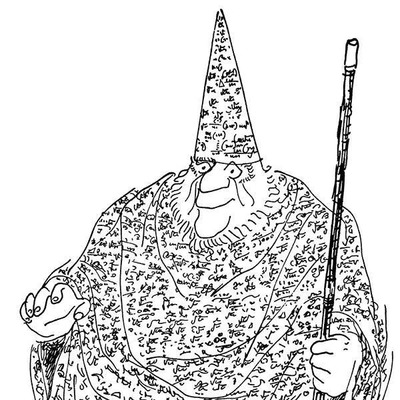
people who study math or CS (including me) often need to read this
If you think you know everything, you probably just don’t know how much you don’t know.
If you think you don’t know anything, you probably have just forgotten how much you know.
Don’t compare yourself to know-it-alls.
@Linux_in_a_Bit You might be happier with Cinnamon than Gnome.
Parienve
boosted

Parienve
boosted
Well, me and Microsoft won't be friends in my life anymore. I hate Azure Azure hates me and the support does not know its products, in the end you have to solve it yourself.
Parienve
boosted

Your computer system is uniquely configured—and thus identifiable—even if you are using privacy-protective software. Learn more with EFF's Cover Your Tracks. https://coveryourtracks.eff.org/


- alt
- Parienve@mas.to
- pronouns/pronomines
- en: they/them/themself
en: Mostly tech, but not entirely. Privacy is a human right.
ia: Principalmente technologia, ma non in toto. Privacitate es un derecto human.
Joined Feb 2020
