

sojournTime @sojournTime@qoto.org
- GitHub (Personal)
- https://github.com/dataNerd23
Data Science PhD Candidate
Likes math, stats, space, and board games (especially Dominion: https://dominion.games/).
⬛️⬛️⬛️⬛️⬛️✨⬛️⬛️⬛️⬛️⬛️⬛️
⬛️✨⬛️⬛️⬛️⬛️⬛️⬛️⬛️⬛️✨⬛️
⬛️⬛️⬛️⬛️🛰️⬛️⬛️⬛️✨⬛️⬛️⬛️
⬛️⬛️⬛️⬛️⬛️🌎⬛️⬛️⬛️⬛️⬛️⬛️
⬛️⬛️🌒⬛️⬛️⬛️⬛️⬛️⬛️✨⬛️⬛️
⬛️⬛️⬛️⬛️⬛️⬛️✨⬛️⬛️⬛️⬛️⬛️
Joined Apr 2022
sojournTime
boosted

How can we train people in the art of learning to read scholarly research like a scientist?
Fascinated by this project that studied how biologists read papers, from undergrads to faculty, and why undergrads get so lost on things that experienced researchers find fast/easy.
More experienced readers focused on the data. More junior ones focused on the narrative.
https://www.tandfonline.com/doi/full/10.1080/21548455.2022.2078010
sojournTime
boosted

School Vouchers Were Supposed to Save Taxpayer Money. Instead They Blew a Massive Hole in Arizona’s Budget.
==
#Arizona, the model for voucher programs across the country, has spent so much money paying private schoolers’ tuition that it’s now facing hundreds of millions in budget cuts to critical state programs and projects.
#News #Education #Schools #Students #Politics #Government
https://www.propublica.org/article/arizona-school-vouchers-budget-meltdown
@j_bertolotti so I think this is an equivalent formulation: instead of taking the top k dice out of n, calculate the probability of the value X from the sum of k dice with m sides (use the probability-generating function like you said) and then multiply the probability of the remaining n-k dice having all values less than or equal to the smallest value of the k dice.
Let me know if this formulation is correct or not and if it is helpful.
sojournTime
boosted

Given that I am surrounded by Mathematicians here, let me ask for help for what should be a simple problem I can't seem to be able to solve:
Assume you have n fair dice with m faces (i.e. each can roll an integer from 1 to m with a uniform probability). You roll all n, and keep the k (with 0<k<=n) highest results. What is the probability that the sum of the k dice you kept is X?
(If one keeps all the dice, probability-generating functions give the answer straightforwardly. If I roll 2 dice and keep 1 I can easily enumerate the outcomes and calculate the probabilities, but I am stumped by the general case).
sojournTime
boosted

As part of an ongoing research project, and also to learn how to create animated graphs, I decided to perform a literature review of zero density estimates \[N(\sigma,T) \ll T^{A(\sigma)(1-\sigma)+o(1)}\] for the Riemann zeta function, where \(1/2 < \sigma < 1\) and the game is to get the exponent \(A(\sigma)\), and particularly the supremum \(\sup_\sigma A(\sigma) \), as small as possible. The Riemann hypothesis basically asserts that this supremum is 0, while the weaker Density hypothesis asserts that this supremum is at most 2. By 1972, the work of Ingham and Huxley had pushed the supremum down to 12/5=2.4, but it then remained stuck for over fifty years, until the recent work of Guth and Maynard reduced this to 30/13=2.307...
I had always wondered why there did not seem to be a comprehensive survey of all the zero density theorems that had been established over the years, and now I know why: the literature is immensely complicated, especially in the region \(3/4 \leq \sigma < 1\) where there has been a lot of activity using a variety of methods. The bounds tend be piecewise in nature, mostly due to the fact that the methods rely on controlling integer moments rather than fractional moments. However, while these bounds are quite messy to state in human-readable form, they are quite digestible to a computer, and it was surprisingly routine to collate all the bounds into a single Python file, which I then used to create the attached animation. These zero density estimates are useful inputs to other analytic number theory problems, so when our project concludes we will be able to easily tweak the code to explore what could have been proven at different points in history of the subject.
sojournTime
boosted

Under Trump, the U.S. military spread lies, via social media (later picked up by "traditional" media) about China's covid vaccine to persuade Asians not to use it.
China's regime is a criminal organization, and it lied relentlessly about covid and the U.S.
That's no excuse for what we did.
https://www.reuters.com/investigates/special-report/usa-covid-propaganda/
And it's no excuse for what American anti-vaxxers did, and continue to do.
Conspirators in death.
sojournTime
boosted

I have never been more disappointed by a spelling error:
sojournTime
boosted

So at a linux (or equivalent) terminal, type this:
$ telnet mapscii.me
Get an interactive world map. In your terminal.
Zoom in and out with A and Z, use the arrow keys to move.
Astonishing.
sojournTime
boosted

Many yearn for the "good old days" of the web. We could have those good old days back — or something even better — and if anything, it would be easier now than it ever was.
https://www.citationneeded.news/we-can-have-a-different-web/
sojournTime
boosted

sojournTime
boosted

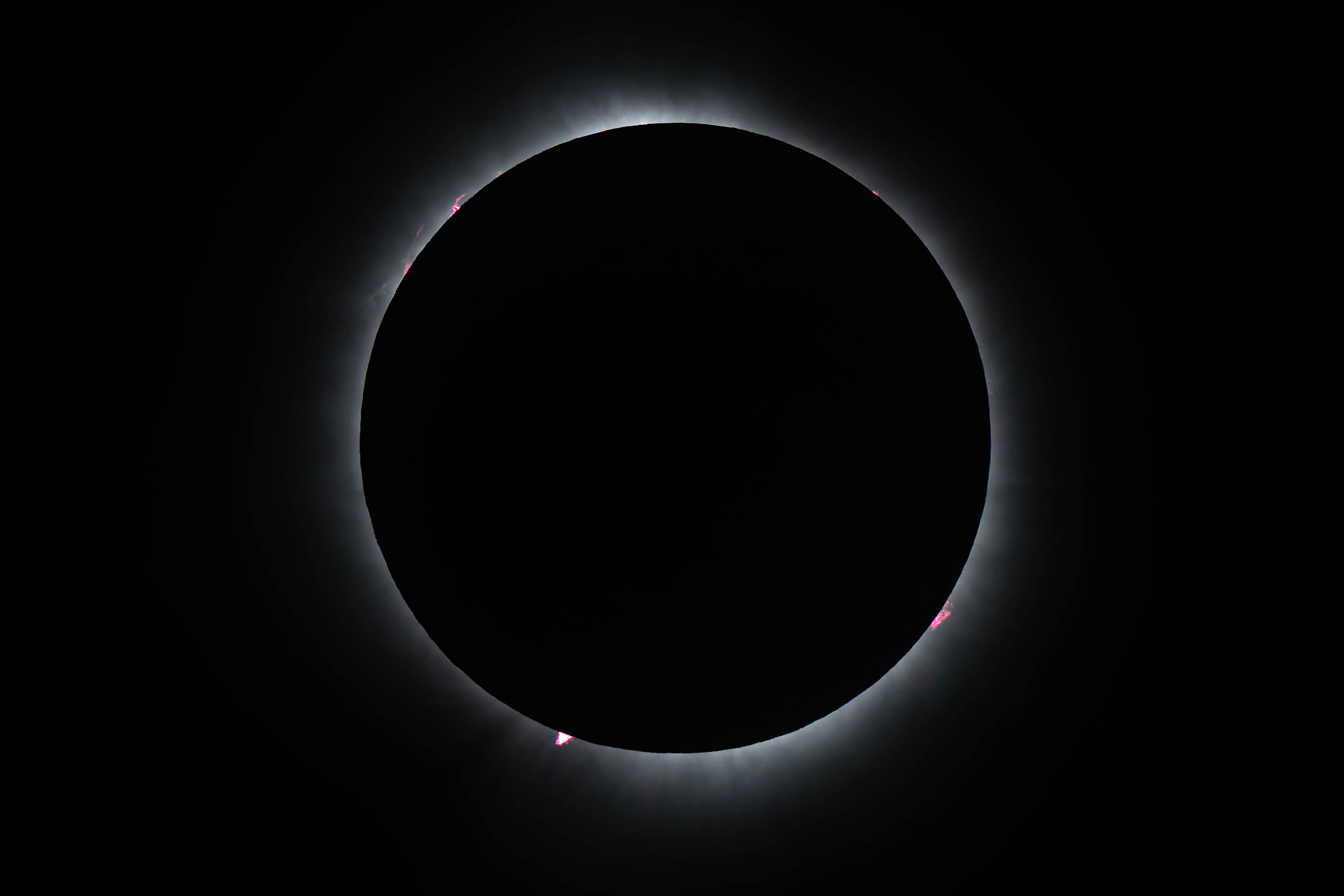
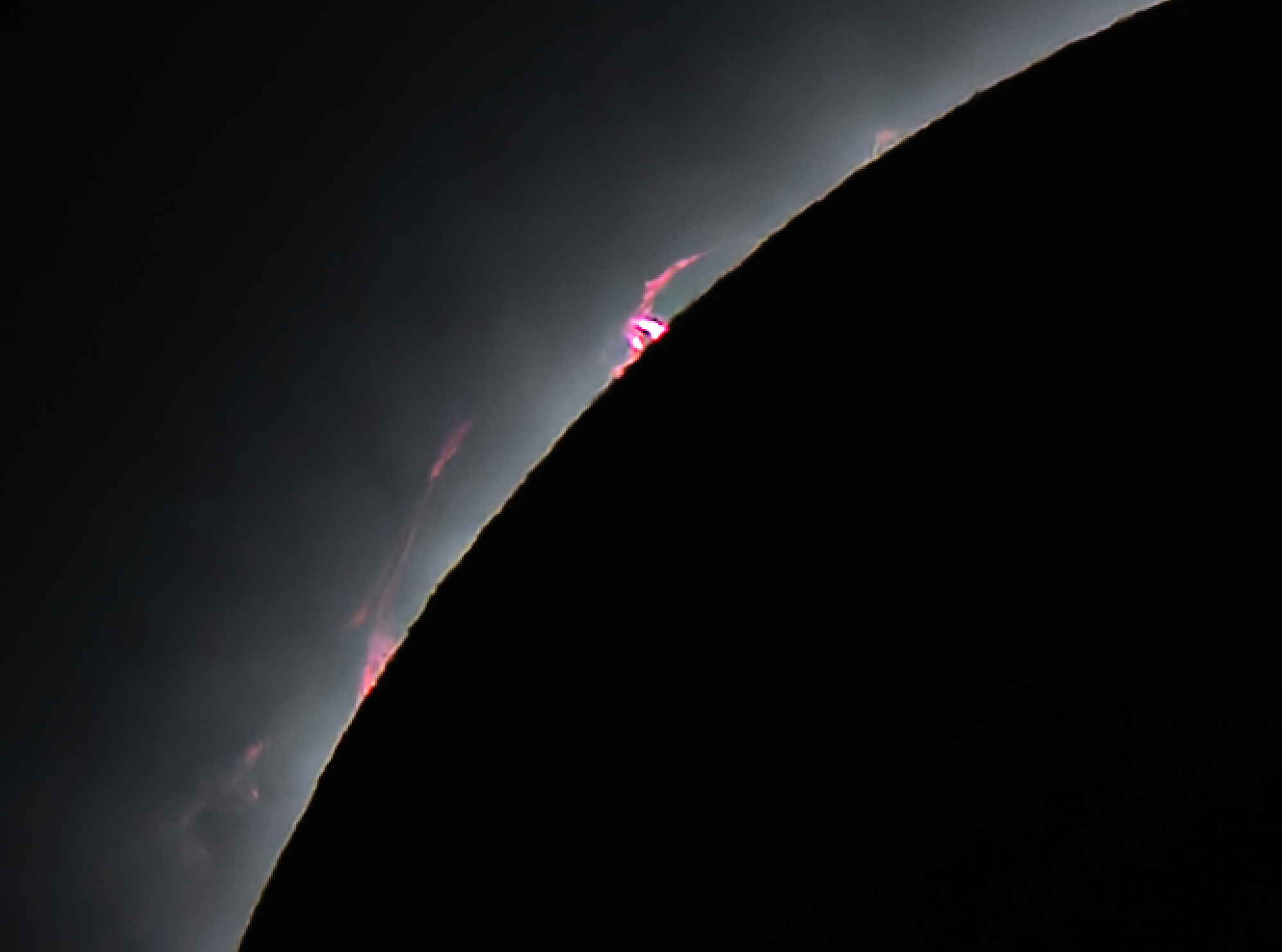
A better view of the wild solar prominences during Monday's eclipse.
(Quick hand-held shot with Nikon Z9 + Nikkor 800mm f/6.3 PF)
sojournTime
boosted

sojournTime
boosted
sojournTime
boosted

sojournTime
boosted

sojournTime
boosted

The Verge article on the best printer in 2024 is just completely brilliant in so many ways.
And also kinda sad.
@tedpavlic Man, spoiler alert!
@WorldImagining here's a reference to the quote in the Wikipedia page for "Brethren of Purity":
https://en.m.wikipedia.org/wiki/Brethren_of_Purity#The_Epistles_of_the_Brethren_of_Purity
sojournTime
boosted




"I’m fond of effective altruists. When you meet one, ask them how many people they’ve killed."
- Stanford professor Leif Wenar pens a devastating takedown of #EffectiveAltruism for WIRED magazine, in the wake of #crypto fraudster Sam Bankman-Fried's sentencing.
sojournTime
boosted
OMG 😧 Playing doom using windows task manager
https://youtu.be/hSoCmAoIMOU?si=mvZ3YrFtRziyjw-A
- GitHub (Personal)
- https://github.com/dataNerd23
Data Science PhD Candidate
Likes math, stats, space, and board games (especially Dominion: https://dominion.games/).
⬛️⬛️⬛️⬛️⬛️✨⬛️⬛️⬛️⬛️⬛️⬛️
⬛️✨⬛️⬛️⬛️⬛️⬛️⬛️⬛️⬛️✨⬛️
⬛️⬛️⬛️⬛️🛰️⬛️⬛️⬛️✨⬛️⬛️⬛️
⬛️⬛️⬛️⬛️⬛️🌎⬛️⬛️⬛️⬛️⬛️⬛️
⬛️⬛️🌒⬛️⬛️⬛️⬛️⬛️⬛️✨⬛️⬛️
⬛️⬛️⬛️⬛️⬛️⬛️✨⬛️⬛️⬛️⬛️⬛️
Joined Apr 2022
