
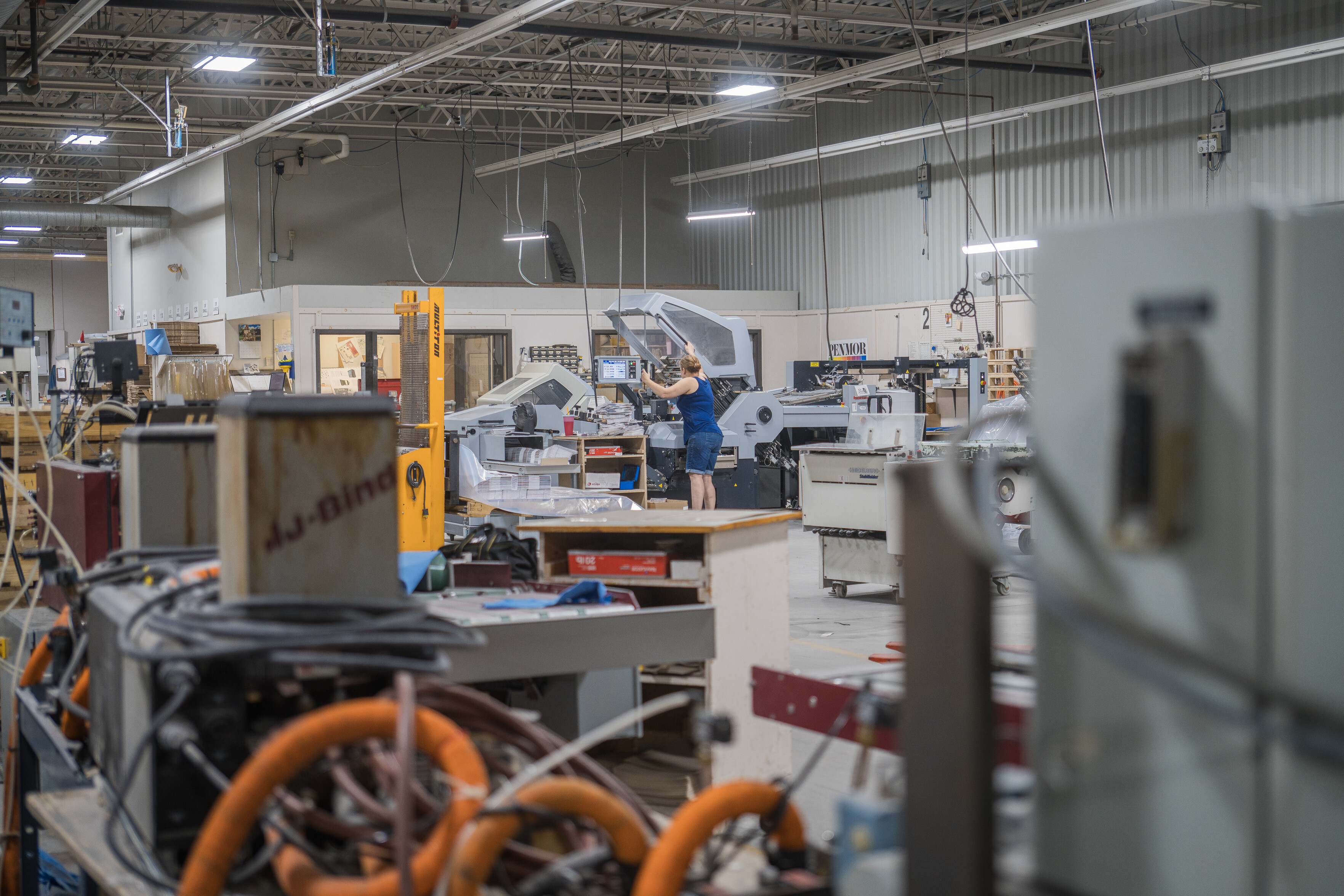
I am already tired (we’re printing in two shifts – 16 hours a day!), so I don’t have energy to write a lot of details, but what a fascinating process.
We’ve solved multiple problems I didn’t know were possible today, and I felt like I’ve learned a lot.
(It’s also way more high tech than I expected.)
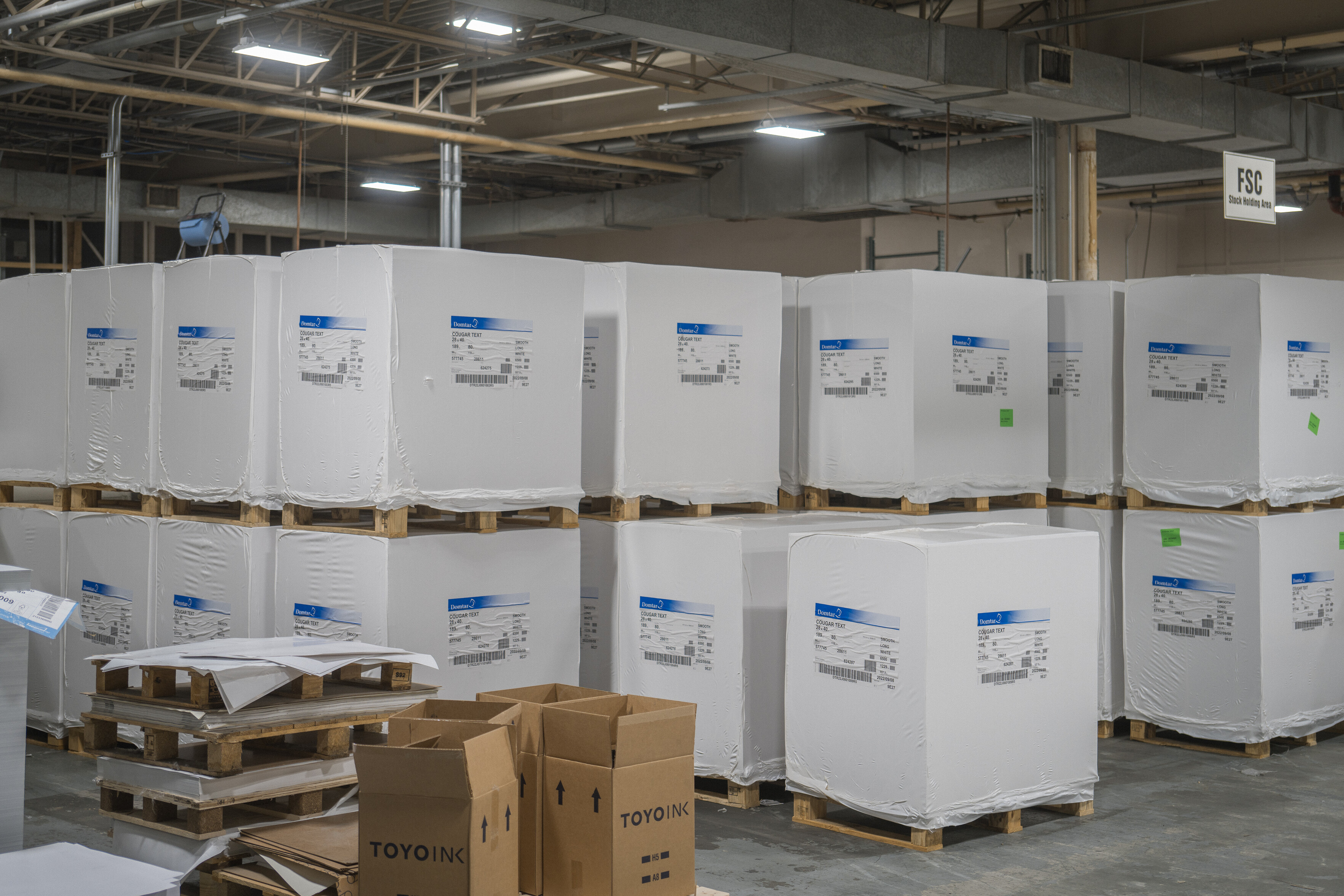
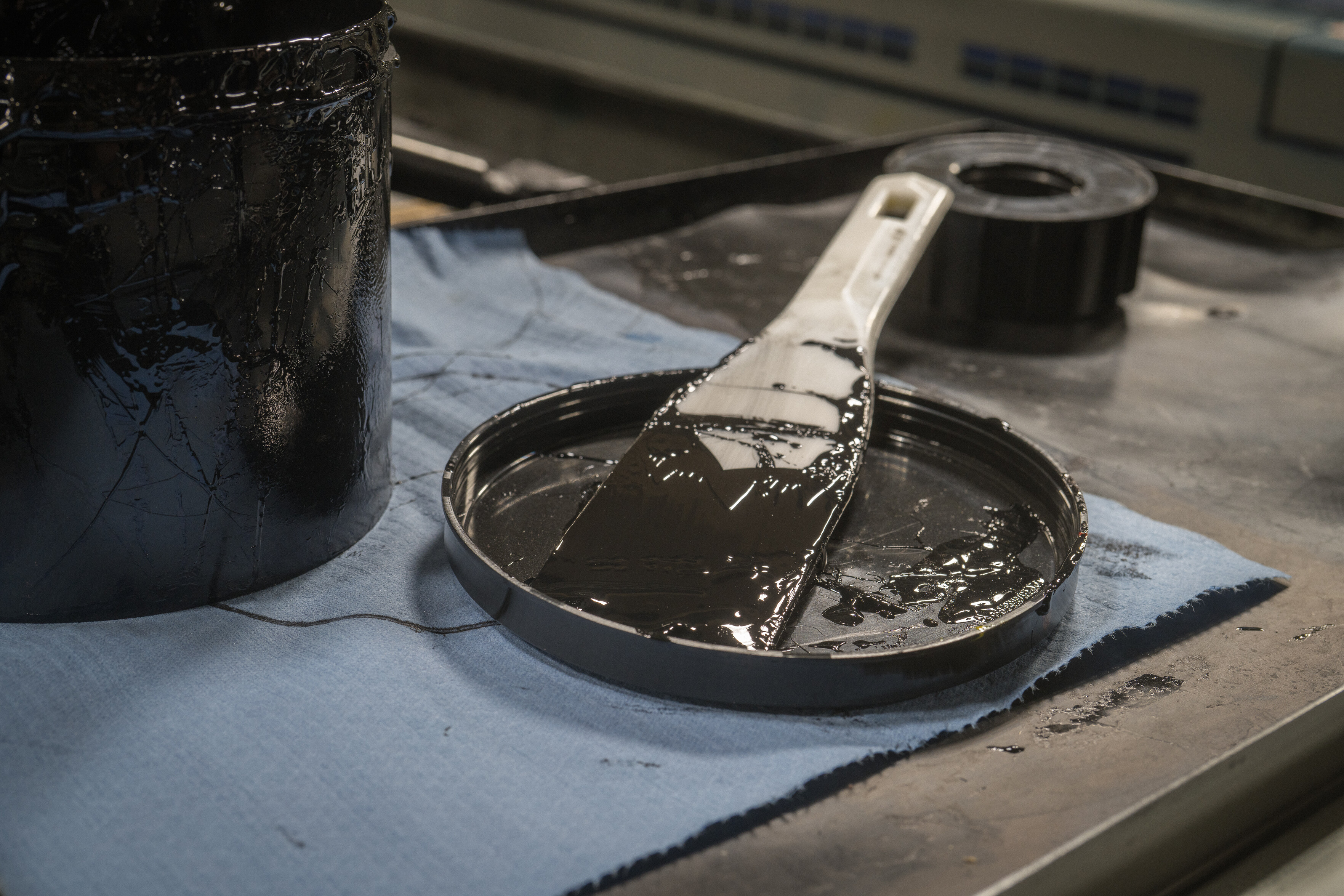
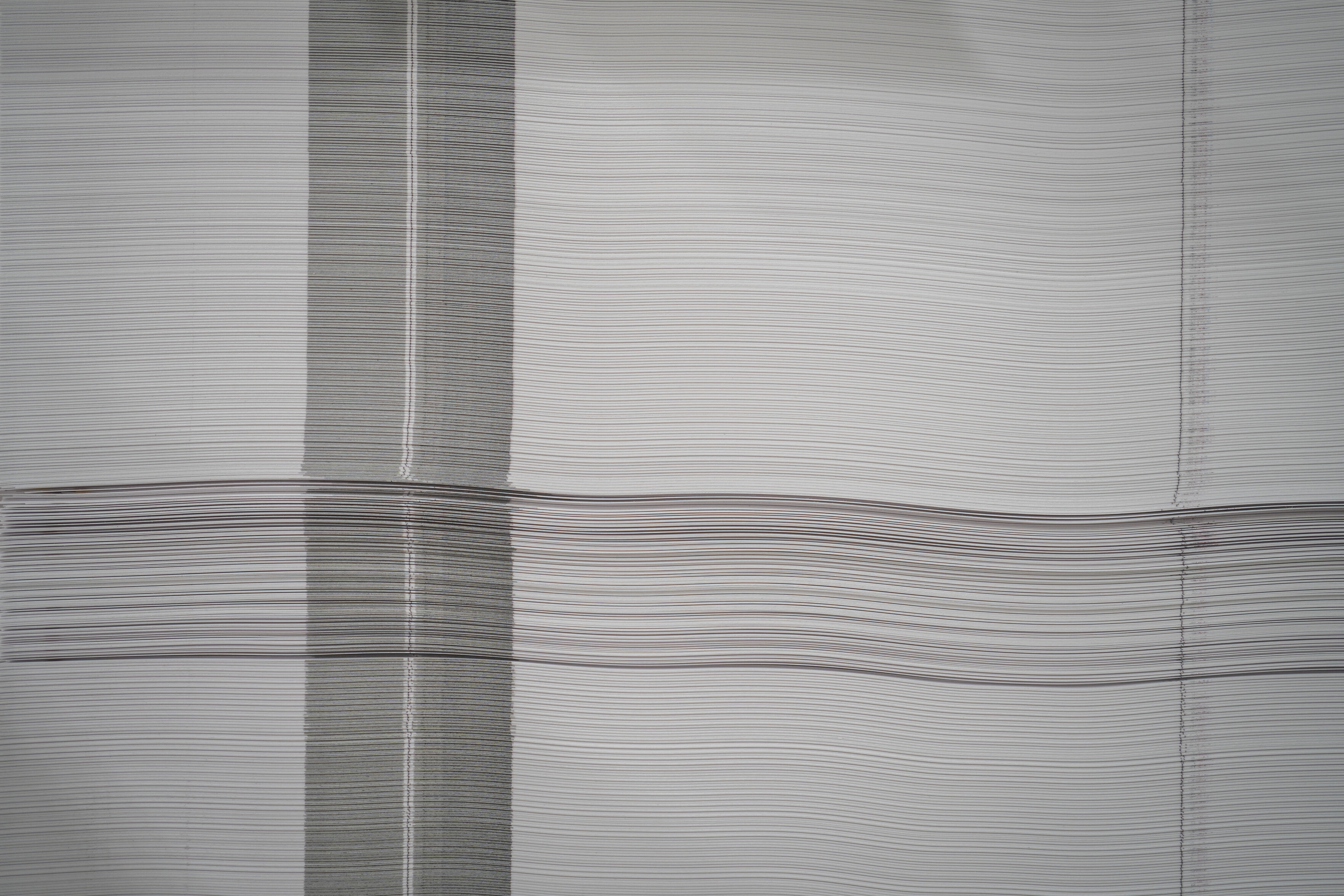
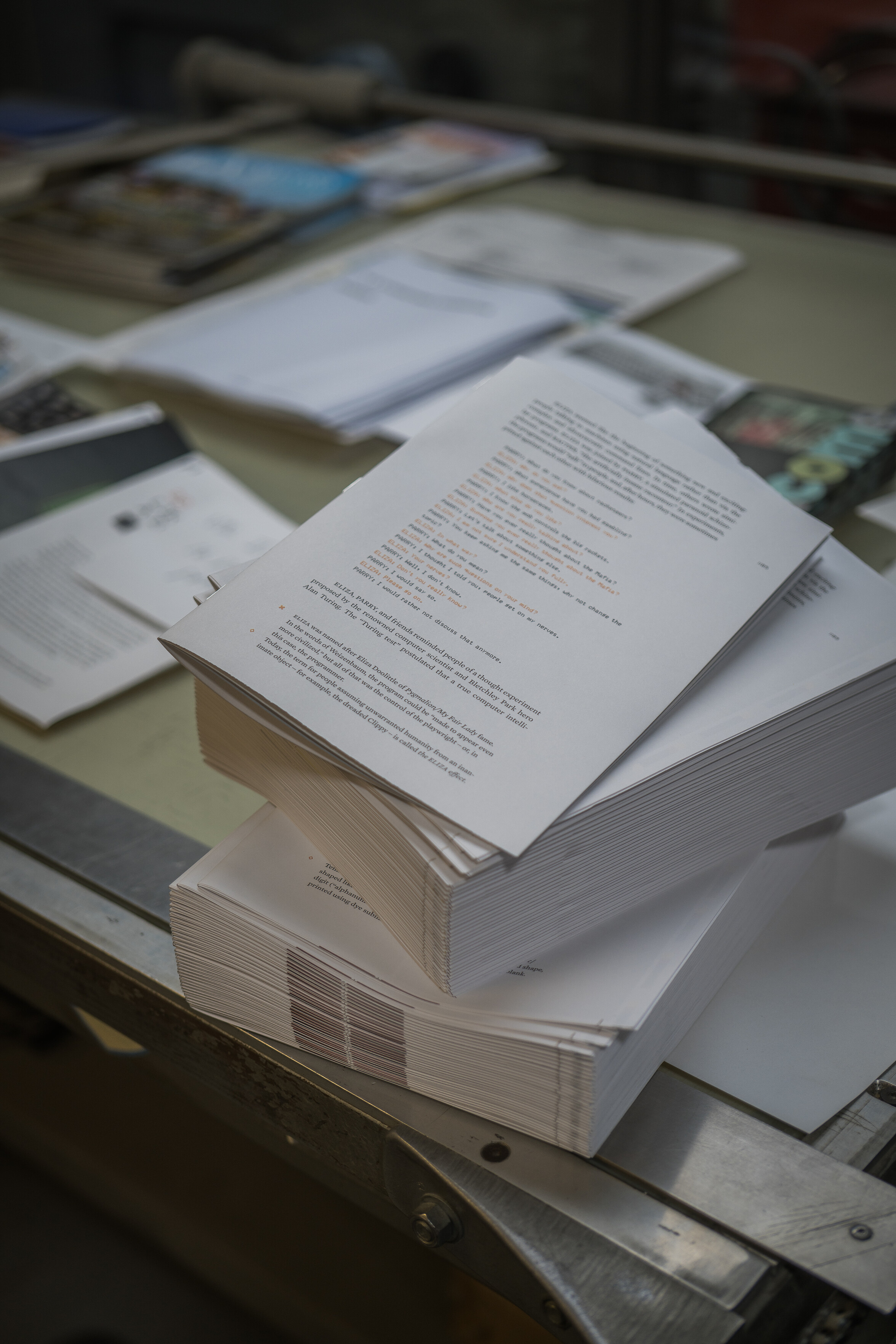
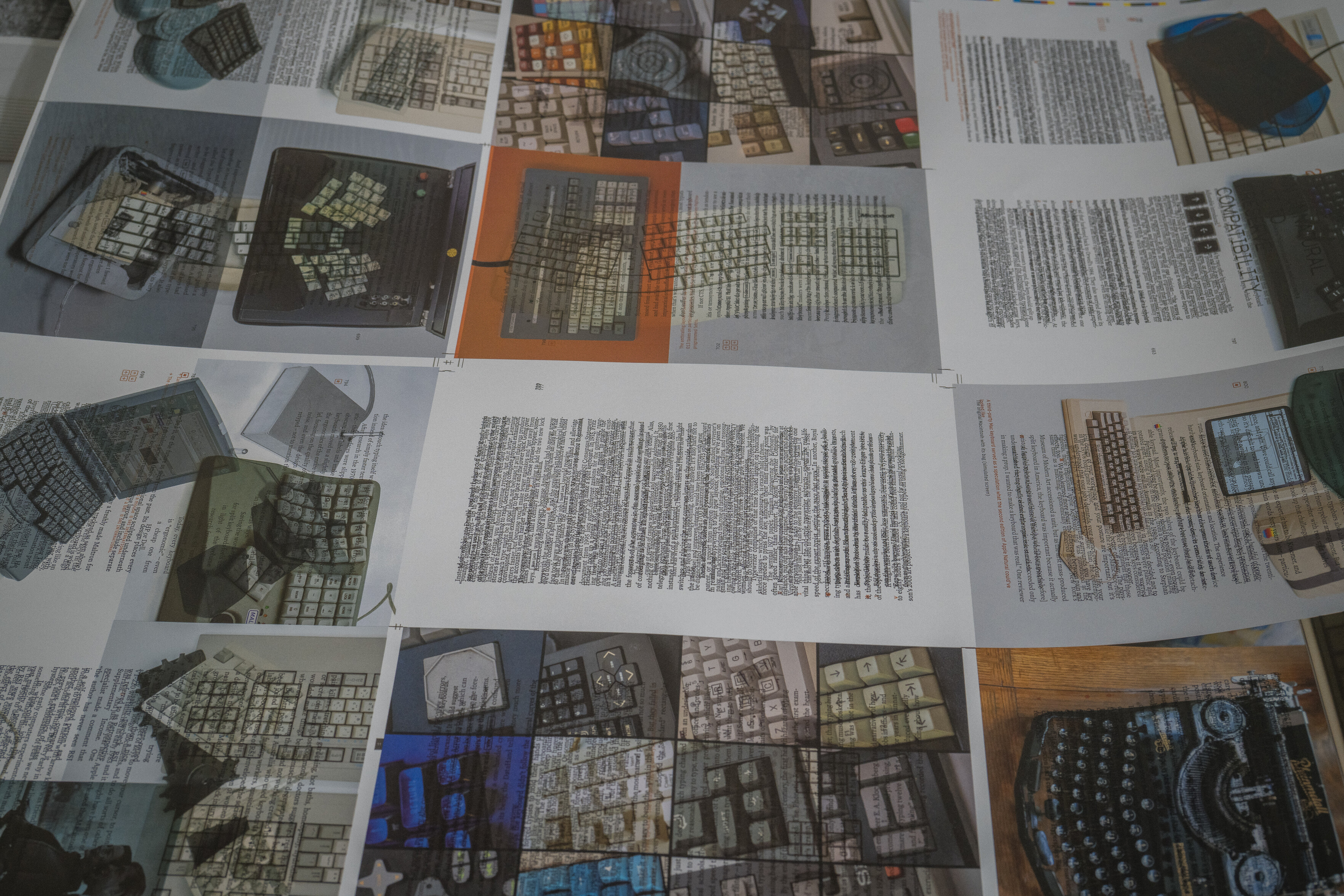
It’s wild to imagine that soon all of this paper and all of this ink will become a book.
So far I’ve signed off on – literally – 10% of the book and saw it printed, but we’ll pick up the pace tomorrow. Starting at 7am (enter via employee entrance). 😭
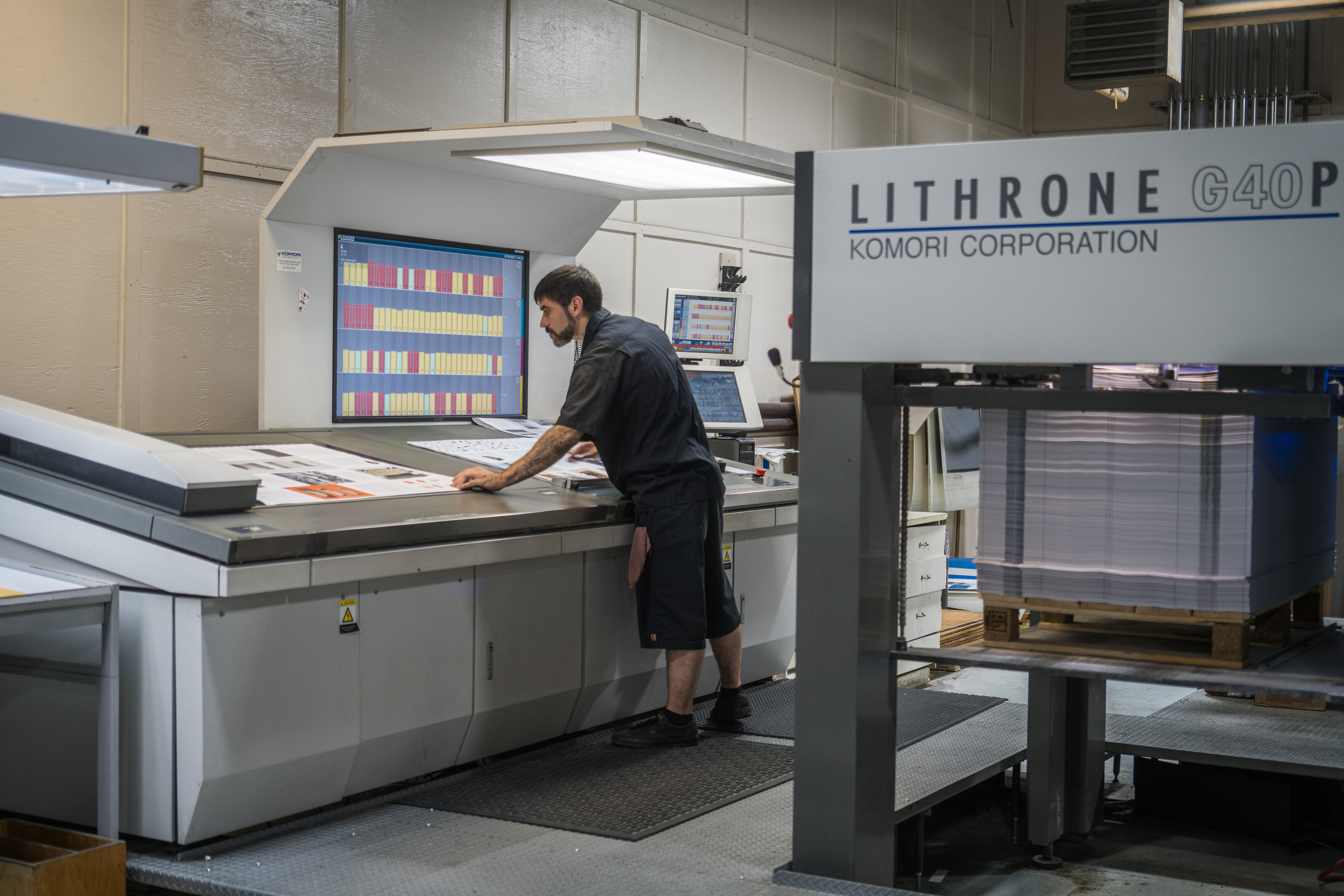
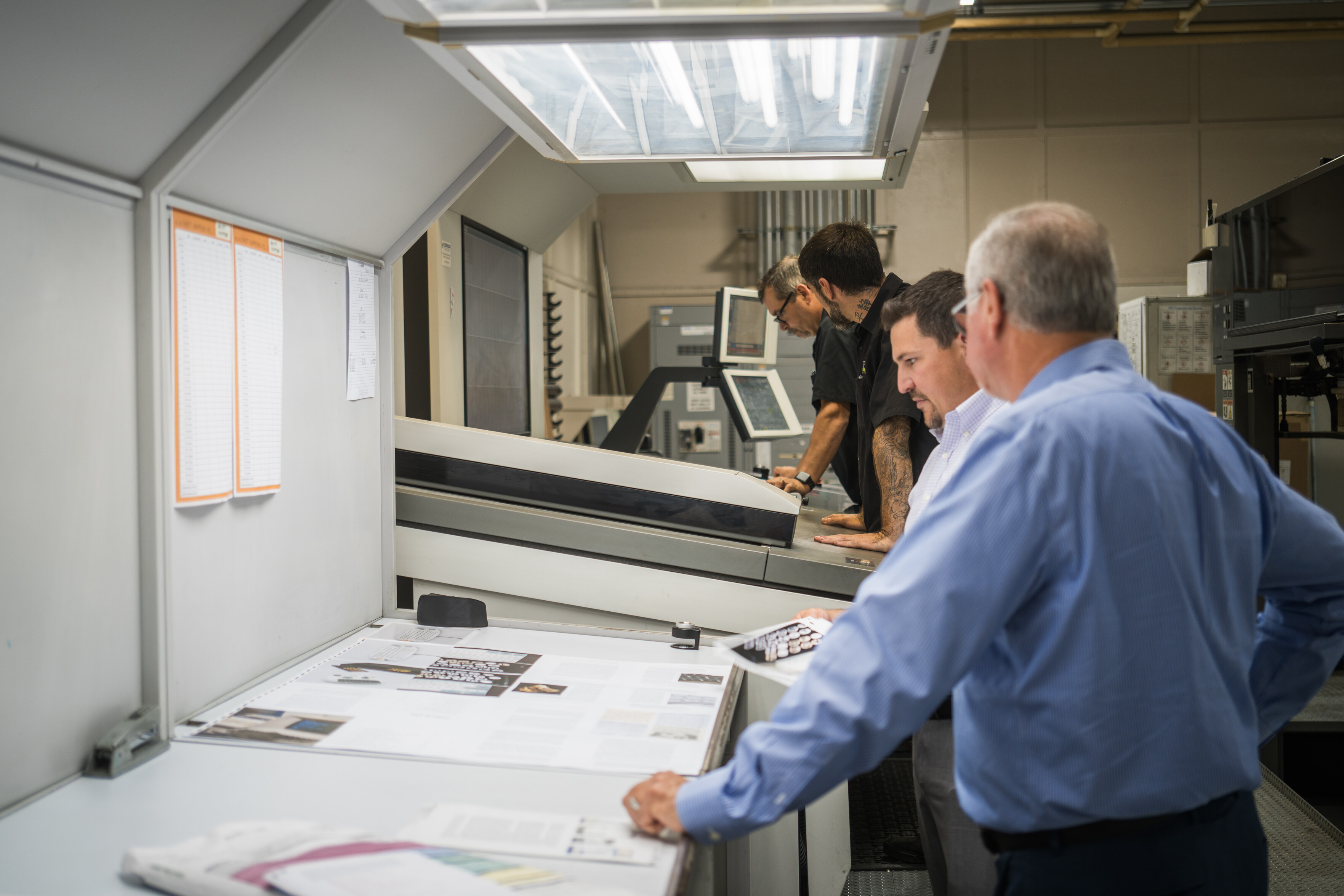
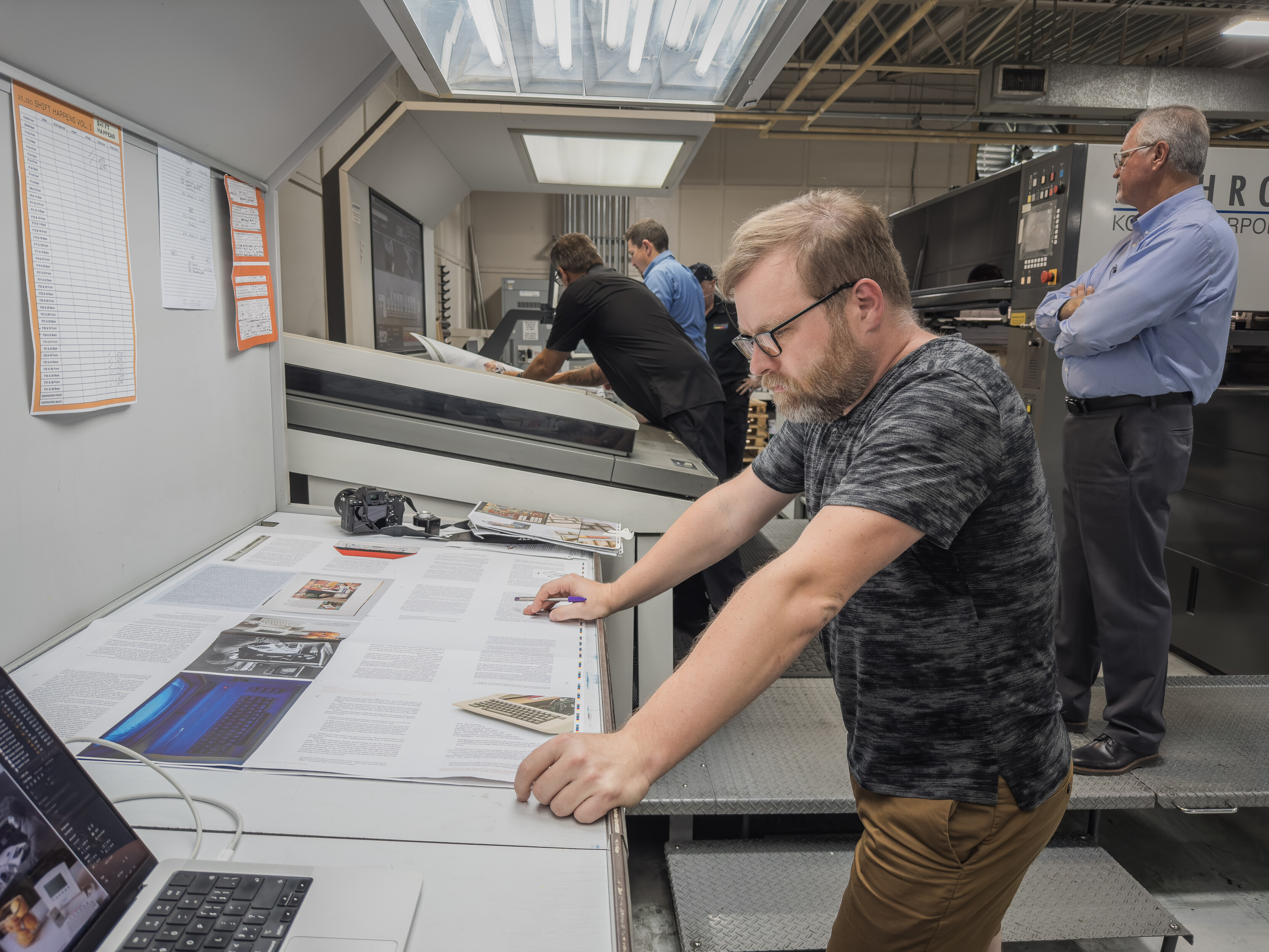
The general process is: we pick a form (32 pages), they put it on press and do initial adjustments, then we look at tons of details together, tweak things, print some more, and then approve it… after that, this signature is locked and then the entire run of that signature gets printed.
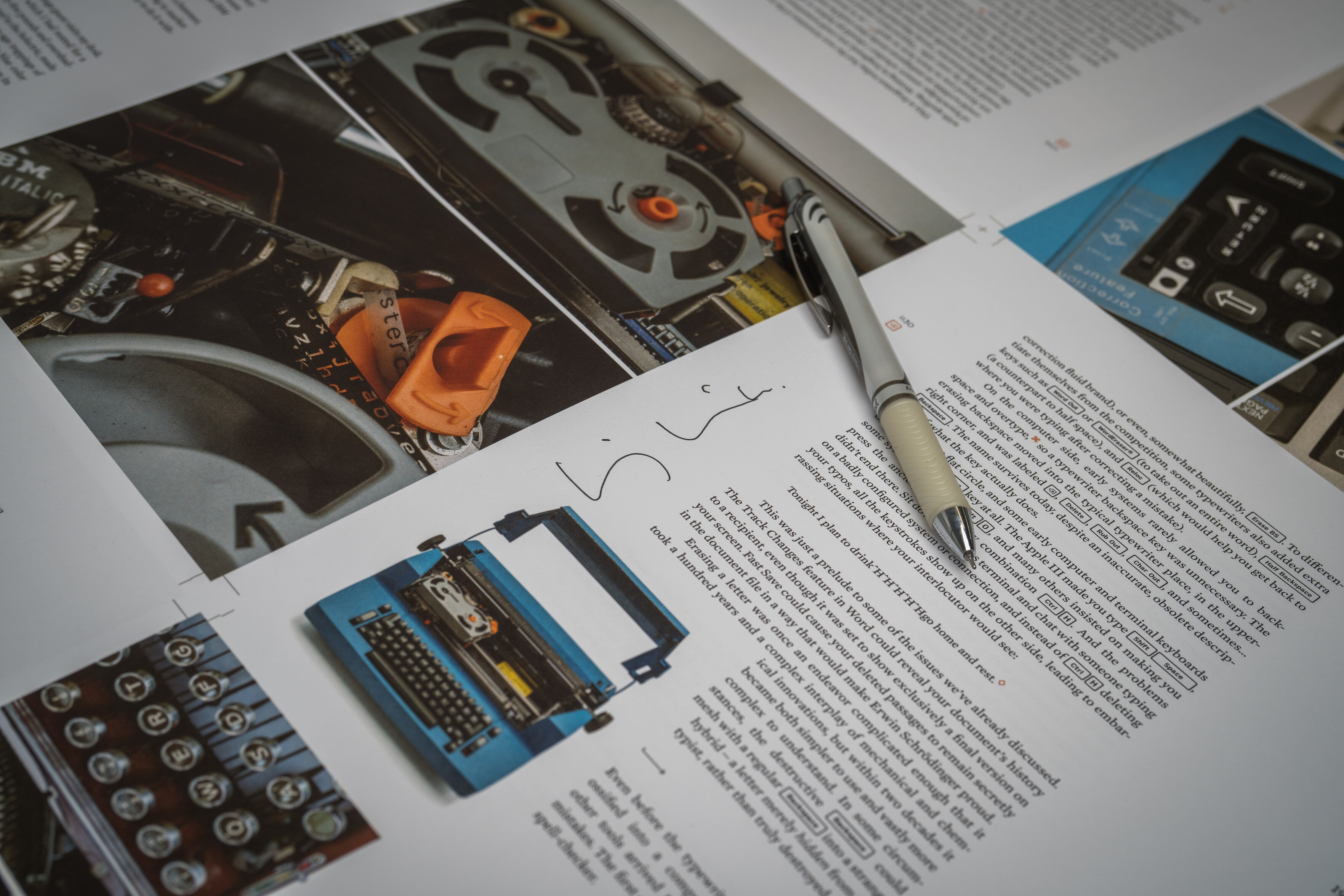
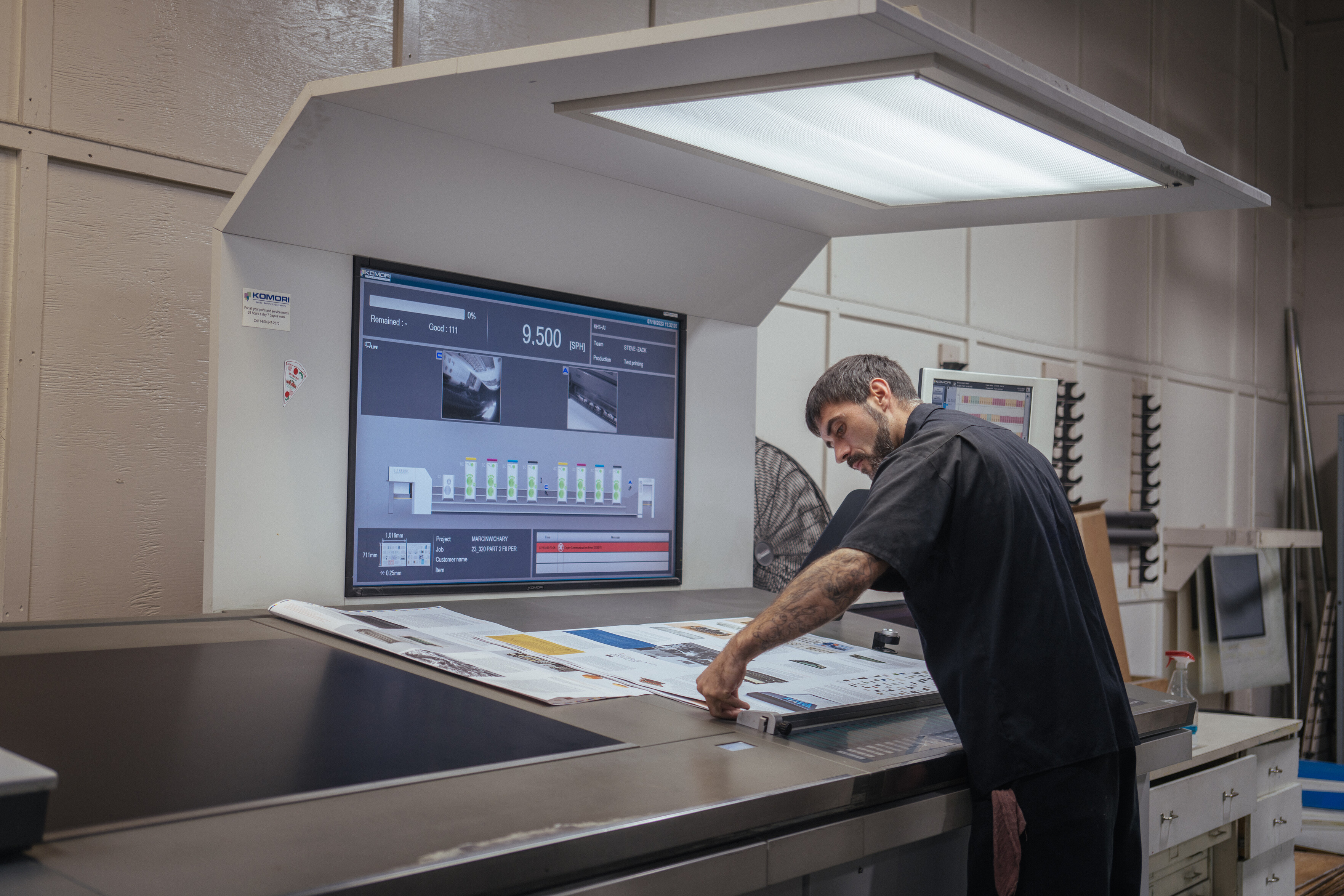
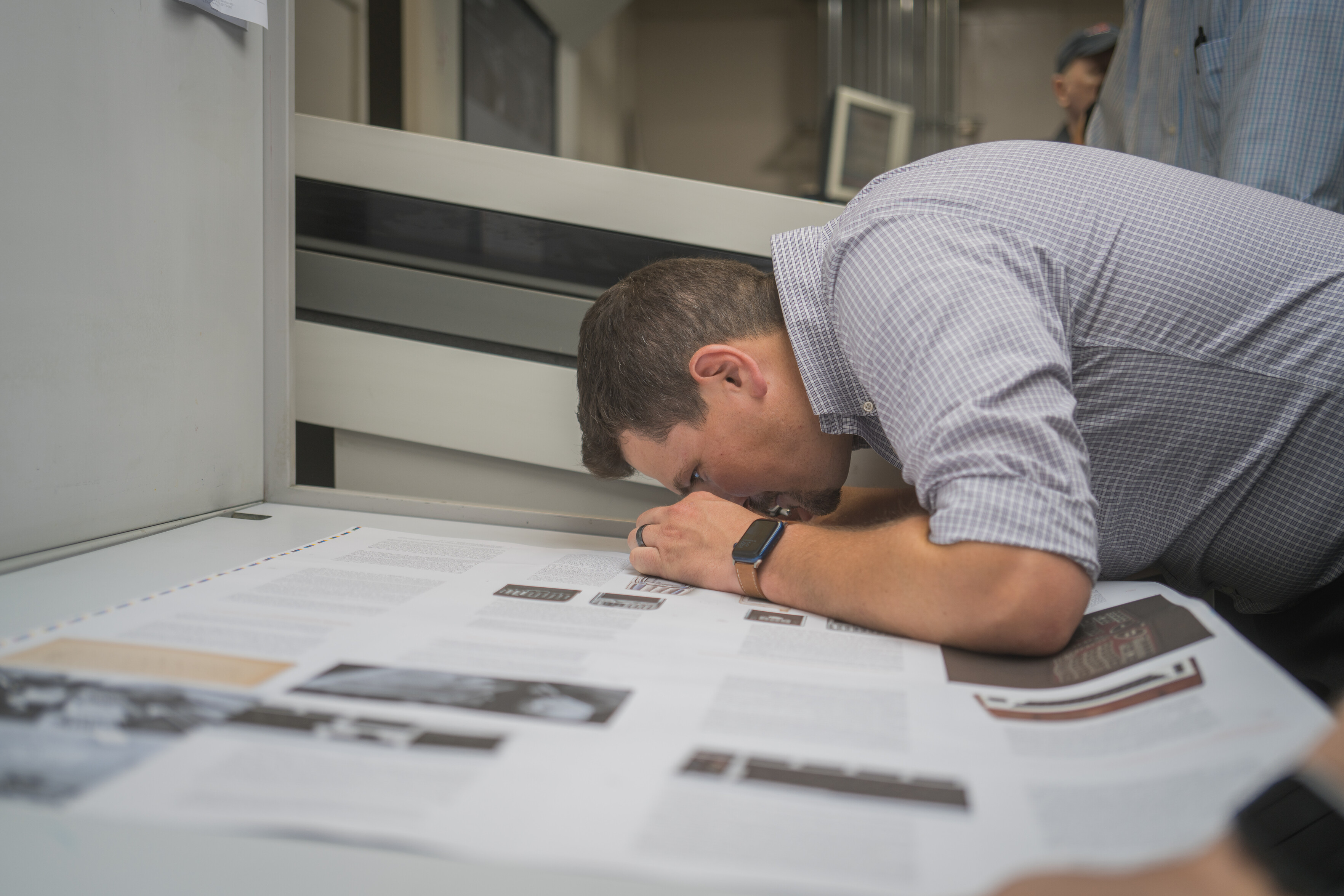
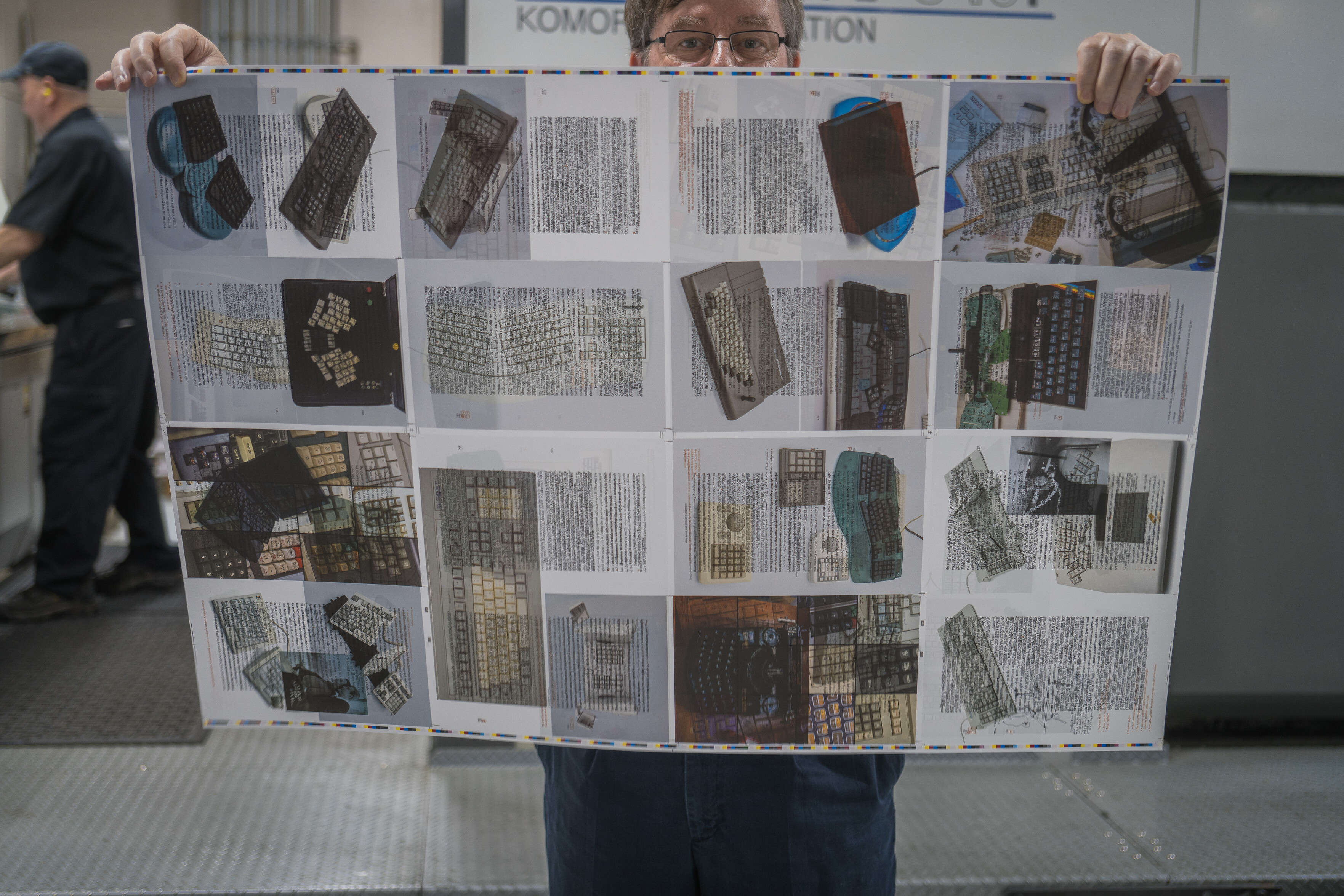
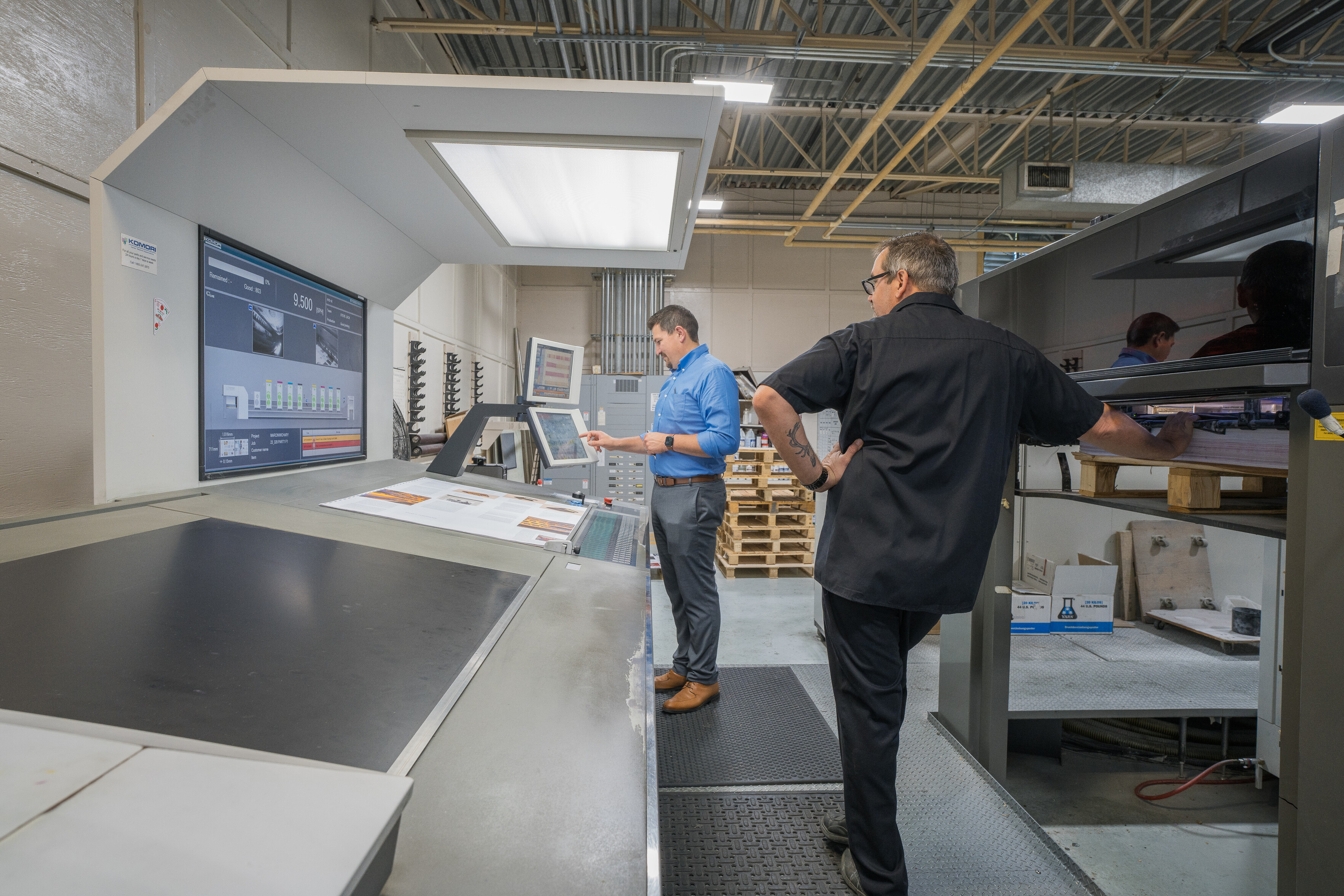
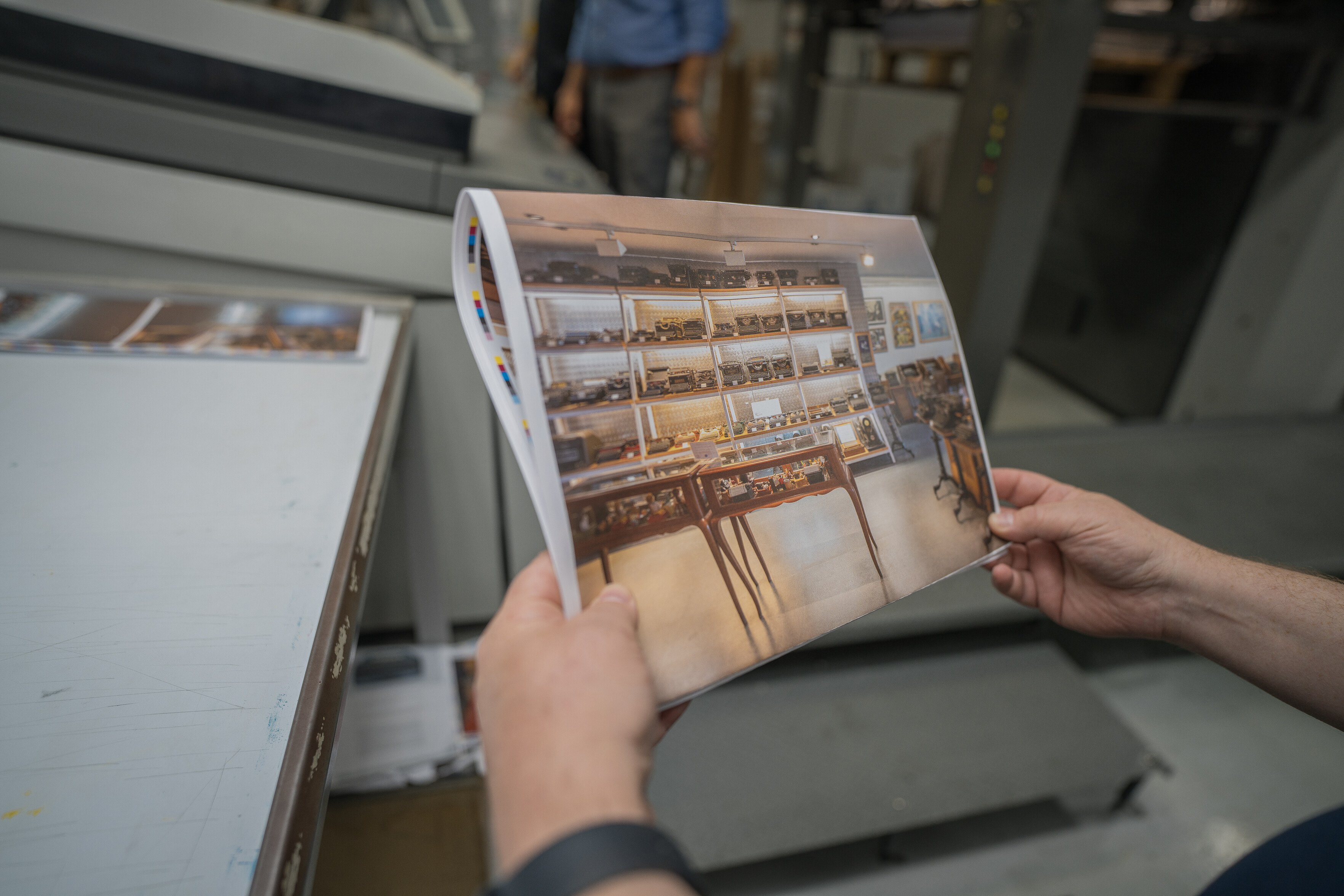
As it’s being printed, someone occasionally pulls a sheet – you can see it here – and inspects it manually and with a built-in scanner.
Then we move on to the next form. (There are 38 forms in total.)
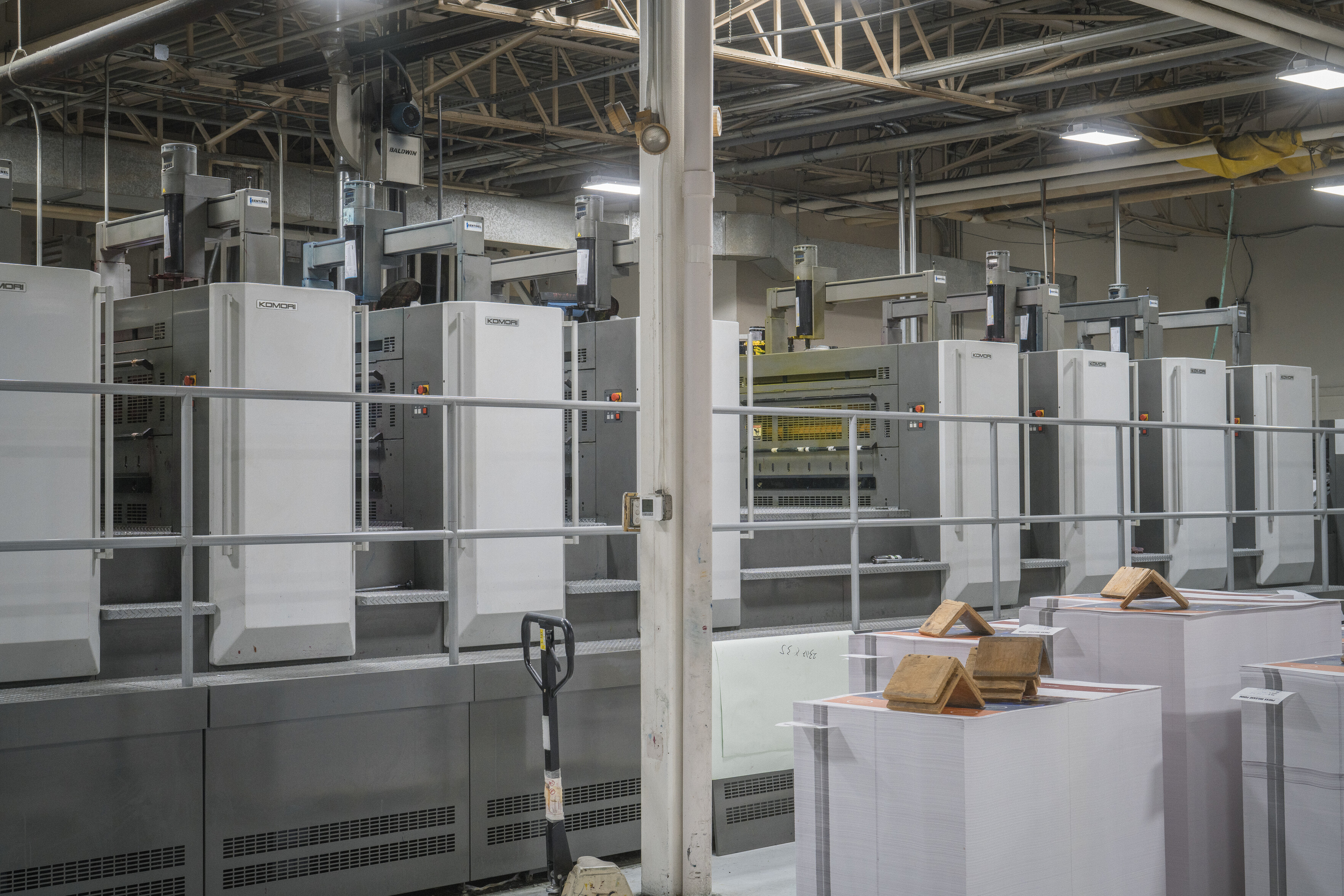
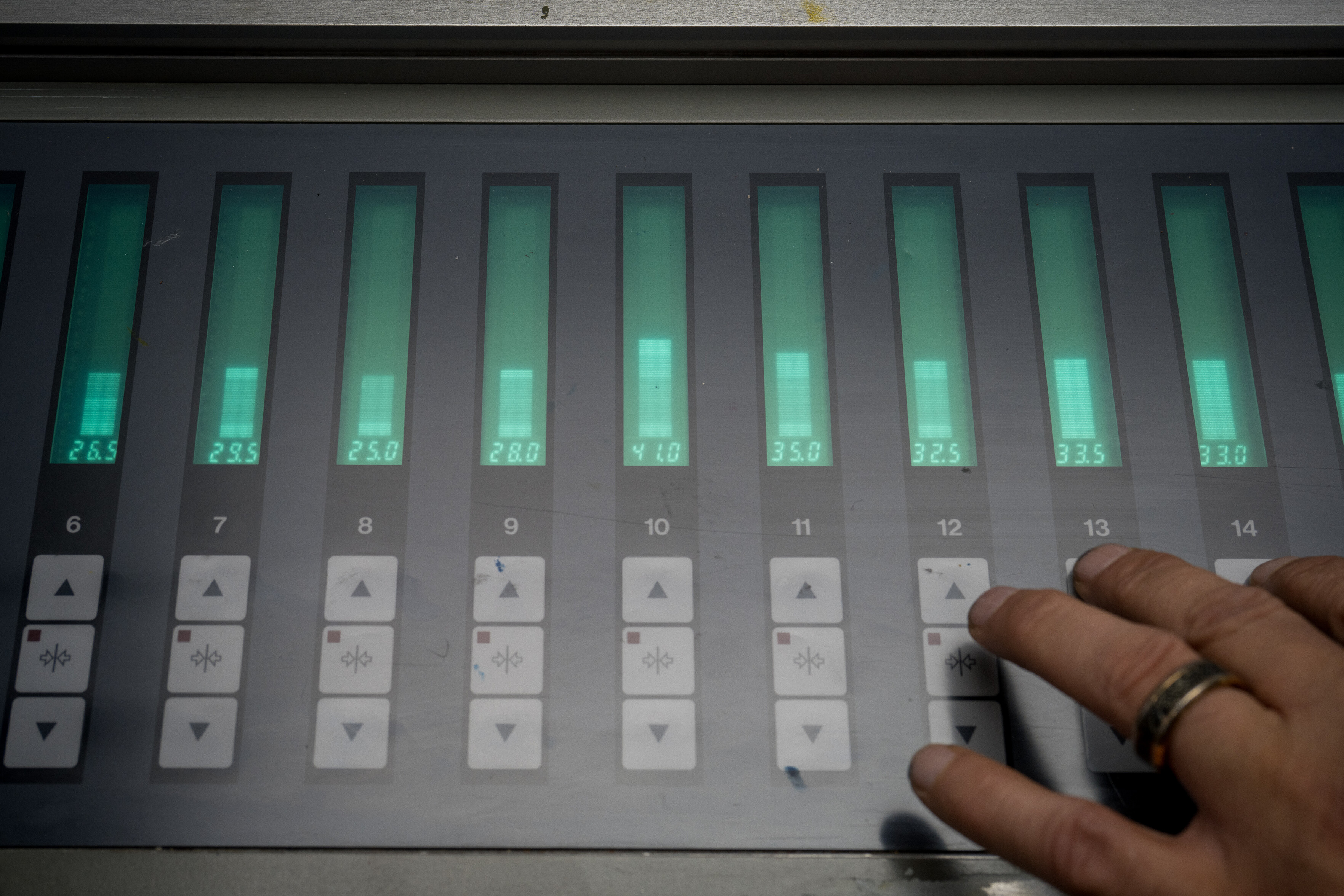
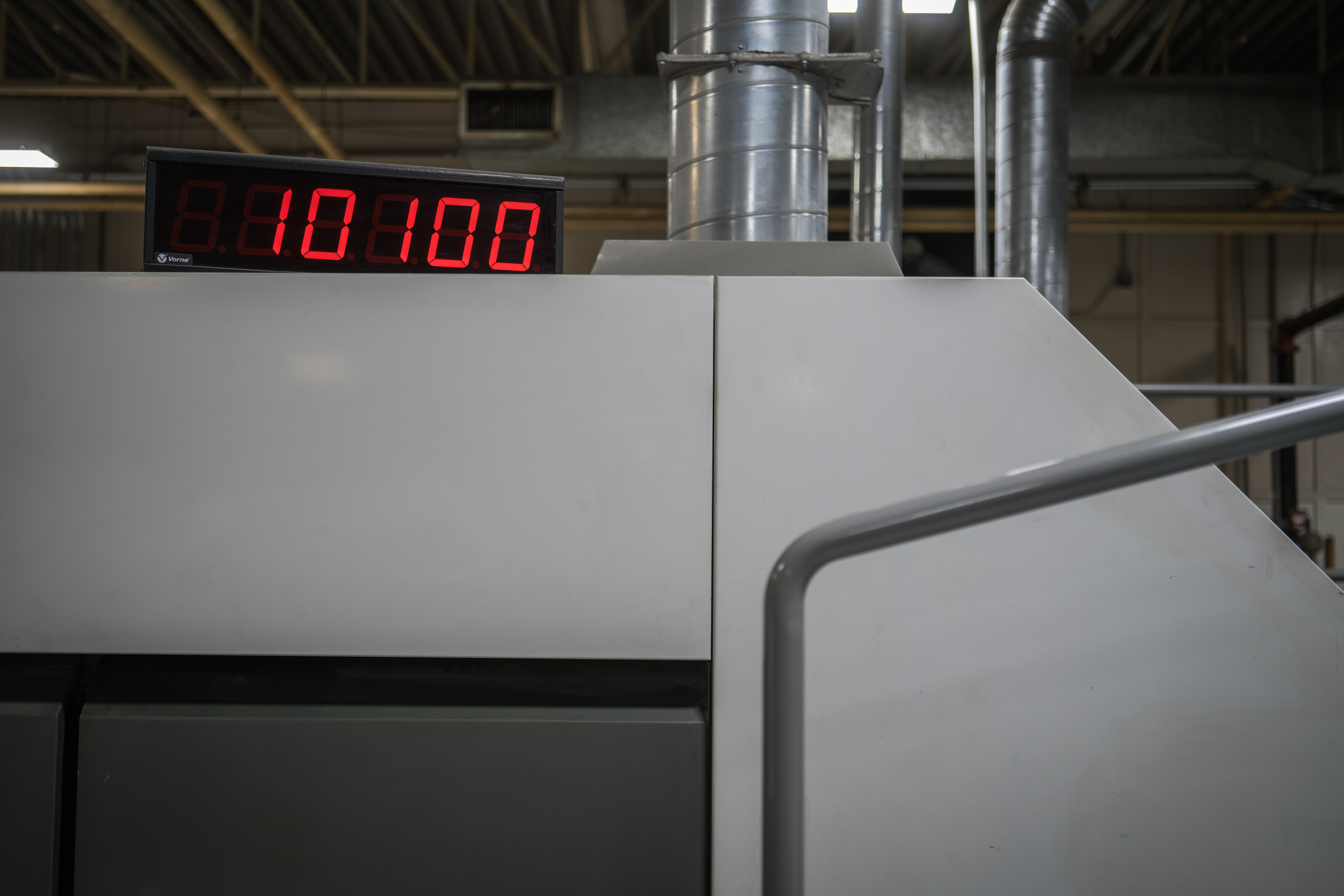
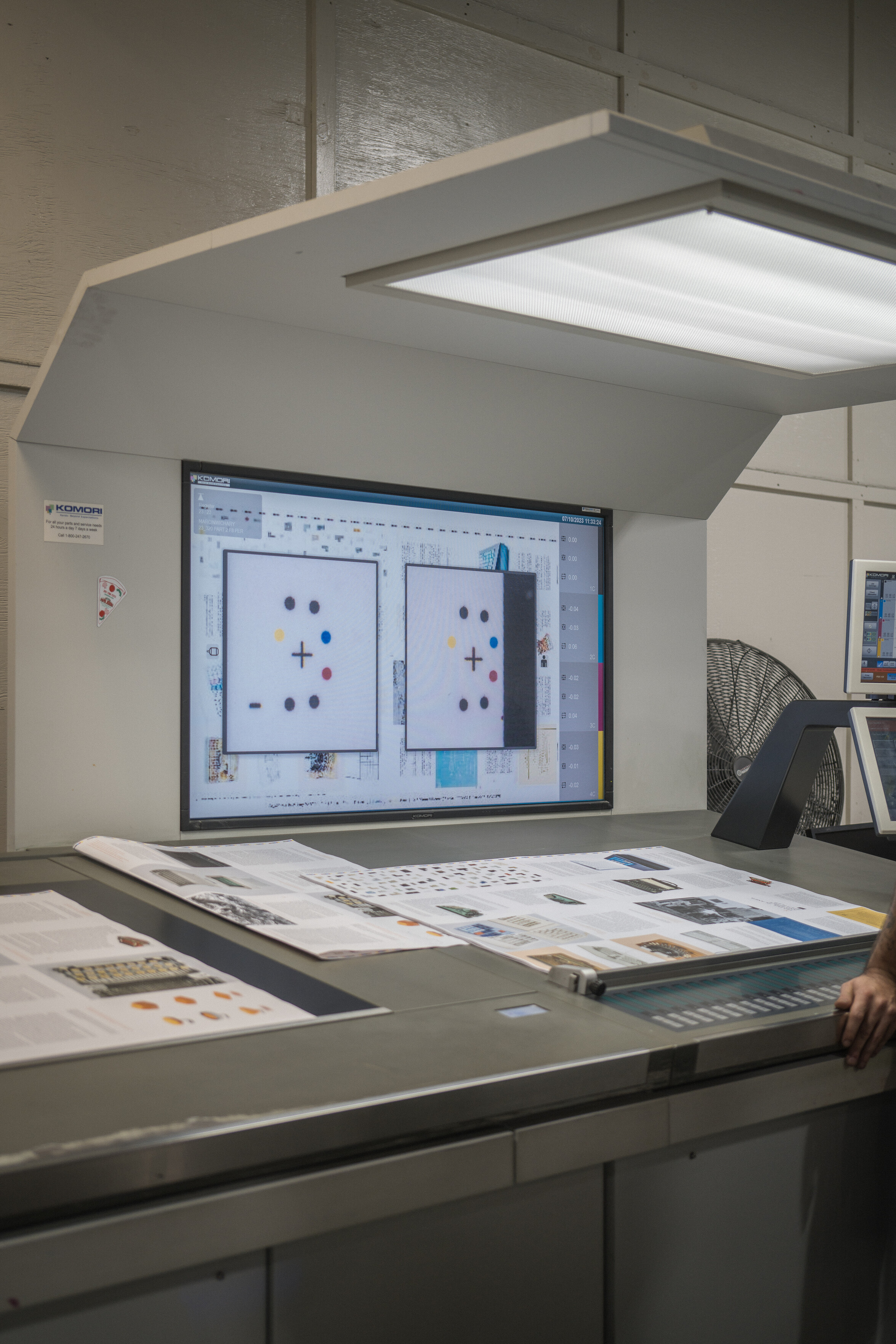
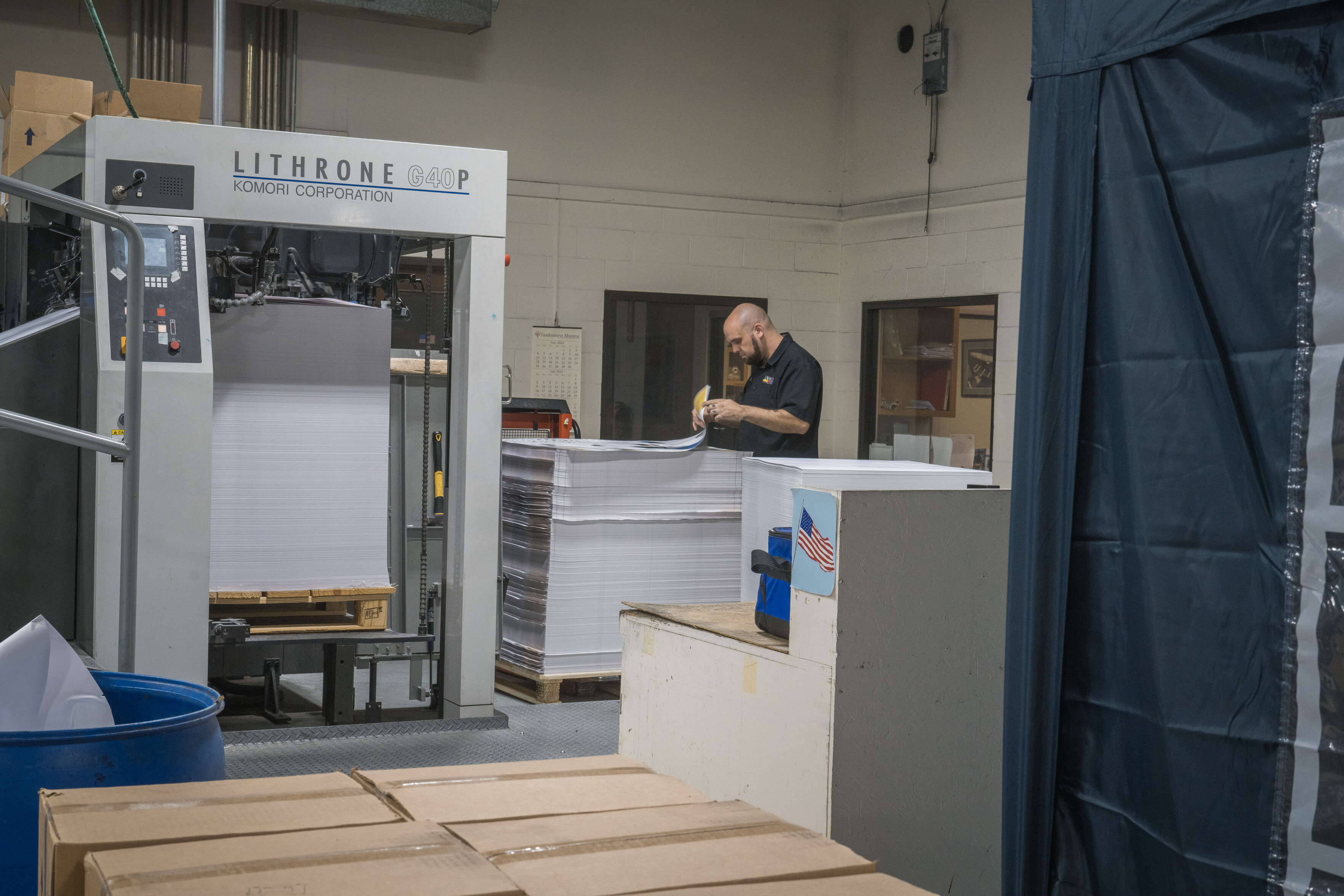
The press has a scanner, a huge panoramic screen, two touch screens, and even security-like cameras inside you can use to inspect the run! It prints on two sides of a sheet. We’ve seen it go up to 10100 sheets an hour, which I think is what this first number means. Wild stuff.
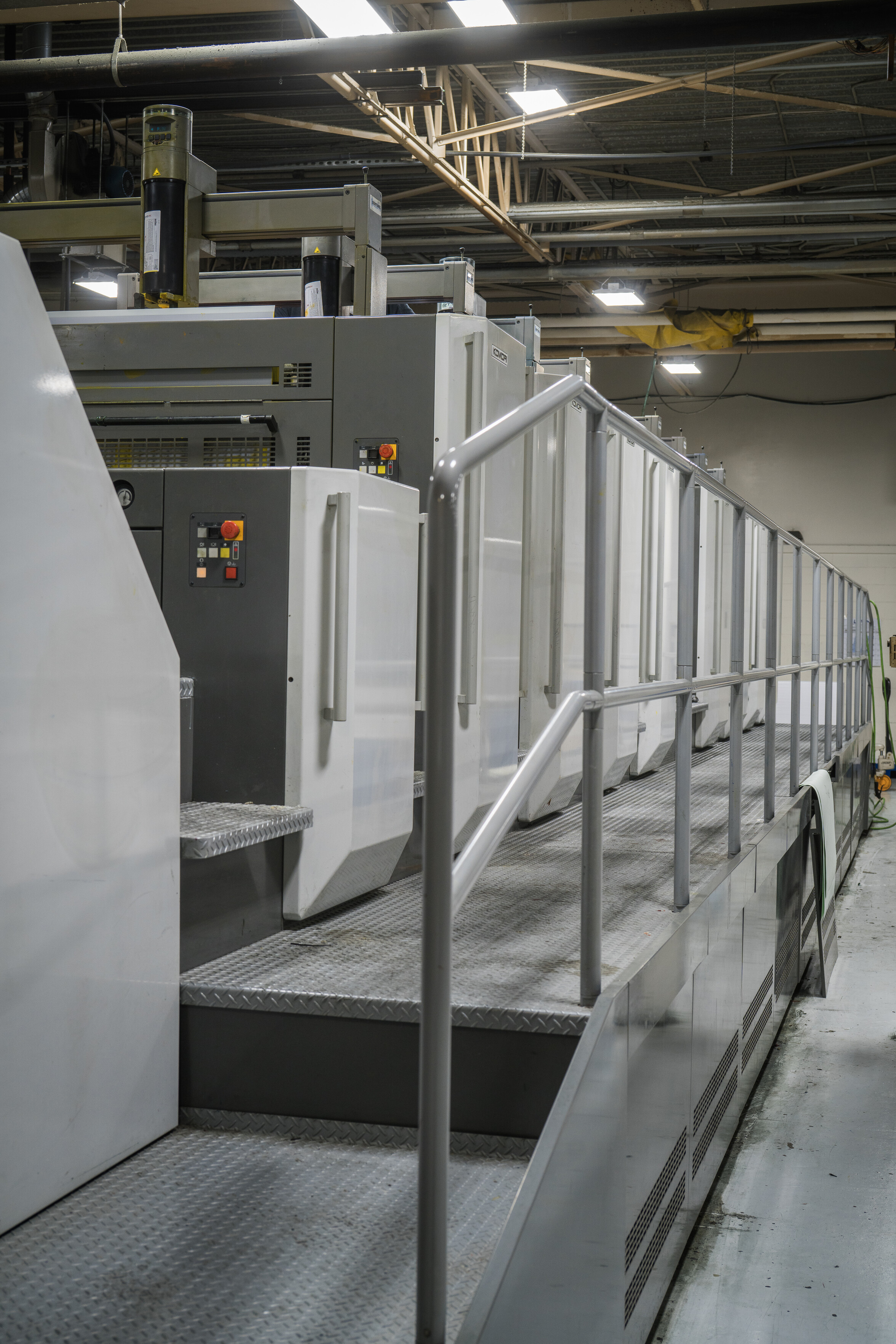
And this is the entire printing end to end. The paper flow is enclosed throughout, so you don’t see a lot outside of the intake and the final output.
The eight stations you can see are C+M+Y+K for both sides of each sheet – the paper gets rotated in the middle through some magic!
(Sorry for warping. This was very wobbly, so I applied heavy image stabilization in post.)
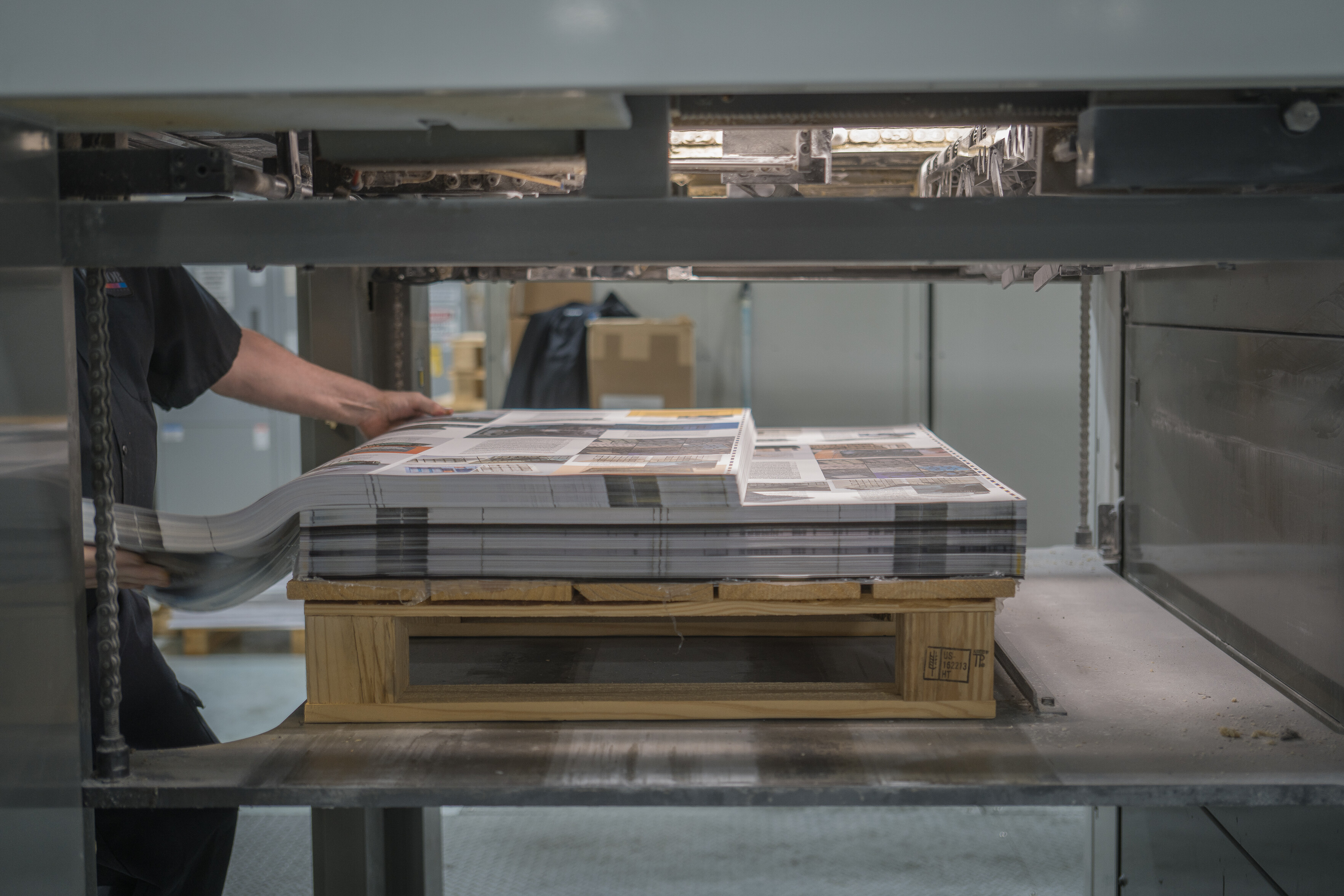
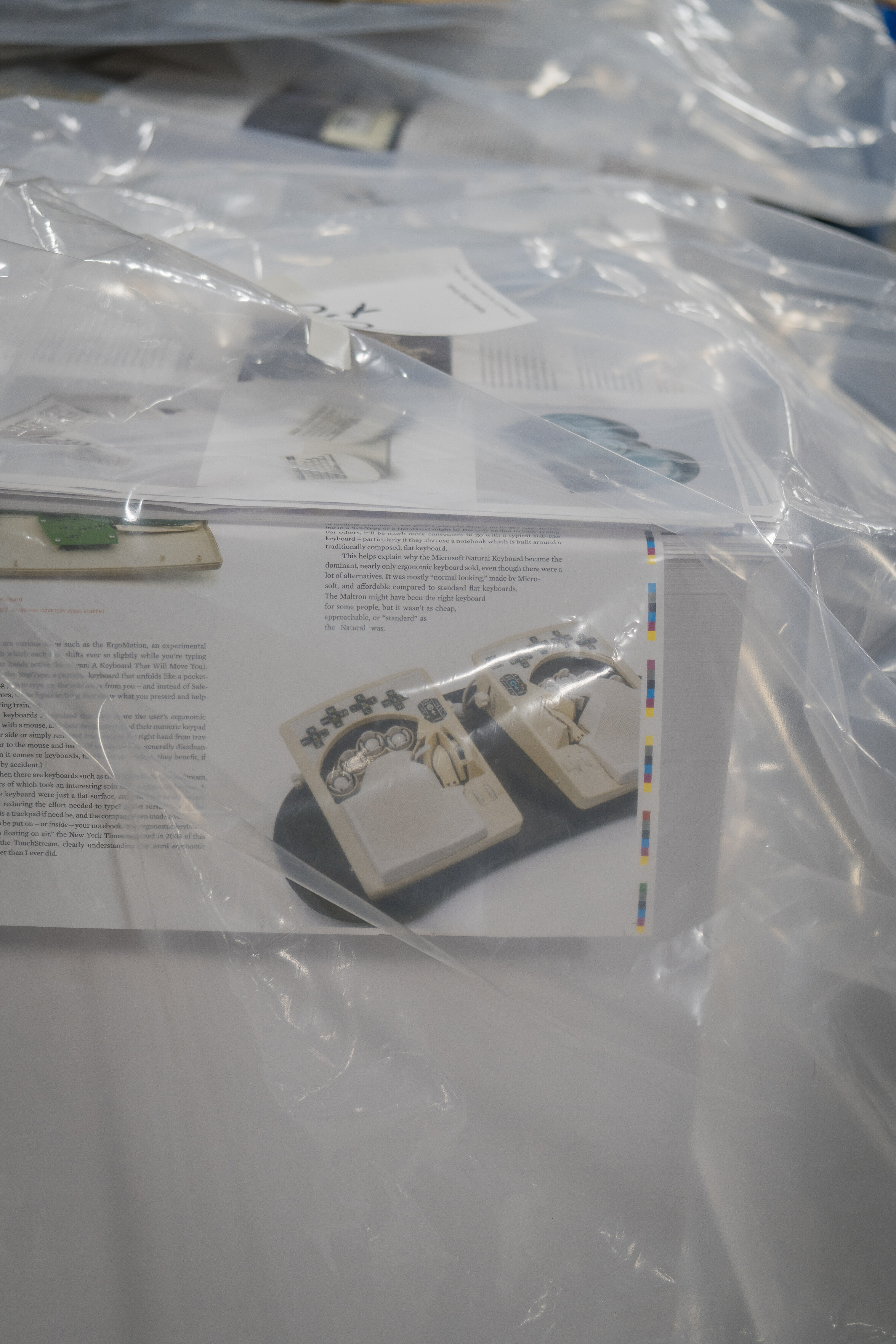
This is about 10% of the book being ready for folding. (I should see folding start later this week!)
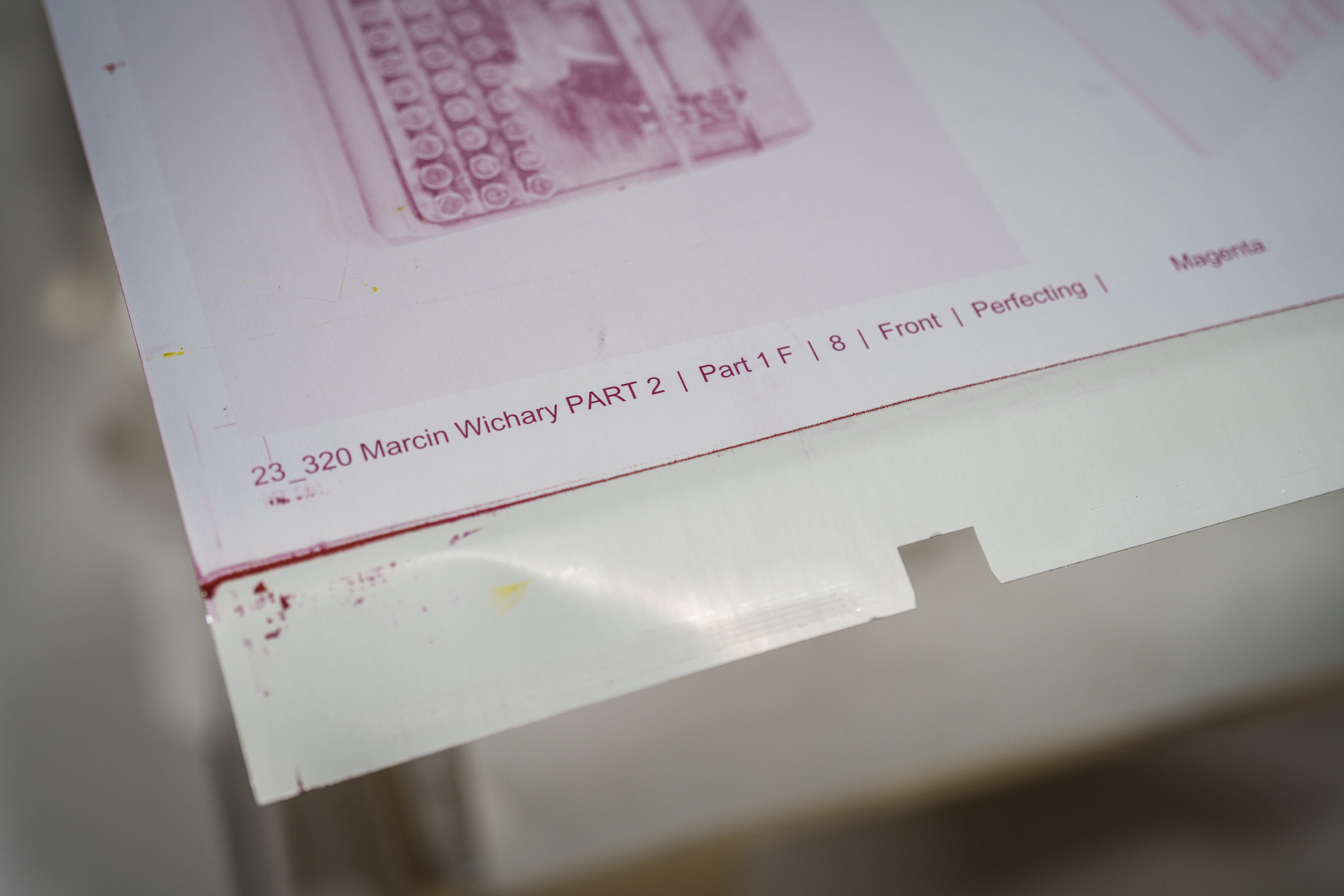
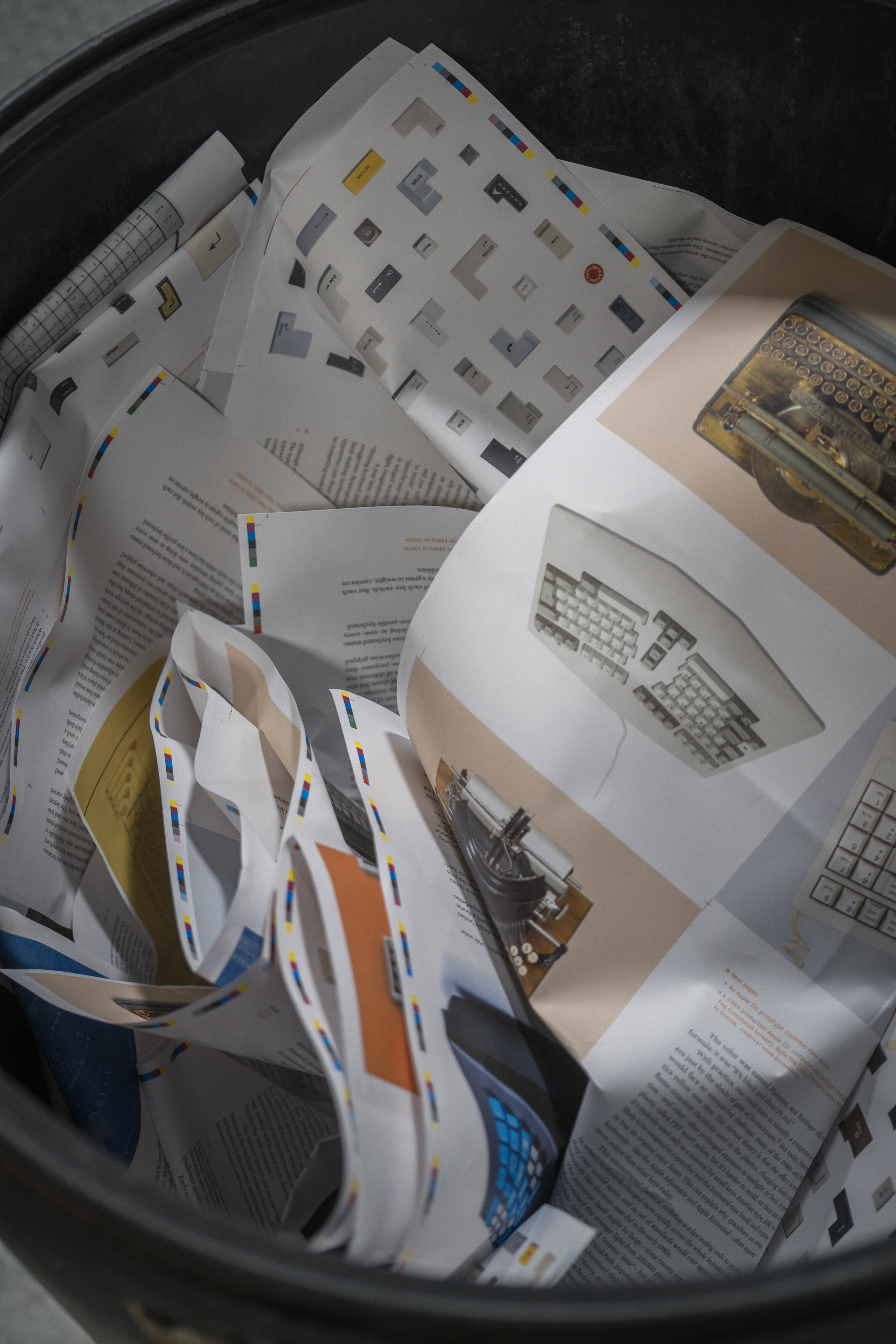
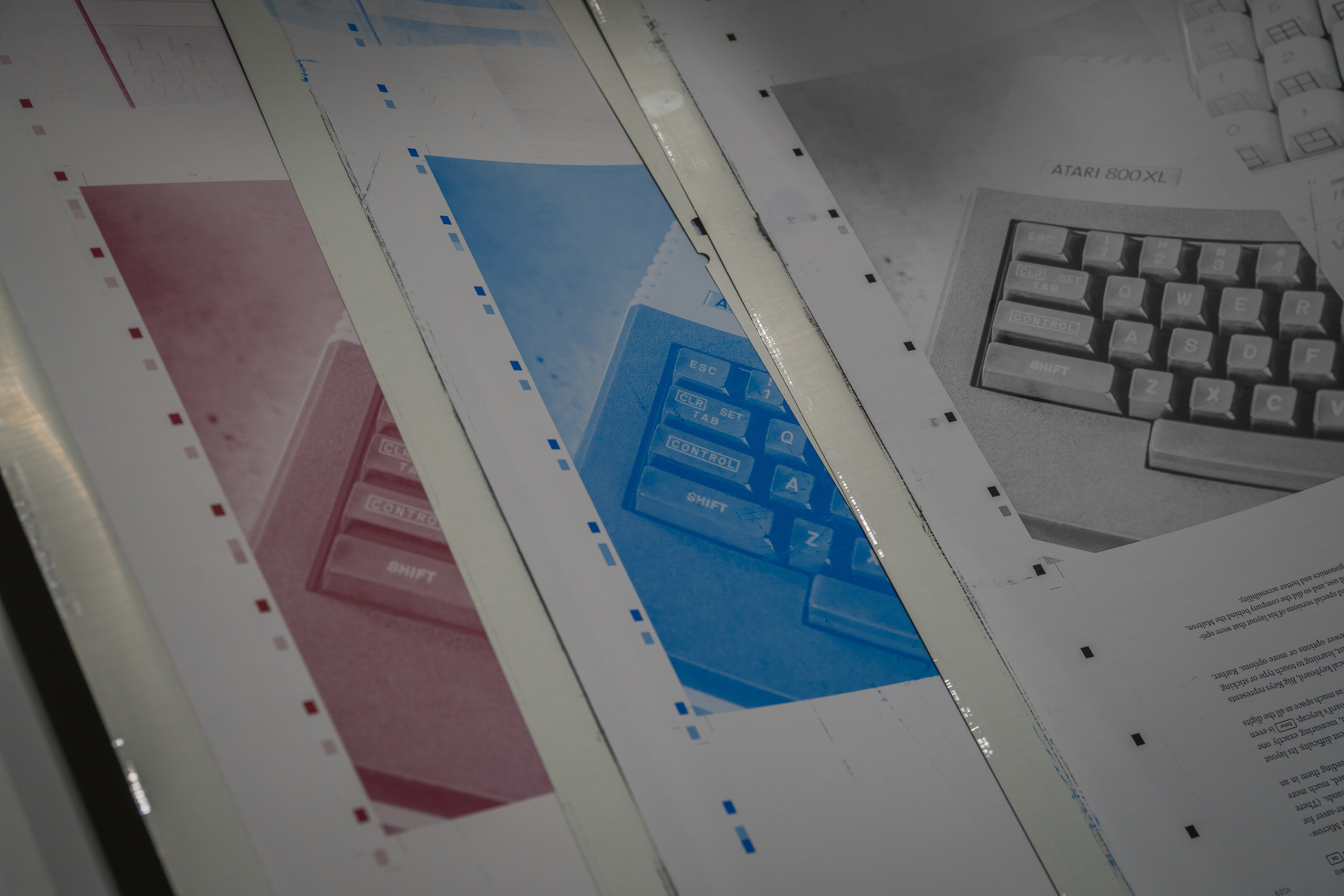
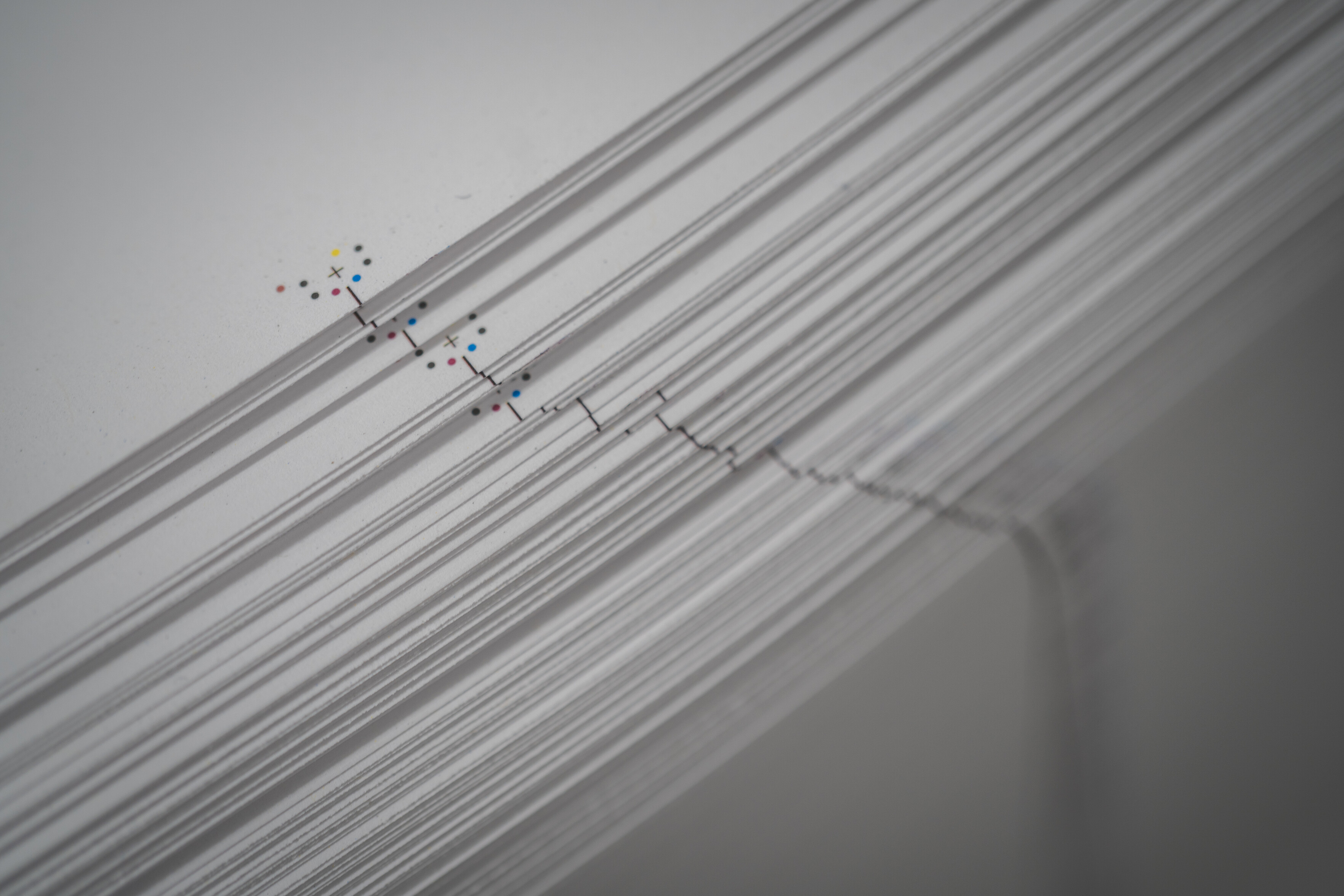
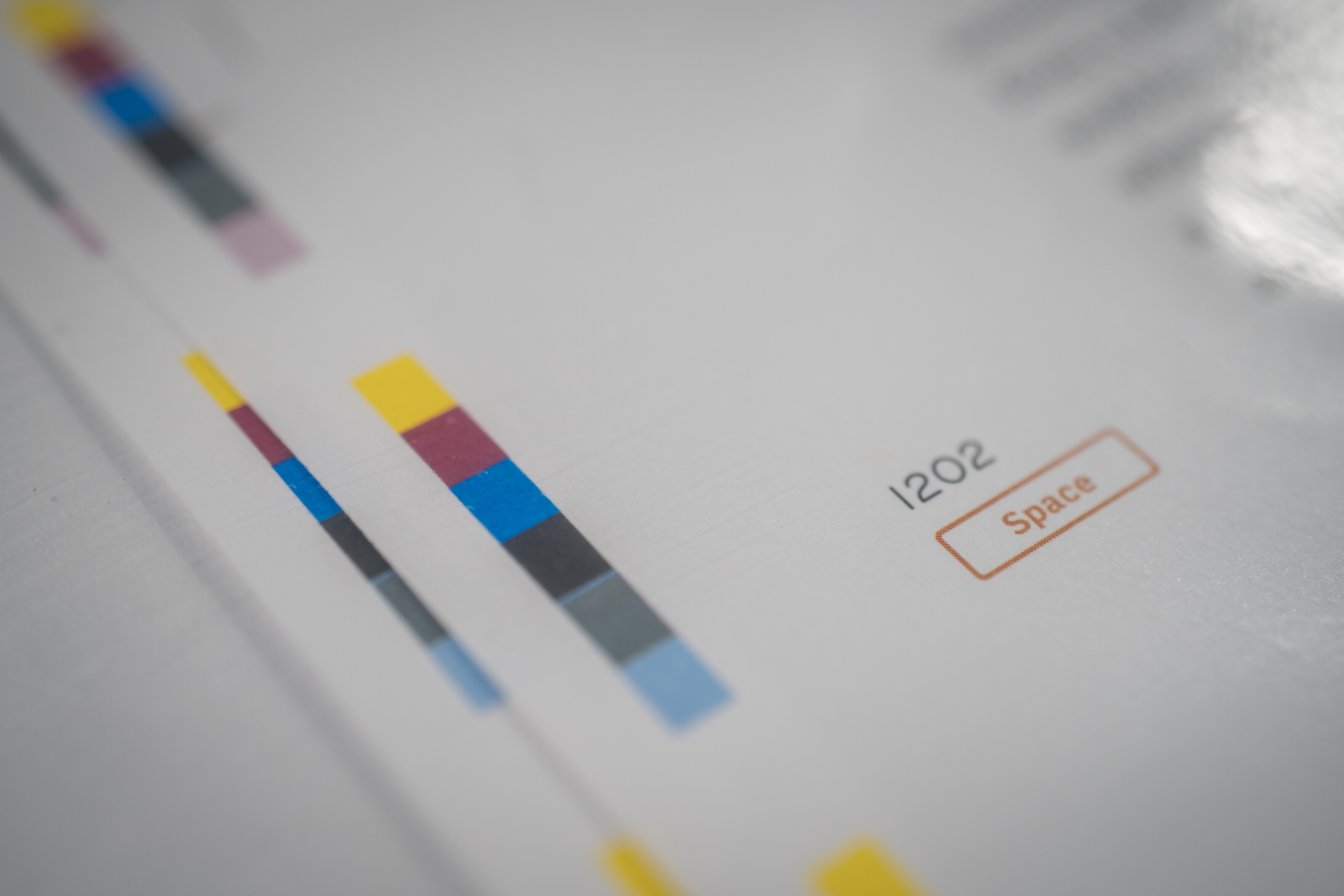
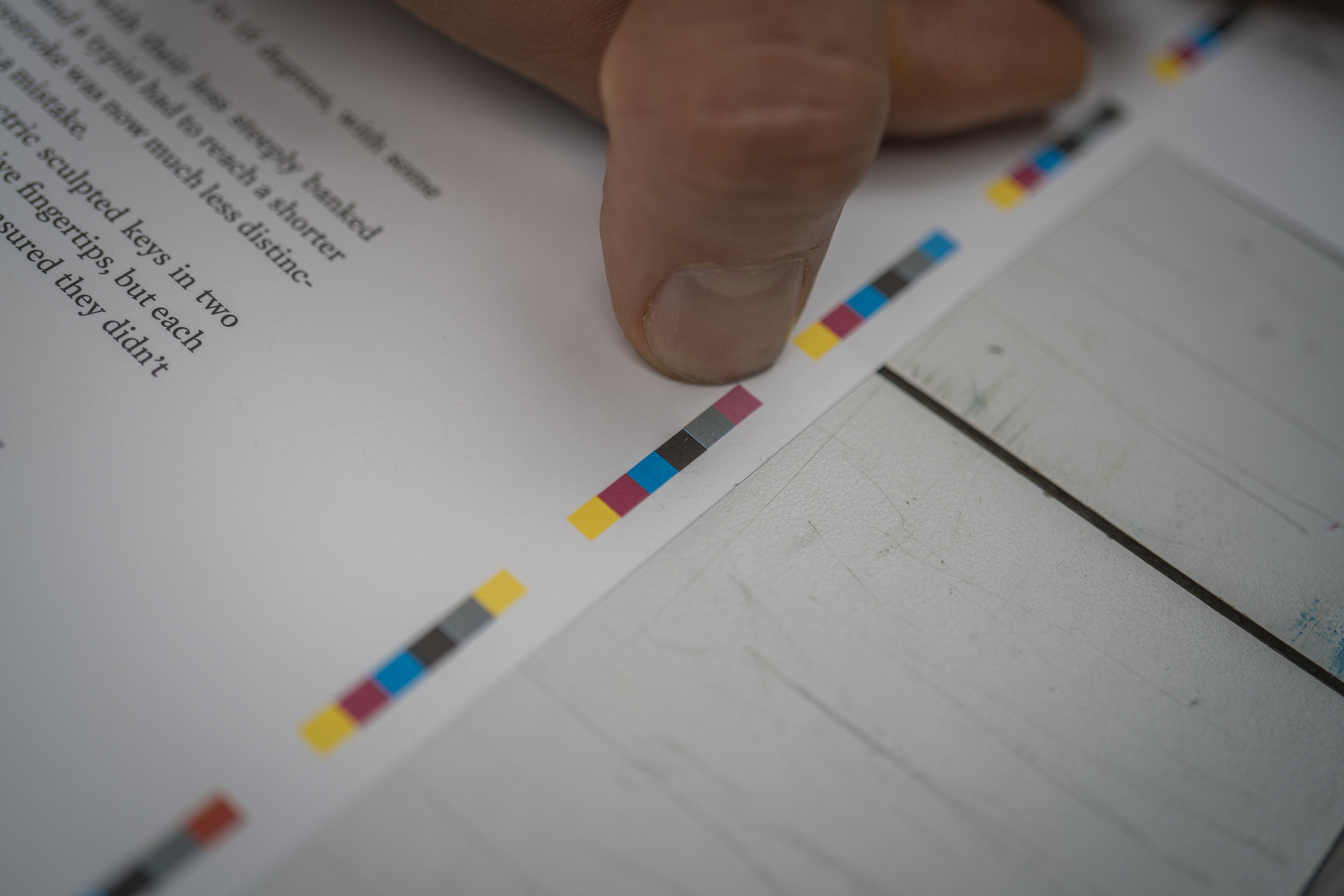
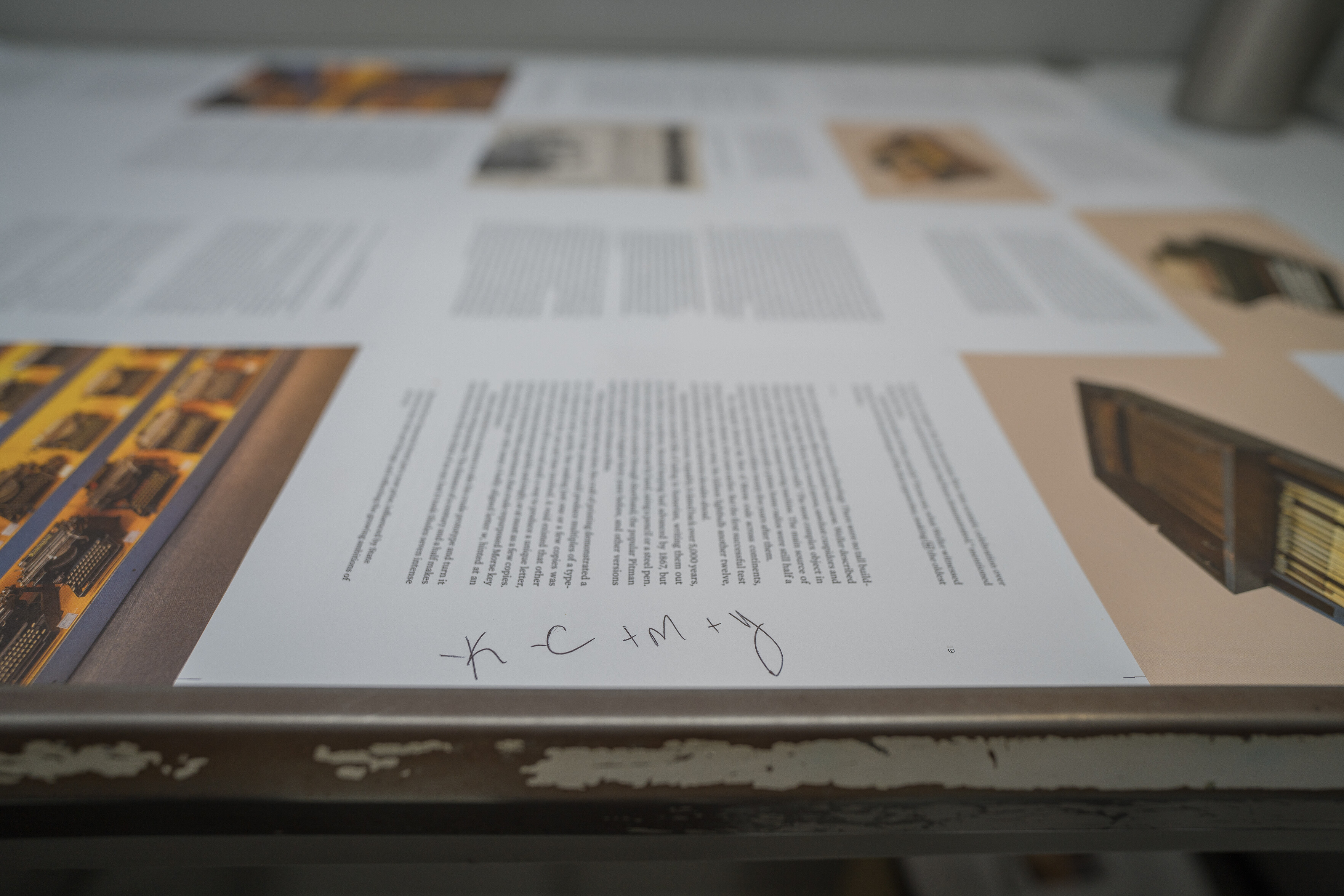
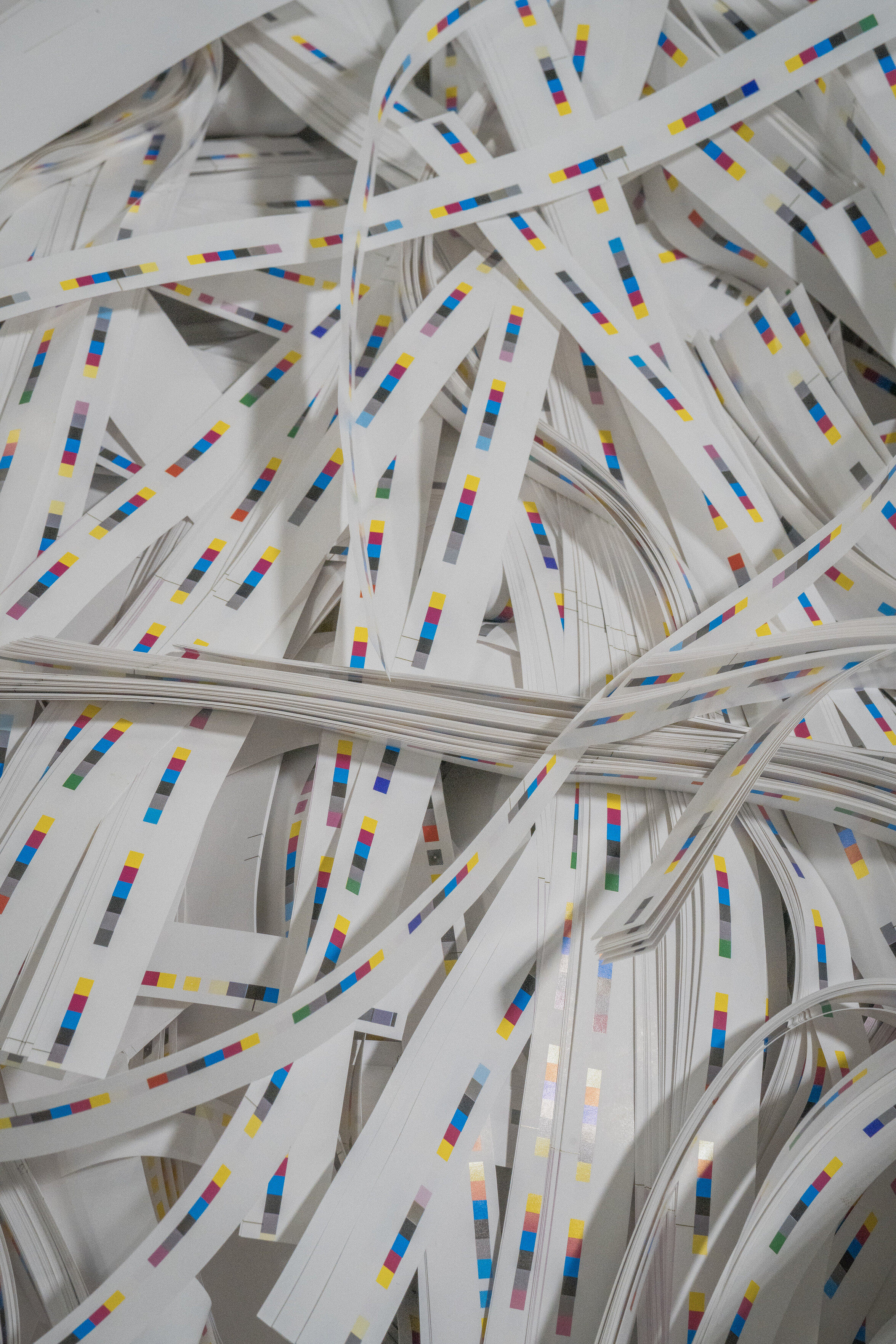
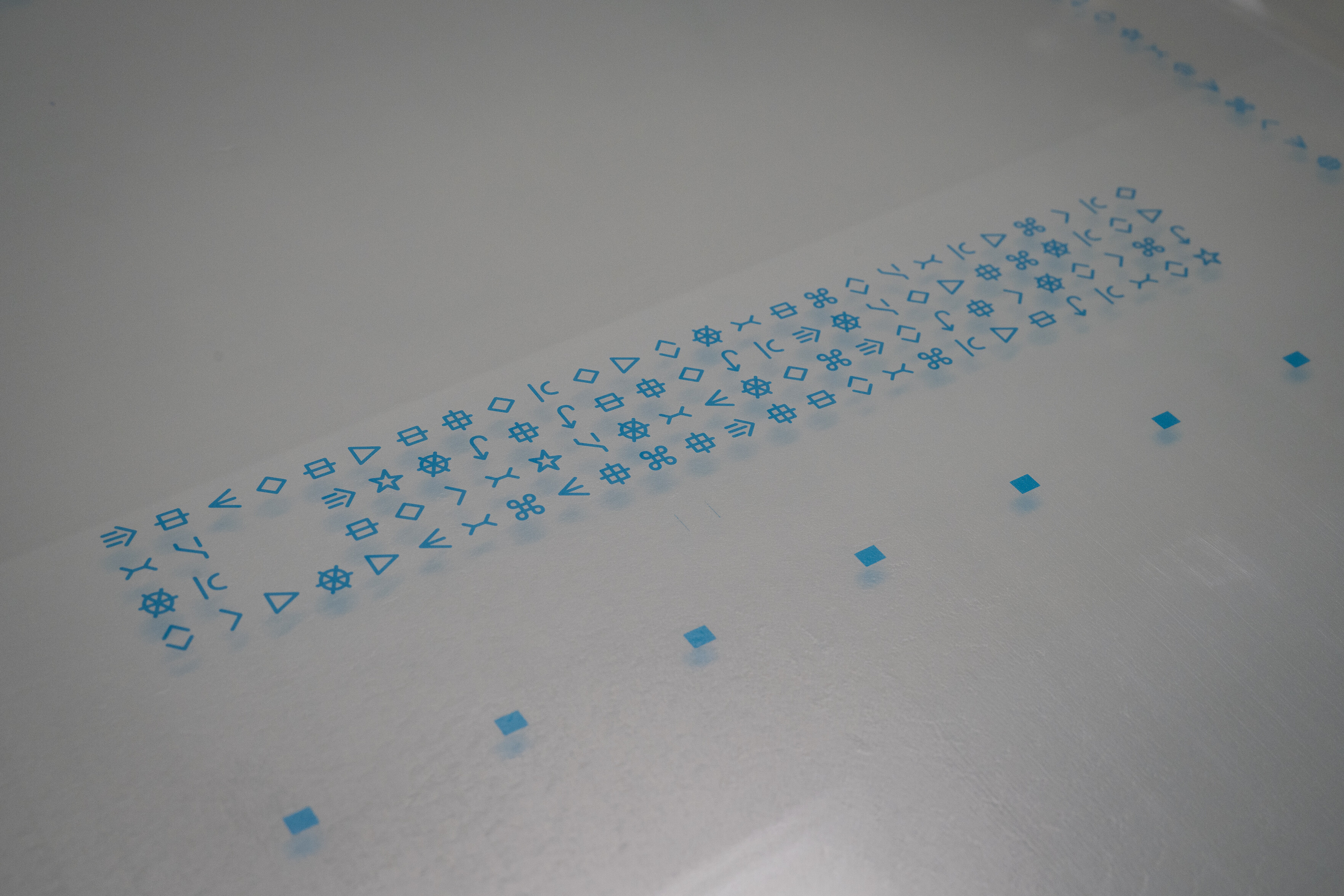
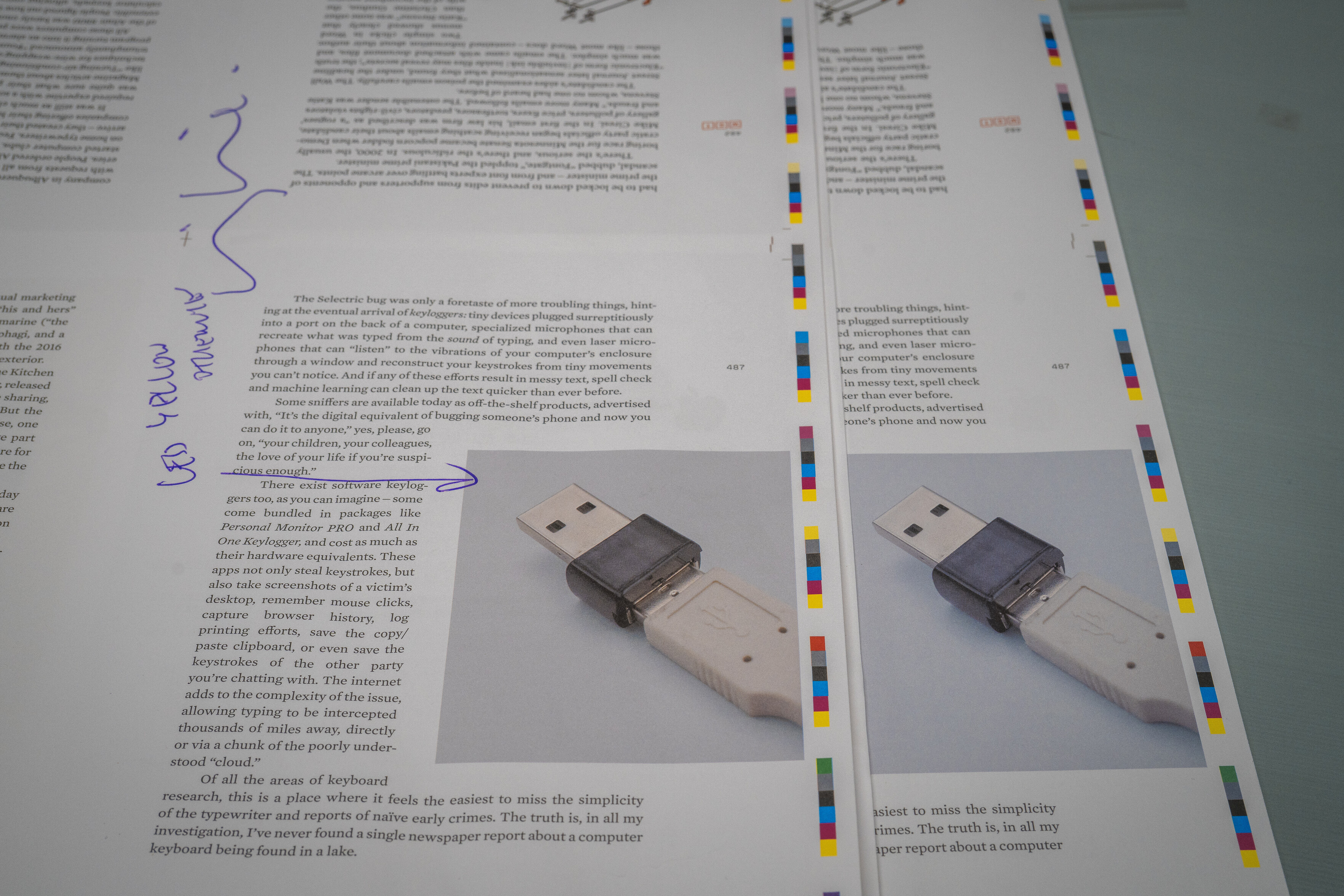
Always loved all kinds of print marks.
Some are printed all up to the edge so you can visually confirm alignment (you can also see on the photos in the previous post).
Hard and slightly disappointing ending of the day today, close to 9pm. Discovered a bunch of tiny mistakes, but big enough to slow us down. Most of them my fault. ☹️
I’m starting to learn how the press pays attention to colors and shades and how very different this is to everything I learned about colors and shades screens.
Please keep fingers crossed for tomorrow.
Seems to be going better today, although honestly I don’t want to jinx it!
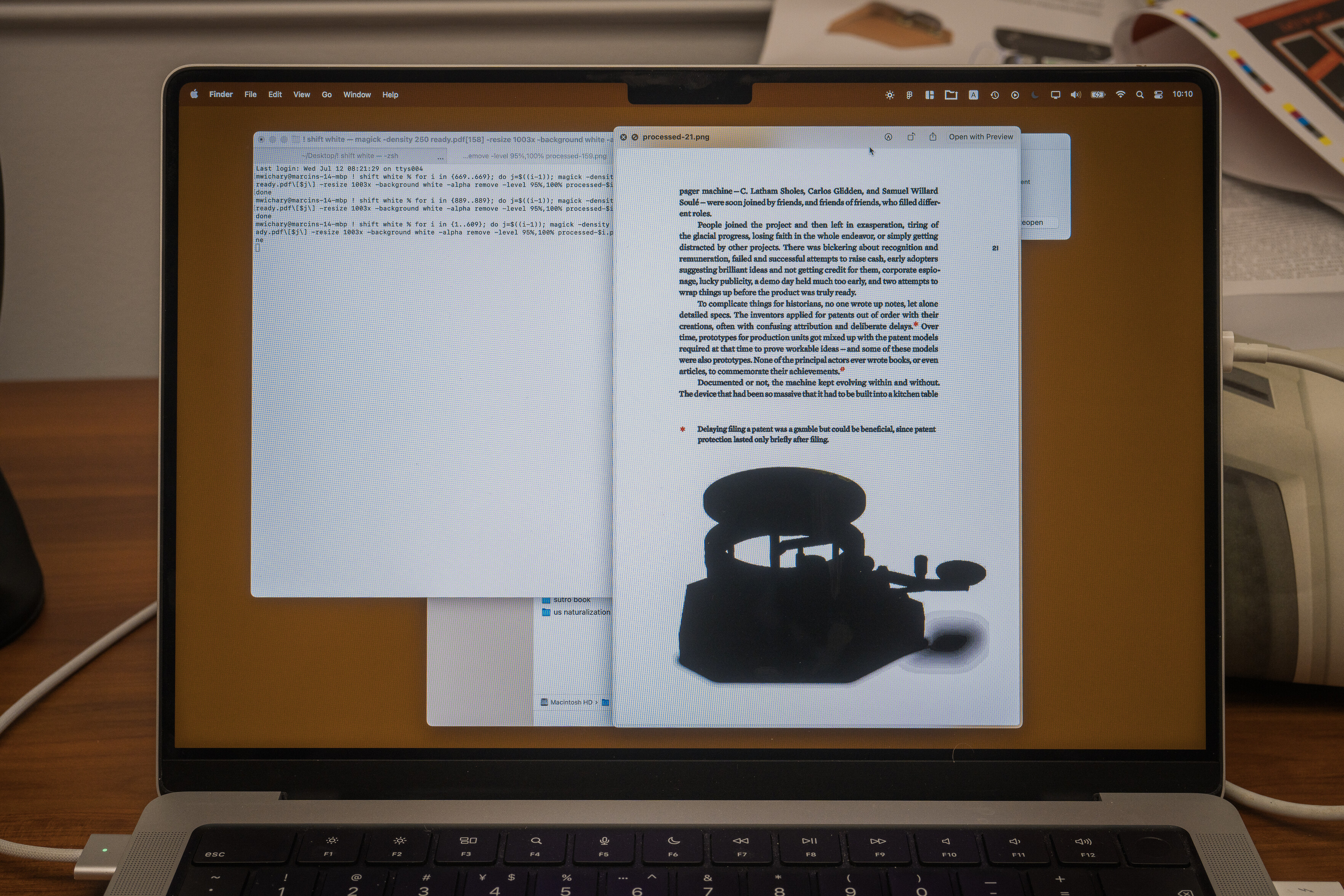
(Also, wrote some shell scripts to find some mistakes in photos.)
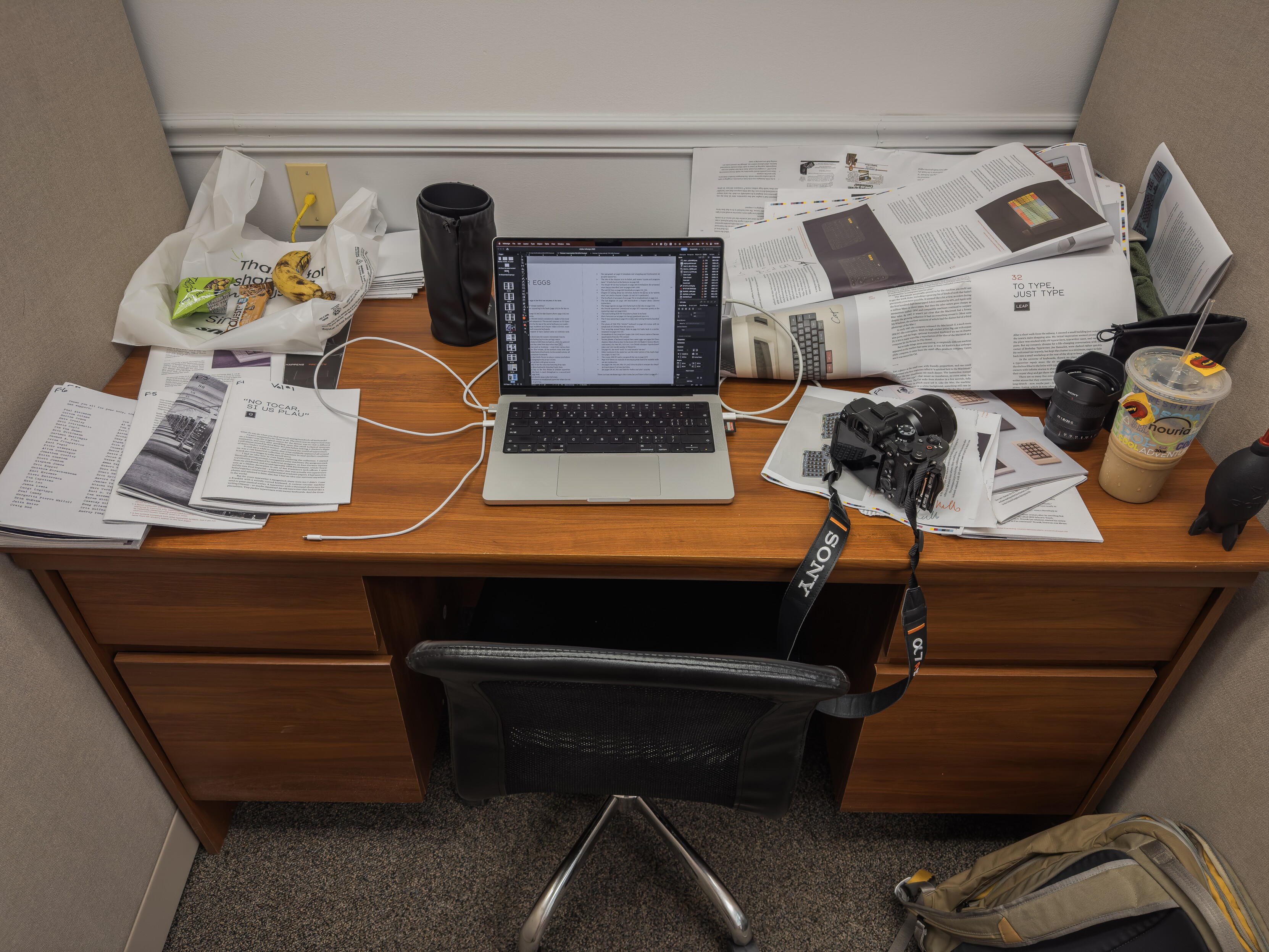
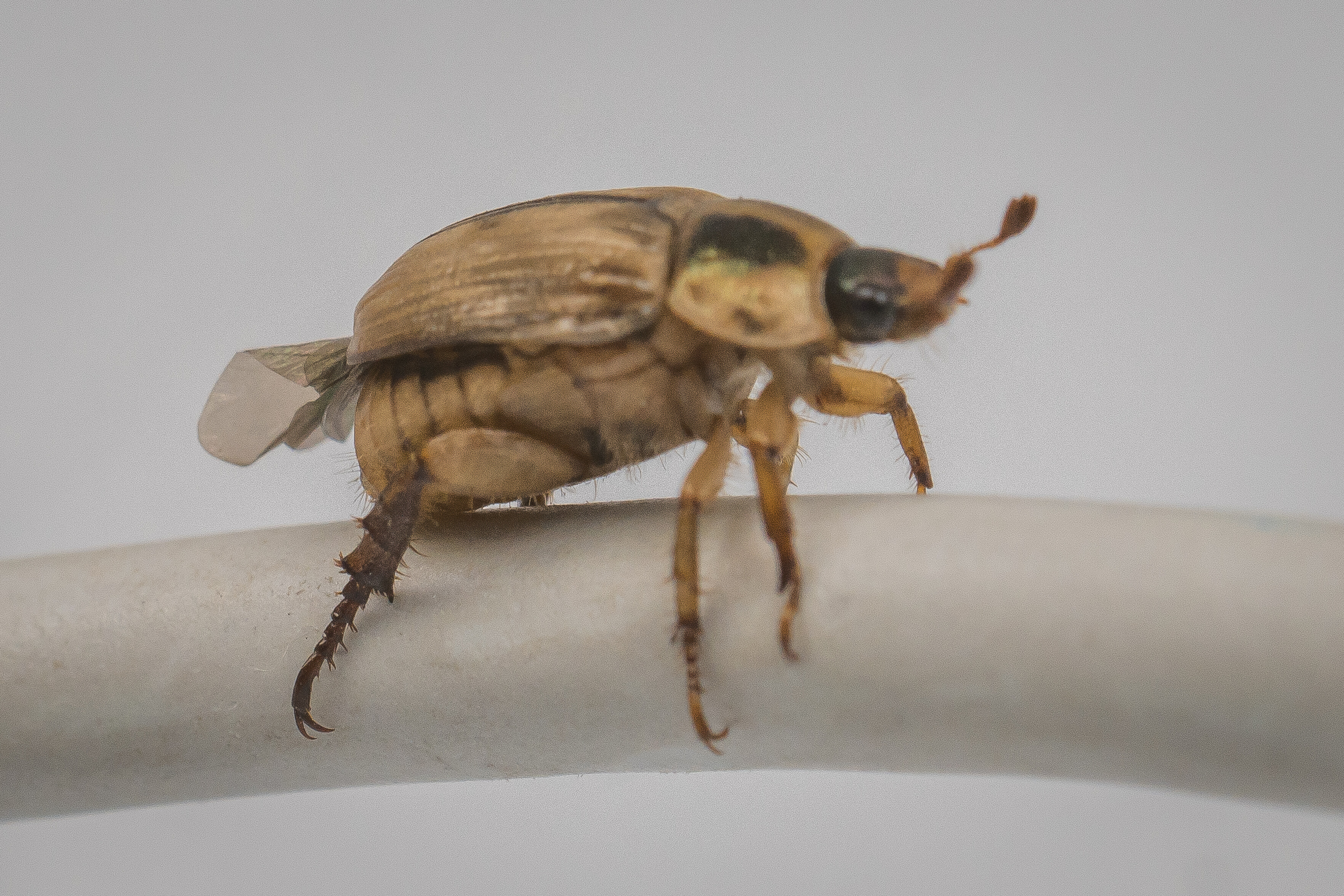
My very non glamorous visitor’s cubicle (where I am most of the time when I’m not in the press room), plus a visit from a “potato bug.”
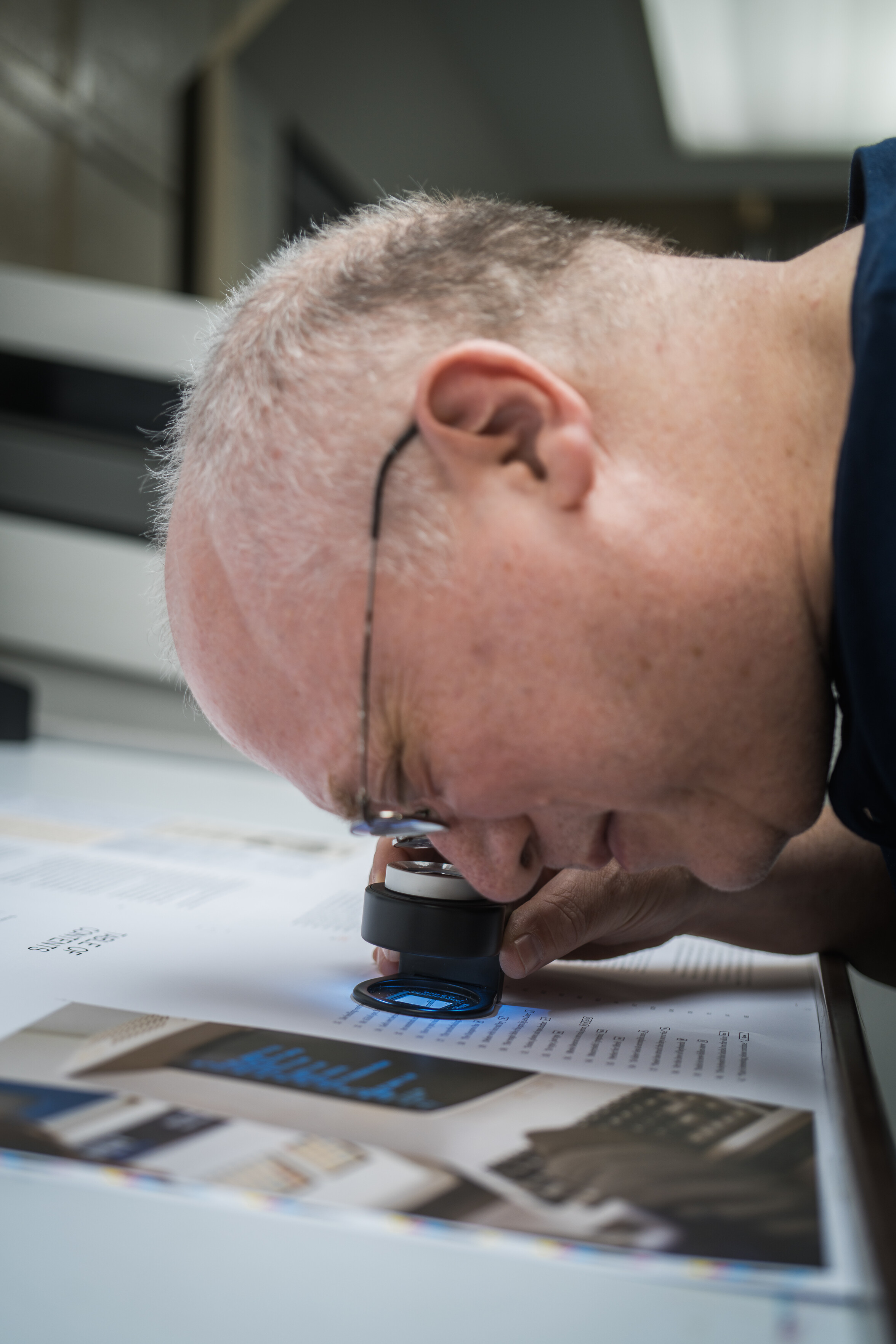
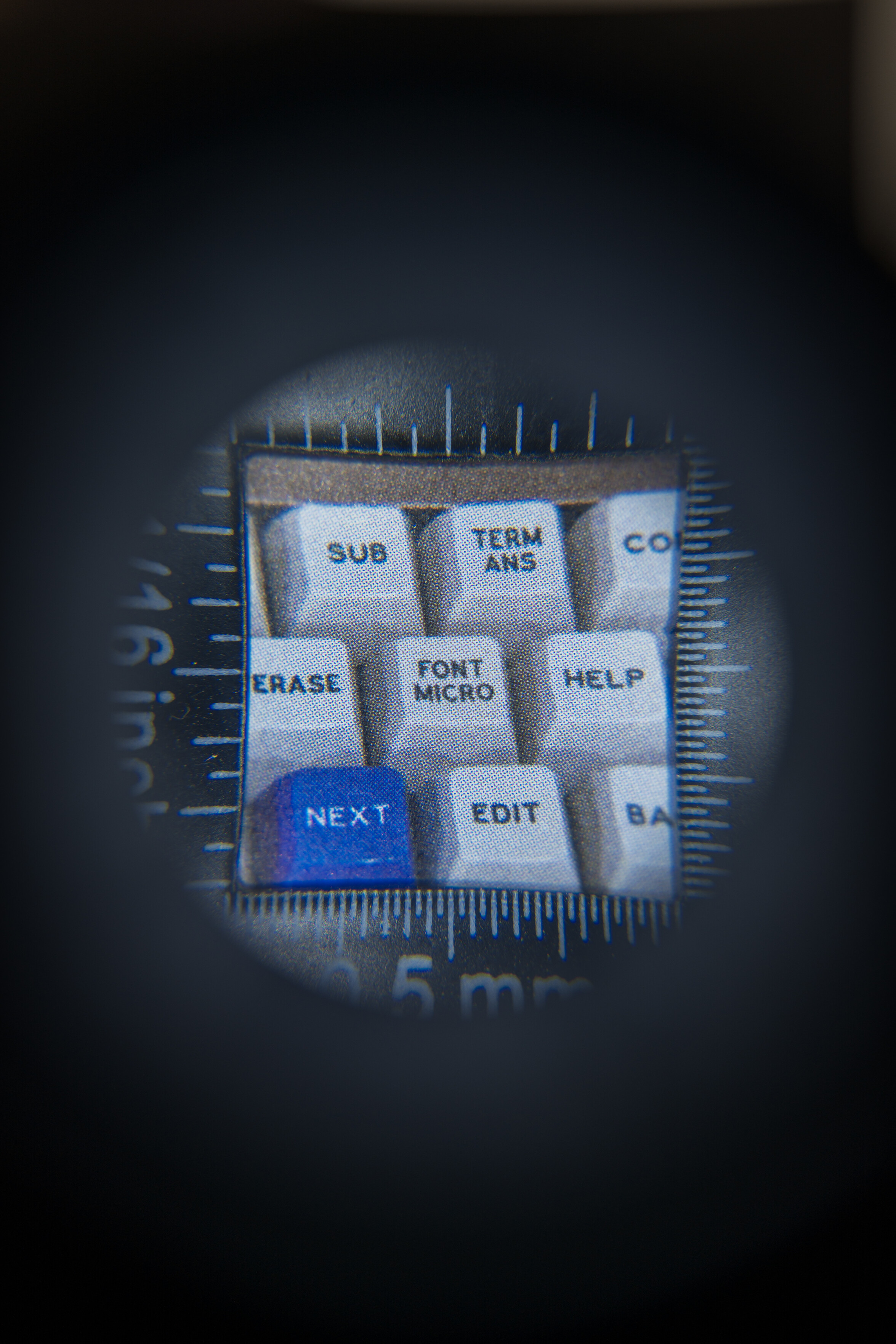
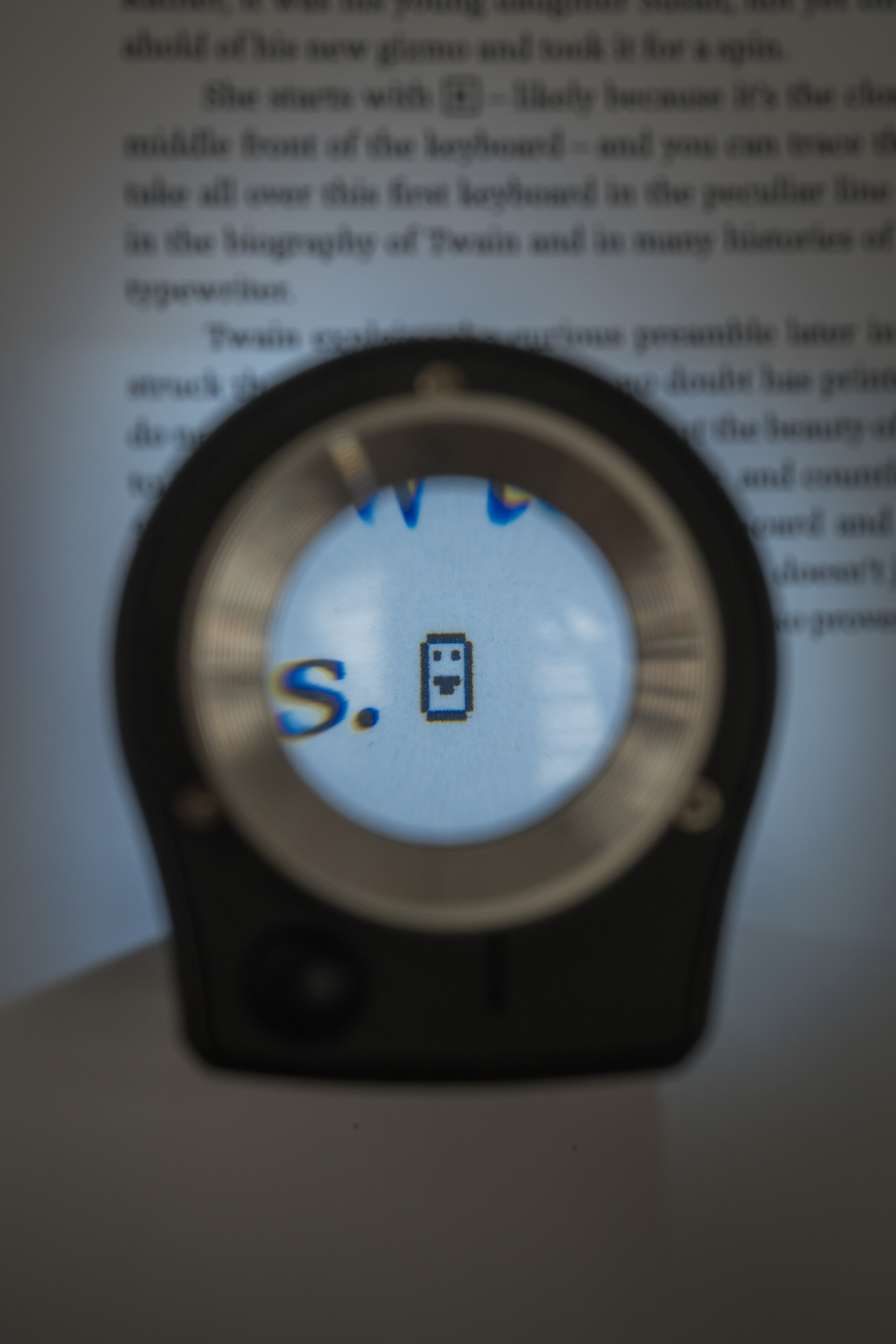
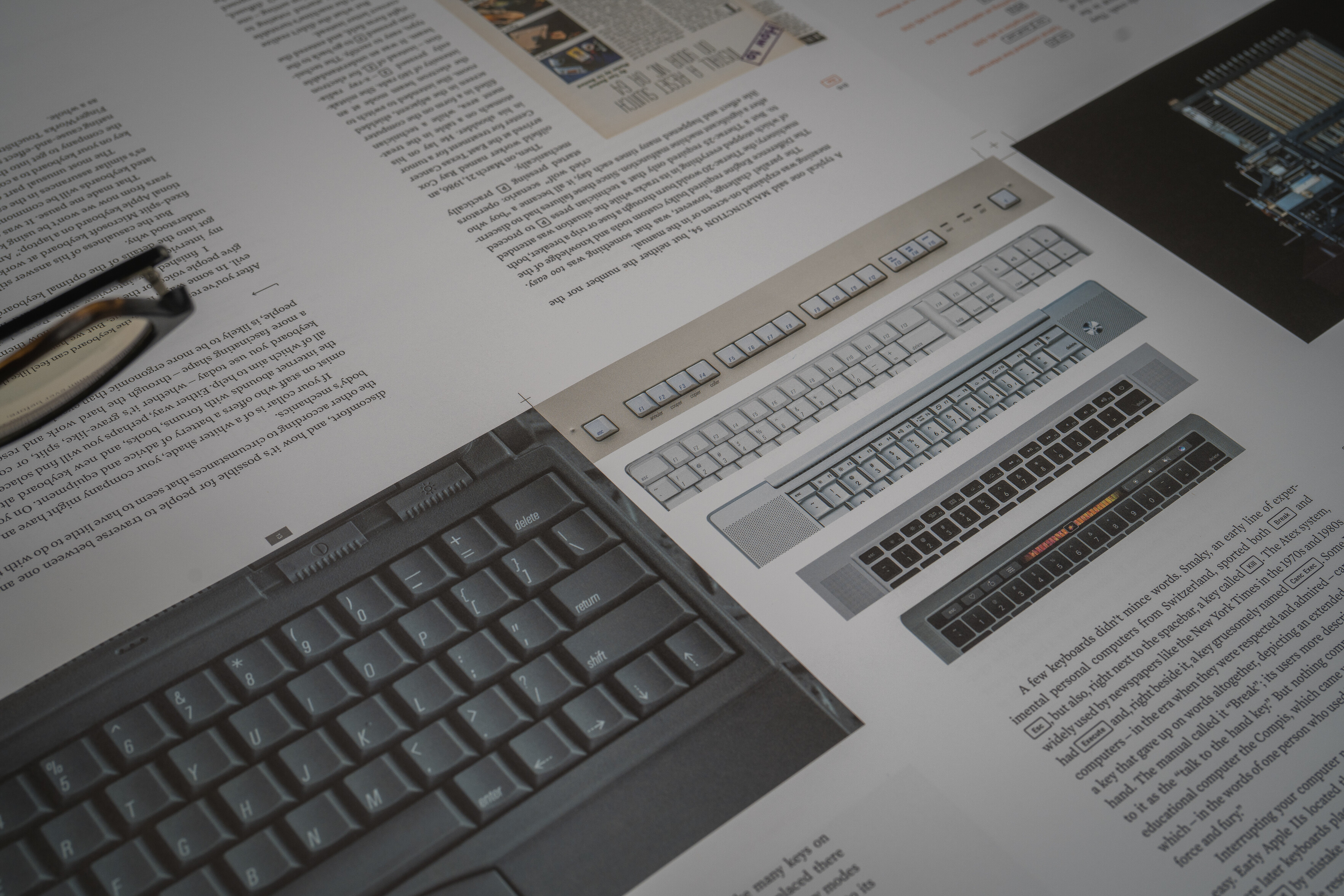
I’m really happy with the sharpness of the print. For the vast majority of the hundreds keyboards in the book, you will be able to read all the legends – and I think a lot of people will do that!
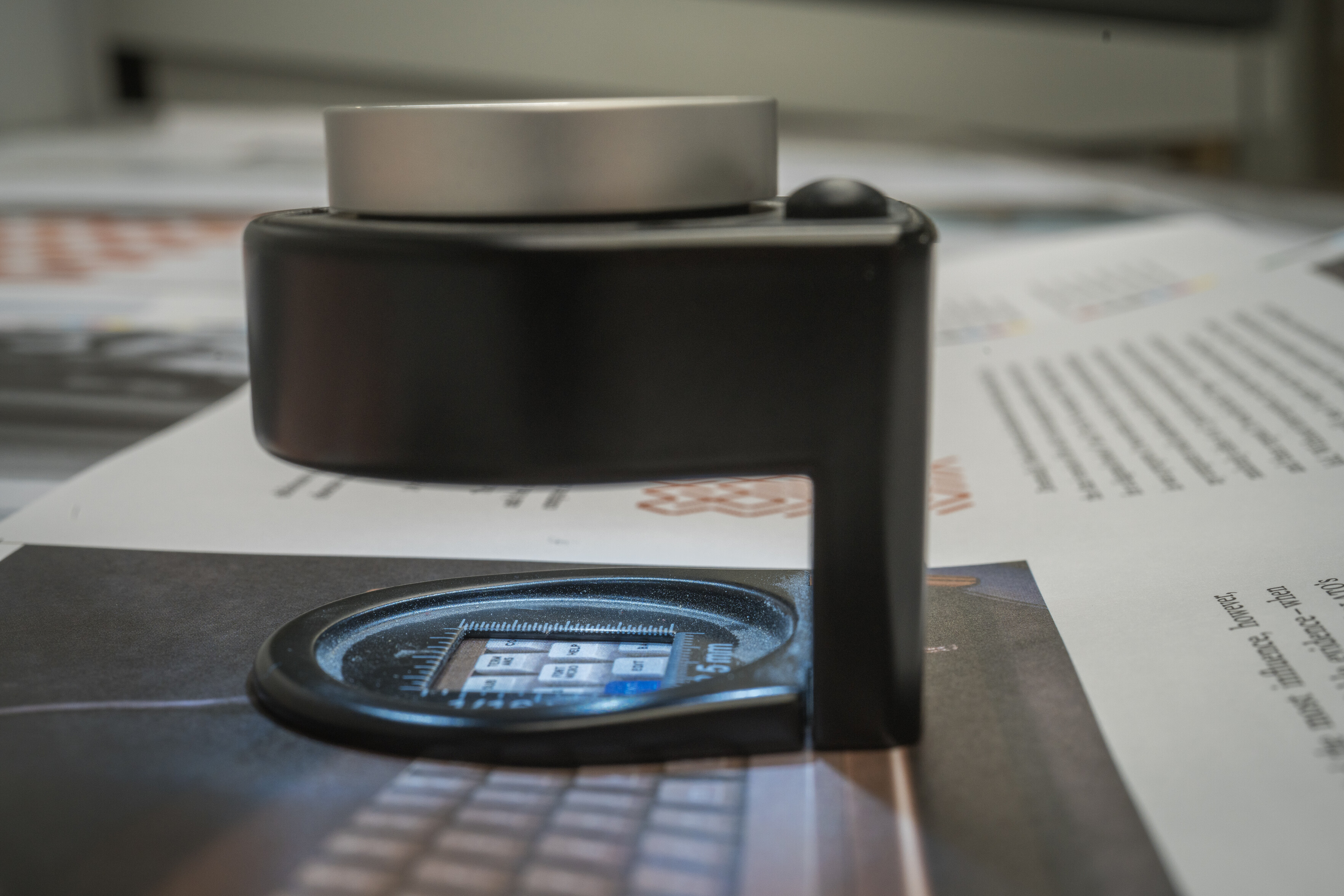
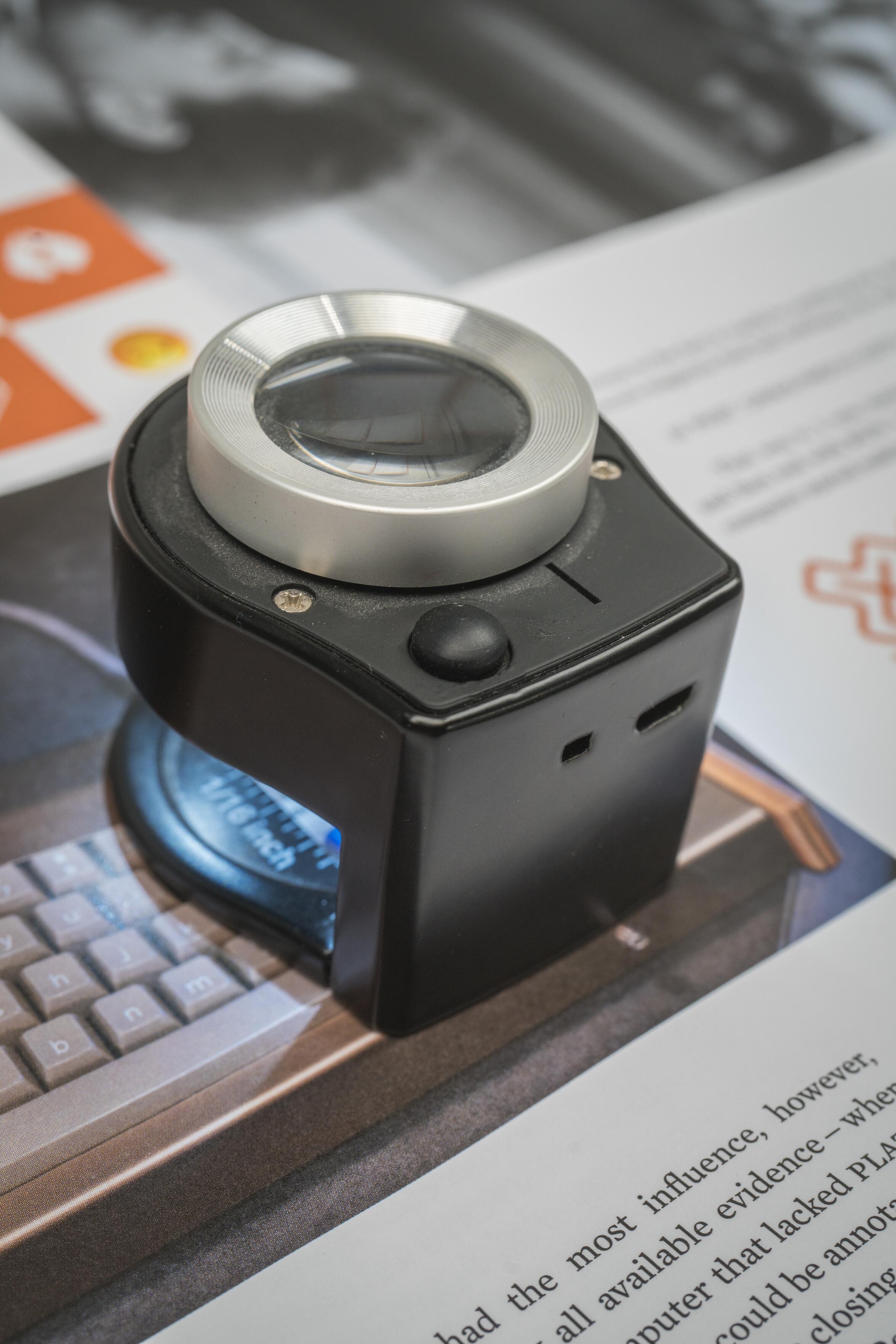
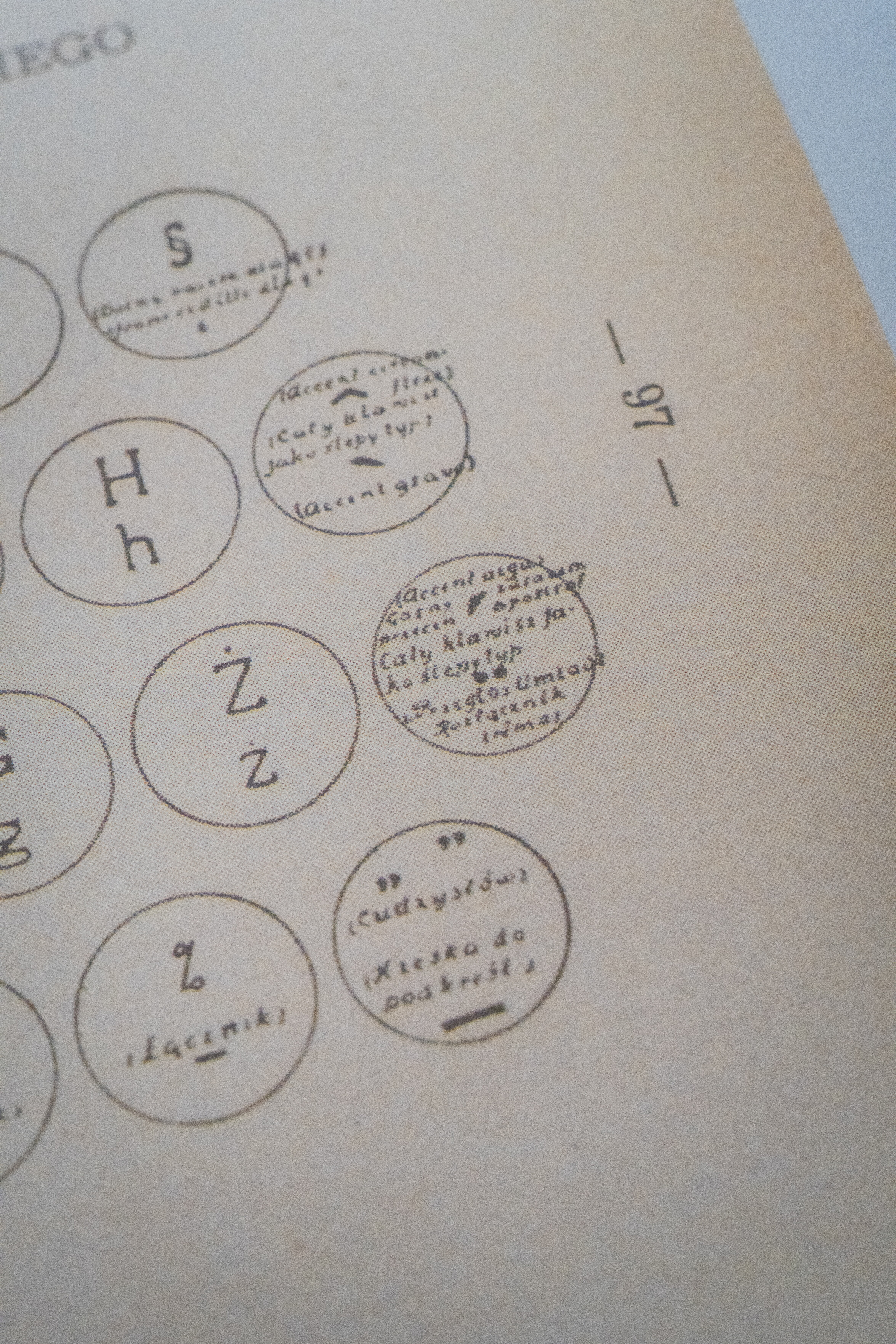
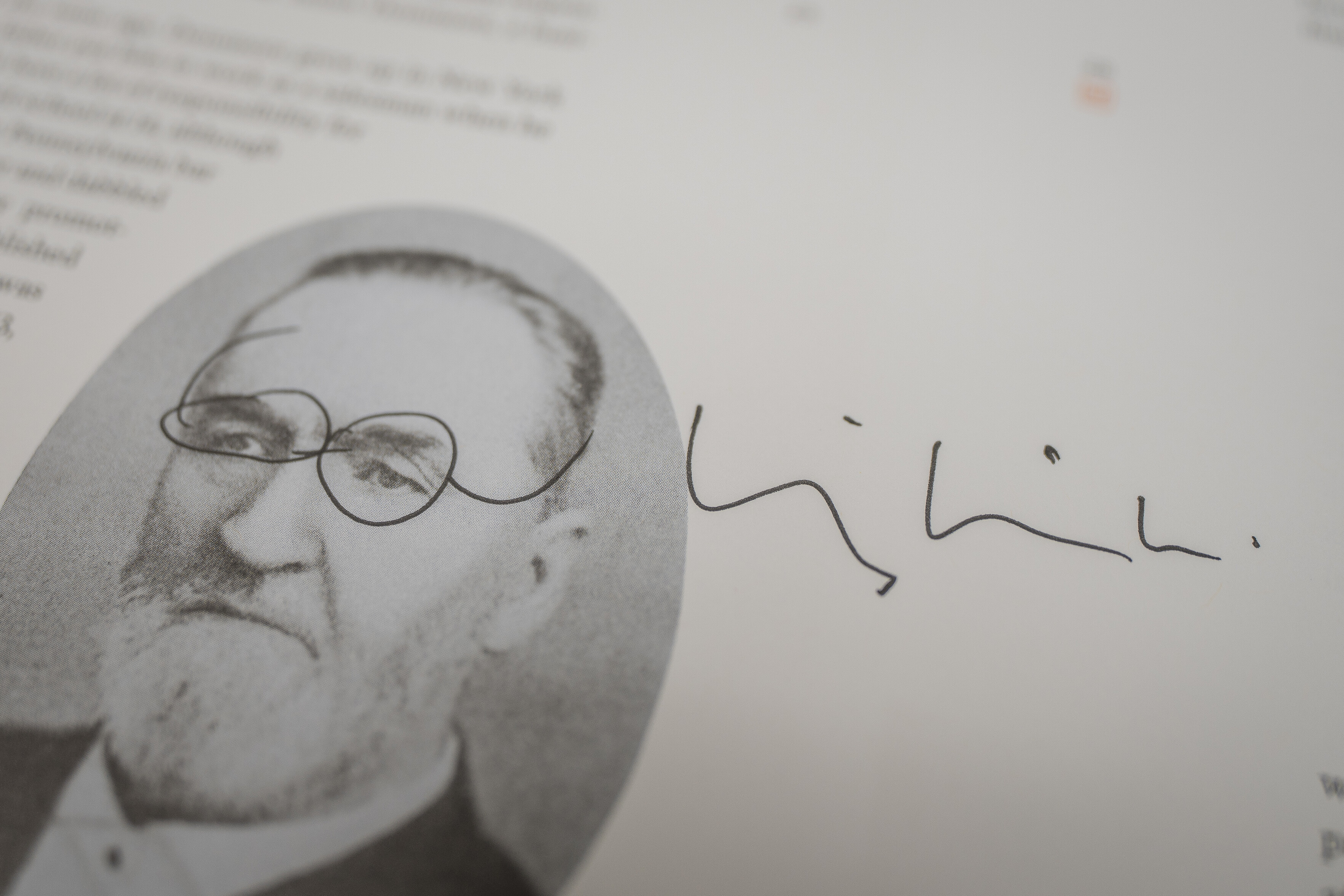
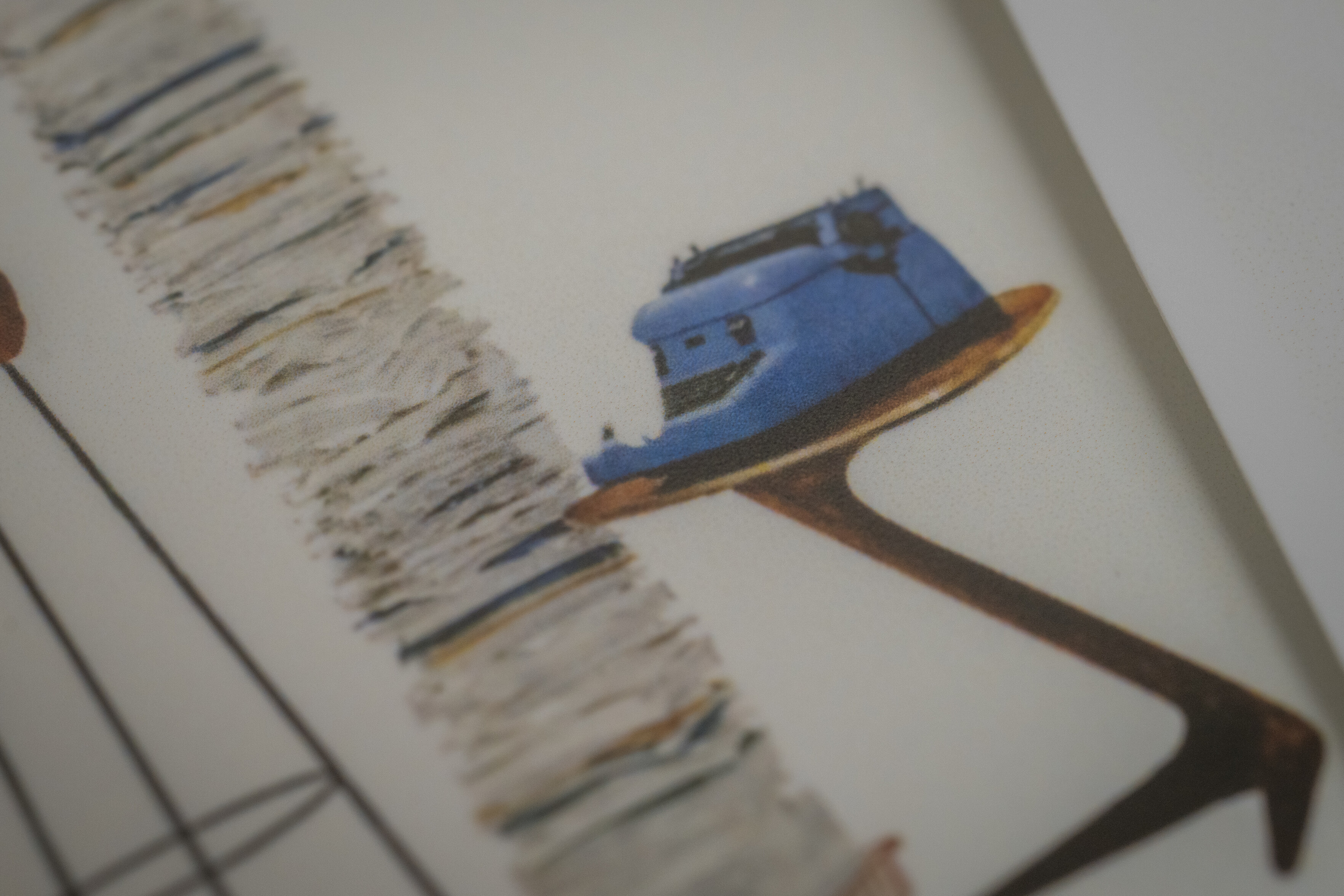
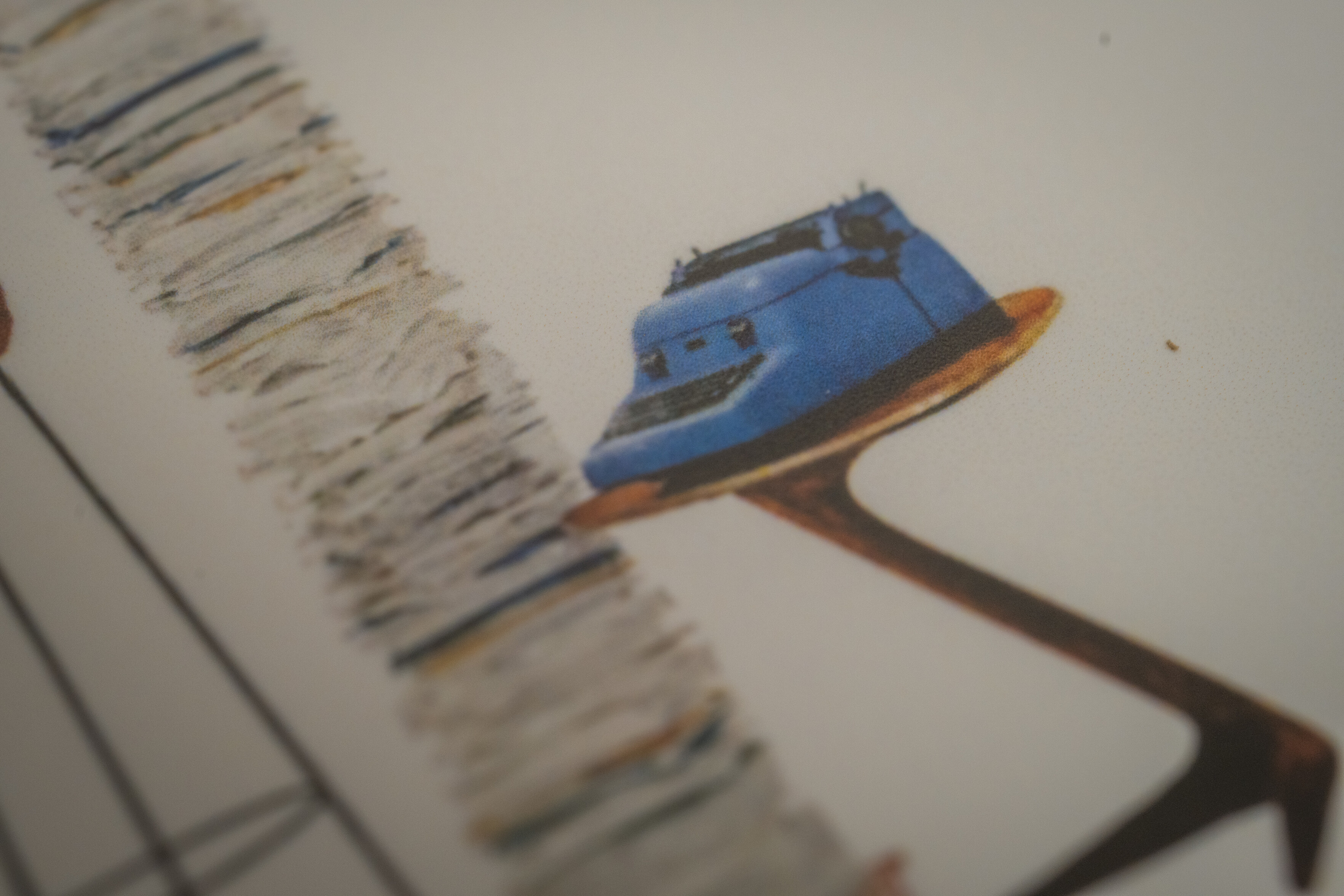
The last photo is an example of the sharpness – I measured it and the text here is not even font size 2 points (equivalent), but you can read it… if you know Polish!
(And you can learn something from it, too. I learned that in Polish, at least a century ago, “dead keys” were called “blind keys.”)
Volume 2 is almost being done printing on the main press, but as of today, volume 3 started printing on the other press!
(The other press smells worse.)
Also, folding started today! No videos yet because I didn’t want to stress out the operator, but here are some photos.
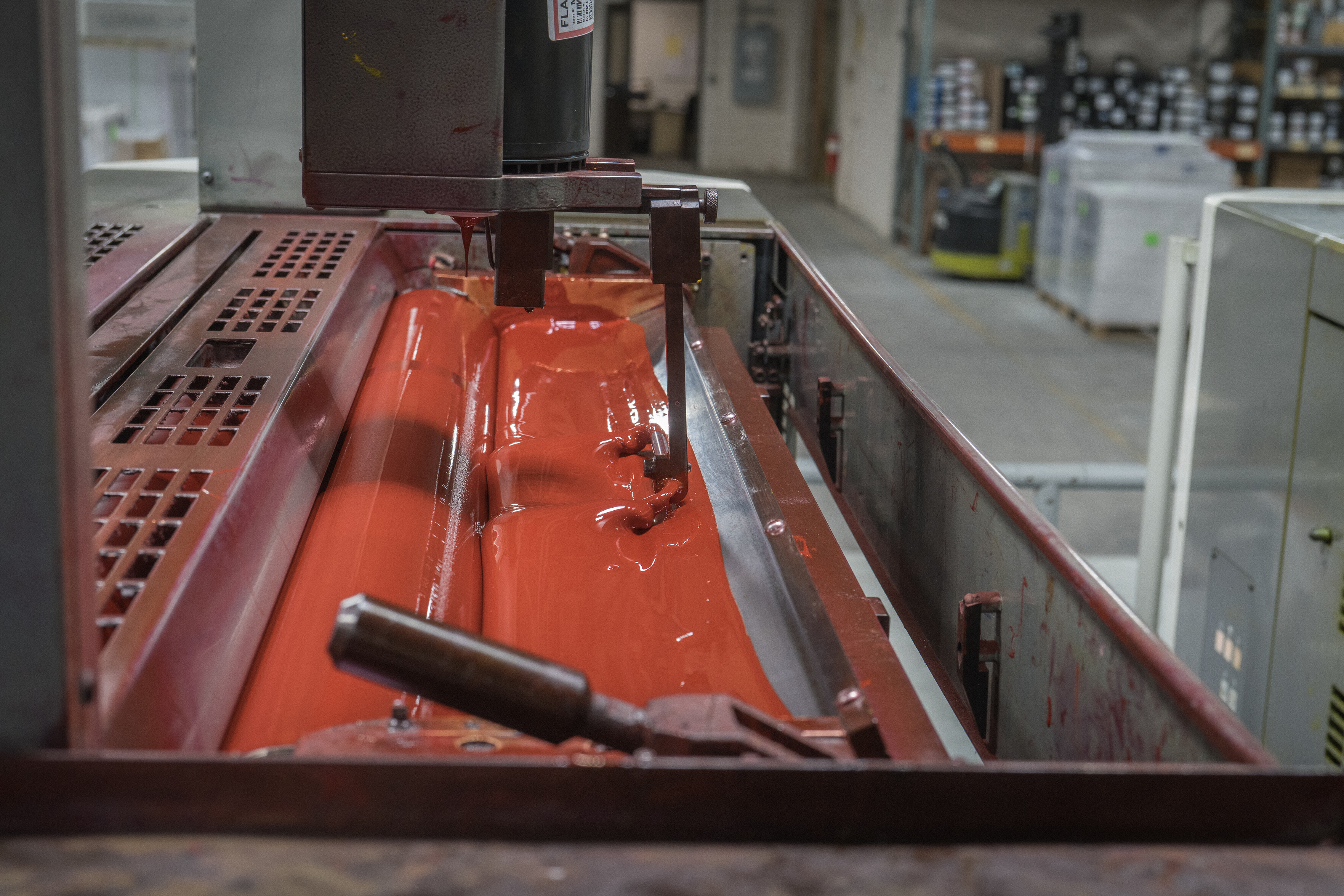
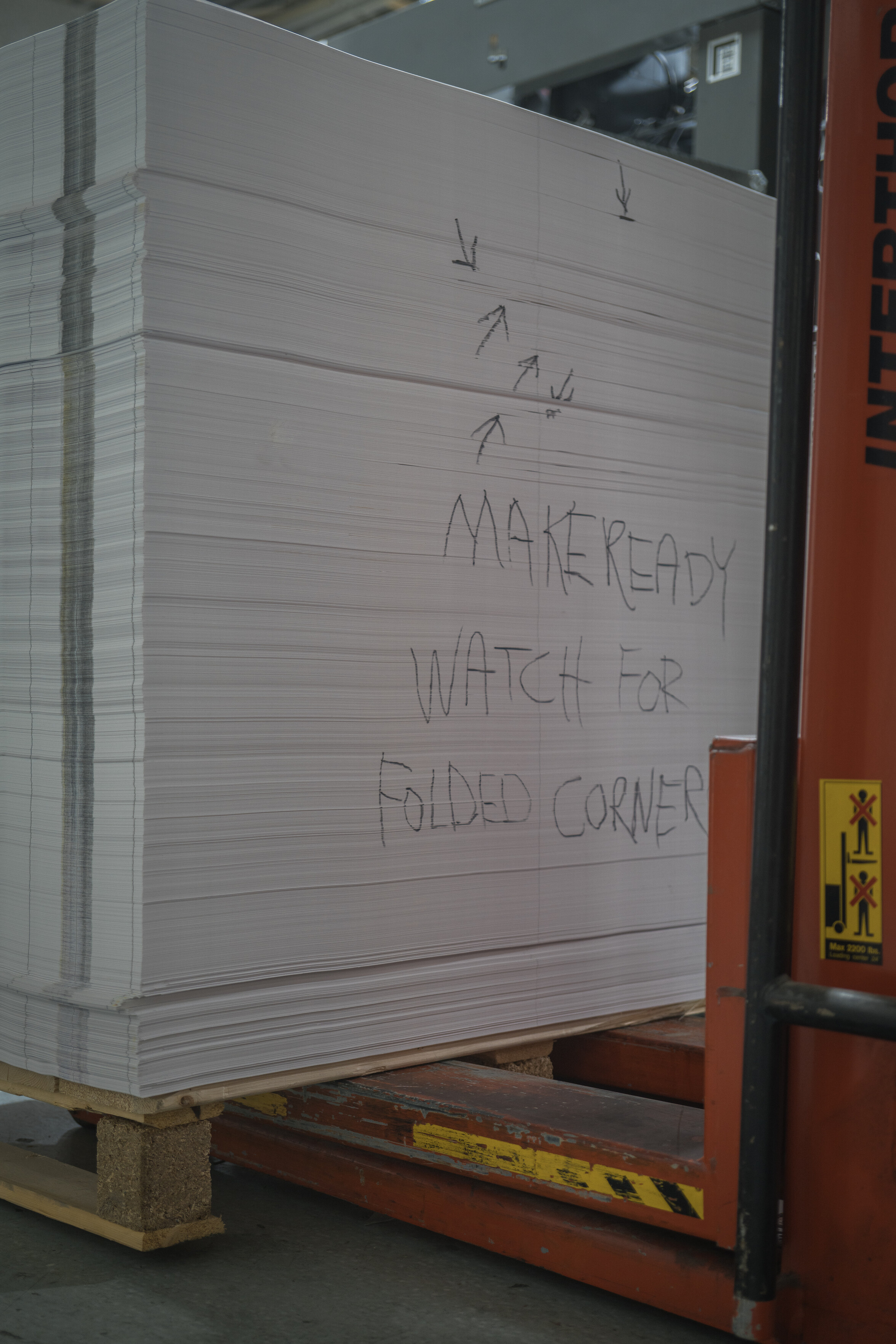
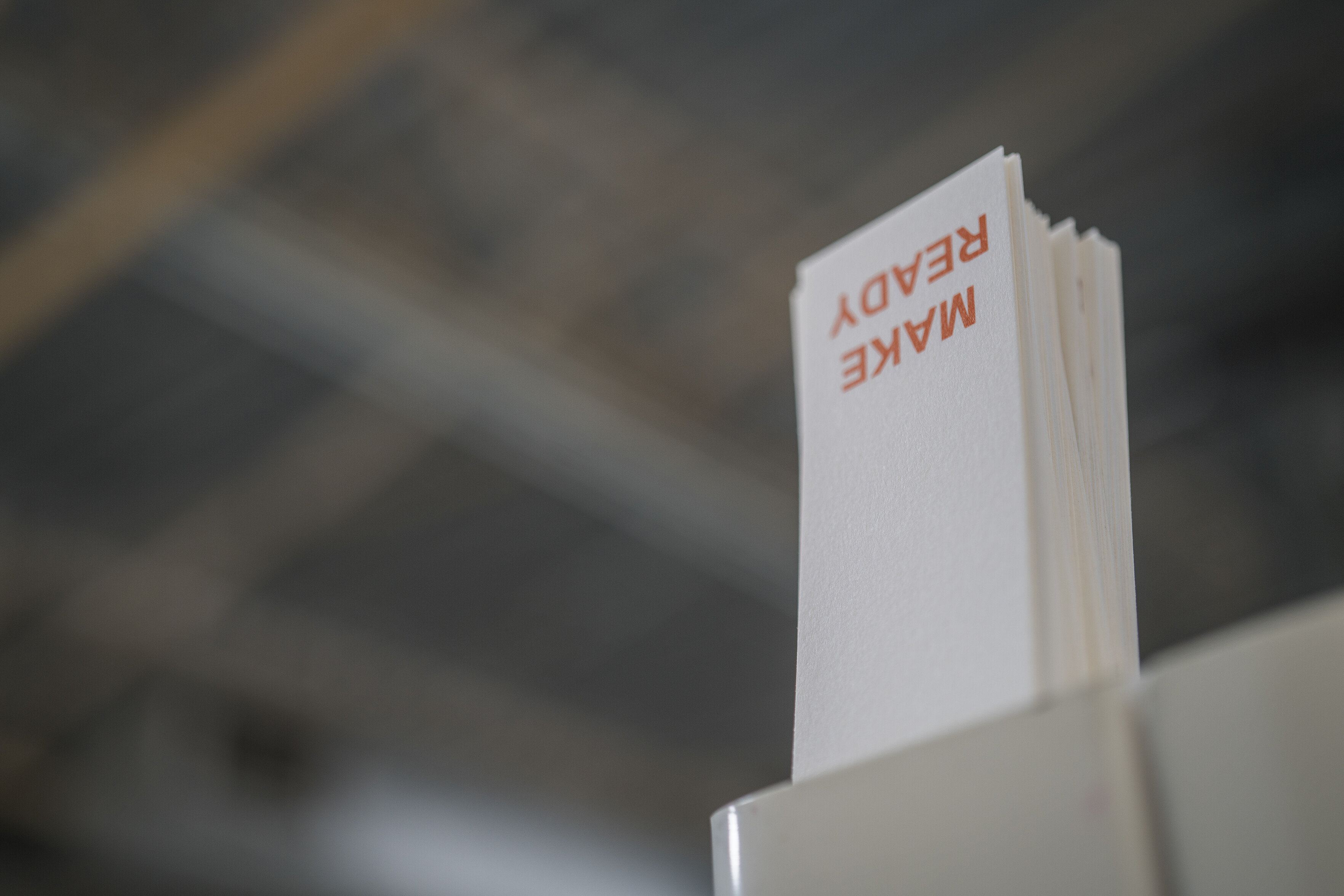
In order to get the press warmed up and the ink flowing nicely for the new form (= a set of pages on both sides of a printing sheet), they first do a “make ready,” which is printing on top of already existing print as to not waste paper. It looks pretty wild.
When people are working on setting up the press, instead of playing some sort of a warning chime, what sounds instead is the theme to Indiana Jones.
(This is a video in the anteroom/corridor next to the press – didn’t want to disturb.)
Today’s workday ended after a rather generous 12 hours, so I walked around a bit before it’s gotten dark.
Volume 2 will all be done very soon! Moving on to volume 1 next.
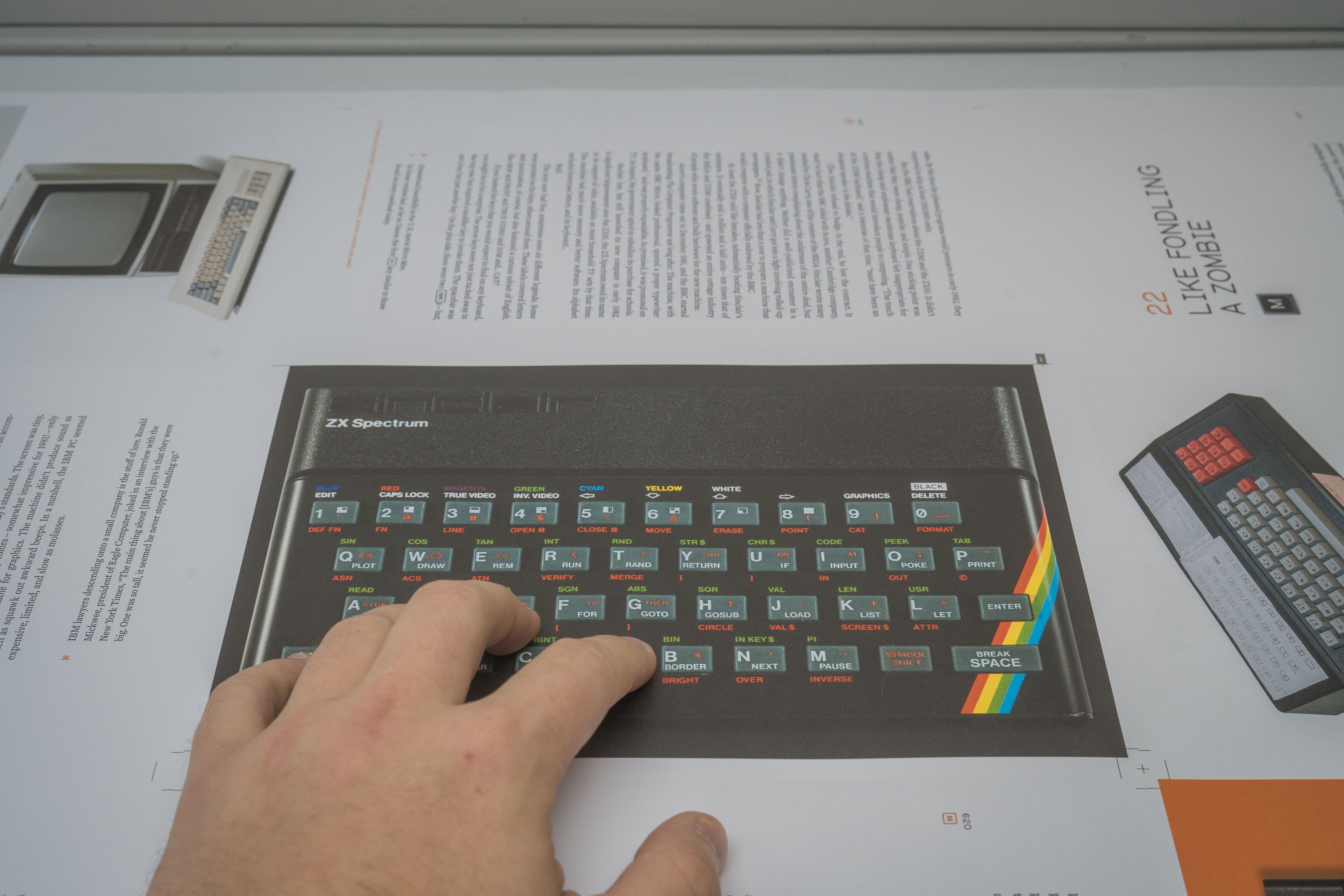
One example of a keyboard that was printed at actual 100% size, so you can imagine using it.
(This doesn’t happen often because the book is smaller than most keyboards, but it happens a few times throughout both the volumes!)
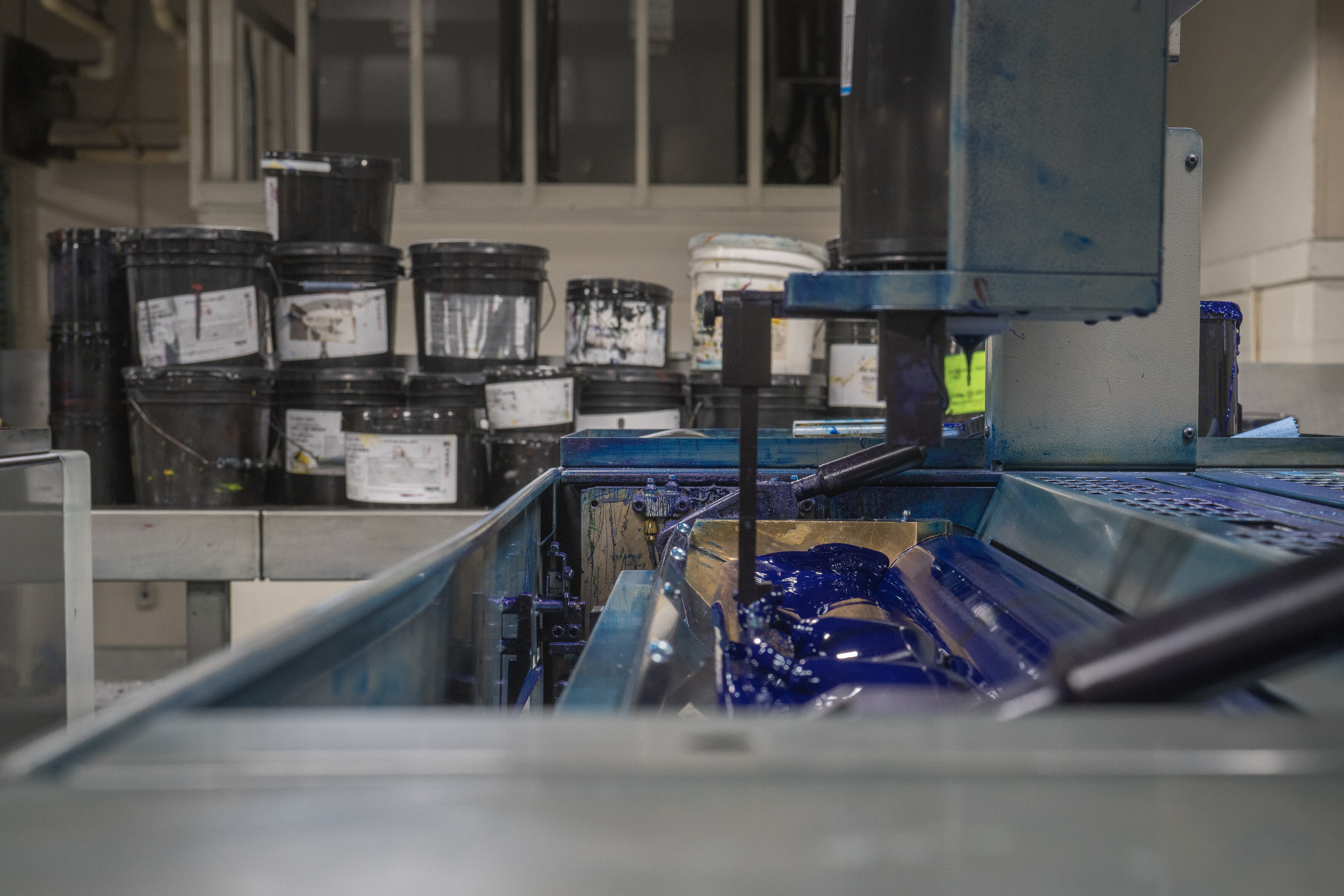
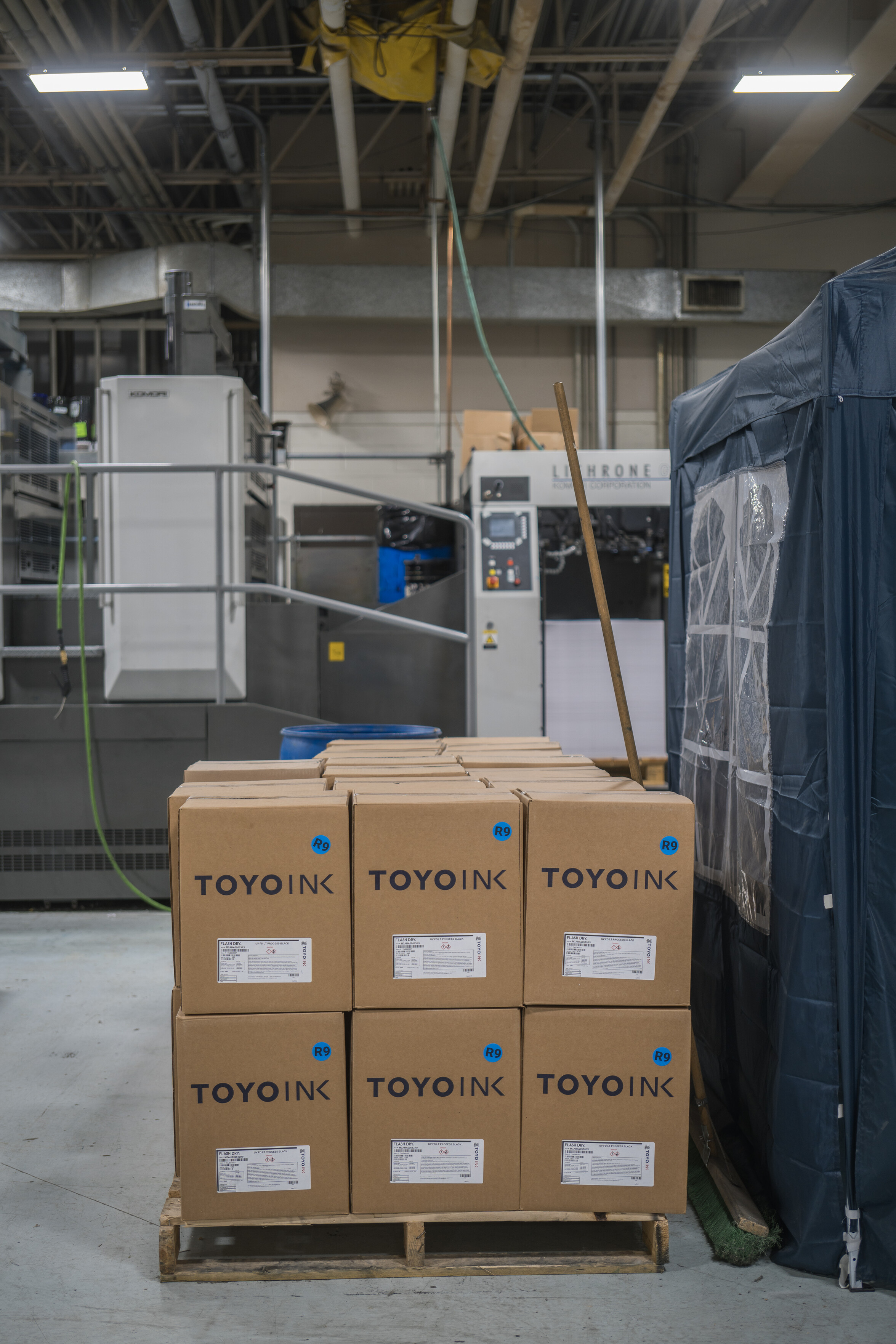
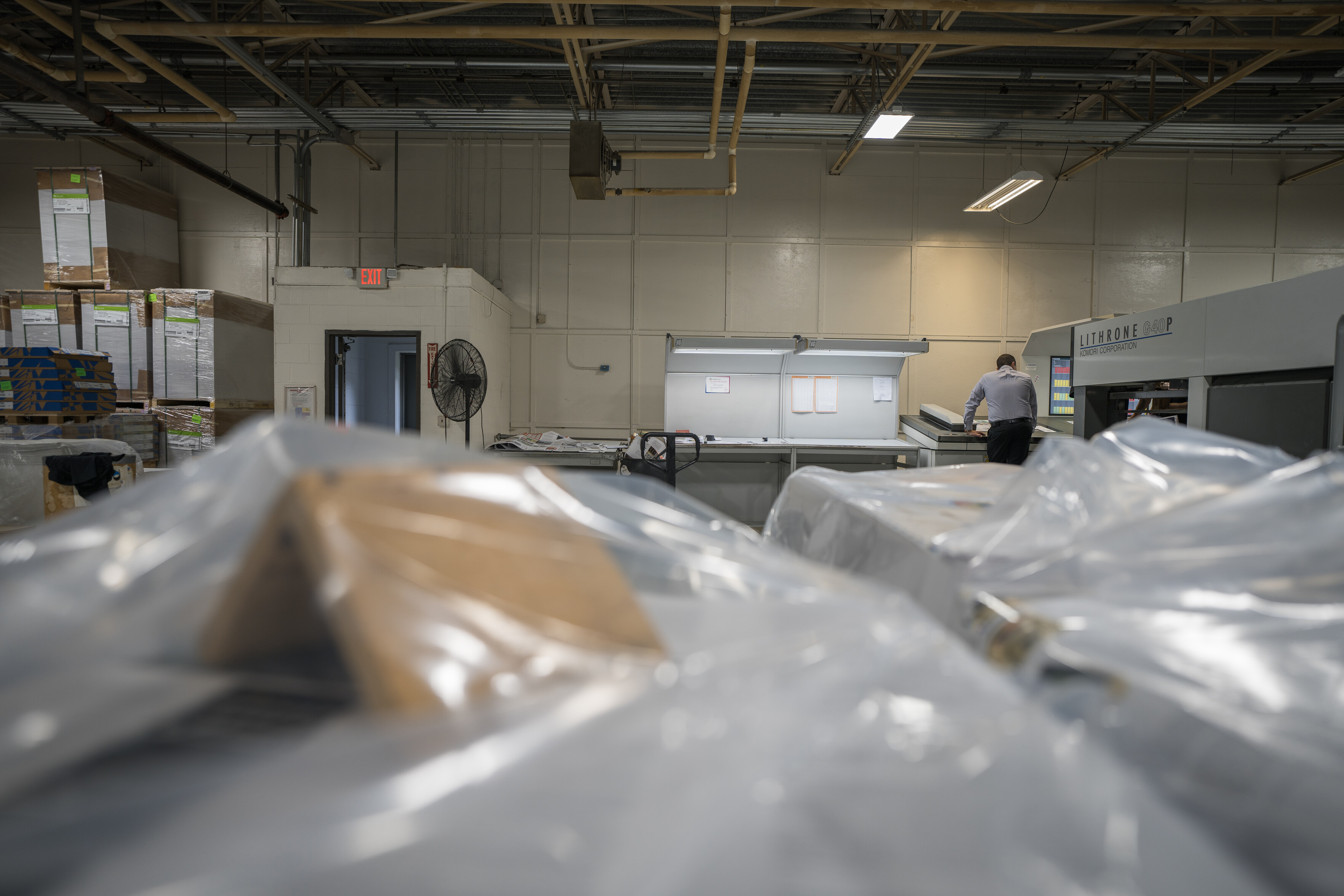
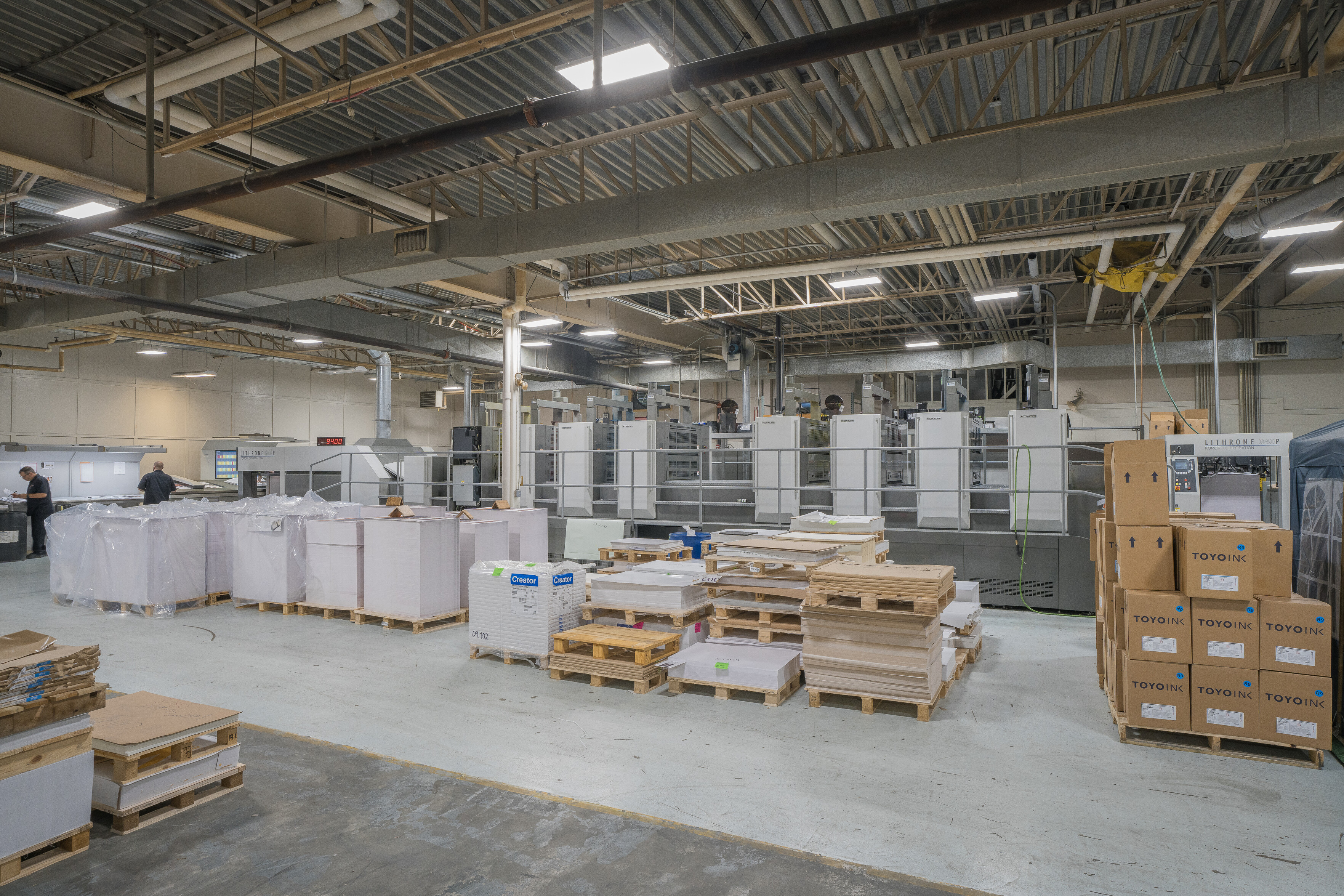
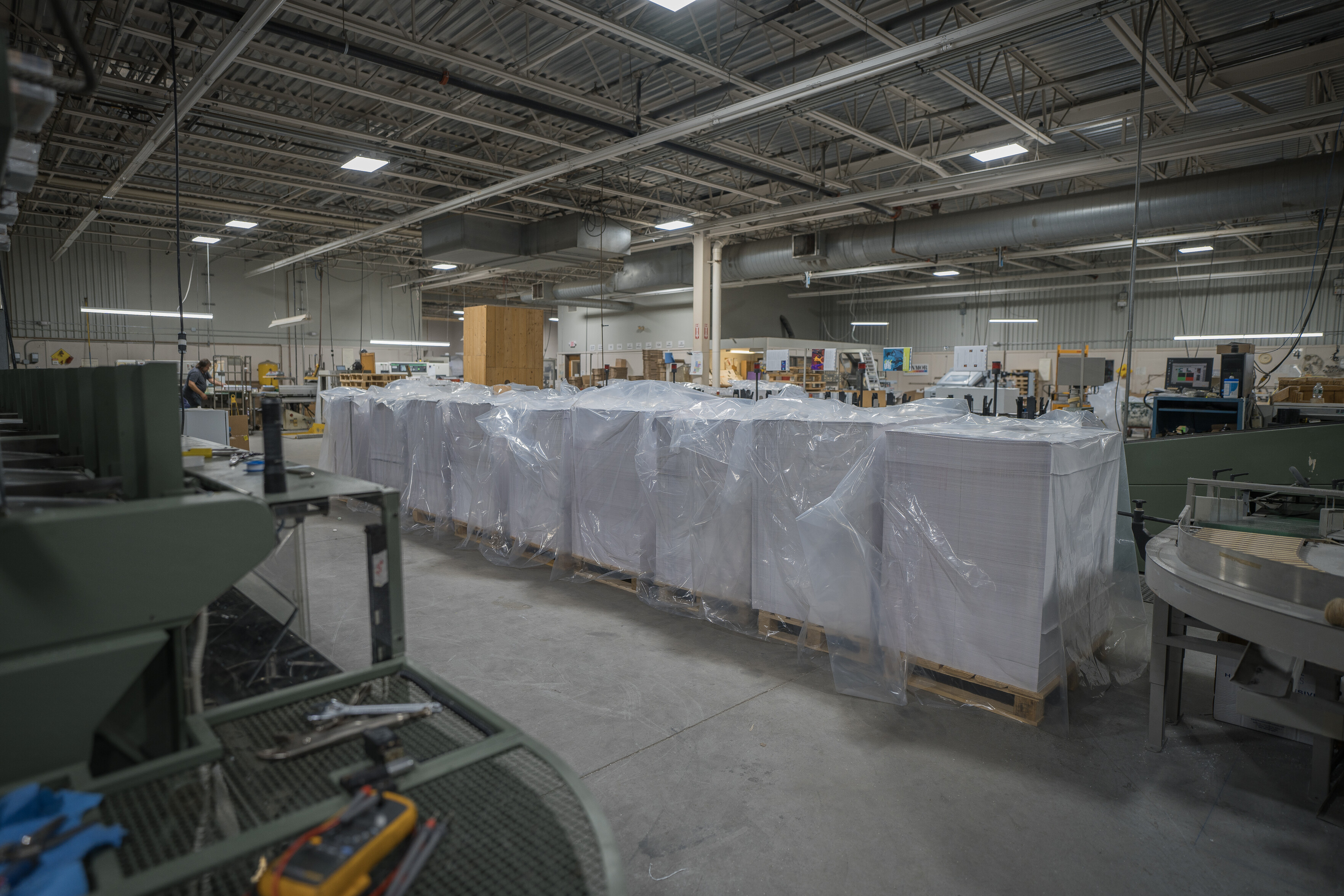
I know I’m posting things out of order, but this is a nice overview and the view of the entire press run – the paper intake is on the right (with extra ink waiting in front), then the pages get printed toward the left, come out on the left, and the table to review prints is on the far left.
The four columns are printing CMYK and they are duplicated for both sides of the sheet.
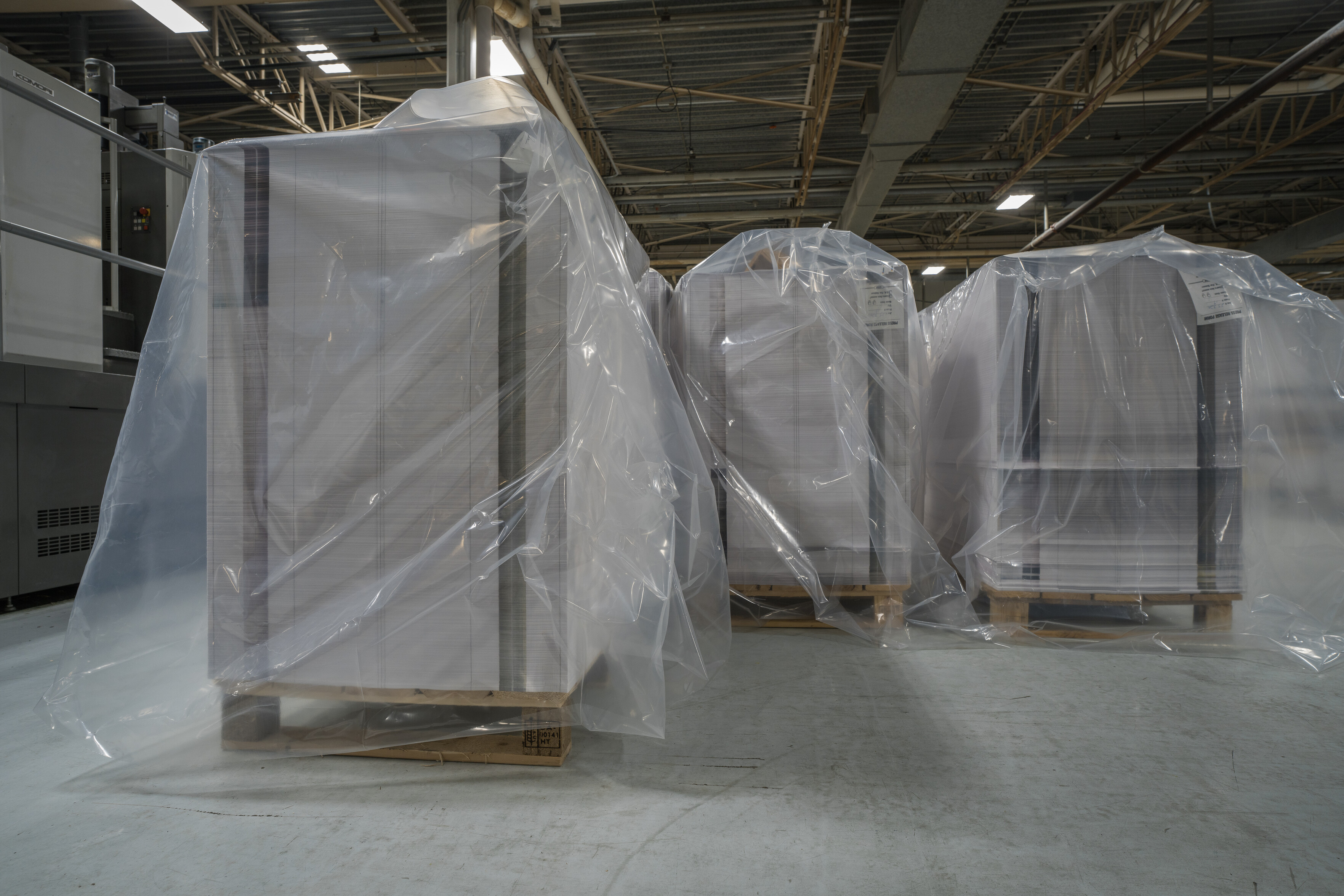
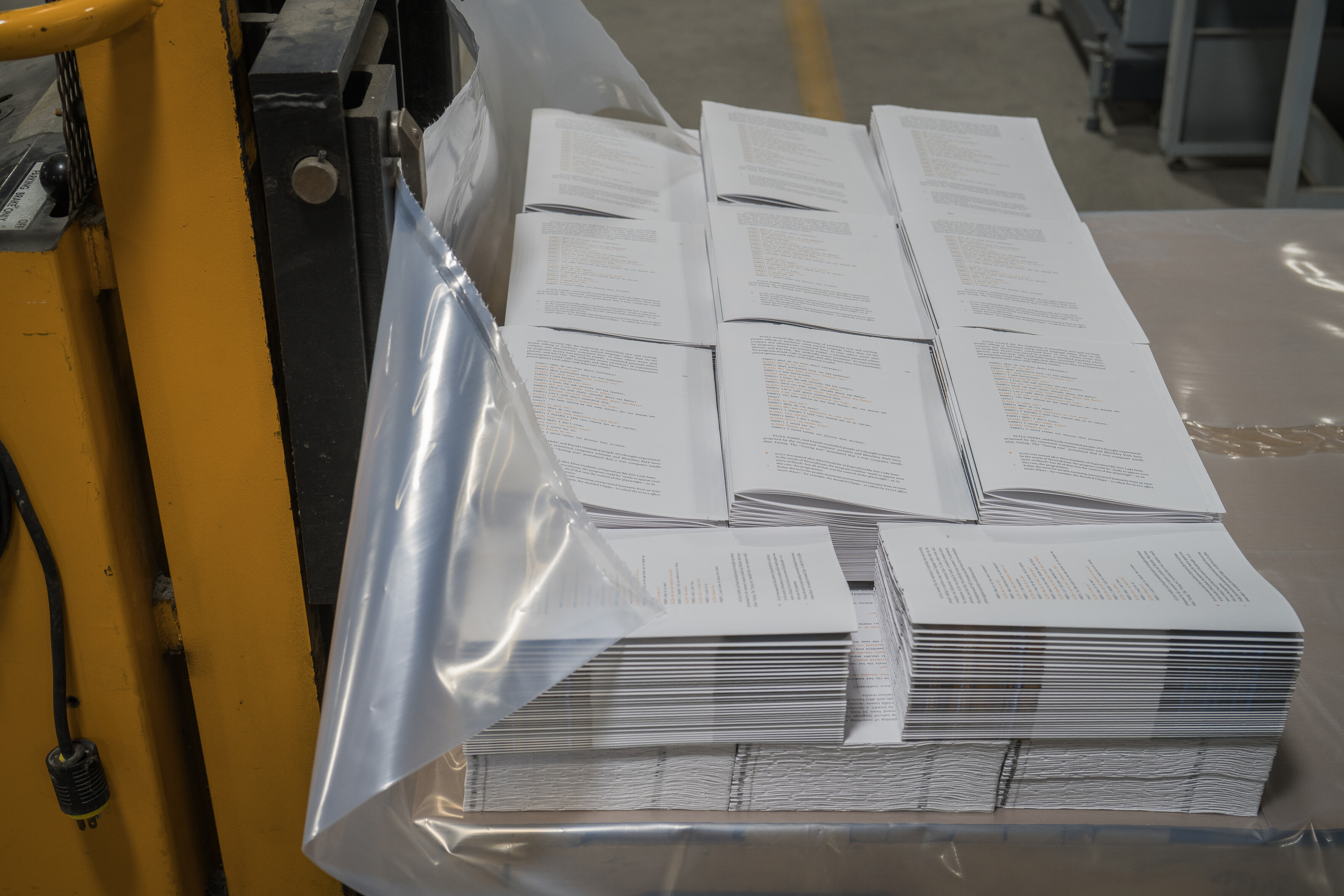
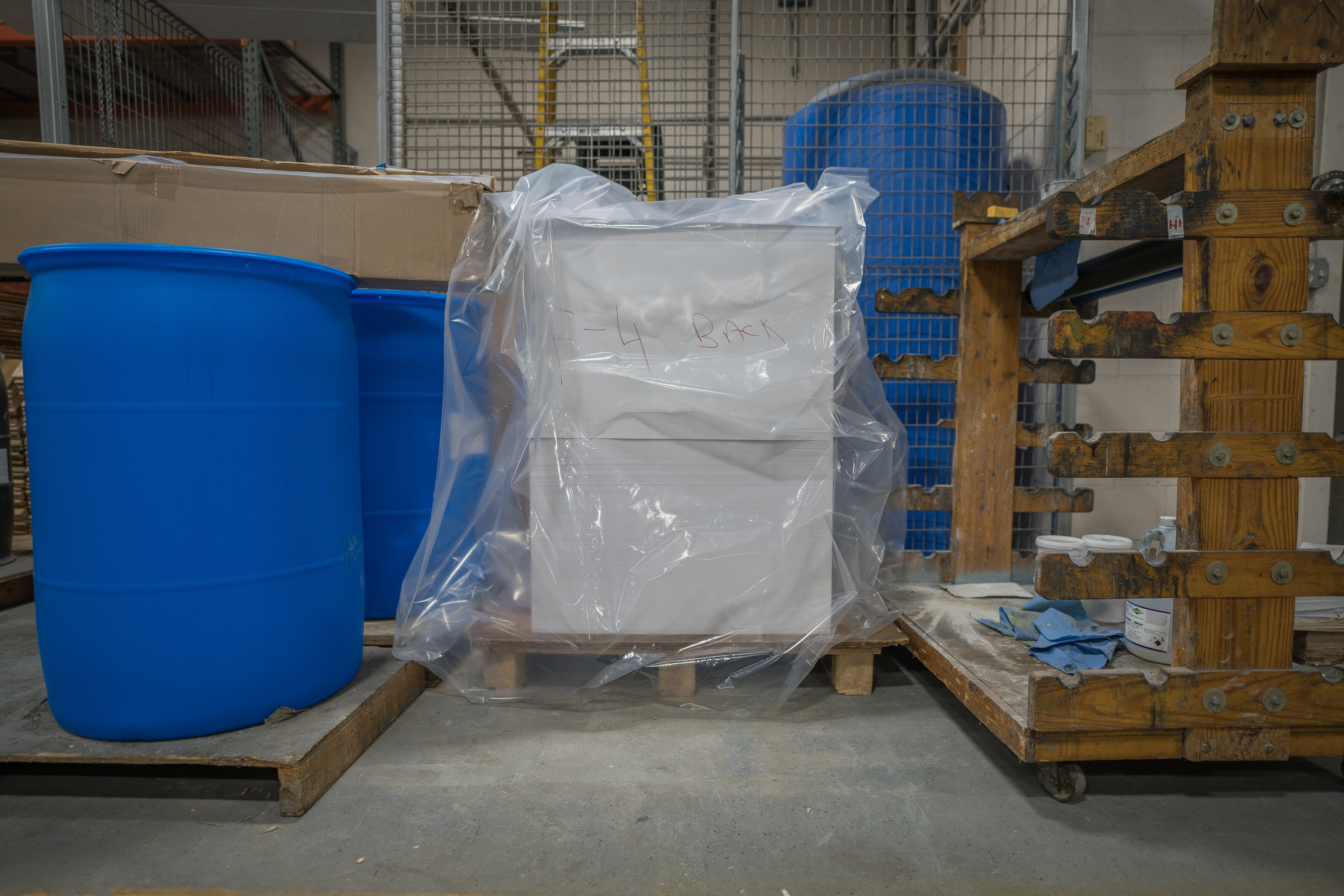
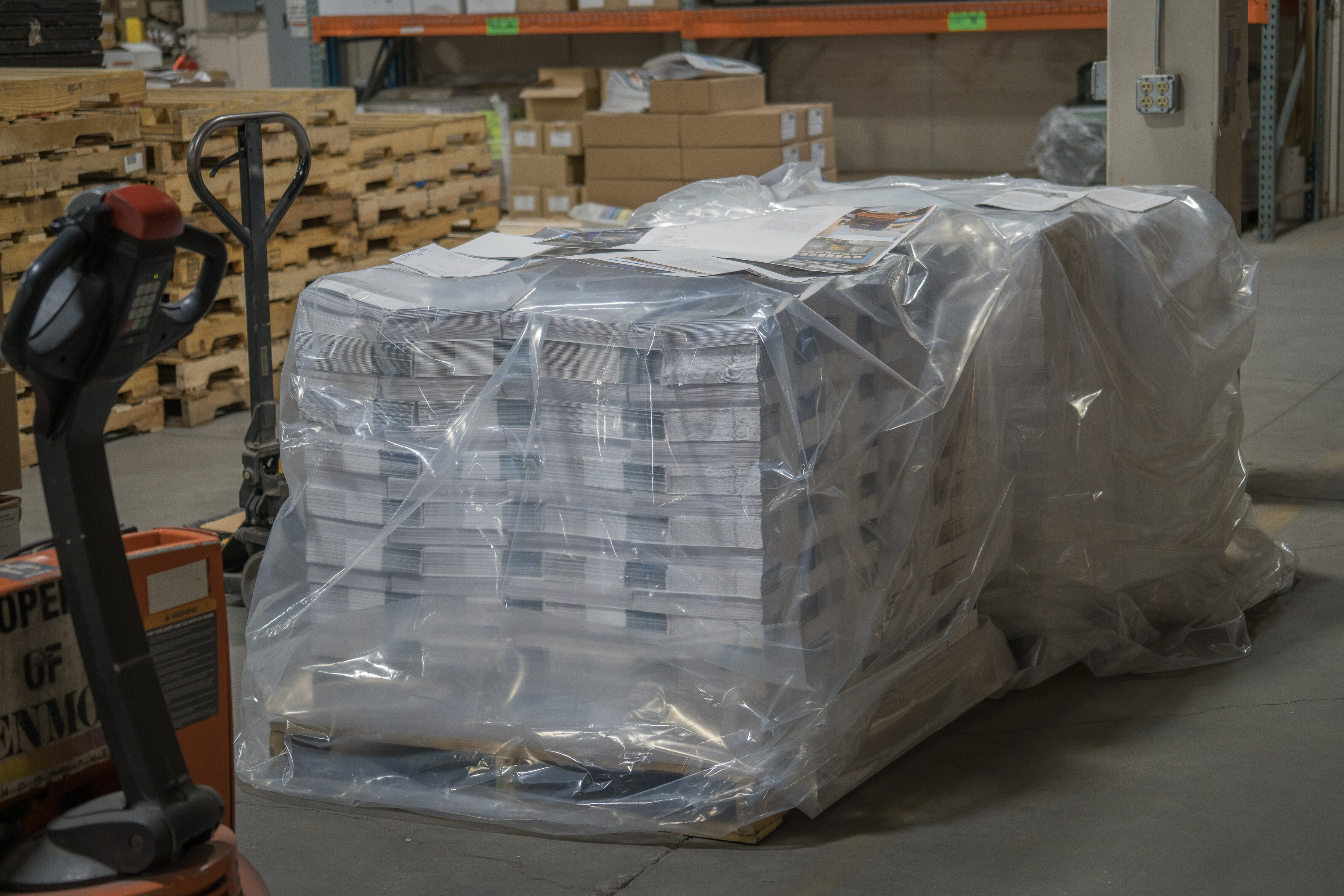
The plastic-wrapped pages on the left are printed, waiting to be moved to folding.
Just approved and started printing the first form of volume one, which means the first 32 pages of the entire book! That’s very exciting.
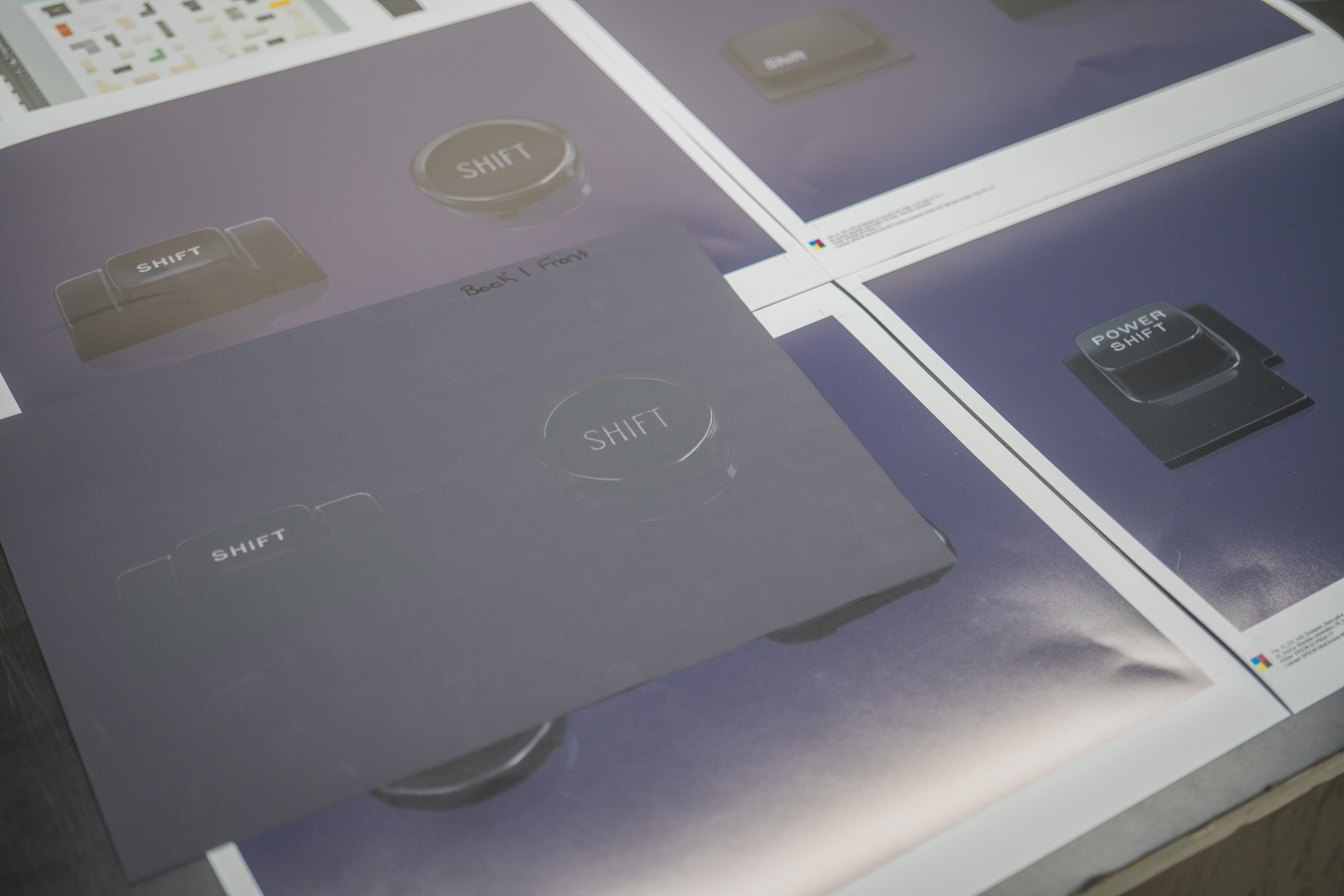
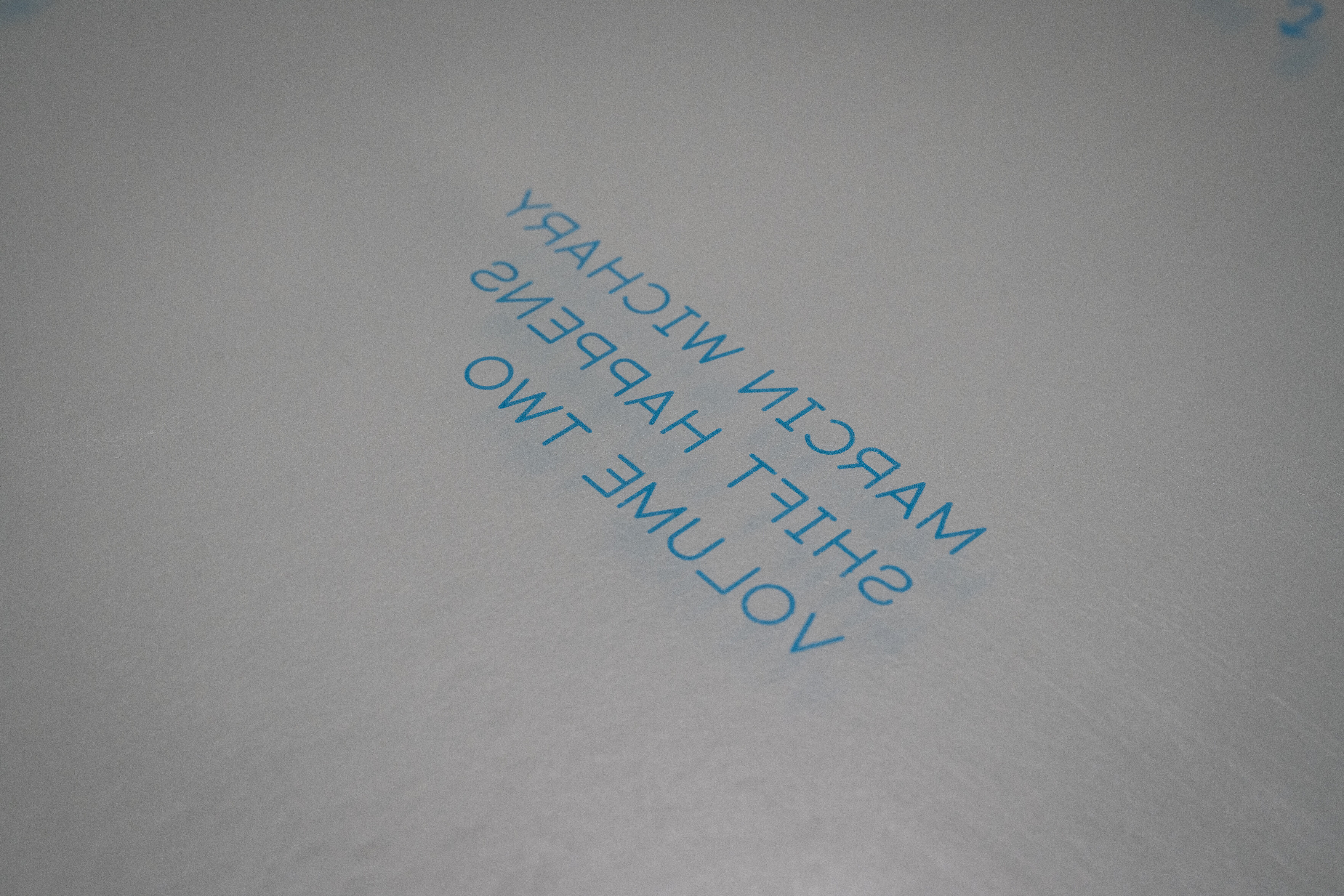
In between approving prints from volumes 1 and 3, we have fixed some problems with volume covers and endpapers (endpapers are the two pages immediately after and before the cover). The covers are a little complicated because in addition to typical four colors, they also have an extra colour of a varnish layer (see the last two photos).
The day is almost over here. Tomorrow: working on the slipcase!
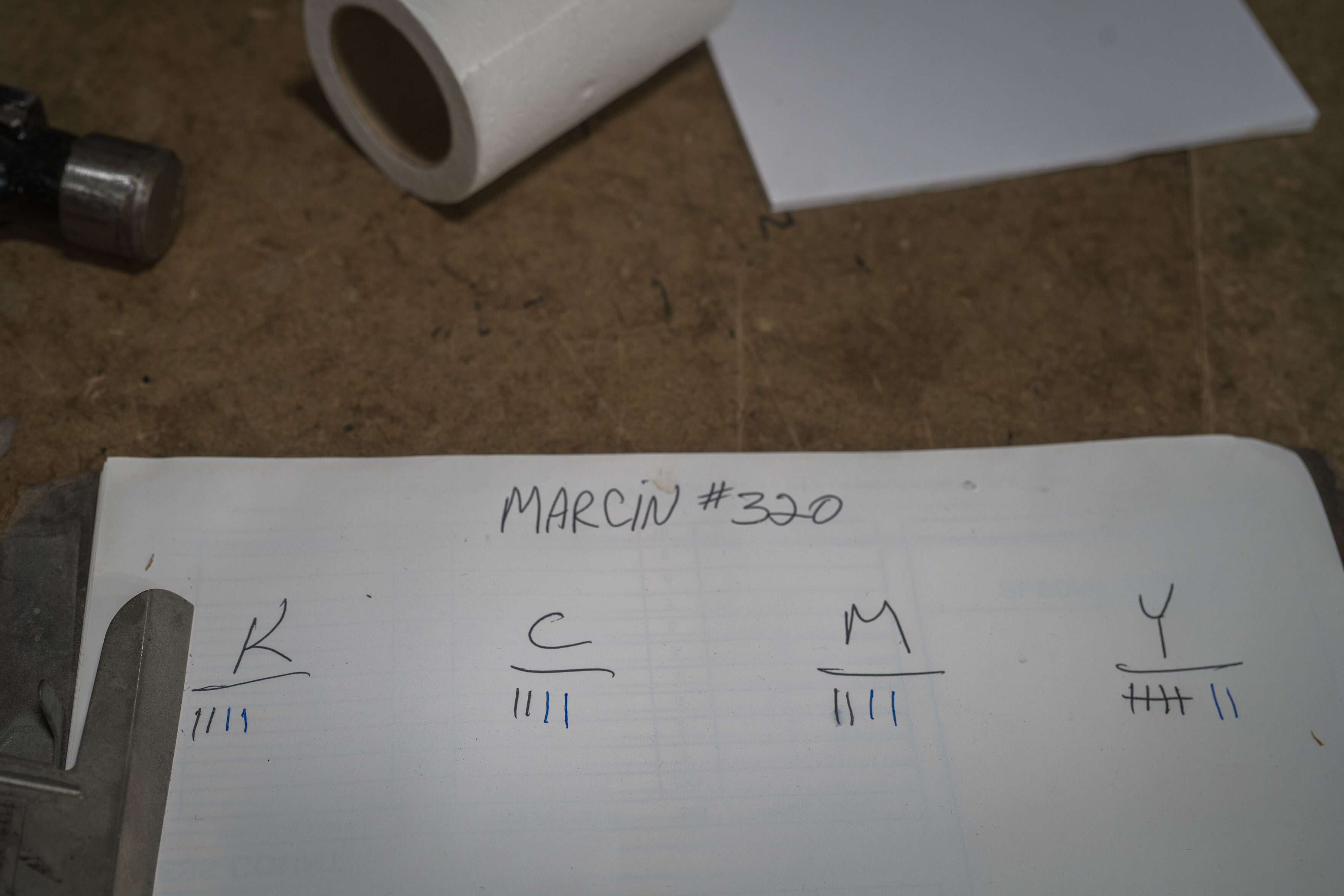
The book is slowly taking over the building. I am seeing various palettes of the printed signatures in various states of assembly throughout – I can tell just by glancing the contents, or by the job number (320).
I’ve been told that by the end, some 30 (!) people here will have worked on the book.
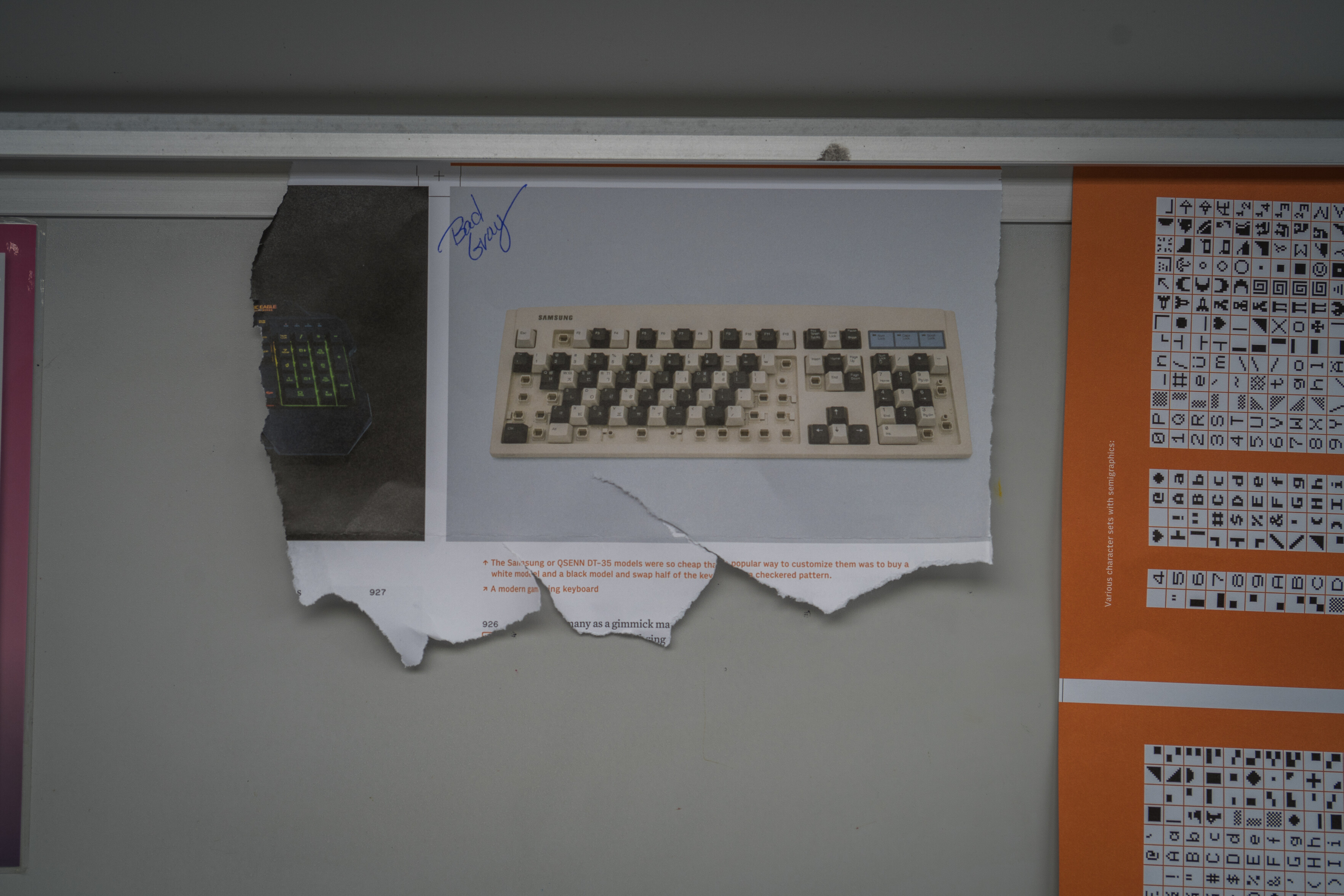
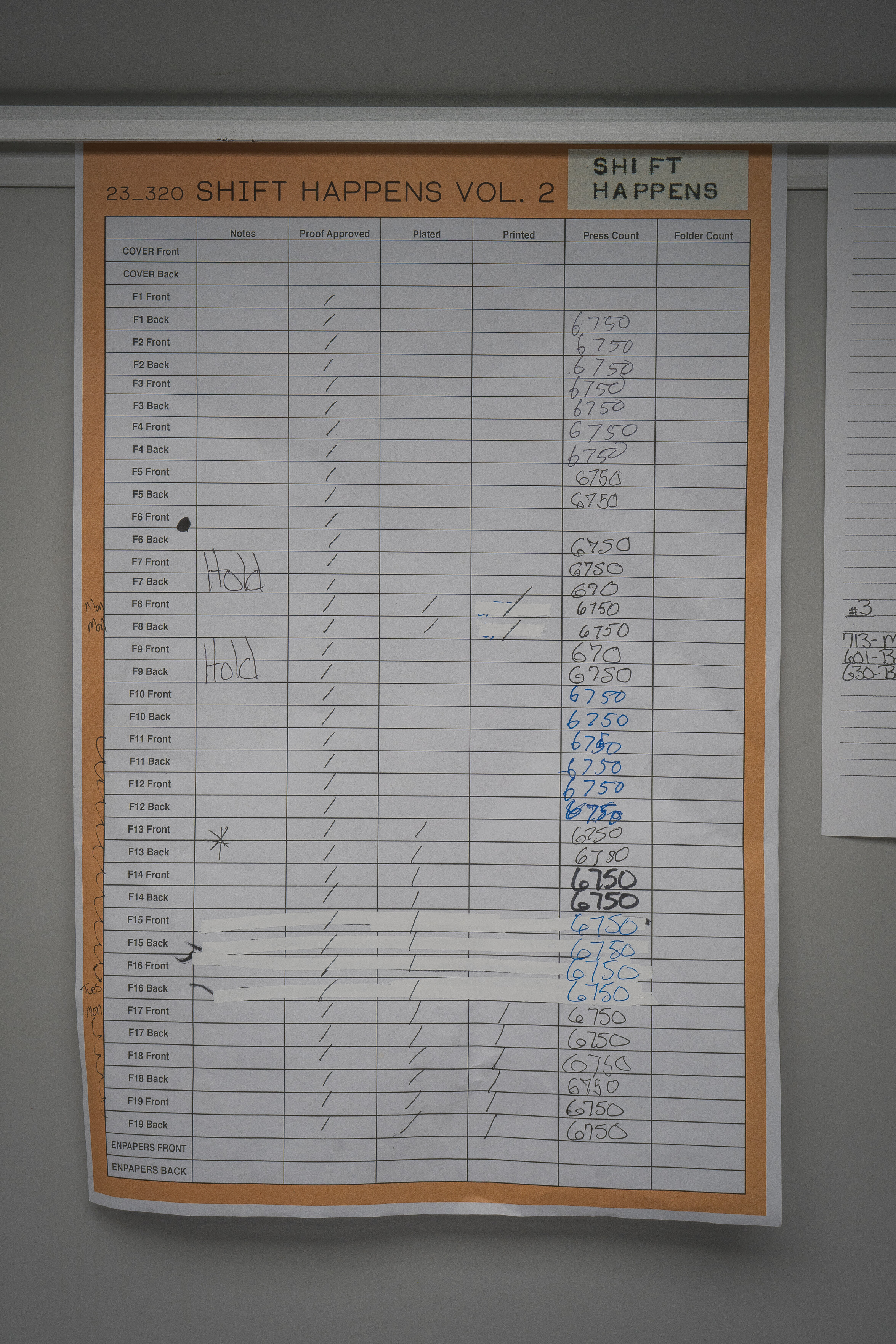
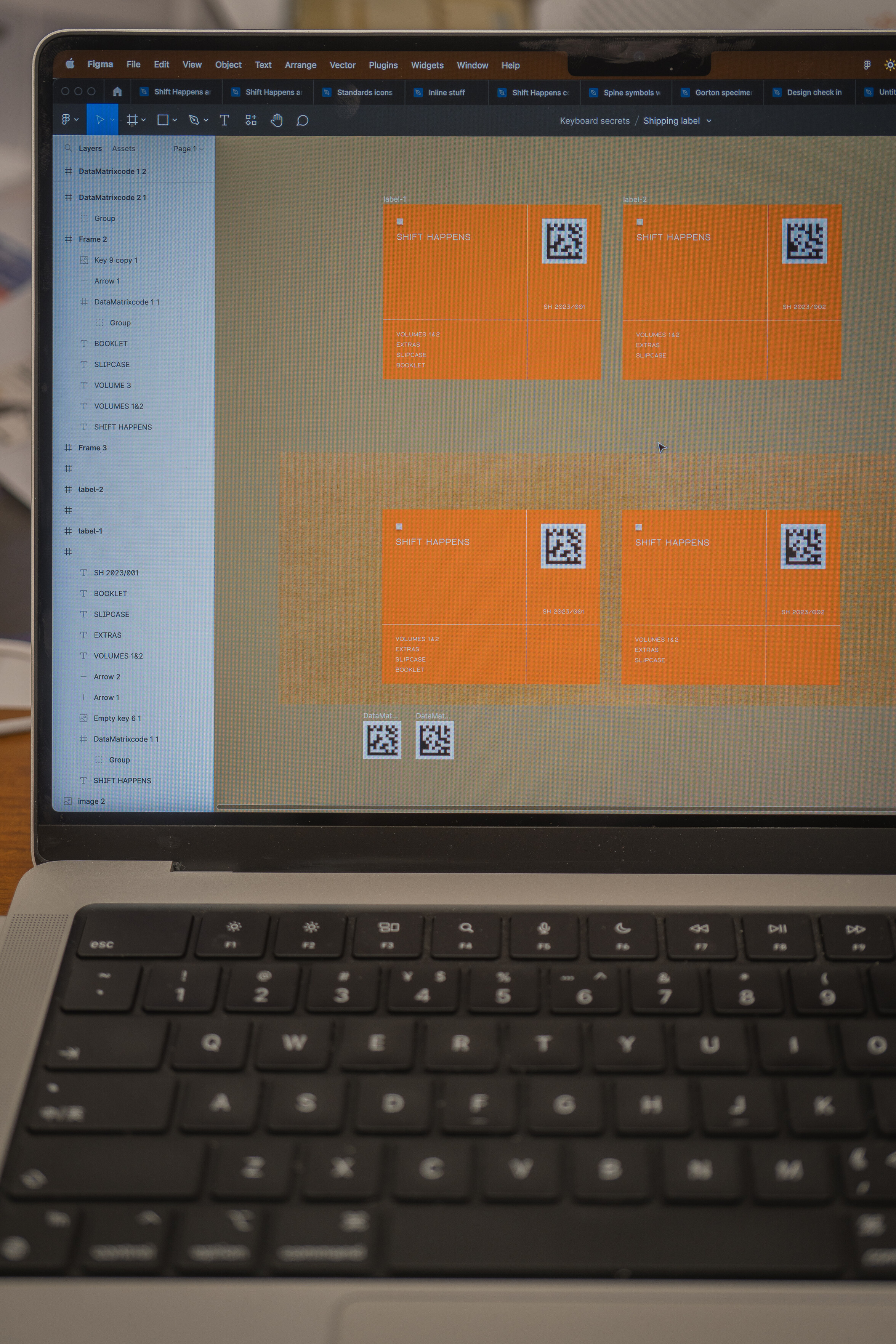
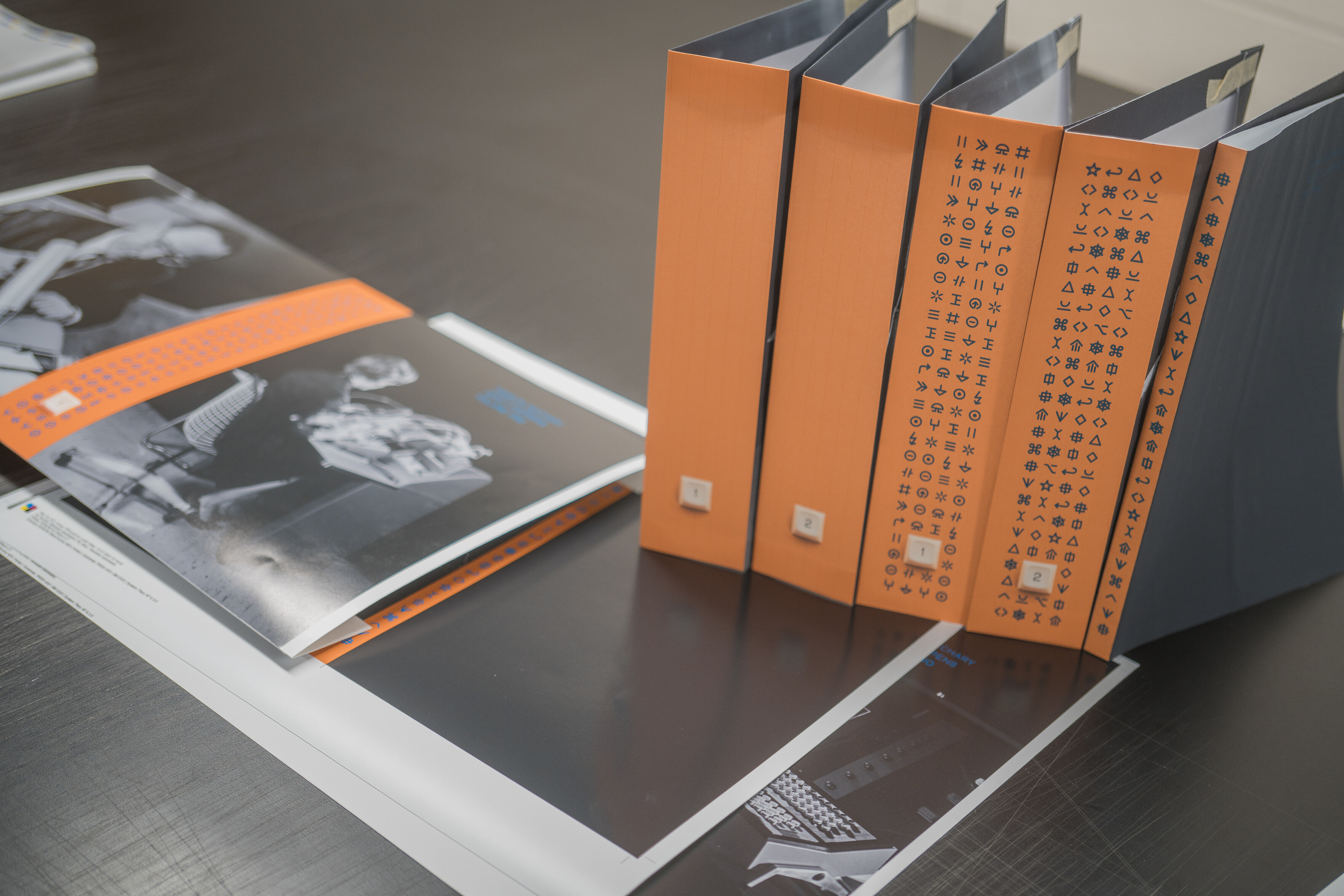
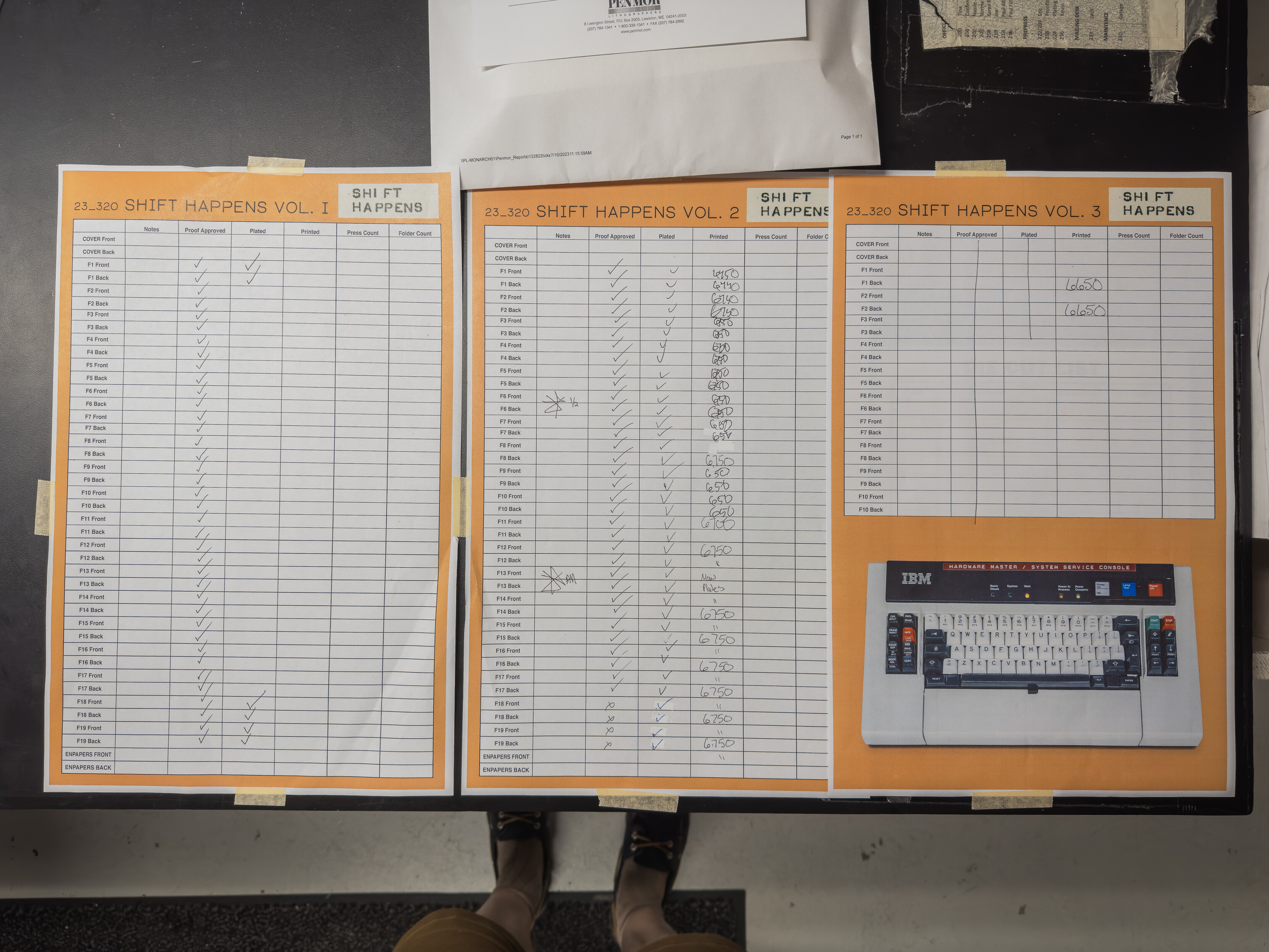
Love that the person who put together these work sheets was nerdy enough to use my font, my orange, and even plug in one of the keyboards from the book just for fun.
Tough end of the day yesterday where we couldn’t quite get the gray to match what we wanted – the press was too hot, the ink too watery. I approved it conditionally and left, but the people worked here to figure it out, and they showed me the perfect results today!
(However, we also discovered a mistake we made an already-printed forms. It’s subtle and hopefully no one will notice!)
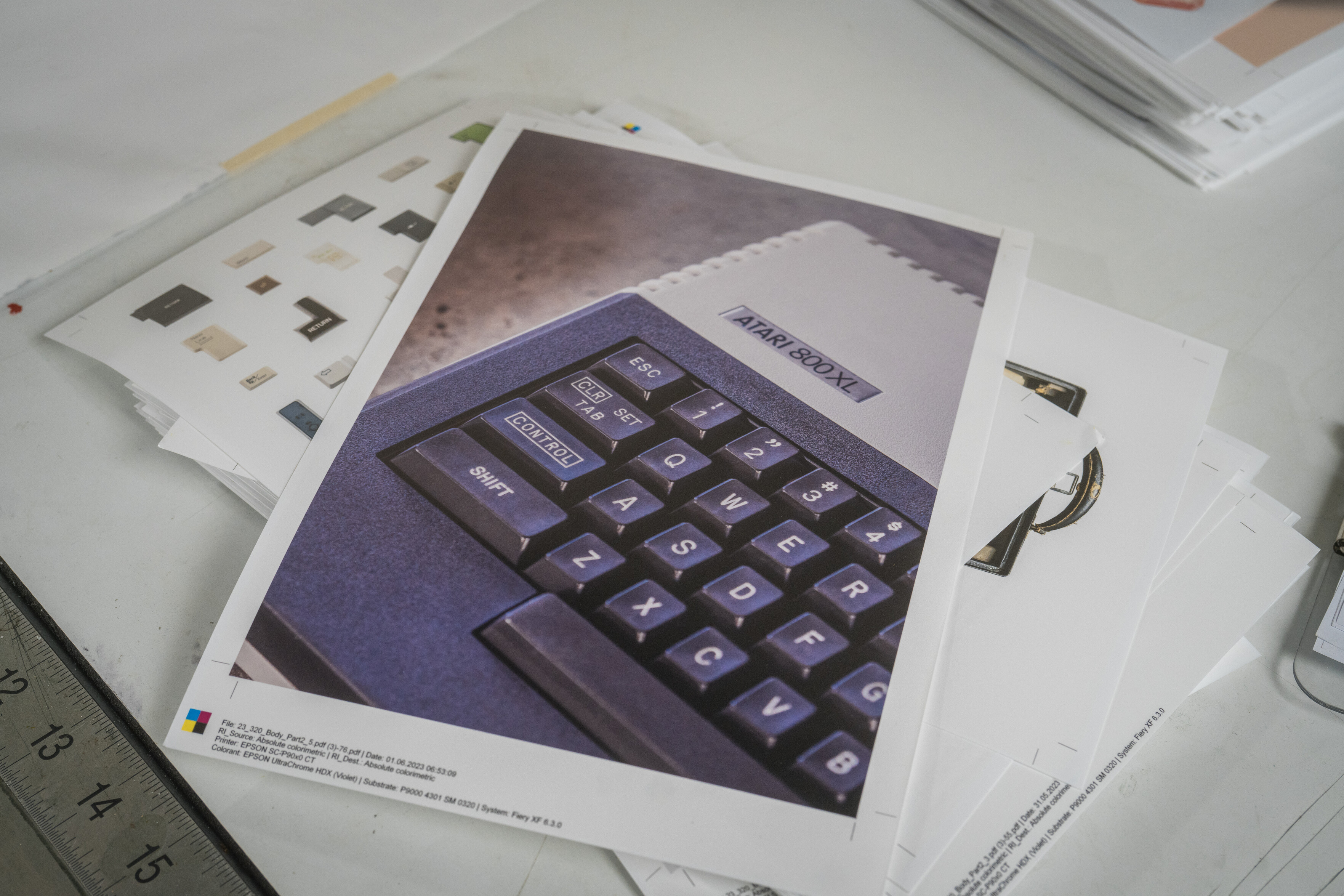
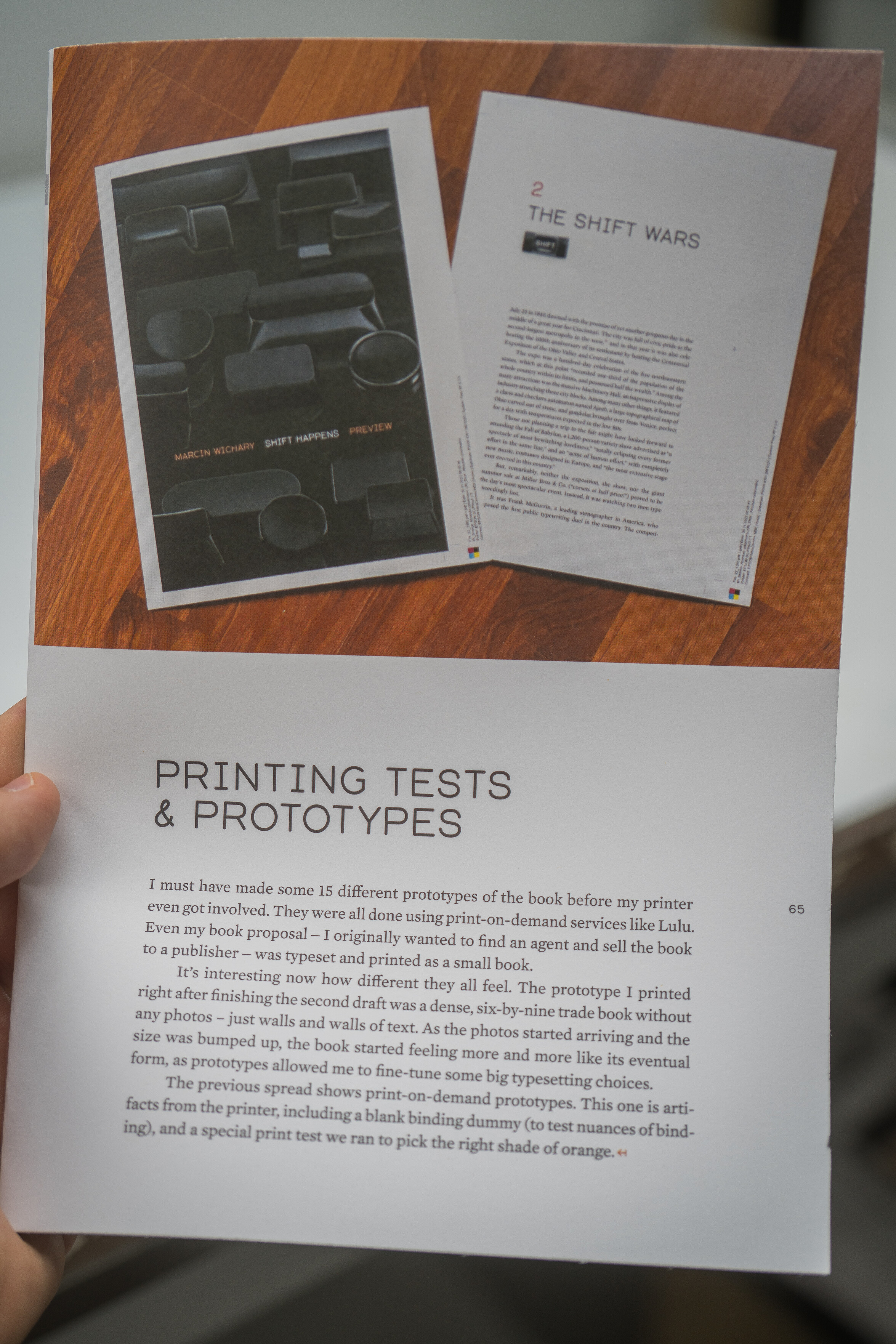
A digital blueline print test of a page of the volume 3 that has a photo of the Epson print test of a volume 1 print preview





@mwichary I’ve never been this excited to get my hands on a book. Your passion for the subject matter is _so_ contagious!
