

Philipp Schlegel @uni_matrix@qoto.org
- Github
- https://github.com/schlegelp
Brains! Brain! Brains! 🧟♂️
Postdoc in Cambridge, UK working on connectomics.
Joined Oct 2022
Philipp Schlegel
boosted

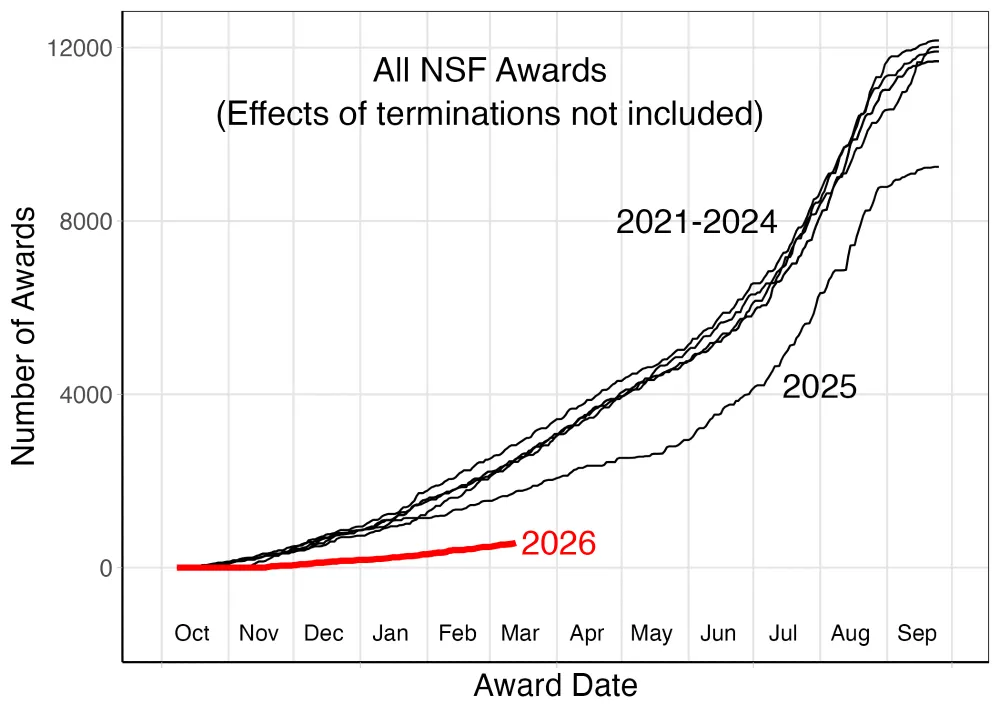
The #NSF has reduced spending on the basic sciences by 50% or more in 2025, with similar cuts proposed for next year as well. For instance, through to May 21 of this year, the funding awarded to the mathematical sciences is currently $32 million, compared to the 10-year average of $113 million. These are of course large numbers for an individual person; but with the US population of 340 million, this amounts to spending less than 22 cents per American per year on basic #mathematics research, compared to the 10-year average of 80 cents per American per year. https://www.nytimes.com/interactive/2025/05/22/upshot/nsf-grants-trump-cuts.html
I myself have been fortunate to be supported by a small fraction of this 80 cents for almost the entirety of my professional career, allowing me to conduct research in the summer, invite speakers to my department, and to support graduate students. For now, I can continue these activities at a minimal level using by existing (and relatively modest) NSF grant https://www.nsf.gov/awardsearch/showAward?AWD_ID=2347850 , but already I do not have the resources to put into any future long-term projects. For instance, my experiments with using new technologies for mathematical workflows are currently being conducted purely by myself together with contributions from unpaid online volunteers; I am applying for funding from several sources to scale these projects up beyond a proof-of-concept level, but I am expecting the process to be extremely competitive. (1/3)
Philipp Schlegel
boosted

On average, global ocean temperatures right now are the hottest in our historical records for this time of year!
Follow along at https://zacklabe.com/climate-change-indicators/
We just had this discussion internally - not with respect to single compartments but rather a recent slew of half-baked connectome analysis papers that many of us were asked to/had to review. Birthing pains of an expanding field?
I'd be a bit cautious about these for now. As far as I can tell they did no quality control on the A/D splits and in my experience the algorithm can get around 30% wrong (or at least not entirely right) due to issues with skeletons, synapse detection/segmentation or genuinely odd neurons. Something to address in the review, I suppose.
PS: Alex also made A/D splits for the BANC!
Philipp Schlegel
boosted

HHMI’s Janelia Research Campus will close two of its programs dedicated to rodent work, @thetransmitter has learned.
By Calli McMurray
Philipp Schlegel
boosted
Philipp Schlegel
boosted

Zandawala lab is looking to recruit a postdoc to work on neuromodulation of feeding in Drosophila and other arthropods at KU Leuven (Leuven, Belgium).
Details for the position can be found here: https://www.kuleuven.be/personeel/jobsite/jobs/60674552?lang=en
Please share!
Philipp Schlegel
boosted

Great idea: A web page that simply shows you the info your browser shares about you and your system whenever you open a web page.
https://sinceyouarrived.world/taken
Philipp Schlegel
boosted

Trump fires all 24 members of the U.S. National Science Foundation’s governing body
https://www.science.org/content/article/trump-fires-nsf-s-oversight-board?utm_source=flipboard&utm_medium=activitypub
Posted into News from Science @news-from-science-SciMag
Philipp Schlegel
boosted

UK, welcome back to Erasmus+ 🇪🇺🇬🇧
The EU and the United Kingdom sealed the deal to bring the UK back into Erasmus+ from 2027.
We are rebuilding opportunities for the next generation to study, work and grow together, giving people the chance to connect across borders once again.
It will also help create and deepen partnerships between our academic institutions.
Together again through learning, exchange and connection 🤝
Philipp Schlegel
boosted

I don't think people fully appreciate how apocalyptic things are for US science. I haven't received any new funding since 2024, but I'm still ok since grants are typically for 3 years. This means next year I will be completely out of funding and will have to fire everyone in the lab. It's not great.
In my 25-year career, I’ve never NOT had funding. I typically have 4 to 8 grants, which you need if you’re running an observation science program and have a technician, students, and postdocs.
Philipp Schlegel
boosted

The digital sphinx: Can a worm brain control a fly body? https://www.biorxiv.org/content/10.64898/2026.03.20.713233v1?med=mas
Philipp Schlegel
boosted

An editor from a Springer Nature journal, a company that posted $2.1 billion in revenue in 2022 [1], from an industry with double-digit percent profits (~30% [2]), kindly asked me, an academic in the UK where salaries continue to plummet [3], whether I would be pleased to review a paper for them, for free ... so I kindly asked whether they would consider paying me. It is only logical.
[1] https://en.wikipedia.org/wiki/Springer_Nature
[2] https://www.theguardian.com/science/2017/jun/27/profitable-business-scientific-publishing-bad-for-science
[3] In UK academia, "Pay has fallen significantly in real terms since 2009, as have pension contributions, and redundancies are rife. Short-term contracts and precarious work arrangements are common, especially for younger staff, as universities struggle to balance their books." https://www.telegraph.co.uk/news/2026/01/28/vice-chancellor-salaries-university-bosses-rich/
Philipp Schlegel
boosted

RE: https://fosstodon.org/@jni/116239224858280467
So, we started a thing... and, as the member with five broken ribs, I'm very happy that my slack was picked up by the rest of the kick ass team!
Philipp Schlegel
boosted

So… um… I (and Draga Doncila Pop and @perlman and @joshmoore and @kevinyamauchi) started a thing! We are excited and terrified in equal measures, and look forward to working with you all in our amazing scientific imaging community! ❤️🔥
Read the linked post for the lowdown.
https://image.coop/blog/posts/2026/03/16/why-image-cooperative/
Philipp Schlegel
boosted

#biology #drosophila #neuroscience
Kenneth Hayworth @/KennethHayworth tweet:
My statement regarding the misleading EON Systems "fly upload" video: (1/7)
Philipp Schlegel
boosted
In 2025, Big Tech—just ten major companies—spent €49 million lobbying Brussels. That’s more than pharma, finance, and automotive combined.
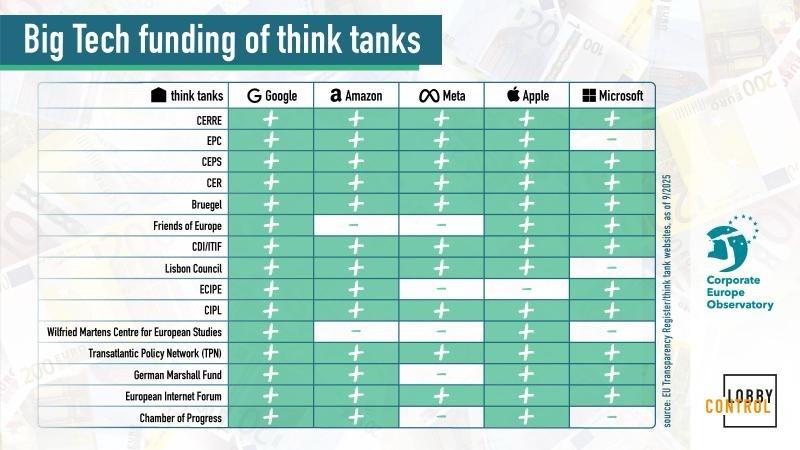
Google funds all sixteen major European think tanks shaping EU policy. Not *some* of them. All of them. Amazon and Meta fund most of the rest.
This is no longer “poor old me, I need a bit of help,” this is full regulatory capture. With a view to becoming even more embedded into businesses and governments, and getting whatever favorable legislation passed or diluted to suit them.
https://corporateeurope.org/en/2025/10/big-tech-lobby-budgets-hit-record-levels
Philipp Schlegel
boosted
“I wanted the blue checkmark on LinkedIn. The one that says “this person is real.” In a sea of fake recruiters, bot accounts, and AI-generated headshots, it seemed like a smart thing to do.
So I tapped “verify.” I scanned my passport. I took a selfie. Three minutes later — done. Badge acquired. I felt a tiny dopamine hit of legitimacy.
Then I did what apparently nobody does. I went and read the privacy policy and terms of service.
Not LinkedIn’s. The other company’s”
https://thelocalstack.eu/posts/linkedin-identity-verification-privacy/
Philipp Schlegel
boosted

Four years ago we delivered free bus travel for everyone under the age of 22.
Now it's time to go further.
We're committing to deliver free bus travel for everyone in Scotland - on a bus network that has been brought back under public control. 🚌
Philipp Schlegel
boosted


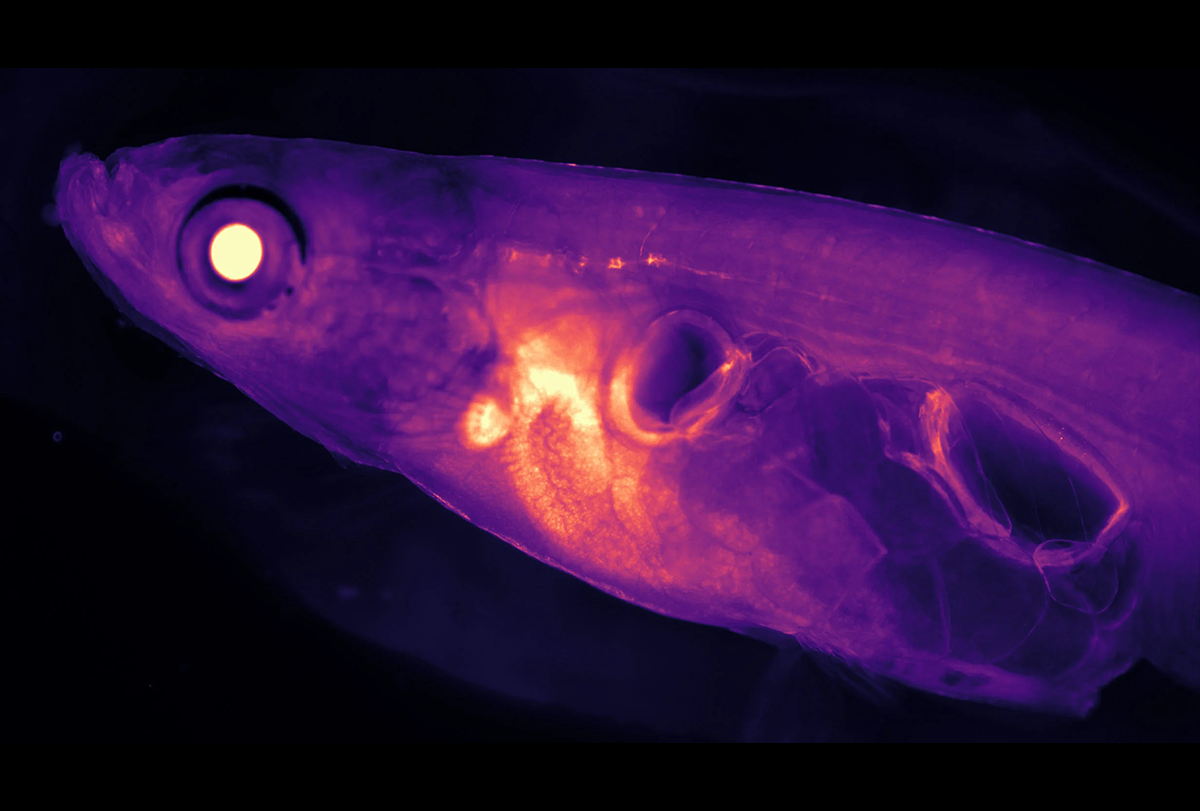


This is work that we presented at last year's #Cosyne workshop on #GNN s https://sites.google.com/bu.edu/gnnworkshop-cosyne2025/home. Better late than never. You can reproduce everything with the associated notebooks. I think it's a good start to learn how to use GNNs to infer something about NNs. https://arxiv.org/abs/2602.13325
- Github
- https://github.com/schlegelp
Brains! Brain! Brains! 🧟♂️
Postdoc in Cambridge, UK working on connectomics.
Joined Oct 2022
