
Migration to #LoRaWAN TheThingsNetwork v3
https://www.disk91.com/2021/technology/lora/migration-to-ttn-v3/
@Blort I'll probably add this to my LoRa article...
LoRa = The network protocol. Just like WiFi is a network protocol.
LoRaWAN = A managed LoRa network. It's like going to a Starbucks and connecting to their WiFi.
The Things Network = A free LoRaWAN network that's run by volunteers around the world. People actually set up base stations and allow free access.
Hope this makes sense? 🙂

@lupyuen
It does, thanks... and the benefit of using it over the more established wifi protocol/ networks is...?
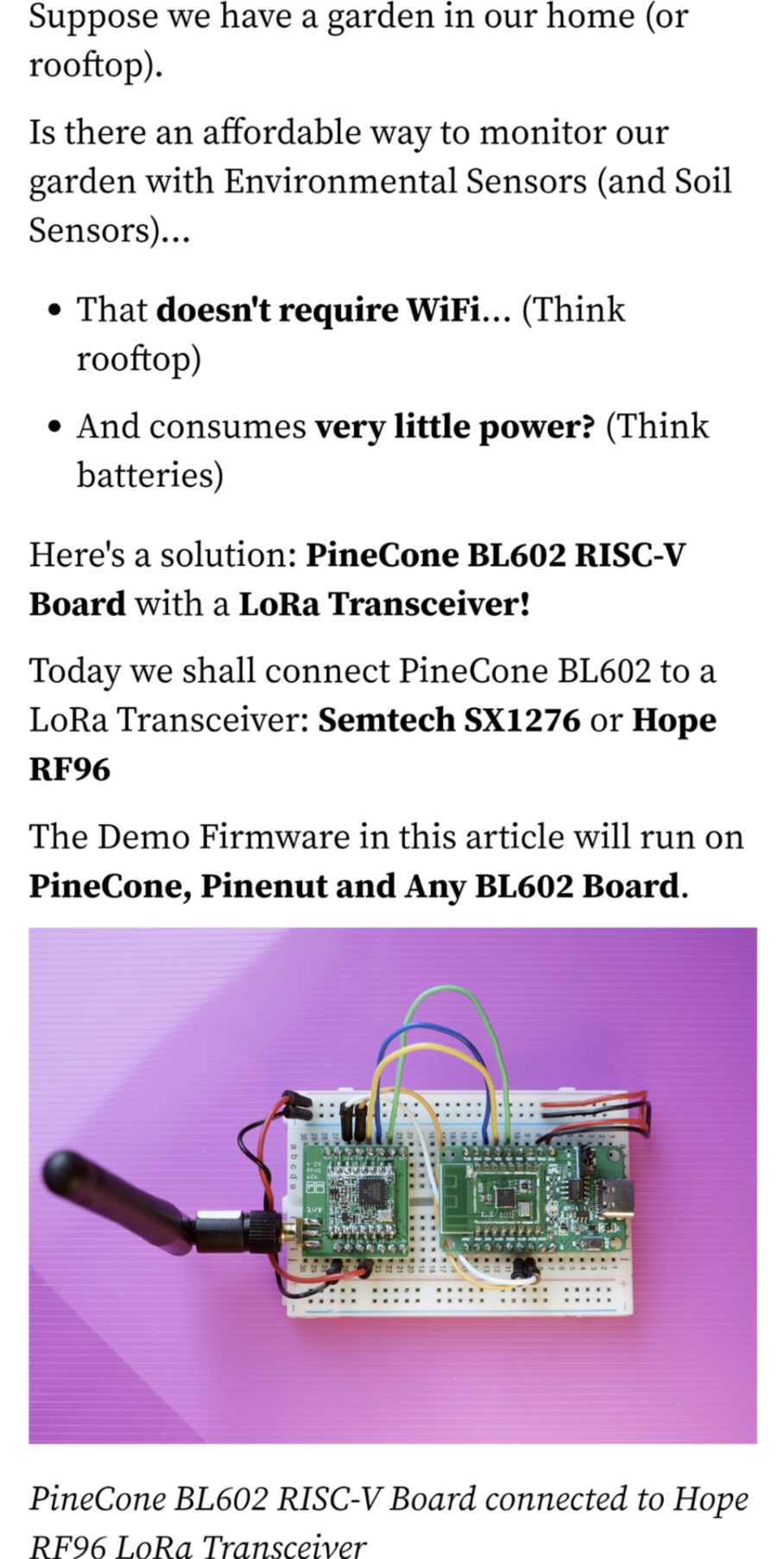
@Blort LoRa / LoRaWAN is more suitable for battery-powered sensors on the streets and in the wild. (Because of its low power and long range)
Here's a good use case: Sensors for our garden...
@lupyuen
Ok, that is cool. Thanks for explaining it to me. Does it still run in a similar frequency range to wifi, ie 2.4-5.6ghz? I'm just thinking about if using it could also reduce interference with wifi devices...
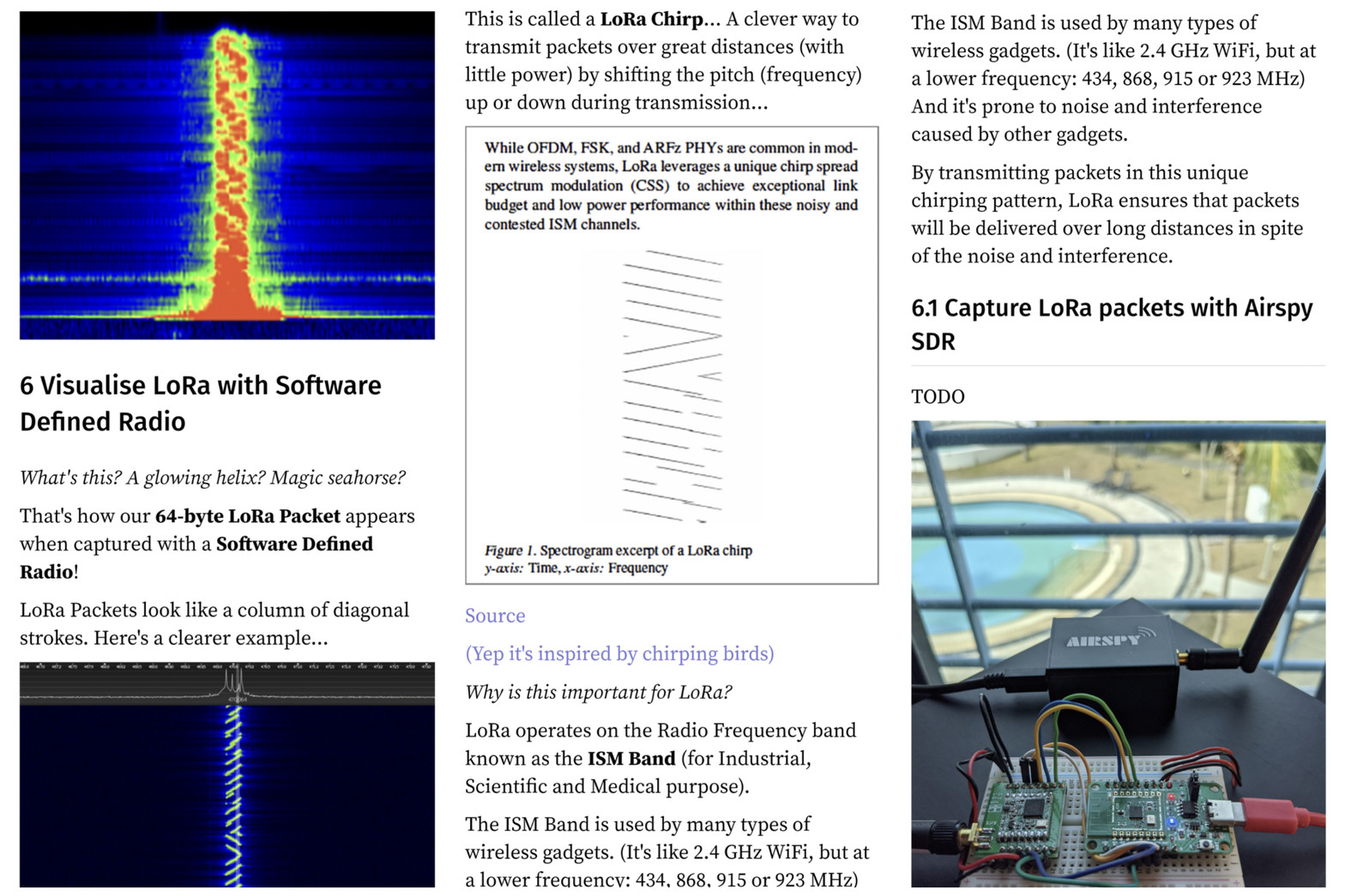
@Blort Depends on the region... #LoRa runs at 868 MHz in Europe, 923 MHz in Singapore.
Because it's running at a lower frequency than 2.4 GHz WiFi, the signals go farther.
But LoRa is a simple packet based protocol, it's not meant for chatty networks like WiFi.
More about this...
https://lupyuen.github.io/articles/lora#visualise-lora-with-software-defined-radio

@lupyuen
I still don't quite get what #LoRaWAN is. It sort of sounds like a wifi based LAN over a larger distance, that doesn't take as much power, but I have a feeling I'm probably way off.