

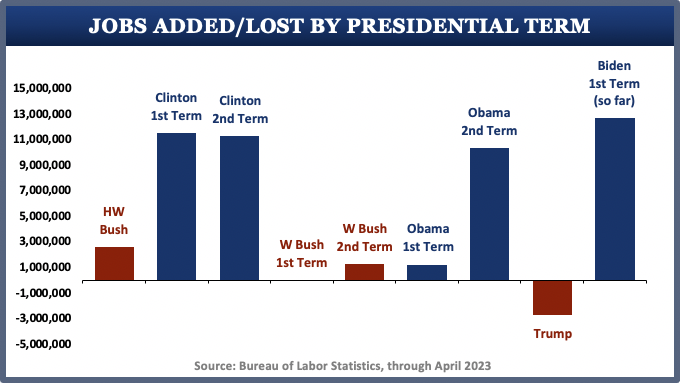
Those statistics are out of context until you correct for the numbers of people who left the workforce and aren't included in the headline unemployment number.
The labor force participation rate remains well below its 2020 level.
You're still excluding people from the count which spends the statistics.
Seriously? You want to look at the overall participation rate, which is affected by massive dynamic of baby boomers retiring, instead of looking at the *prime-working-age* participation rate, which is at a 15 year high?
Unless a party's slogan is "Make Retirees Work Again," looking at the overall participation rate to judge the health of the labor market makes no sense.
But you do you.
The BLS stats call that claim to question. See the link below.
But YES, I want to look at the overall participation rate since otherwise you're just saying, "there's very low unemployment! ... except for those unemployed people, but nevermind them."
If you happen to believe there's good reason to ignore unemployed people in the picture of unemployment that you're selling, great, but just be honest and clear about it.
1. The BLS chart you've linked confirms that prime-working-age participation rate is at a 15-high. Thanks.
2. If you think retired baby boomers should be counted as "unemployed people" that should be used to inflate the unemployment rate unless we force them to un-retire and work again, I can't help you.
I do, in fact, think unemployed people should be counted as unemployed people, yes.
BLS chart shows that prime-age participation remains below trend from its pre-pandemic recovery, showing quite a lot of people don't have jobs but aren't reflected in the unemployment numbers you're crowing about, even excluding a lot of the unemployed people you'd rather not recognize.

@volkris
Happy to look beyond the headline number (U-3).
The broader measure (U-6), which includes both the unemployed and the underemployed, is also at an historic low.
And the prime-age labor participation rate is at a 15-year high.