
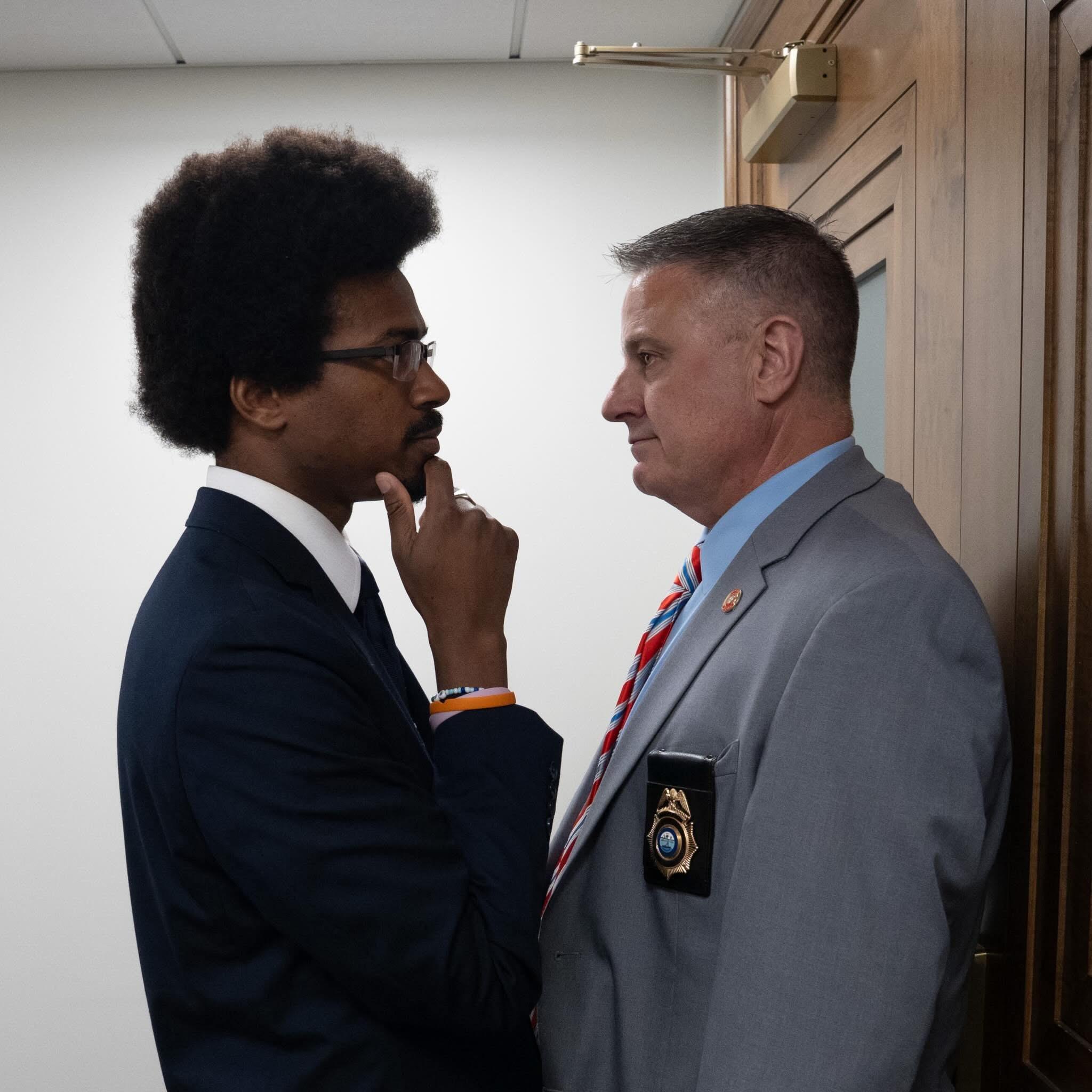
This photo is going to be in the history books eventually.
#USpol
“The Sergeant at Arms blocks Representative Justin Pearson from Memphis from entering a committee meeting about redrawing the map specifically for the district he represents.
A white officer with a badge, blocking a black congressional member, from joining meeting that specifically targets the black district meant to give representation to people of color.
The segregation is alive and well in the south.” - Brian Garlick

@BrianJopek Remember, it was Roberts who claimed that the VRA was “obsolete” because there is no more racism in the US. #SCOTUS #bullshit

Where? I saw so much misreporting saying that was the reasoning behind the Callais, but that's not at all what the actual opinion said.
@volkris @BrianJopek In (a)(2)(b) of the syllabus of the opinion, find this statement: “Four historical developments are of particular note. First, vast social change has oc- curred throughout the country and particularly in the South, which have made great strides in ending entrenched racial discrimination.“
https://www.supremecourt.gov/opinions/25pdf/24-109_21o3.pdf
Back up to the beginning of the section to see what that applies to: "This interpretation does not require abandonment of the framework"
"This interpretation" isn't being proposed in the section or justified by historical developments. Instead, it's referring to the conclusions made in previous sections not based on social change.
This part of the ruling says, given that we've already settled the major question (without citing social change), how do we handle this practical objection, and how do we put this finding into practice?
If the opinion was saying VRA was obsolete because of racism then the statement needed to be in the previous section.
No, if you read the opinion the opinion they're very clear: "This interpretation of §2 does not require abandonment of the Gingles framework."
They bother talking about social change in the context of the section, bringing legal processes, the Gingles framework, in line with the law.
The decision on law was in the previous section, but they used this section to talk about how the decision on law would work in the lower courts.
It's law vs legal practice.
In the previous section the Court found that racial districting was disallowed by US law regardless of history, but they brought up legal history to show the process by which courts could reject racial districting.
"The facts of Gingles afford a good example of how a §2 plaintiff can properly meet these preconditions."
