

Thiago Carvalho @cyrilpedia@qoto.org
I've worked on all of science, from B cells to T cells.
https://fellowsherpa.com
Joined Nov 2022
Thiago Carvalho
boosted

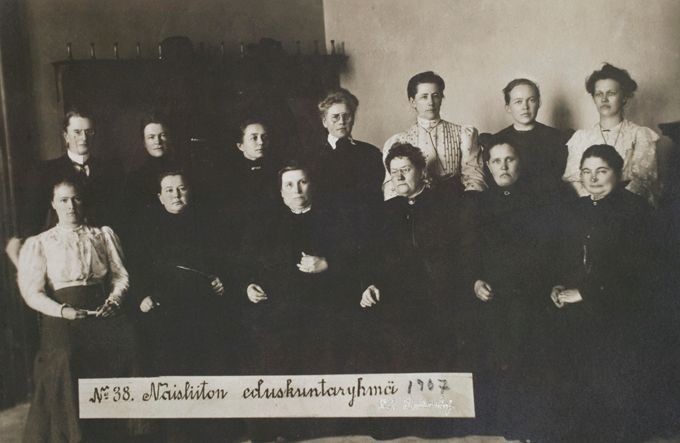
#OnThisDay, 23 May 1907, 19 women take their seats in the Finnish Parliament. They are the first women Parliamentarians in the world.
#WomenInHistory #VotesForWomen #FinnishHistory #EuropeanHistory #Histodons
Thiago Carvalho
boosted

Social media risks for youth mental health highlighted in new surgeon general report https://www.statnews.com/2023/05/23/social-media-youth-mental-health/?utm_medium=social&utm_source=mastodon&utm_campaign=mastodon_organic
Incidence and prevalence of 19 autoimmune diseases in the UK estimates that 1:10 individuals will suffer from at least one.
#Immunology #Autoimmunity #AutoimmuneDisease #Epidemiology
https://www.thelancet.com/journals/lancet/article/PIIS0140-6736(23)00457-9/fulltext
Thiago Carvalho
boosted

Biologists still have much to learn about #preprints adoption in their community.
ASAPbio invited representatives from social sciences (including @philipncohen ) to share their knowledge and experience regarding strategies they’ve used to build communities of preprint users.
https://us02web.zoom.us/meeting/register/tZ0oceCpqT8pGNCppCmhNcW2vNaOi4_9Nlrp#/registration
FDA approves a fecal microbiota pill for recurrent C. diff infection. My latest #ClinicalPipeline column for Nature Medicine. #Medicine #SciComm #ScienceCommunication #Microbiology https://www.nature.com/articles/d41591-023-00046-2
Thiago Carvalho
boosted

A fantastic thorough study on viral ecology within built environments! #virology #MicrobialEcology
“Consistent with the differences in diversity and structure between bacterial communities in air and on surfaces, the airborne and surface-borne viromes in the present study were distinct. The use of advanced ventilation and filtration systems may explain the lower virome diversity in subway air than in air from venues using natural ventilation.”
'This development, which health experts widely agree could greatly affect public health for a nation in which nearly half of all pregnancies are unintended, comes three decades later than many people once expected.'
https://www.nytimes.com/2023/05/22/opinion/birth-control-over-the-counter-fda.html
Thiago Carvalho
boosted

On this day in 1925: Joshua Lederberg born, won 1958 #NobelPrize for discovering genetic recombination in bacteria #ThisDayInBiotech
Joaquim Maria Machado de Assis is one of the greatest novelists ever (though I cant speak to the quality of the translations):
"I had to force myself to finish it. For years, I didn’t pick up another one of his books. When at last I did, I was bewildered by my initial impression. Where first I had been bored, I was now enthralled. Where I had seen salon chitchat, I now saw the musings of genius. I wanted more."
https://www.nytimes.com/2023/05/22/books/review/machado-de-assis-dom-casmurro.html
'The researchers found that certain frequency fluctuations from the orbitofrontal cortex were the best predictors of chronic pain. Although that brain signature was common among patients, Dr. Shirvalkar said, each patient also showed unique brain activity. “Every patient actually had a different fingerprint for their pain,” he said.'
Thiago Carvalho
boosted
'But organoids are not ready to represent complex neural networks, says Maria Leptin, the biologist who leads the European Research Council. “You cannot study the function of the brain and its interconnections, even though you can grow brain organoids,” she says. “It will be a long time before questions that require organ interactions or perception can be studied in this way.”
https://www.ft.com/content/7c35e08a-4931-4401-b27e-acabf974bff8?shareType=nongift

In which the author experiments with chatGPT as a reviewer.
"However, when asked to suggest more specific improvements, it fails and starts what is often described as hallucinating, the process by which the LLM provides a confident sounding response that is false or unsubstantiated."
#PeerReview
https://www.thelancet.com/journals/laninf/article/PIIS1473-3099(23)00290-6/fulltext
Thiago Carvalho
boosted
'Disease has long been weaponized against those who are perceived as “other.” From the bubonic plague of the 14th century to tuberculosis and H.I.V., the examples echo throughout the history of medicine. When people are frightened, they seek someone to blame, to create a narrative — even if that narrative is false — in which disease is punishment rather than a random unlucky event.'
https://www.nytimes.com/2023/05/21/opinion/the-next-pandemic-blame.html
Thiago Carvalho
boosted
'Anomotaenia brevis, a cestode that uses Temnothorax nylanderi ants as intermediate hosts, extends the lifespan of these hosts several fold and changes their behaviour, morphology, and colouration. The mechanisms behind these changes are unknown, as is whether the increased longevity is achieved through manipulation of the parasite.'
'But it’s not hard to make the case that the overall benefits from not commuting every day are equivalent to a gain in national income of at least one and maybe several percentage points. That’s a lot: There are very few policy proposals likely to produce gains on that scale. And yes, these are real benefits. C.E.O.s may rant about lazy or (per Musk) “immoral” workers who don’t want to go back into their cubicles, but the purpose of an economy is not to make bosses happy.'
https://www.nytimes.com/2023/05/22/opinion/work-from-home-commuting-gdp.html
Thiago Carvalho
boosted

Postdoctoral Researcher Position in Biophysics
University at Buffalo, SUNY
Unlock the secrets of biomolecular condensates with us at Banerjee Lab, UB as a #Postdoc in #Biophysics! #ScienceJobs
See the full job description on jobRxiv: https://jobrxiv.org/job/university-at-buffalo-suny-27778-postdoctoral-researcher-position-in-biophysics/?feed_id=46242
#ScienceJobs #hiring...
https://jobrxiv.org/job/university-at-buffalo-suny-27778-postdoctoral-researcher-position-in-biophysics/?feed_id=46242
Thiago Carvalho
boosted

Evolutionary Trajectories of New Duplicated and Putative De Novo Genes https://doi.org/10.1093/molbev/msad098 #science #evolution #biology #genome #evolgen_paper
'Here we use a nutrient-sensitized screening strategy to identify drugs that shift cellular energy metabolism based on their selective effect on cell growth and viability in glucose- versus galactose-containing media.'
Thiago Carvalho
boosted




Could brain/mind research benefit from a decadal survey?
I'm fascinated to learn that Astronomy/Astrophysics coordinate a giant community survey every 10 years to discuss priorities. It's a huge effort for the researchers involved in making it happen, and the last one:
drew from the astronomical community through hundreds of white papers, town hall meetings, and the advice of 13 sub-panels over several years to produce its recommendations
https://science.nasa.gov/astrophysics/decadal-2020/2020-decadal-survey
Astronomy is a bit different than brain/mind research because there has to be a lot more coordination due to the resources involved (a lot of funds > 1 telescope). But I imagine that an added benefit is community discussion of the "Grand Plan".
My growing sense is that the incentives in brain/mind research are a bit broken insofar as they encourage researchers to "make beans" as opposed to think "what needs to be done and how can I contribute?". Moreover, a lot of the funding priorities are coming from the top rather than the community. I wonder: would brain/mind research benefit from a survey something like what Astronomy does (with the caveat that the conclusion probably would not be: let's invest in 1 big thing)? 🤔
I've worked on all of science, from B cells to T cells.
https://fellowsherpa.com
Joined Nov 2022
