

Nick has moved to Mathstodon @internic@qoto.org
- Pronouns
- he/him/his
Moved to Mathstodon.xyz
Theoretical physicist by training (PhD in quantum open systems/quantum information), University lecturer for a bit, and currently paying the bills as an engineer working in optical communication (implementation) and quantum communication (concepts), though still pursuing a little science on the side. I'm interested in physics and math, of course, but I enjoy learning about really any area of science, philosophy, and many other academic areas as well. My biggest other interest is hiking and generally being out in nature.
Joined Nov 2022
Nick has moved to Mathstodon
boosted

A big heartfelt thank you from all of us at Signal to every person who has ever used Signal, gotten your friends to make the switch, and donated to support our work. It is truly an honor to build Signal for you. 💙
Nick has moved to Mathstodon
boosted

Hardcore physics post:
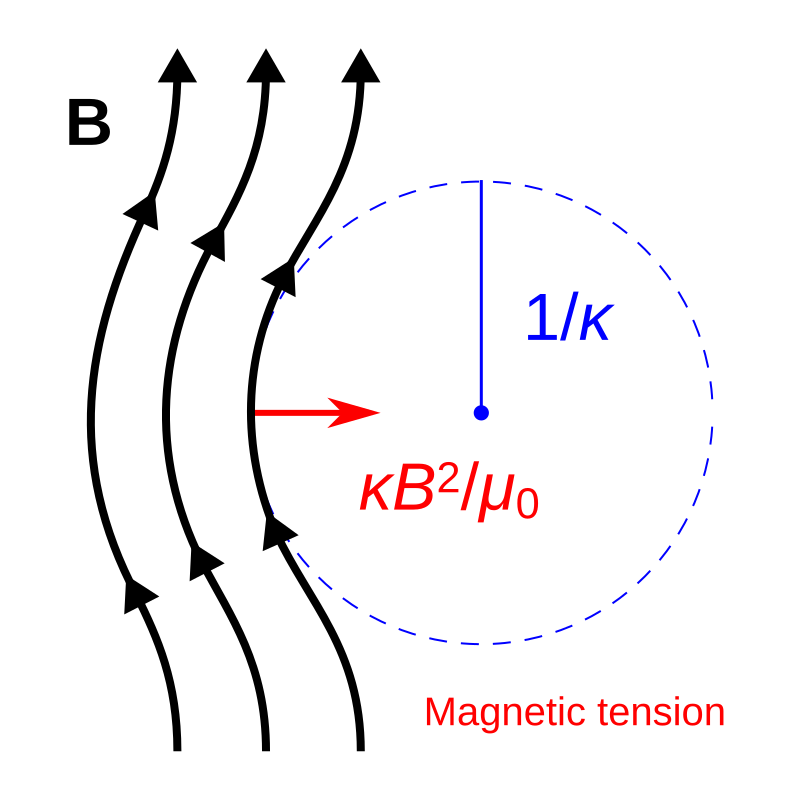
After my spectacularly popular post on Alfvén waves, there's nothing to do but write a much less popular post on the physics behind them. People say magnetic field lines in a plasma can act like stretched rubber bands: if they're bent, they try to straighten out. There's a Wikipedia article on this idea, which is called 'magnetic tension':
https://en.wikipedia.org/wiki/Magnetic_tension#Mathematical_statement
and I'd like to understand it.
They start with the equations of 'ideal magnetohydrodynamics' where you have a plasma with velocity vector field 𝐯, pressure p, density ρ and electric current vector field 𝐉 in a magnetic field 𝐁. It's called 'ideal' because we're assuming the plasma conducts electricity so well that the electric field is zero.
One of these equations, called the 'Cauchy momentum equation', says the plasma accelerates due to two forces:
the gradient of pressure, or more precisely −∇p, and
the force caused by the magnetic field, which is 𝐉 × 𝐁 as usual - this is called the Lorentz force.
They then do some fun vector calculus manipulations. Assuming |𝐁| is constant everywhere, they find a term in the force whose magnitude is the curvature κ of the magnetic field line, which points to the center of curvature of the magnetic field - where you approximate the magnetic field locally as going around a circle of radius 1/κ. See the picture to understand what the hell I just said.
I think I follow the calculation, but this is a force on the plasma, right? Not the magnetic field line per se! So why do they interpret it as the field line wanting to straighten out? If we knew 𝐯 is proportional to 𝐁 that would make sense, but they don't say anything about that.
Nick has moved to Mathstodon
boosted

Her Mental Health Treatment Was Helping. That’s Why #Insurance Cut Off Her Coverage.
—
Providers, patients and even some federal judges say progress-based insurance denials harm patients at key moments of mental health treatment.
@veronica Star Trek TNG had the same exact plot hole with an episode where two characters were "out of phase" (and, worse yet, they were in a starship that presumably also accelerated). Normally I don't have too much trouble suspending disbelief when consuming sci-fi, but I have to admit that that one bugged me (along with how they were breathing).
@ben @adamshostack @rmondello oh, if you mean the key icon in the lower left of the first photo, I think that's the icon that's used within 1Password for a password type entry (they have different entry types with different populated fields, e.g. "login" or "SSH key").
@ben @adamshostack @rmondello I'm fairly certain those are both 1Password dialogs. The first image shows what I think of as the 1Password logo (with and extra arrow to indicate a dropdown) at the right side.
Nick has moved to Mathstodon
boosted

Nick has moved to Mathstodon
boosted
What's causing the Great Stagnation? Most branches of physics are thriving. But in so-called "fundamental physics" - briefly, the search for the ultimate laws of nature - we haven't seen a successful new theory since 1980. Why not?
There are many causes. One is that string theory got a stranglehold on the market, crowding out other ideas. Another is that university bureaucrats are pressuring physicists to spend more and more time getting grants, which means following trends. But there's a third reason that is rarely discussed: physics is hard.
Just kidding: we all know physics is hard. But quantum gravity in particular is hard, and people don't spend enough time talking about exactly why it's hard.
First, physicists tend to assume that combining quantum mechanics, relativity and gravity will make us see strange new things when we probe down to a distance we get by combining Planck's constant ℏ, the speed of light 𝑐 and Newton's gravitational constant G. This distance, the 'Planck length', is about 10¹⁵ times smaller than what we can study now with particle accelerators. But a bunch of unexpected new stuff could happen long before we get down to the Planck length! Indeed we usually see surprises when we look at things 1000 times smaller than before.
Second, physicists like theories that can be extrapolated to *arbitrarily small* distances. These are called 'renormalizable' quantum field theories. The quest for such theories led physicists to supersymmetry and strings.
In these theories spacetime is a continuum - that is, it has no 'graininess' at small distances. We don't know this is true. Why don't we simply drop this assumption?
Well....
(1/n)
Nick has moved to Mathstodon
boosted

Buried in a story about yet another Elsevier journal editorial board resigning en masse (Journal of Human Evolution, https://retractionwatch.com/2024/12/27/evolution-journal-editors-resign-en-masse-to-protest-elsevier-changes/), there is an alarming new development in Elsevier's publication practices:
"In fall of 2023, for example, without consulting or informing the editors, Elsevier initiated the use of AI during production, creating article proofs devoid of capitalization of all proper nouns (e.g., formally recognized epochs, site names, countries, cities, genera, etc.) as well italics for genera and species. These AI changes reversed the accepted versions of papers that had already been properly formatted by the handling editors. This was highly embarrassing for the journal and resolution took six months and was achieved only through the persistent efforts of the editors. AI processing continues to be used and regularly reformats submitted manuscripts to change meaning and formatting and require extensive author and editor oversight during proof stage."
Nick has moved to Mathstodon
boosted

I'm just going to throw this out there: I have been getting a ton of new follows, and a lot of them appear to be bots and fake accounts.
I think we can mostly agree that bots and fake accounts are not a great thing for the majority of people in the Fediverse who aren't looking to artificially inflate follower counts - a process that really isn't beneficial to anyone who wants actual authentic engagement - and I'm concerned that this will eventually lead to the sort of spam plaguing Facebook.
Nick has moved to Mathstodon
boosted

Hello everyone,
I am a researcher at the CNRS in cognitive sciences. My research focuses on decision making: How we make decisions, and how we learn based on the consequences of our actions. Part of my research contributes to neuroscience (what are the mechanisms at play in the brain?). Another part contributes to AI and robotics (how can an agent effectively adapt its decisions to changes in the environment?).
Nick has moved to Mathstodon
boosted

Every polynomial with real coefficients factors into linear and quadratic terms.
How much machinery is needed to show this?
If it crosses the X-axis then it has a linear term.
If it doesn't cross the X-axis then it is of even degree, and the roots come in complex conjugate pairs.
What the minimum needed to see this?
@Tyrion1803 Other than metadata files at the top of the file hierarchy (the plists, lock file, etc.), everything else under the mapped and bands is an file with an opaque 3-hex-character name unrelated to the actual names of actual files on the system being backed up. If you see normally-named files on yours, I guess maybe this is the sign I was looking for that things are encrypted.
@Tyrion1803 I can read the XML files (e.g. .plist files) at the top of the file hierarchy, but below that are a bunch of opaquely named files in the mapped and bands subdirectories, which I would assume are mostly binary. The only thing I could think to do was try to run 'strings' on some of the files, but given that it's over 1 TB of data I'd rather not try to sift through it for text.
The problem here is that I've never gotten to compare an encrypted Time Machine backup and a non-encrypted one, so I don't know how they're expected to differ.
To your other question, the person who made the backup (not me, again, I'm not a Mac user) doesn't know. But that's why I was thinking "surely there's a way to tell whether it's plaintext just by looking at the sparse bundle," which I imagine is true but I don't know what to expect. Presumably, even if it's encrypted there's may be some plaintext metadata at the top level.
Nick has moved to Mathstodon
boosted

what's the best way to sign & distribute an open source Windows app as a student? ideally without giving away my address or spending hundreds of dollars !!
I am not at all an #Apple person. Can someone tell me how I can verify that a Time Machine backup on a NAS has been encrypted on the client side (other than via the Time Machine GUI on the client machine)? I would assume that if I have access to the NAS volume itself (which I do) it should be possible to verify that it's not plaintext (even if I can't verify the specific type of encryption or that it's not corrupted).
Nick has moved to Mathstodon
boosted

HISTORY OF PHYSICS
Chandrasekhara Venkata Raman and his love for music.
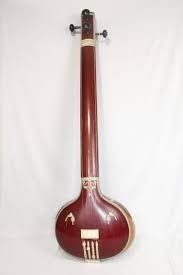
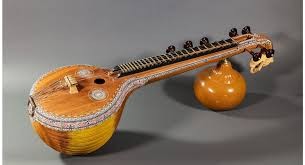
Although he didn't study them exhaustively, Raman discovered that the rich tonal quality of the tambura and veena (shown below) was due to the peculiarity of the bridge.
1/
Nick has moved to Mathstodon
boosted

“Magic of the North”
Fires glow above and below in this award-winning image from photographer Josh Beames. In the foreground, lava from an Icelandic eruption spurts into the air and seeps across the landscape as it slowly cools. Above, the northern aurora ripples through the night sky, marking the dance of high-energy particles streaming into our atmosphere, guided by the lines of our magnetic field. Throw in some billowing turbulent smoke, and it’s hard to get more fluid dynamical (or beautiful!) than this. (Image credit: J. Beames/NLPOTY; via Colossal)
#aurora #eruption #fluidDynamics #fluidsAsArt #lava #magnetohydrodynamics #physics #science #solarWind #turbulence
Nick has moved to Mathstodon
boosted

When digital materials are vulnerable to sudden removal, our collective memory is compromised, and the public’s ability to access its own history is at risk. This year, we released the Vanishing Culture report, a study that details instances of cultural loss and emphasizes the crucial role that libraries and archives play in preserving materials for future generations.
Help us in saving these resources: https://archive.org/donate/?origin=mstdn-eoy2024
Nick has moved to Mathstodon
boosted

20 years ago today, a tiny neutron star reached halfway across the galaxy and slammed our planet with a gamma-ray hammer.
https://www.scientificamerican.com/article/an-earth-rocking-cosmic-explosion-turns-20/



- Pronouns
- he/him/his
Moved to Mathstodon.xyz
Theoretical physicist by training (PhD in quantum open systems/quantum information), University lecturer for a bit, and currently paying the bills as an engineer working in optical communication (implementation) and quantum communication (concepts), though still pursuing a little science on the side. I'm interested in physics and math, of course, but I enjoy learning about really any area of science, philosophy, and many other academic areas as well. My biggest other interest is hiking and generally being out in nature.
Joined Nov 2022
