

Martin Ruskov @mapto@qoto.org
- Games
- https://mapto.itch.io
- Others (+fedi)
- https://linktr.ee/mapto
Studying how people interact, in the past (#CulturalAnalytics) and today (#EdTech #Crowdsourcing). Researcher at @IslabUnimi, University of Milan. Bulgarian activist for legal reform with @pravosadiezv. I use dedicated accounts for different languages.
My profile is searchable with https://www.tootfinder.ch/
Joined Nov 2022
Martin Ruskov
boosted

Danish parents encourage unstructured play (especially the kind that lets children test their limits) as a way to help them grow into competent, independent adults.
More from a psychologist from Denmark:
https://theconversation.com/denmarks-hands-off-approach-to-parenting-could-offer-a-blueprint-for-raising-more-resilient-self-reliant-kids-281485
Martin Ruskov
boosted
@TheConversationUS "Chip manufacturing behaves less like a competitive commodity market and more like a layered oligopoly. Scale matters because the leading firms can reinvest in research, improve yields, secure equipment and deepen customer relationships. In the case of graphics processor chips, designers such as NVIDIA, which has 85% market share, depend on advanced semiconductor foundries such as TSMC, which has more than 70% market share, to manufacture chips using extreme ultraviolet lithography machines from ASML, a monopoly."
@TheConversationUS "Chip manufacturing behaves less like a competitive commodity market and more like a layered oligopoly. Scale matters because the leading firms can reinvest in research, improve yields, secure equipment and deepen customer relationships. In the case of graphics processor chips, designers such as NVIDIA, which has 85% market share, depend on advanced semiconductor foundries such as TSMC, which has more than 70% market share, to manufacture chips using extreme ultraviolet lithography machines from ASML, a monopoly."
Martin Ruskov
boosted

🌡️Europe is warming faster than any other continent.
In 2025, about 95% of the continent saw above-average temperatures.
To fight climate change we are building a digital twin of our planet to monitor & predict natural phenomena.
Explore DestinE → https://destination-earth.eu
---
https://nitter.net/DigitalEU/status/2051999155434713542#m
Martin Ruskov
boosted

Tag:harassment_prevention=ask_angela - OpenStreetMap Wiki
https://wiki.openstreetmap.org/wiki/Tag:harassment_prevention%3Dask_angela
Amazing! I had just been wondering whether this can be mapped or whether I would have to start a proposal. Yay! It already exists. Obviously sad that it has to.
#OpenStreetMap
Related:
"The bulletproof marker to Emmett Till at Graball Landing, in Mississippi
Selected by Sarah Lewis
President Joe Biden, in his last days in office, announced an act to create a monument to Emmett Till and Mamie Till-Mobley. Near Glendora, Miss., is a marker that offers evidence of the need for this act—a marker that is deliberately 500 lbs. and bulletproof, covered with abrasion-resistant acrylic. It is the fourth time a marker has been placed there; the first three were all shot and thrown in the Tallahatchie River, where Till was found. Till helped inspire the Civil Rights Movement that we know today; the resistance to honoring him speaks to the work that remains before we can all claim freedom on American ground.
Lewis is the founder of the Vision and Justice initiative and currently the John L. Loeb Associate Professor of the Humanities and Associate Professor of African and African American Studies at Harvard University; she is also the organizer of the exhibition and book If Emmett Till Lived…, set to premiere in September."
https://time.com/collection/our-america-250/2026/art-that-defines-america/
But I find it tremendously disappointing that so many of the "American tech insiders" in this list are so obsessed with what they do. To the extent that they declare it to be the most defining thing for their society.
Do these people really consider themselves so exceptional that they believe they personally are responsible for the most important changes in society? Or is it that they are so much engaged in their petty business, that they can't stop selling even when asked a big question? To me it doesn't really matter - either way they fail to live up to the expectations arriving with the question.
Here's an answer for a life-changing technology that truly stands out:
"The Bicycle
Selected by Reshma Saujani
In the 1890s, the bicycle, as we know it today, finally let women go where they wanted, on their own, without asking permission. It even played a central role in the fight for women’s suffrage—a simple machine with outsized impact. Today, it reminds us what technology should do: expand freedom and opportunity. Millions of American women are still fighting for what the bicycle once gave them: the freedom to move, make decisions, and control their own futures. At 250 years in, that’s still the most American question we can ask of any new technology: Will it set people free?
Saujani is a lawyer, activist, and the founder of the nonprofits Girls Who Code and Moms First."
https://time.com/collection/our-america-250/2026/tech-innovations-that-define-america/
Martin Ruskov
boosted
USB-C just matched with your laptop! 💻
As of 28 April 2026, laptops join phones, tablets and other portable devices under the EU common charger rules.
This means less e-waste and less clutter.
No swiping left on compatibility.
🔗http://link.europa.eu/QDMFTh
---
https://nitter.net/DigitalEU/status/2051628977173811553#m
Martin Ruskov
boosted
The framework boils down to key tests:
• Legitimate authority
• Just cause
• Right intent
• Proportionality
• Last resort
• Likelihood of success
Fail these and the war isn’t justified.
@claudeai this probably explains the investment. Looks cool. I really hope they can make this sustainable, because ever-growing generalist models are not. Not environmentally, not financially, not in any meaningful way.
Martin Ruskov
boosted

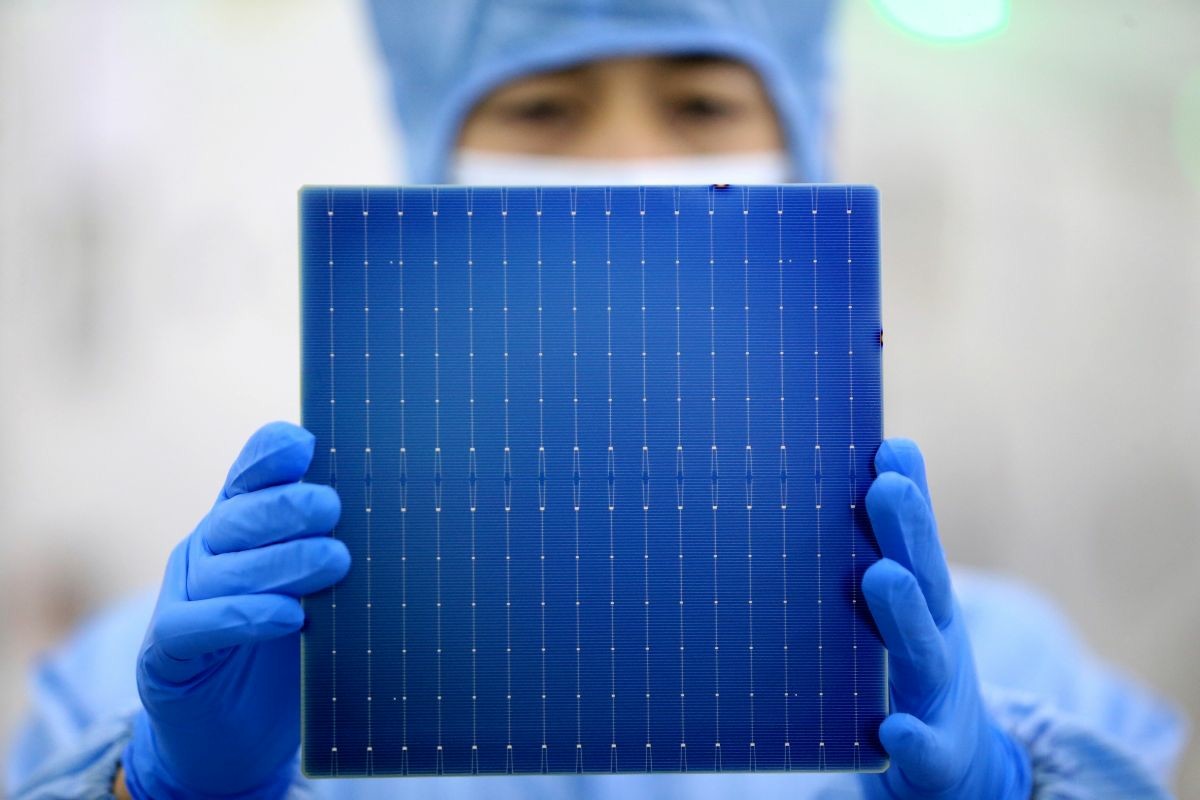
Brussels bars Chinese-made ‘brains’ of solar panels from EU funding https://www.euractiv.com/news/brussels-bars-chinese-made-brains-of-solar-panels-from-eu-funding/?utm_source=eac&utm_medium=mastodon&utm_campaign=%40euractiv%40masto.ai
Martin Ruskov
boosted
Martin Ruskov
boosted

I've put together a test AppImage for work-in-progress CMYK mode in GIMP. If you're interested in trying it out, you can get it here: https://gitlab.gnome.org/GNOME/gimp/-/merge_requests/2379#note_2750929
While it's functional, note this is very much a "help me start finding the bugs and unimplemented areas to work on" kind of thing, not a "this is 100% ready for production!!!" :)
Martin Ruskov
boosted

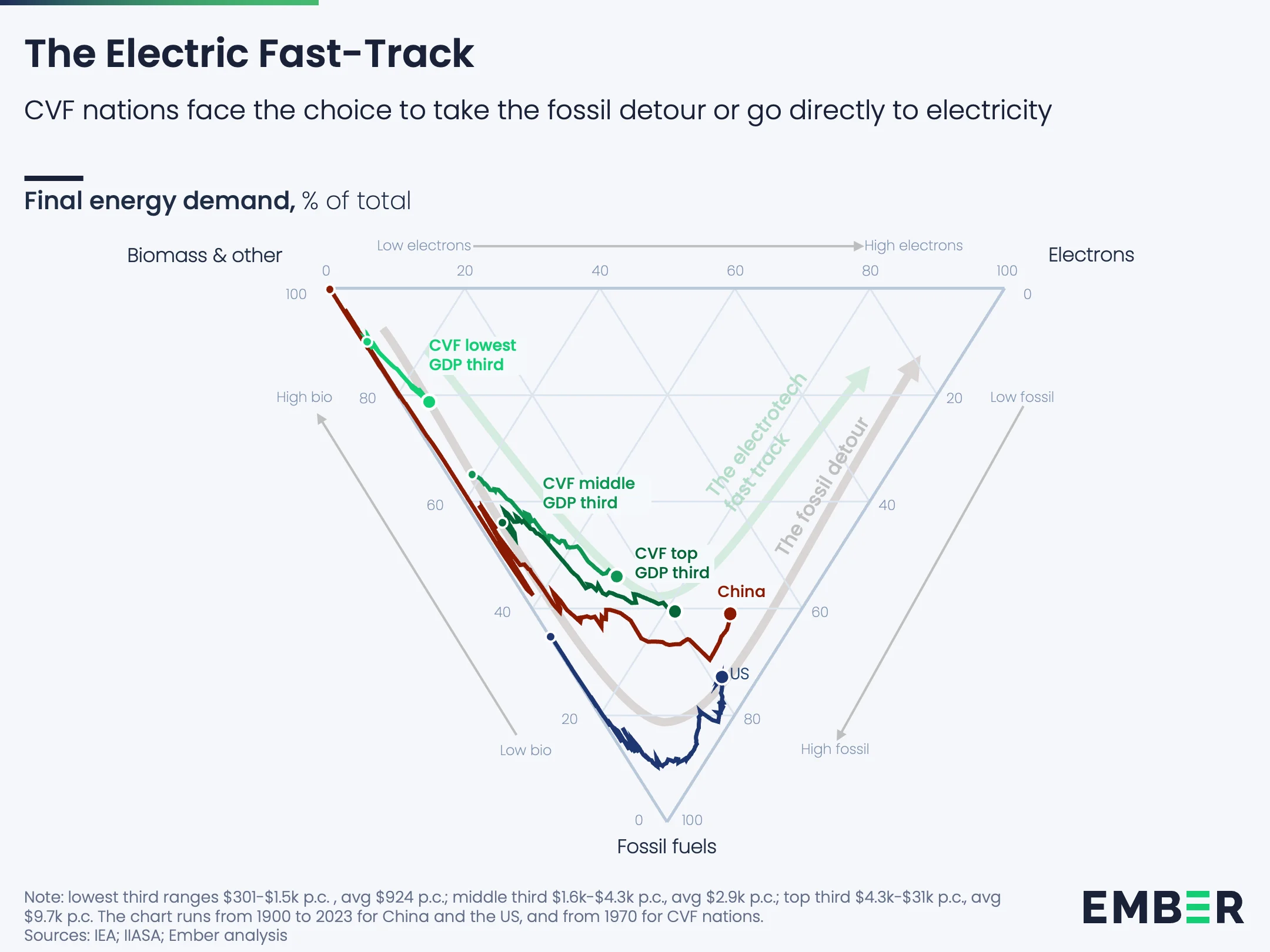
This is at the crux:
Macroeconomics: from fossil import drain to electric abundance
And the question for future energy choice: Fast-track or detour?
This is IMO one of the most compelling graphics on the leapfrogging:
Developed countries have made a fossil fuel detour on the way from biomass to clean energy, but countries who have not committed to fossil fuels can make a shortcut straight to clean energy.
https://ember-energy.org/latest-insights/the-electric-fast-track-for-emerging-markets/
Martin Ruskov
boosted
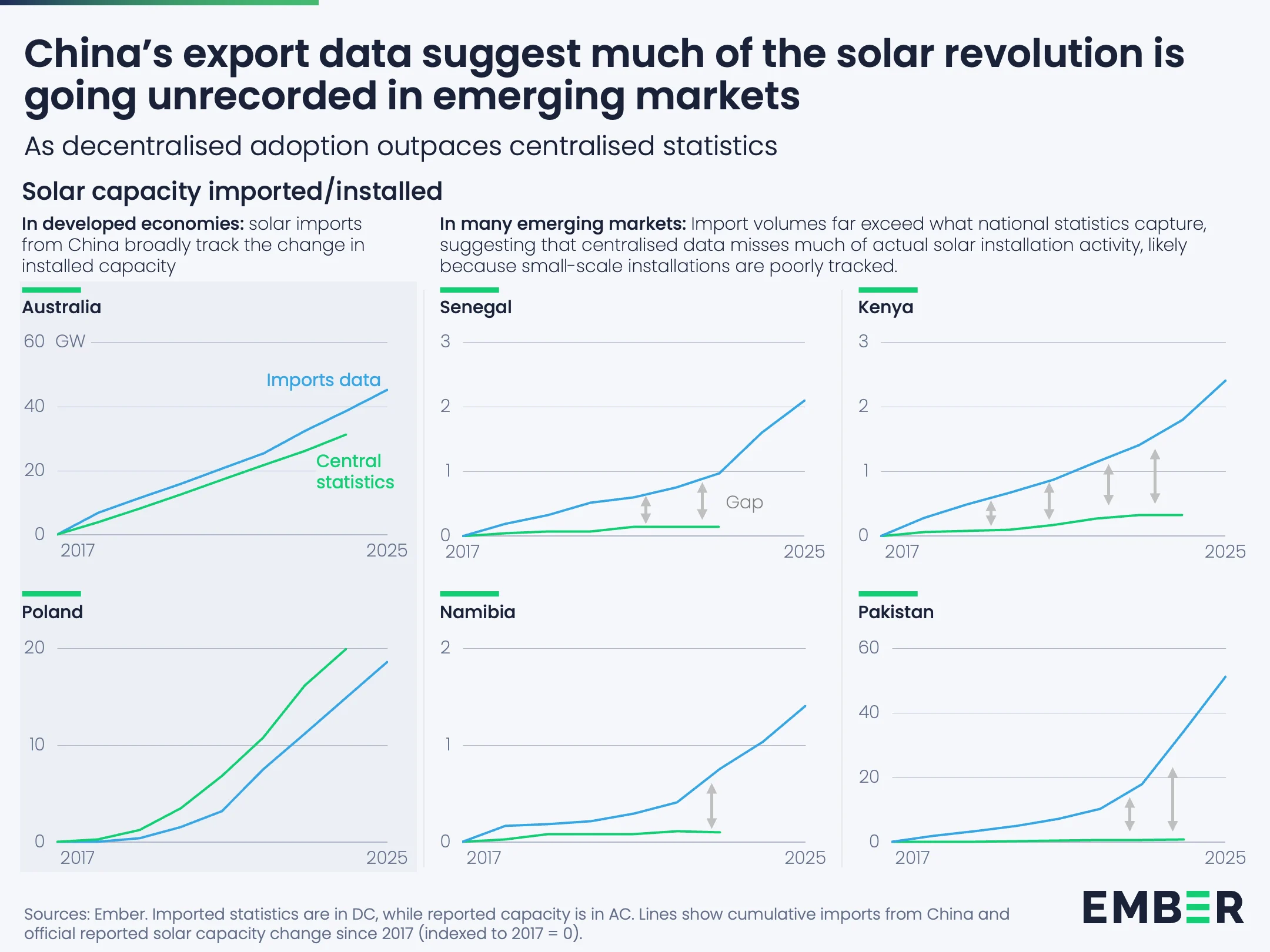
It's a quiet leapfrogging that's not in the news because "Change is outpacing the centralised statistics: for example, small solar panels on balconies and rooftops go largely unregistered in national figures. The gap between panels imported and capacity officially reported is large and growing."
https://ember-energy.org/latest-insights/the-electric-fast-track-for-emerging-markets/
Martin Ruskov
boosted
"Solar panel imports will reduce fuel imports. The savings from avoiding diesel can repay the cost of a solar panel within six months in Nigeria, and even less in other countries. In nine of the top ten solar panel importers, the import value of refined petroleum eclipses the import value of solar panels by a factor of between 30 to 107."
https://ember-energy.org/latest-insights/the-first-evidence-of-a-take-off-in-solar-in-africa/
Martin Ruskov
boosted
"In 2024, Pakistan installed about 15 Gigawatts of solar panels; for context, the country’s total peak electricity demand is about 30 Gigawatts.
Households put so many panels on their rooftops that Pakistani cities now look visibly different on satellite maps."
https://www.wired.com/story/african-imports-of-chinese-solar-panels-increase/
These countries are leapfrogging "developed" countries which have painted themselves into a fossil fueled corner.
@benzinazero giustamente l'autore si vergogna di sottoscrivere, perché una spiegazione così inadeguata merita un titolo diverso:
"«Ero praticamente ferma. Faccio sempre questa strada e lo so che c'è una ciclabile» ha raccontato con gli occhi lucidi all'incrocio tra via Paolo Veronese e via IV Novembre al figlio del 68enne. La guidatrice doveva immettersi sulla principale quando, procedendo in avanti di qualche metro, si è trovata il 68enne sul cofano. «Ho visto che un'auto stava svoltando e, tempo di voltarmi, ho visto la bicicletta arrivarmi addosso. Stavo andando piano»."
Martin Ruskov
boosted
Courage isn’t about being fearless.
It’s speaking up, risking failure and acting anyway, even when you’re not ready.
And experts say it’s a skill you build – one hard decision at a time.
https://theconversation.com/what-courage-is-how-to-build-it-and-why-you-should-take-a-risk-280257
- Games
- https://mapto.itch.io
- Others (+fedi)
- https://linktr.ee/mapto
Studying how people interact, in the past (#CulturalAnalytics) and today (#EdTech #Crowdsourcing). Researcher at @IslabUnimi, University of Milan. Bulgarian activist for legal reform with @pravosadiezv. I use dedicated accounts for different languages.
My profile is searchable with https://www.tootfinder.ch/
Joined Nov 2022
