

Martin Ruskov @mapto@qoto.org
- Games
- https://mapto.itch.io
- Others (+fedi)
- https://linktr.ee/mapto
Studying how people interact, in the past (#CulturalAnalytics) and today (#EdTech #Crowdsourcing). Researcher at @IslabUnimi, University of Milan. Bulgarian activist for legal reform with @pravosadiezv. I use dedicated accounts for different languages.
My profile is searchable with https://www.tootfinder.ch/
Joined Nov 2022
Martin Ruskov
boosted

I've put together a test AppImage for work-in-progress CMYK mode in GIMP. If you're interested in trying it out, you can get it here: https://gitlab.gnome.org/GNOME/gimp/-/merge_requests/2379#note_2750929
While it's functional, note this is very much a "help me start finding the bugs and unimplemented areas to work on" kind of thing, not a "this is 100% ready for production!!!" :)
Martin Ruskov
boosted

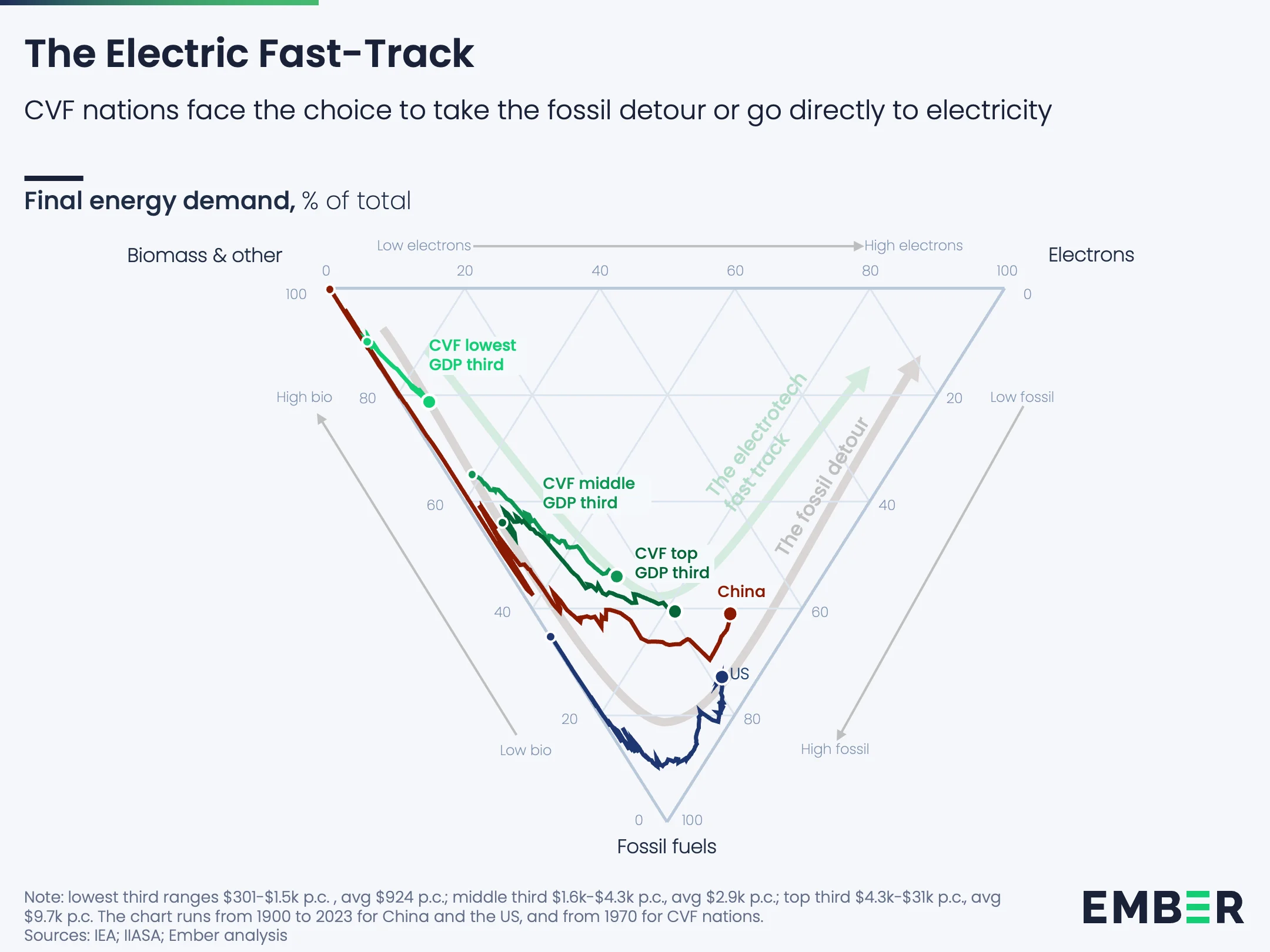
This is at the crux:
Macroeconomics: from fossil import drain to electric abundance
And the question for future energy choice: Fast-track or detour?
This is IMO one of the most compelling graphics on the leapfrogging:
Developed countries have made a fossil fuel detour on the way from biomass to clean energy, but countries who have not committed to fossil fuels can make a shortcut straight to clean energy.
https://ember-energy.org/latest-insights/the-electric-fast-track-for-emerging-markets/
Martin Ruskov
boosted
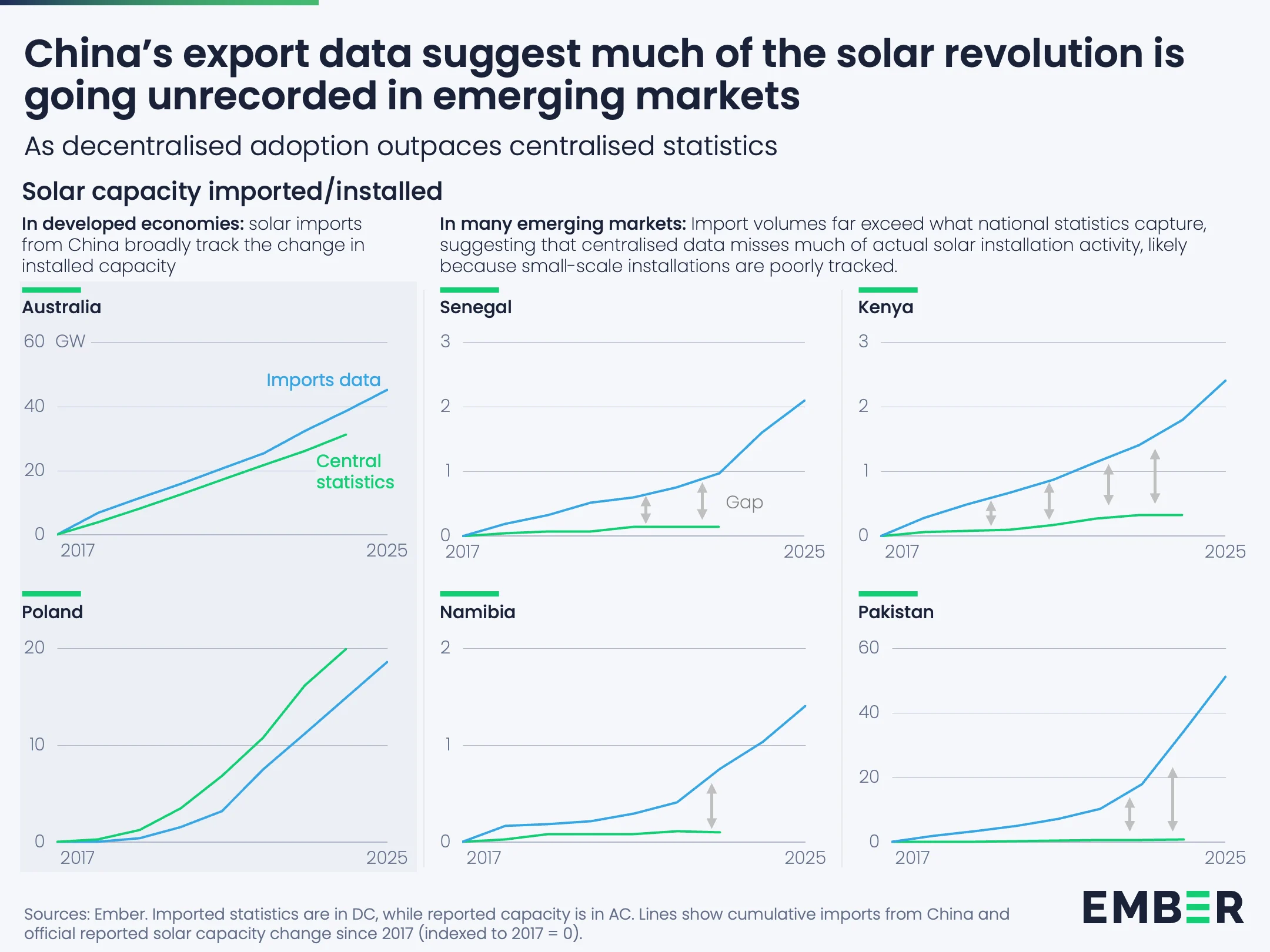
It's a quiet leapfrogging that's not in the news because "Change is outpacing the centralised statistics: for example, small solar panels on balconies and rooftops go largely unregistered in national figures. The gap between panels imported and capacity officially reported is large and growing."
https://ember-energy.org/latest-insights/the-electric-fast-track-for-emerging-markets/
Martin Ruskov
boosted
"Solar panel imports will reduce fuel imports. The savings from avoiding diesel can repay the cost of a solar panel within six months in Nigeria, and even less in other countries. In nine of the top ten solar panel importers, the import value of refined petroleum eclipses the import value of solar panels by a factor of between 30 to 107."
https://ember-energy.org/latest-insights/the-first-evidence-of-a-take-off-in-solar-in-africa/
Martin Ruskov
boosted
"In 2024, Pakistan installed about 15 Gigawatts of solar panels; for context, the country’s total peak electricity demand is about 30 Gigawatts.
Households put so many panels on their rooftops that Pakistani cities now look visibly different on satellite maps."
https://www.wired.com/story/african-imports-of-chinese-solar-panels-increase/
These countries are leapfrogging "developed" countries which have painted themselves into a fossil fueled corner.
Martin Ruskov
boosted

Courage isn’t about being fearless.
It’s speaking up, risking failure and acting anyway, even when you’re not ready.
And experts say it’s a skill you build – one hard decision at a time.
https://theconversation.com/what-courage-is-how-to-build-it-and-why-you-should-take-a-risk-280257
Martin Ruskov
boosted

Thanks to @deadsuperhero for the collaboration on this update to my article from last summer. As Sean put it: "It's a way to reflect on how things have changed over the past six months, with clear ideas on where things are headed." Hope like the last time, this sparks good conversations and further motion.
The Seven Deadly #Fediverse UX Sins: A Redemption Report Card https://wedistribute.org/2026/04/the-seven-deadly-fediverse-ux-sins-a-redemption-report-card
Martin Ruskov
boosted

The US is so pathologically capitalist
...that they get to the point where:
1. they commoditize political resistance by writing tons of self-help books of dubious quality on the topic
2. they commoditize the abundance of the above by selling the excess in an outlet (Humble Bundle is a sort of outlet for digital products)
https://www.humblebundle.com/books/no-kings-library-berrettkoehler-books
@resist
Martin Ruskov
boosted
Your face is becoming your password, and you can’t change your face.
Facial recognition systems turn your identity into a permanent digital key. If that data is breached, it’s not just another hack — it’s a lifelong vulnerability that can track you, expose you and be nearly impossible to undo.
https://theconversation.com/facial-recognition-data-is-a-key-to-your-identity-if-stolen-you-cant-just-change-the-locks-278289
Martin Ruskov
boosted
Italy's prime minister is now aligning with European leaders like Merz and Macron instead of Trump, a shift driven partly by Trump's unpopularity in Italy.
Just 12% of Italians view him favorably, and his attacks on the Pope in a predominantly Catholic country are not helping.
Martin Ruskov
boosted

Amazon spent $75M on Melania. It may finish under $20M at the box office, with theaters keeping half. Hollywood calls that a loss. Amazon calls it strategy. When power and capital intersect, the math carries weight.
https://theintellectualistofficial.substack.com/p/melania-the-movie-and-amazons-60
Martin Ruskov
boosted

Japan is moving to become a major arms supplier in Asia to shore up regional security as U.S. leadership wanes, but must act faster and compete with South Korea to make that strategy work. https://www.japantimes.co.jp/commentary/2026/04/30/japan/japan-teaches-no-us/?utm_medium=Social&utm_source=mastodon #commentary #japan #us #usjapanrelations #southkorea #defense #asiapacific
Martin Ruskov
boosted
AI’s apparent inability to generate interesting and unique images and videos is becoming harder to ignore.
A computer scientist explains why they weren’t surprised about OpenAI’s decision to shut down video generation tool Sora.
https://theconversation.com/soras-downfall-signals-broader-problems-with-ais-creative-utility-280013
Martin Ruskov
boosted
Donkeys symbolize endurance for Palestinians.
Harm to animals—through attack, deprivation, seizure, and forced separation—has long accompanied Israeli violence against Palestinian communities.
https://theconversation.com/donkeys-are-a-symbol-of-endurance-for-palestinians-they-are-also-a-target-of-settler-violence-and-care-275639
Martin Ruskov
boosted
Supply chain disruptions stemming from the conflict in Iran are beginning to create chokepoints across Japan's auto industry, including the network of companies surrounding Toyota. https://www.japantimes.co.jp/business/2026/04/29/companies/toyota-supply-chain-shortage/?utm_medium=Social&utm_source=mastodon #business #companies #toyota #carmakers #carparts #middleeast
Martin Ruskov
boosted

Cyberbullying isn’t just ‘kids being kids’, it's a growing issue with real consequences. But what if parents held the key to a safer internet?
The PARTICIPATE project provides parents with tools, schools with guides and governments with data to act.
30 years of #MSCA = 30 years of science that works for society.
Read the full article: https://t.co/Y5ONeoL6kd
An outstanding article, and it's not about AI. It's about added value and doing business:
"A marketing manager with no engineering background opens Cursor on Monday morning. By Wednesday afternoon, she has a working customer-facing app. It looks polished. It performs the core task. She demos it to her VP, who forwards it to their CMO, who then shows it in the executive staff meeting as evidence that the team is “moving at AI speed.”
By Friday, it is in front of customers.
No one asked who owned the decision to ship it. No one tested it against the conditions it would actually face. No one had the cultural standing to say this looks great, and we are not putting it into production. The prototype became a product because the organization had no system for telling the difference.
I watched a version of this scenario play out recently in a boardroom. A senior executive demoed an AI-built internal tool. The room admired the speed. What received less attention were the harder questions: Who would own it after launch? Who would maintain it? And what would happen when it produced an answer that was confidently wrong?
This is what vibe coding is about to expose across businesses. The companies that think the story is about software are going to lose to the companies that understand the story is about judgment."
https://www.forbes.com/sites/jasonwingard/2026/04/23/vibe-coding-will-break-your-company/
Martin Ruskov
boosted

“There’s a misconception that you can somehow influence or persuade AI systems directly. That’s not really how they work,” says Market Brew founder and Chief Technology Officer Scott Stouffer.
“What you can do is make sure that your information is structured, sourced, and aligned in a way that those systems are more likely to retrieve it when someone asks a question. It’s less about changing the conversation and more about making sure your facts are eligible to be part of it.”
Martin Ruskov
boosted



Could using AI for simple tasks make you worse at them?
A new study found that people who relied on AI for basic maths and reading tasks performed better at first, but struggled more once it was removed and were less likely to persist.
#FrAIday: http://tr.ee/c47YkR
---
https://nitter.net/DigitalEU/status/2047587346371973506#m
Martin Ruskov
boosted
Data centers are straining power grids.
But new research suggests they don’t have to. With the right design, they can generate energy, store it and even reuse waste heat to support nearby communities.
https://theconversation.com/data-centers-dont-have-to-be-a-burden-on-local-communities-and-can-even-support-them-by-generating-power-and-repurposing-waste-heat-276729
- Games
- https://mapto.itch.io
- Others (+fedi)
- https://linktr.ee/mapto
Studying how people interact, in the past (#CulturalAnalytics) and today (#EdTech #Crowdsourcing). Researcher at @IslabUnimi, University of Milan. Bulgarian activist for legal reform with @pravosadiezv. I use dedicated accounts for different languages.
My profile is searchable with https://www.tootfinder.ch/
Joined Nov 2022
