
Debt Ceiling Politics
The debt ceiling has become increasingly political every year. How terribly the GOP did electing the speaker of the house does not bode well for raising the debt ceiling in earnest. As usual, regular people will suffer.

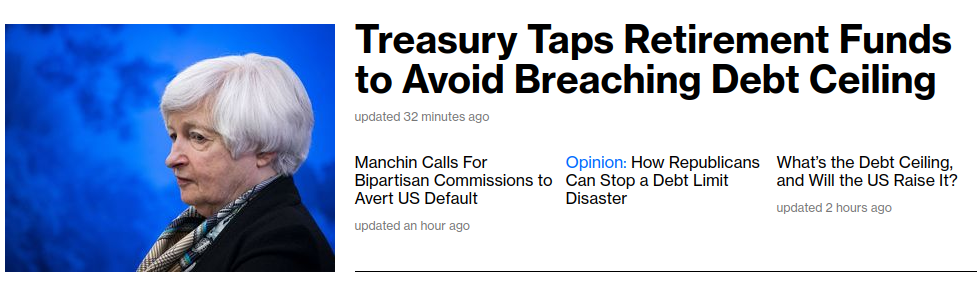
Keep in mind that there's a well-known strategy that presidents have often employed where they will choose to shut down high-profile things like national parks and blame Congress for it, all to get the public to turn against legislators, forcing them to bow to the president's demands.
This is a case of that.
If the Treasury doesn't have the money to continue spending on all of the executive branch's programs, then it chooses for itself which ones to pull back on.
If the Treasury is tapping retirement funds instead of, I don't know, the defense budget or travel budgets, then that's on them.
It's a political stunt that the president is engaging in, and we all need to keep that in mind.
@volkris That's not how the debt ceiling works. It's a self imposed limit created by congress, not the president.
No, the US Constitution assigns authority to borrow to Congress, as we want to be really sure that there's general consensus among the population before we're all obligated for generations to work to pay off those debts.
The debt ceiling is merely the total amount of borrowing that Congress has authorized.
It wasn't self imposed, but was built directly into the framework of the US government because that borrowing was seen as such a critical thing to include in the checks and balances.
Here's another way to respond:
If I give you a million dollar check but with the stipulation that you cannot cash it, are you really rich?
Technically, accounting-wise, you have that money, but practically, no, you're no better off.
Graeber's graphs are counting exactly that situation, counting the private sector as richer based on money locked up in loans to the federal government.
If government paid off those loans instead of revolving it into new loans then the private sector would ACTUALLY be richer, able to use that capital to invest in machinery, hiring, and all sorts of other things.
His argument miscounts unspendable paper wealth and so is misleading.

@volkris If you give me a check (and you have trust, like say, a government) and I'm able to pass it off to someone else for goods and services, then yes, I obviously got richer without having to cash it.
Money IS accounting of debt. What gives dollar it's value is the ability for the US government to tax. In other words, force people to pay back their debt (taxes owed), which it wants in dollars (which it creates!)