
Here's a postmortem of Starship's second launch attempt, and what I think SpaceX will need to do to fix it. …
For those who didn't watch, things on the second launch attempt appeared very, very good at the start. No obvious damage at the pad, all 30 Raptor 2 engines burning all the way to staging, and the impressive hot-staging maneuver going off with no obvious hitch. …
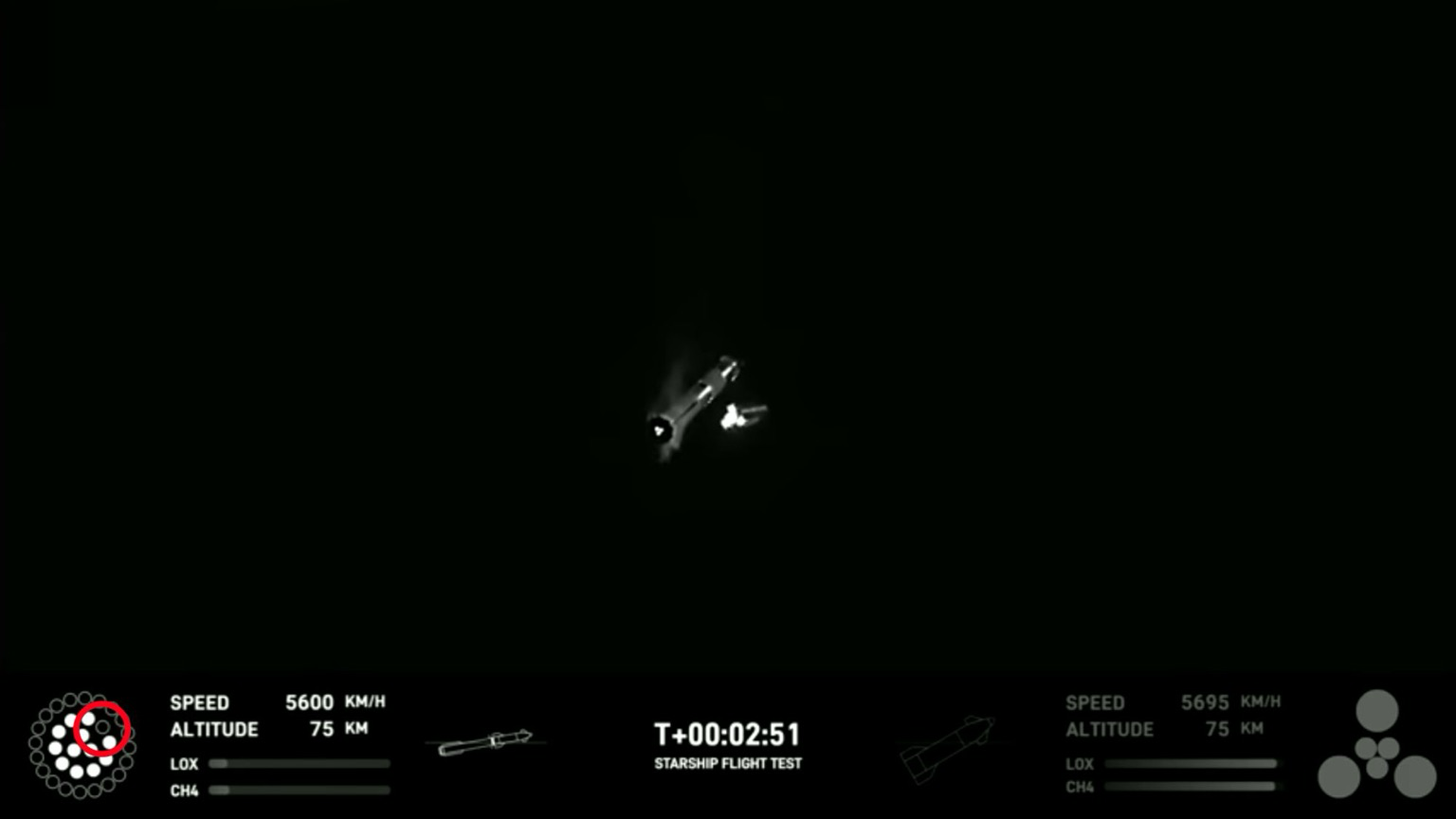
But as the engines on the booster began to restart around 250 in advance of the boost-back burn, one engine did not restart. This was accompanied by a visible burst of gas. …
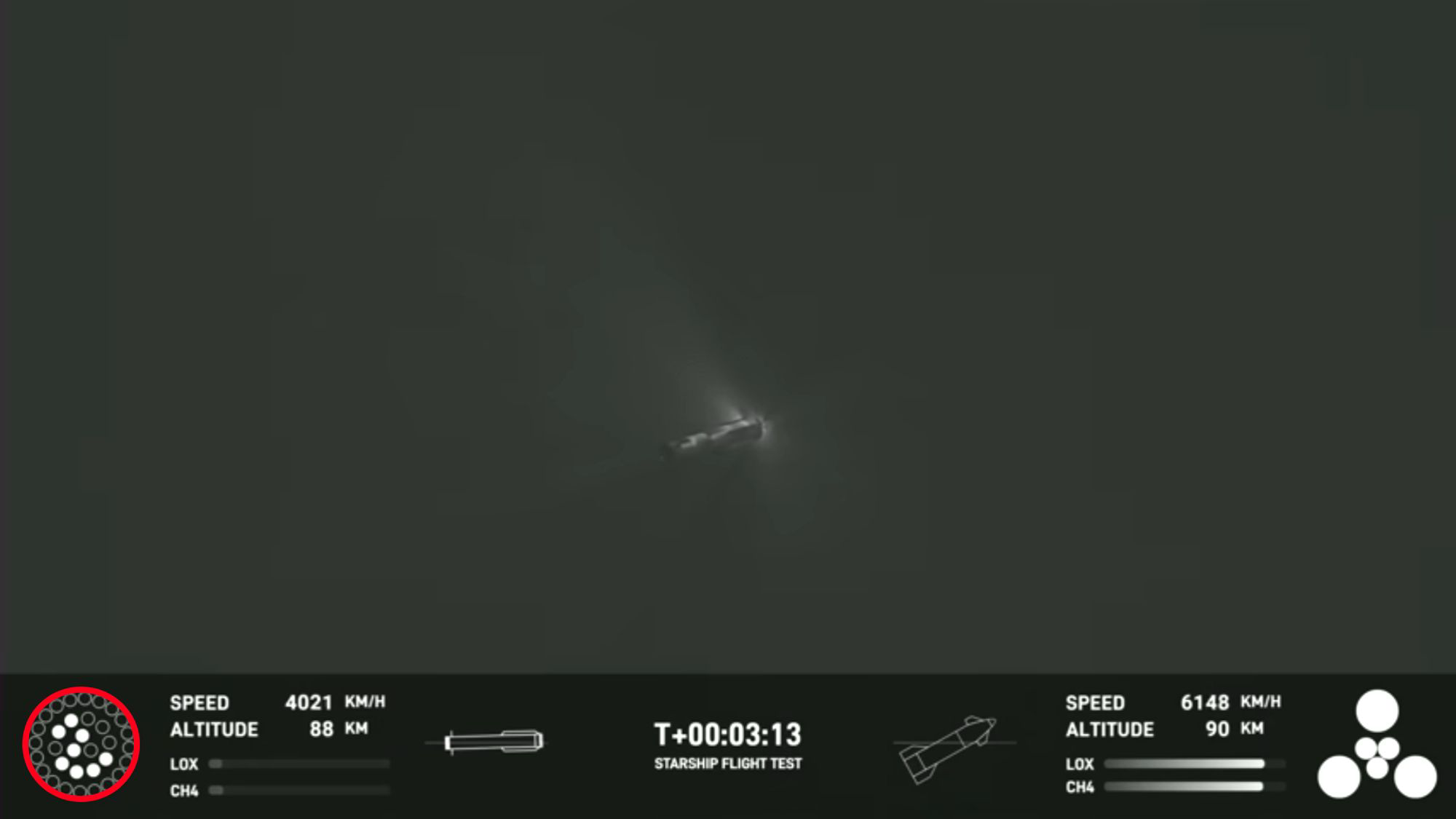
More of the visible plumes appeared as a cascade of engines failed. By 3:13, five engines were out. Two more went out in the next two seconds. At 3:17, all engines shut off. …
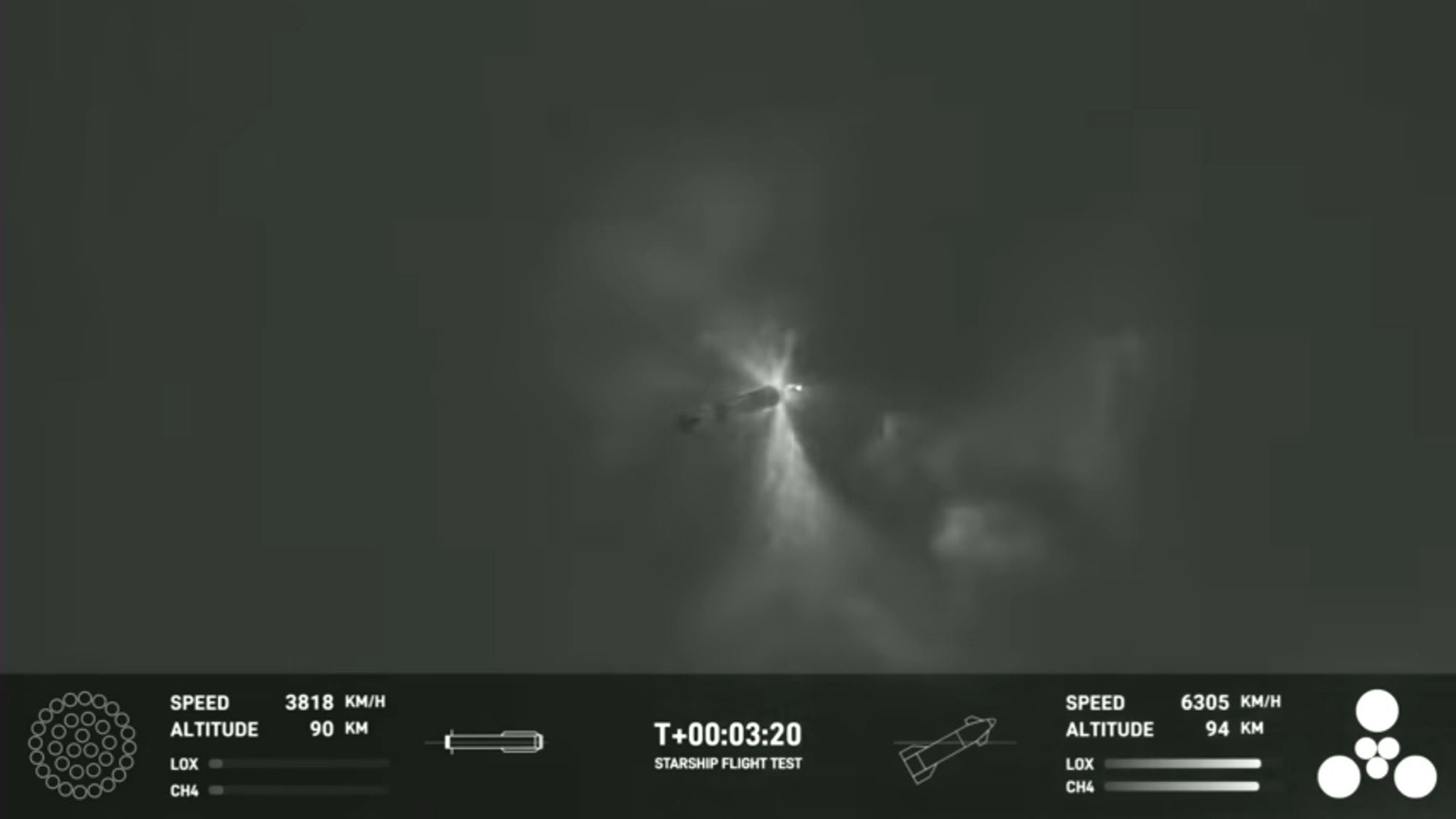
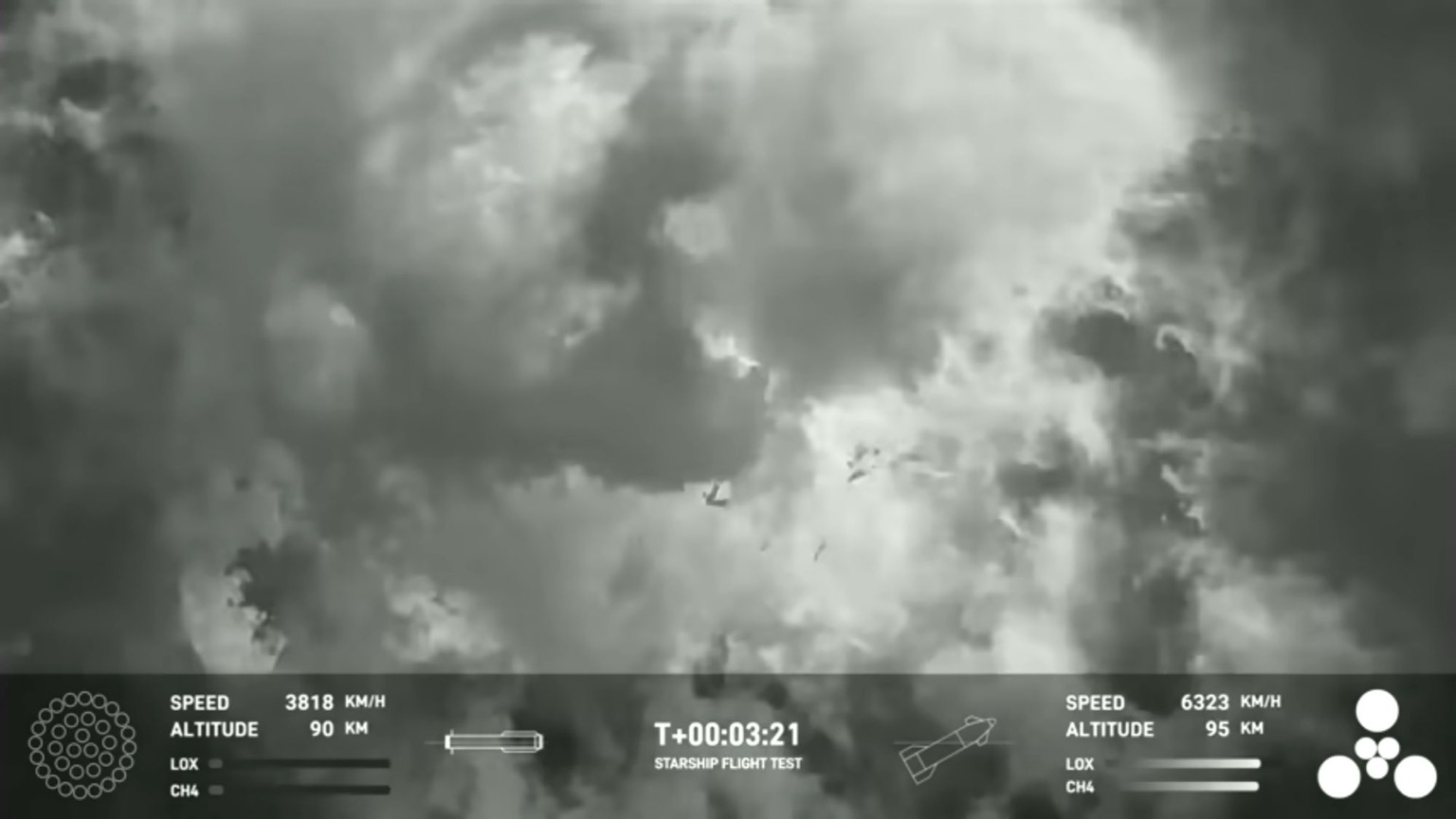
At 3:20, there was a sizable explosion in the thrust section. Followed less than a second later by a large explosion starting near the shared bulkhead at the middle of the booster. It's extremely likely that, with all engines out, the flight termination system automatically detonated the booster. …
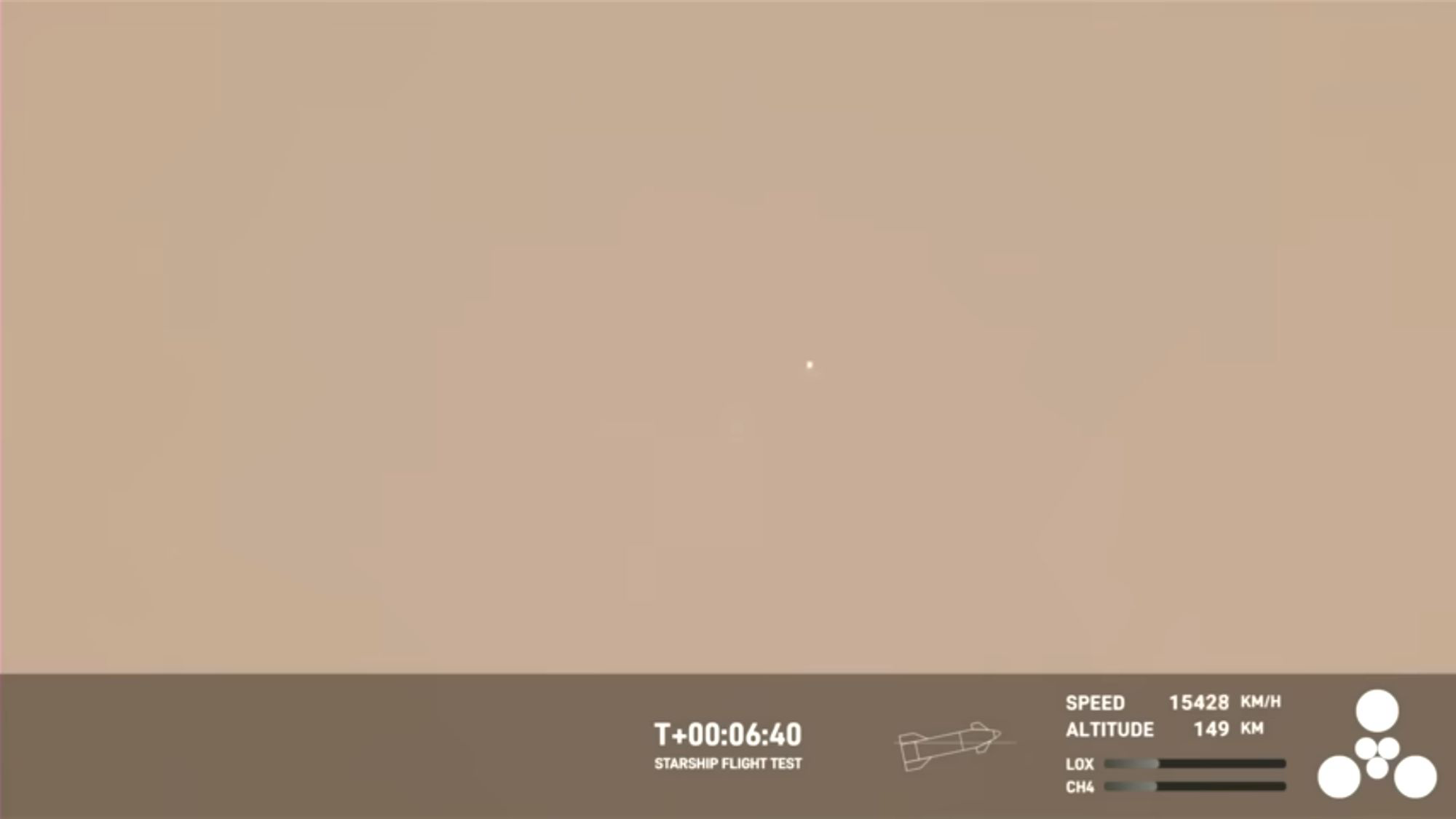
Meanwhile, Starship 25 continued toward space and appeared to be right on course with every call being nominal. Here it is at 6:40, but there are a couple of things I want to enlarge for a better view. …
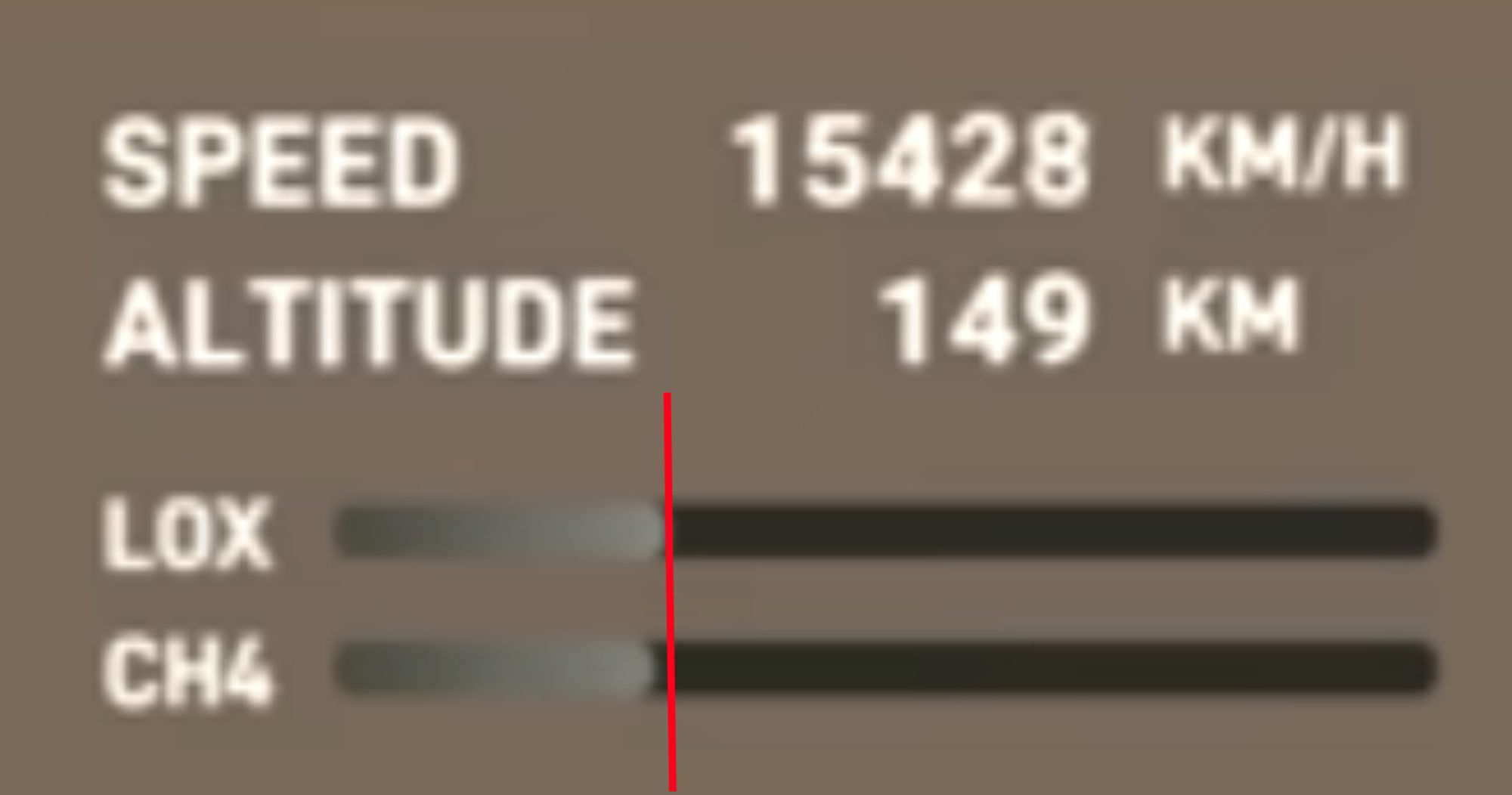
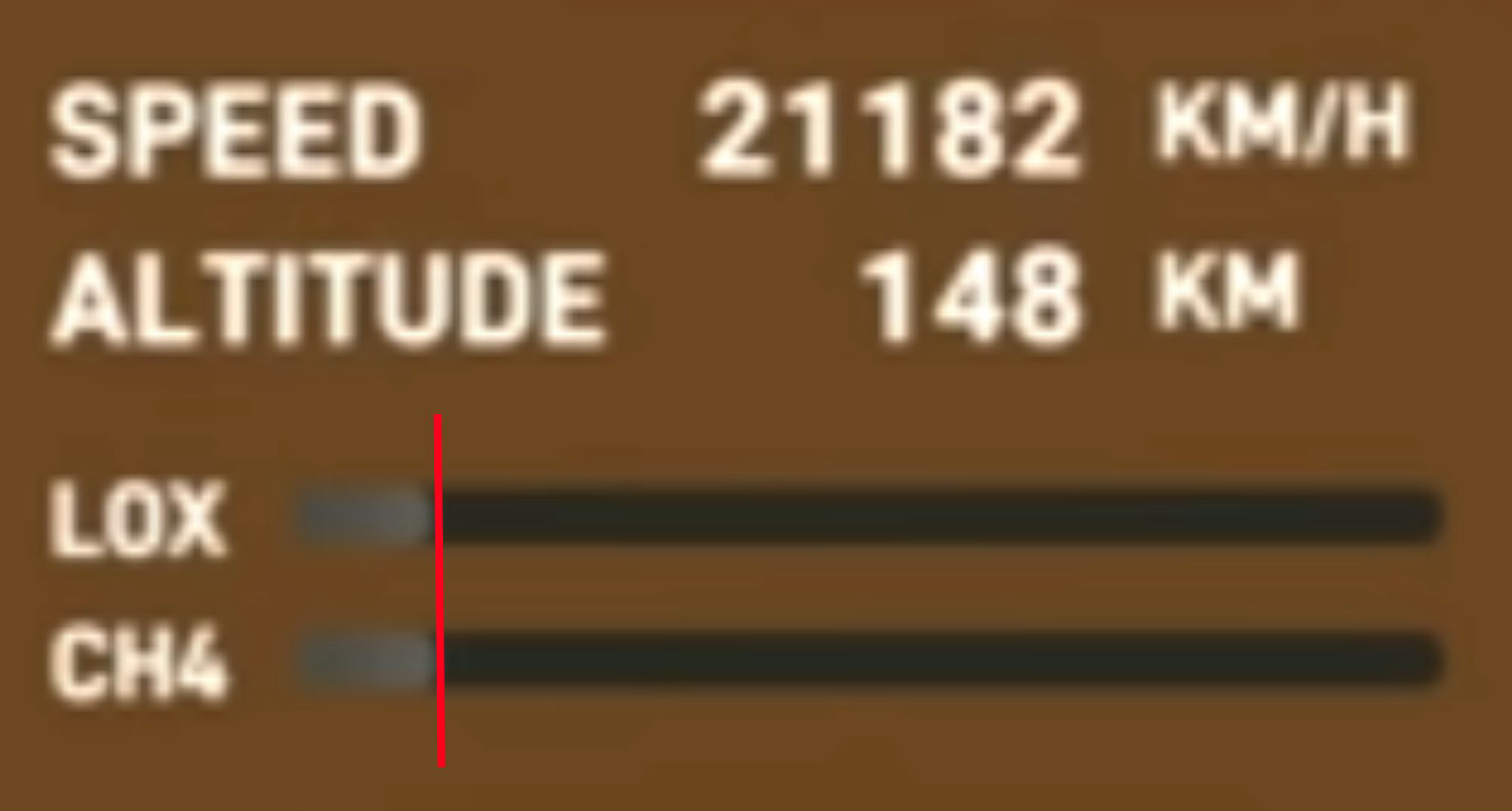
Here's the view of Starship, and its oxygen and methane gauges at 6:40. Both are 5x enlarged. I've added a red line to make it clear that the oxygen bar is slightly longer than the methane bar. To this point, Starship has gone through slightly more Methane than Oxygen. …
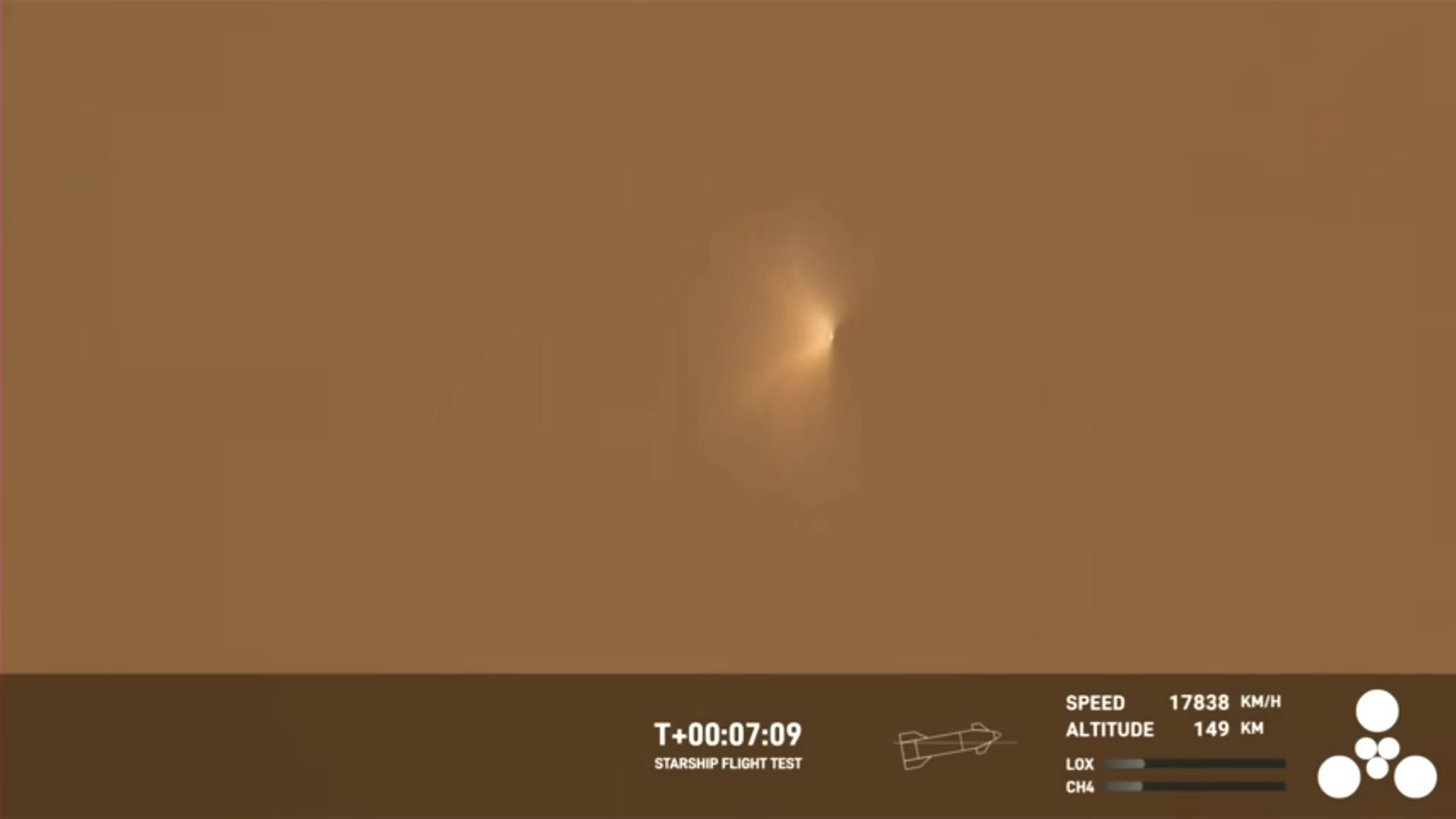
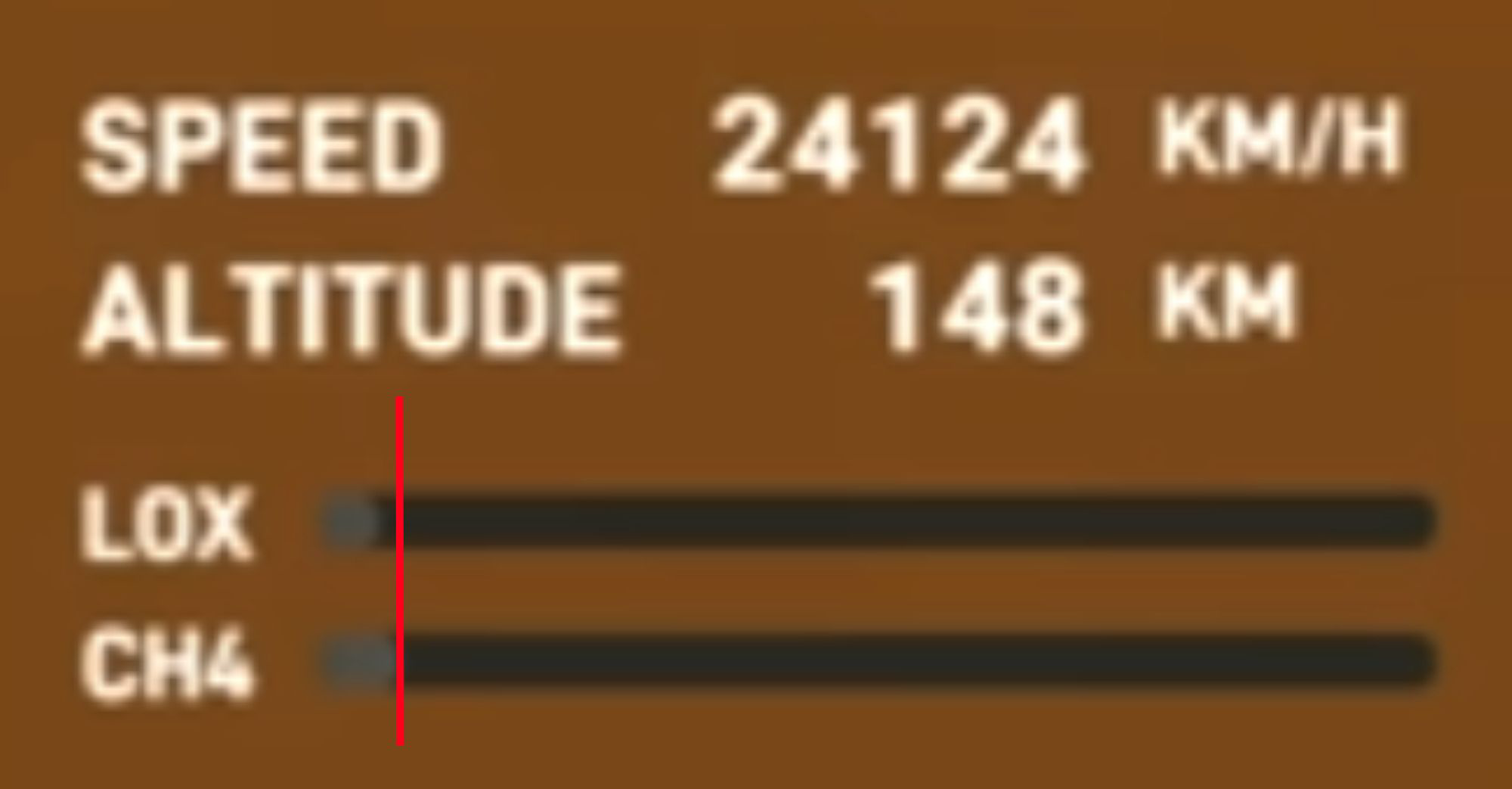
At around 7:05, a plume suddenly appears behind Starship and rapidly grows. At this point, all the flight numbers look nominal and oxygen is still slightly ahead of methane. …
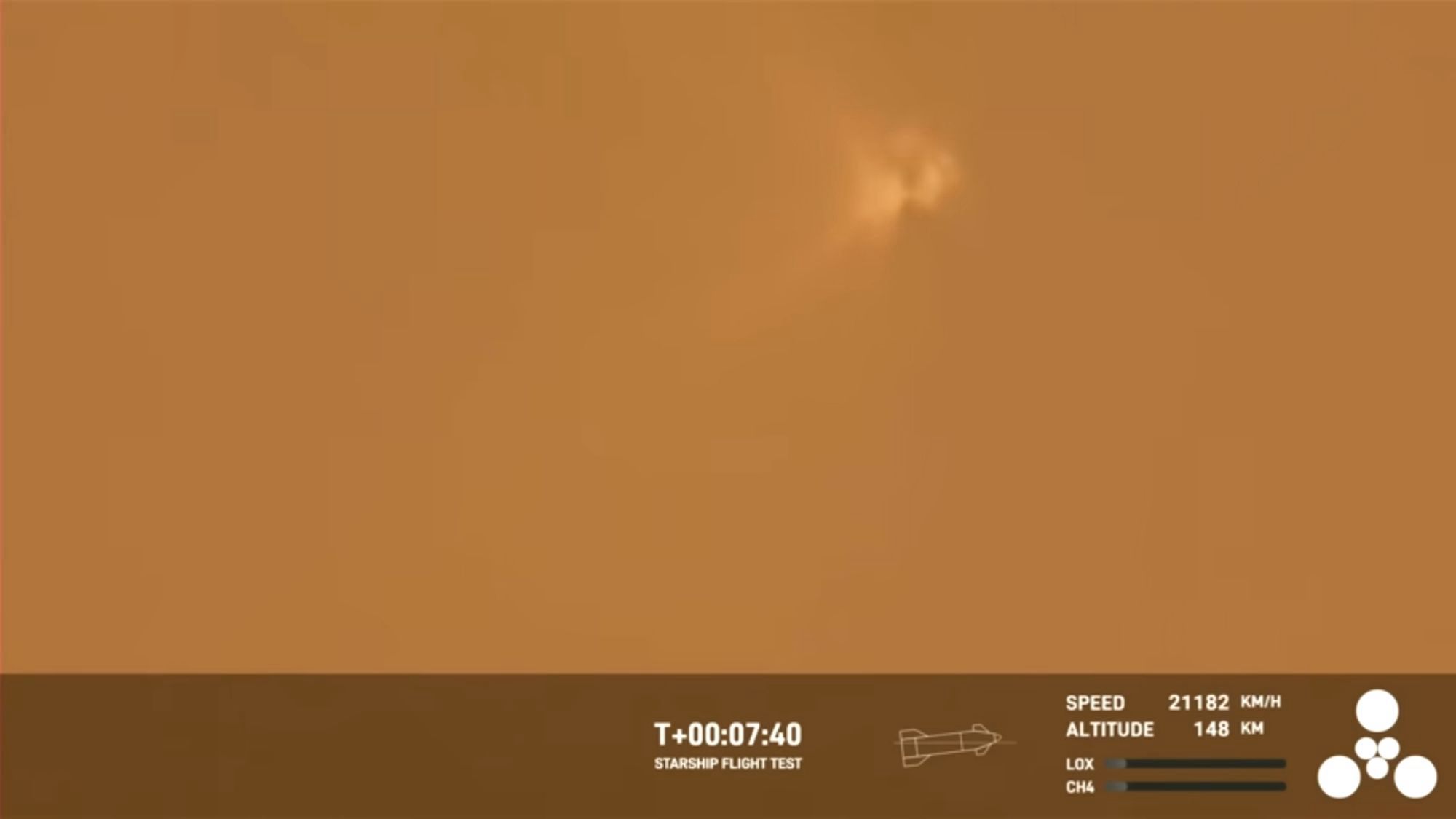
At 7:40, one minute after everything looked fine in those earlier shots, the plume suddenly throws off a burst of gas. There's no indication of an engine failure at this point, however, by this point, the oxygen levels are very slightly lower than methane. Over this minute, oxygen use > methane. …
At 8:05, there's a burst of gas that, though hard to see because of distance, seems to represent a major failure. A bit over two seconds later, there's a larger burst and all telemetry is lost. ...




@Devilstower one thing on my mind is, I'd caution people against taking those displays fully at face value.
I don't think we have public information about how (and even IF) they're calculated based on telemetry--whether they're a direct reading of some sort or based on engine feedback for example.
They're something to consider, but we need to be skeptical of those displays.
NOT because SpaceX is doing something deceitful here. It's just the nature of engineering instrumentation.

@volkris oh, absolutely. I spent a decade building control rooms and designing visual displays. The fidelity of such displays is always questionable.