
@taz @LouisIngenthron
Did you take this into account?
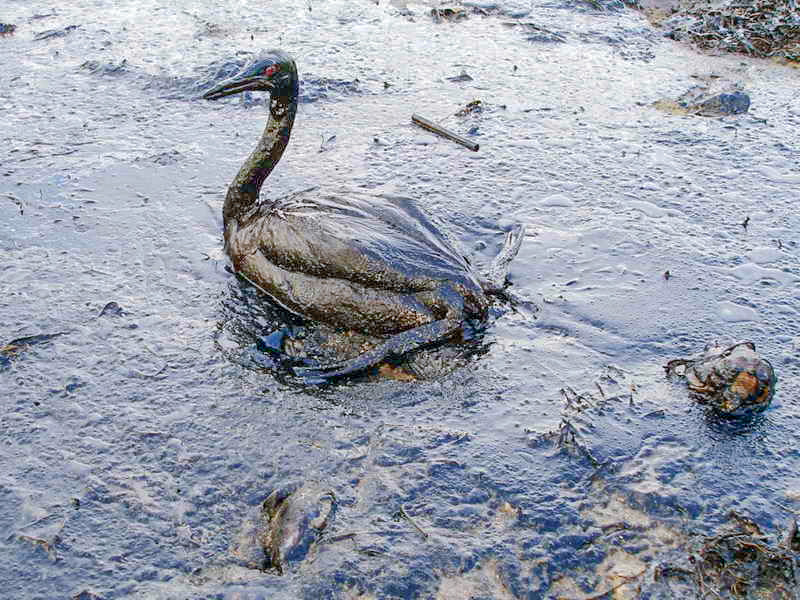
(image: Marine Photobank, cc-by-sa-2.0, mediawiki Commons)

@Pat @taz Until the power grid is no longer powered by fossil fuels, EVs contribute to that every bit as much as standard vehicles.
@LouisIngenthron @taz
>"Until the power grid is no longer powered by fossil fuels, EVs contribute to that every bit as much as standard vehicles."
Actually, they don't. I get 4-5 mi/kWh. Work it out -- it's just fraction of CO2 footprint of a typical putt-putt car.
@Pat @taz 0.08 gallons of petroleum per kWh. At 4 miles per kWh, you're at about 50 miles to the gallon. Which is directly comparable to pretty much every hybrid available, and not that much worse than the traditional economy vehicles.
Now, if you get solar panels installed on your house to charge your EV, that's *actually* doing something. But the sad part is, it still isn't enough, because the earth is really really big and our individual choices don't make a bit of difference. The change has to come from the top and apply collectively.
@LouisIngenthron @taz
EPA gasoline gallon equivalent is 33.7 kWh / gallon. (http://www.epa.gov/fueleconomy/)
At 4.5 mi/kWh, that's 151.65 miles per gallon.
@Pat @taz
Your link doesn't lead to a page with any statistics.
This one, however, has it at 12.69 kWh/gallon for petroleum liquids.
https://www.eia.gov/tools/faqs/faq.php?id=667
@LouisIngenthron @taz
That eia number is not for cars, it's just energy. Cars mostly turn the energy from gas into heat, not miles. The EPA number is 33.7 kWh/gal, which accounts for the inefficiency of putt-putt cars.
@Pat @taz You seem to have lost the thread.
We're talking about how much petroleum *power plants* use to power your car. They burn the gas just like my car does.
@Pat @taz "*will* switch" is the key.
Eventually, EVs will be significantly better.
But we're nowhere close to that yet.
