
TheOldGuy @TheOldGuy@qoto.org
I am a Democrat who supports Ukraine in their battle against The Russian fascist invaders.
I am a 73 year old Covid hermit who
lives on 10 acres in a sparsely populated area of the Ozarks. I heat with wood that is leftover by the lumber industry. When cutting oak for lumber only the trunk is used.
The largest town is population 2993. The county is 13k people scattered over 713 square miles.
Joined Dec 2022
Estonia to ask NATO to deploy 'deterrent fleet' in Baltic Sea after submarine cables cut
Estonia intends to ask NATO to deploy a "deterrent fleet" in the Baltic Sea after the submarine cables were cut, Prime Minister Kristen Michal said.
According to him, consultations on this issue will be held within the framework of Article 4 of the North Atlantic Alliance, which envisages discussion of threats to the security, territorial integrity or political independence of any of the bloc's countries.
"Damage to critical infrastructure is becoming more commonplace, the problem is recurring, which means that countries must better protect their infrastructure and better intercept ships, along with deterrence there must be the ability to more quickly identify the perpetrators," Michal said . He noted that the most important thing is to increase the level of monitoring of potential threats.
The North Atlantic Alliance is ready to help Estonia protect critical infrastructure in the Baltic Sea, NATO Secretary General Mark Rutte said.
"NATO stands by its allies and condemns any attacks on critical infrastructure. We are following the investigations launched by Estonia and Finland and are ready to provide further support," Rutte said. However, he did not specify what kind of support he was talking about.
In response to the incident, Estonia has deployed the Raju, a naval patrol vessel, to safeguard the Estlink 1 power cable, which remains operational.
Estonian Defence Minister Hanno Pevkur announced the move on X, adding that Estonia is prepared to protect its energy links with Finland "by military means if necessary."
Pevkur also revealed that Estonia has proposed collaboration with Finland on securing the cables and suggested that other Nato allies, such as Sweden, Germany or Poland, might join the effort.
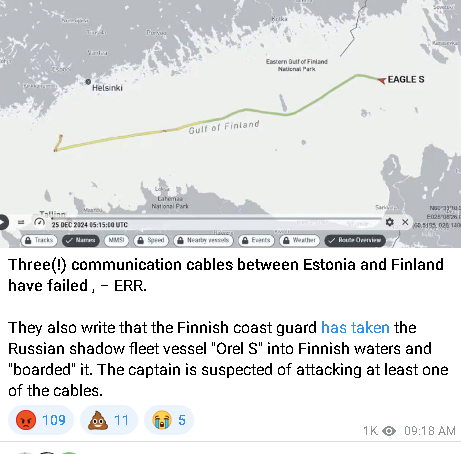
Finnish authorities have boarded and detained the Eagle S, a Cook Islands-flagged oil tanker linked to Russia's so-called "shadow fleet", a network of tankers operating without insurance recognised by western countries.
The vessel was observed to slow down when in the vicinity of the cable when it was damaged.
According to the EU, the shadow fleet threatens security and the environment, while simultaneously funding Russia's war chest.
"We propose additional measures, including sanctions targeting this fleet," said Kaja Kallas, the EU's High Representative for Foreign Affairs and Security Policy.
Earlier this month, the EU approved sanctions against approximately 50 Russian oil tankers linked to the shadow fleet. Efforts to safeguard subsea cables, including enhanced international cooperation, are also being intensified.
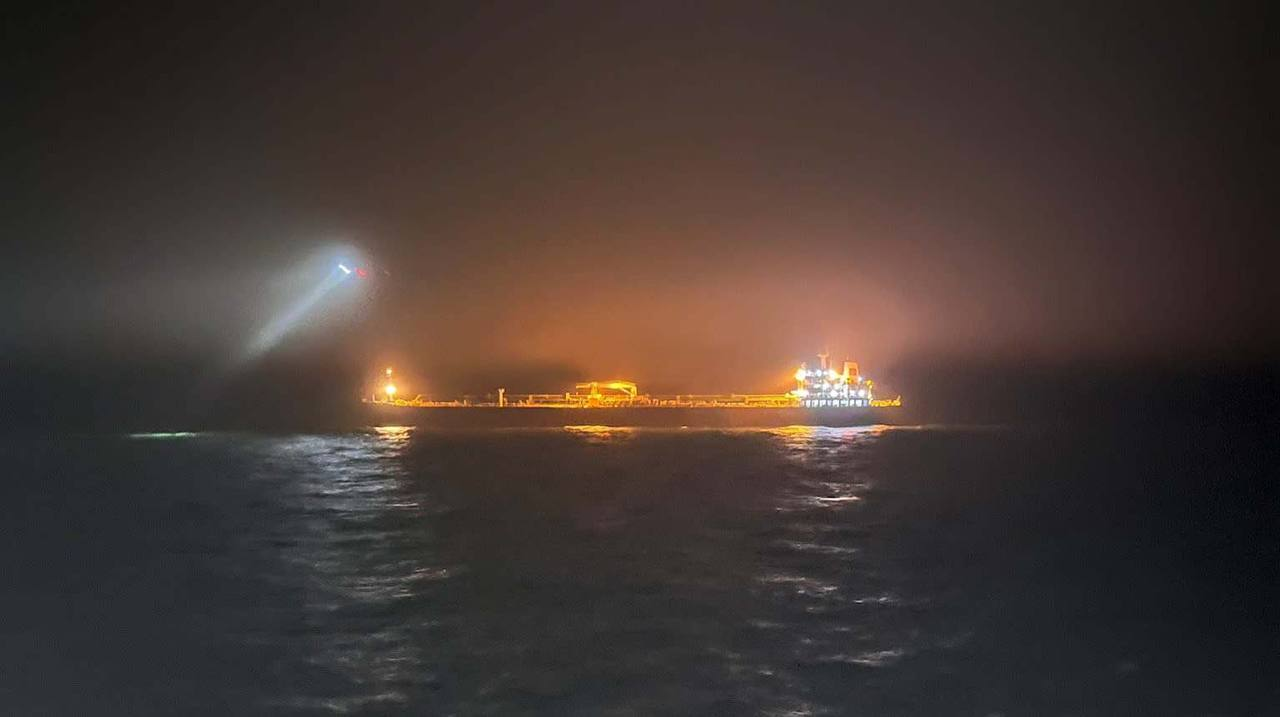
The photo shows the tanker, which was boarded by armed Finnish police from the air.
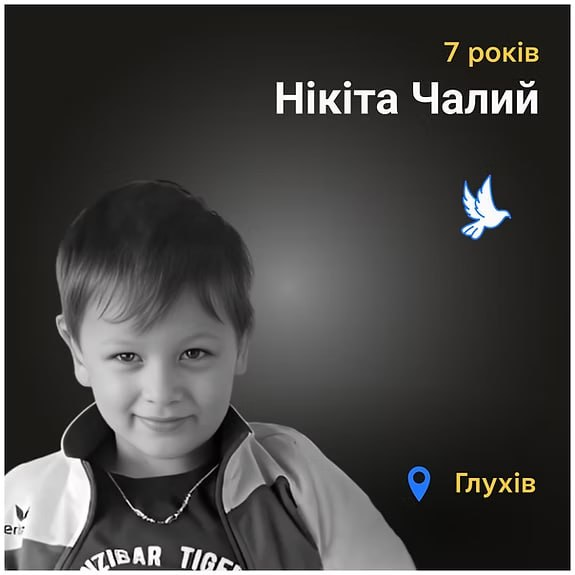
Nikita Chaly was 8 years old. He lived in the Sumy region: in the village of Ulanovo, and in the spring of 2024, due to Russian shelling, the family moved to the city of Hlukhiv. They settled in a dormitory. That is where the enemy hit on November 18, 2024. His mother, Tatyana, and older brother, Vasyl, also died.
Nikita is remembered as cheerful, inquisitive, and smiling.
"The boy dreamed of a peaceful life, of victory and a quick return to his home. He dreamed of meeting his classmates in the walls of his native school," the community said.
Nikita was buried in Hlukhiv. At his funeral, they brought a toy train and sweets, which the boy had asked for in a letter to Saint Nicholas written the day before the tragedy. In this letter, he also asked for victory for Ukraine.
Arkansas thought they could just declare anything they disagreed with "onscene"
A way around the First Amendment.
https://open.substack.com/pub/wonkette/p/nice-time-arkansas-librarians-score?r=70k1h&utm_campaign=post&utm_medium=email
Estlink cable disruption: Finnish Border Guard detains tanker linked to Russia's 'dark fleet'
An oil tanker that was sailing in the area when the Finland-Estonia electrical link was disrupted has been escorted and boarded by the Finnish Border Guard.
According to global ship tracking website MarineTraffic, the vessel in question, the Eagle S, flying the Cook Islands flag, noticeably slowed down while passing over the cable around the time the transmission was disrupted.
The Finnish Border Guard's patrol vessel Turva escorted the tanker to waters some 20km off Porkkalaniemi, a peninsula on the Gulf of Finland, on Wednesday evening. The ship is now anchored in Finnish territorial waters and a three-kilometre no-fly zone has been imposed in the area.
The ship was boarded by a Finnish coast guard crew which took command in the Baltic Sea and sailed the vessel to Finnish waters, a coast guard official told a press conference.
According to the Finnish Border Guard, the anchors on the Eagle S vessel were not in place, raising suspicions among authorities.
When instructed to raise the anchor, it was not present at the end of a broken chain.
Officials said that based on the preliminary investigation, there is reason to believe the vessel's anchor has caused the damage.
Authorities have also reported disruptions in a total of four telecommunications cables connecting Finland in the Baltic Sea.
The oil tanker was, according to MarineTraffic, on its way from St Petersburg to Egypt.
According to the British publication Lloyd's List, the Eagle S tanker is part of Russia's oil-carrying 'dark fleet', also known as 'shadow fleet'.
The publication defines a "dark fleet" as vessels older than 15 years whose true owner is unknown, and whose sole purpose is to transport oil from sanctioned countries.
These ships are involved in deceptive maritime practices defined by the US government, and typically lack proper insurance. They are often very old vessels that are poorly maintained, making them major environmental risks as well.
Lloyd's List reported that the tanker belongs to Caravella, a company based in the United Arab Emirates, and is the only vessel in the company's fleet.
In July, the British publication reported that the Eagle S, a ship about 20 years old and in poor condition, posed a security and environmental risk.
The electricity connection between Finland and Estonia via Estlink 2 was disrupted shortly after noon on Christmas Day.
According to Arto Pahkin, manager of Fingrid's Main Grid Control Centre, the damaged area is located in the Finnish side of the subsea cable between the two countries, making Fingrid responsible for the repair. Pahkin estimated that repairs could take up to seven months.
Police are working with the Border Guard and other authorities to investigate the sequence of events leading to the incident. Police said it is now investigating the incident as a case of aggravated vandalism.
Fingrid's manager Pahkin told Yle on Wednesday that the possibility of terrorism or vandalism cannot be ruled out.
According to Pahkin, two vessels were near the marine cable at the time the connection was severed.
President Alexander Stubb has received a briefing on the cable damage in the Gulf of Finland from top officials.
"The risks posed by vessels connected to Russia's shadow fleet must be countered," he posted.
He also mentioned closely monitoring the situation with Prime Minister Petteri Orpo (NCP) on Christmas Day and commended the effective collaboration among authorities investigating the incident.
Damage to subsea installations in the Baltic Sea has now become so frequent that it is difficult to believe this was caused merely by accident or poor seamanship, Estonian Foreign Minister Margus Tsahkna said in a statement.
“We must understand that damage to submarine infrastructure has become more systematic and thus must be regarded as attacks against our vital structures,” Tsahkna said.
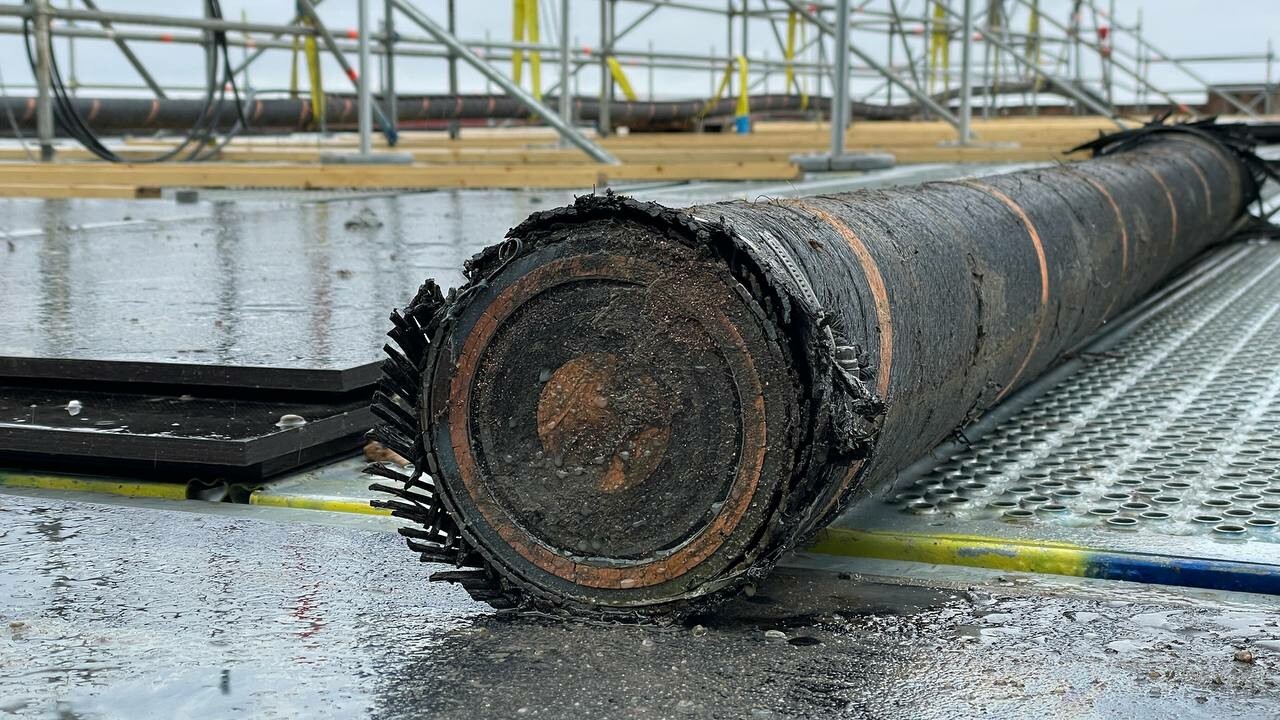
(Photo is illustrative)
I am a Democrat who supports Ukraine in their battle against The Russian fascist invaders.
I am a 73 year old Covid hermit who
lives on 10 acres in a sparsely populated area of the Ozarks. I heat with wood that is leftover by the lumber industry. When cutting oak for lumber only the trunk is used.
The largest town is population 2993. The county is 13k people scattered over 713 square miles.
Joined Dec 2022
TheOldGuy's choices: