
TheOldGuy @TheOldGuy@qoto.org
I am a Democrat who supports Ukraine in their battle against The Russian fascist invaders.
I am a 73 year old Covid hermit who
lives on 10 acres in a sparsely populated area of the Ozarks. I heat with wood that is leftover by the lumber industry. When cutting oak for lumber only the trunk is used.
The largest town is population 2993. The county is 13k people scattered over 713 square miles.
Joined Dec 2022
Dam bursting and the Russians want ice cream.
Zelensky's options for what to do about the war "range from bad to worse," the Washington Post writes.
A summary of the article:
The return of territories by military means "seems increasingly less likely." “The status quo is terrible. Currently, the fight has reached a dead end, Ukrainians are dying on the battlefield every day,” the article says.
Ukrainian and Western officials believe Zelensky is largely stuck and solidarity within Ukraine is weakening.
A senior Ukrainian official said: “Everyone wants quick solutions, but everyone has come to the understanding that there will be no quick solutions.”
Also in Ukraine they consider it “unrealistic” to reach the 1991 borders.
“Smart people know that this is unrealistic,” the Ukrainian legislator said, adding that the political leadership “at some point needed to correct this rhetoric.”
Attempts to correct the situation at the front are still in question. Measures to increase mobilization “split society.”
“Ukraine does not have the strength for a new offensive,” said a Western diplomat. In his opinion, there are two scenarios.
"One scenario is that they receive support to maintain defensive lines. ... In the second scenario, the support will not be enough, and Ukraine will still defend itself, desperately and with less manpower," he said.
But in this case, casualties and territorial losses will increase, “which will put Ukraine in a dead end.”
Now Ukraine and its partners must prepare for 2025 as “another year of war, not peace negotiations,” the diplomat said.
In Ukraine itself, opinions about how long the war can last are divided.
"A Ukrainian legislator has said that the country will not survive this status quo for another ten years. Others, however, believe that the fight could continue even longer," the article says.
“It's an unpleasant thought, but when some people say it could take decades, no one disputes that,” said former Economy Minister Timofey Milovanov.
@ukrainejournal
From "The Analyst":
SHOIGU & LECORNU SPEAK - THE RUSSIANS ARE BOTHERED
Now we have an understanding of an unusual telephone call from the Russian war minister to the French defence minister. The first call in over 22 months.
During the call Sebastien Lecornu said that he offered condolences over the Crocus stadium deaths - diplomatic niceties require it.
Shoigu made it clear that Ukraine was in their view involved in some way, and that if Ukraine was involved they did it because NATO told them to. You can almost imagine those not on the call but listening in, rolling their eyes in the French version of ‘yeah, whatever’.
But Shoigu was on the phone for a reason - he wanted to make it clear that French troops in Ukraine in any capacity ‘would make things very difficult for France’.
Anyone would think that President Macron didn’t know that. But what the call really shows is that the idea that France or Poland or anyone else, putting troops of any kind into Ukraine for any reason, is a situation Russia wants to avoid. It would complicate their situation dramatically and that’s the point. It seems clear that despite the propaganda, Russia knows any confrontation on land with another western ally - especially a nuclear armed one like France where it can’t use its blackmail threats to intimidate it, is not a good prospect. Not least would be the threats of a major western air force that knows what it’s doing.
Clearly the idea of their war on Ukraine taking a turn like this is deeply disturbing for them.
And that’s the entire point of President Macron’s strategy of not setting red lines Russia can see, reach but doesn’t cross, has already worked. Not knowing what the redlines are forces them to be more circumspect and think about what they’re doing. American and German concepts of red lines have done nobody any favours. It’s not a concept Russia likes at all. And the telephone call is the more important in understanding that it’s this policy Russia fears most - because it’s exactly what they would do. Creating strategic ambiguity causes greater uncertainty for anyone making the aggressive moves.
Shoigu also said Russia was still interested in negotiating an end to the war - based on the Istanbul concept - no Ukrainian membership of NATO and Russia gets to keep what it’s already taken. That’s just wishful thinking. Even if it ended up keeping much of what it’s conquered there’s no way Ukraine would concede the NATO aspect now. It’s the only way to guarantee it’s long term security.
All in all the fact of the call is tied to, and the real reason for it - the policy of French strategic ambiguity about what, when and why it might send troops to Ukraine - it’s that that’s triggered a Russian response. And that’s a weakness they should not have been so stupid to reveal. It bothers them. It tells them that the West - and France especially - long a softie on Russia - has finally had enough. And that for Russia is a hard pill to swallow. It’s challenging their very concept of where and why this war is being fought. Finally it’s making Putin think he’s actually gone too far, but he doesn’t have a clue how to get out of it. He’s all in. And for once he’s finally seeing the consequences of his actions have changed the perception in the west of Russia ever being reliable, or trustworthy or even friendly again. That once the war is won Putin would simply be accepted back into the fold is now a pipe dream. It’s actually dawned on him that isn’t going to happen. Ever.
We often fail to understand that more often than we realise, personal experience and thought patterns get deeply ingrained. Relationships between leaders do matter - especially authoritarian leaders who crave legitimacy and acceptance, largely because they know inside themselves their power has no real basis in popular support. Being recognised amongst those they see as their peers is hugely important.
Being rejected as fully as Macron has now rejected Putin - with whom Putin thought he had a deeper personal understanding, is painful for him. CONTINUES…
CONTINUE…
The Macron who flew to Moscow to advise Putin not to do this from the other end of a ten meter long table, who listened to what ever gibberish and reasoning Putin had to say about why he had to do it. He saw Macron in a different light. Now he has turned his old friend and peace seeker into an implacable enemy. And it’s only just dawned on him it’s his own fault.
You might think this too simple, to easy. But history is riddled with personal leadership relationships that have gone right or wrong, and had amazingly good or equally dire effects on the world as a result. Something has finally clicked with Putin. The proverbial penny has dropped. He’s gone too far. Now he has no way out that ends well for him.
Putin's little helpers.
Mariupol was completely destroyed by Russia. Tens of thousands of civilians were killed and displaced. Reconstruction plays a central role in the Russian propaganda war. According to Monitor research, German companies are also involved.
It was one of the most horrific battles of the Russian invasion of Ukraine. For weeks, Russian troops besieged Mariupol on the Sea of Azov, starving the population, sparing neither the patients in hospitals nor civilians hiding in the theater. Many survivors were driven out by Putin's army. When the Russian flag was raised on the destroyed buildings of Mariupol, construction work began on the "new" Mariupol. A Russian city, with Russian inhabitants, built on behalf of the Kremlin. There are building sites all over the city, blocks of flats rising from the ground.
This is so important for the Z-propaganda that even Putin himself came to see the progress of the work last year. "We will rebuild the apartments, schools, hospitals, theaters and museums," he said about Mariupol. In other words, everything that he previously had brutally destroyed.
Reporters from the ARD political magazine Monitor set out in search of clues. In business reports, on company websites, in pictures and in videos - there are clues and evidence everywhere that German companies are also playing an important role in the reconstruction of Mariupol, with heavy machinery or windows bearing the logos of several German manufacturers. And again and again on plaster sacks: the name Knauf. The German family business from the Franconian province is a world leader in gypsum production. Also because it has been doing important business in Russia for a long time.
Company patriarch Nikolaus Knauf was the Russian honorary consul for more than two decades, in photos he smiles next to Putin. He retained this post even after the annexation of Crimea, and in 2018 he still described the subsequent sanctions against Russia as "terrible". Knauf still employs 4.000 people in Russia and generates billions there. He wrote to Monitor in a general statement on its Russian business that he condemns the Russian war of aggression against Ukraine and complies with all EU sanctions against Russia. The company produces in Russia "exclusively for the Russian market". However, Knauf left an extensive list of questions from the editorial team unanswered.
So does the Russian business have nothing to do with the German parent company? Sanctions law expert Viktor Winkler disagrees: "The idea that if I only operate in Russia with a subsidiary in Russia, only on Russian territory, that this is irrelevant to sanctions, so to speak, is an absolute myth and couldn't be further from reality."
But Knauf is not an isolated case. The logo of a German company from Münsterland in North Rhine-Westphalia - WKB Systems GmbH. The main shareholder of the company is the Russian oligarch Viktor Konstantinovich Budarin. He used his German company as a supplier for the construction industry in Putin's Russia. Customs data available to Monitor show that WKB Systems GmbH supplied entire plants for factories for the production of aerated concrete blocks to a Russian company owned by Budarin.
Investigation (German) or (English translated)
@freerussia_report
Russia could not be the target of Islamist attacks because the country "demonstrates a unique example of interfaith unity"
Putin refused to believe that Holy ruZ could be a target for attacks by Islamic fundamentalists. He stated this at the XII Congress of the Federation of Independent Trade Unions, stressing that the "masterminds" of the terrorist attack in Crocus City Hall wanted to "damage the unity".
The self-proclaimed dictator explained his thought by saying that the country "demonstrates a unique example of interfaith unity":
"And in the external arena, it behaves in such a way that it can hardly be the target of an attack by Islamic fundamentalists. But the goal of undermining the unity of RuZZian society is certainly visible."
In addition, Putin once again brainless repeated that Russia was allegedly put in conditions in which it was forced to "defend its people, its future and its sovereignty by armed means." He informed that the economy in the Russian Fuckeration will not be put on a war footing and repeated again that there is "practically none" unemployment in the country.
At the same time, he noted the shortage of personnel, which, according to him, the country will experience in the near future. In his opinion, there are two possible solutions to this problem: importing labor from abroad or increasing labor productivity.
Putin also called for accelerated industrialization, an increase in the volume of Russian goods in the domestic market and promised to introduce a "new model of remuneration for public sector employees" by 2027.
Well, I don't know where he lives, but certainly not in MuZcovy, nor in Russian reality. 🤦♀️
@freerussia_report
Gasoline production in Russia for the three weeks of March fell by 10% to 754.6 thousand tons, according to official Rosstat numbers. Diesel fuel production for the same period sank by 3.9%, to 1.648 million tons.
Putinistan suspended gasoline exports from March 1 until August 31, 2024, to ensure supply for the domestic market in peak demand season, while several refineries are undergoing regular maintenance and urgent repairs after Ukrainian drone strikes. This is a second such export ban in just a few months. In the autumn of 2023, the Kremlin banned exports of diesel and gasoline in an effort to stabilize domestic fuel prices in the face of soaring prices and shortages as crude oil rallied and the ruble weakened.
Due to the threat of a shortage of oil products, the ruZZia turned to Belarus for help. On March 28, the head of the Energy Committee of the State Duma Pavel Zavalny said that an agreement had been reached on the purchase of 100-150.000 tons of Belarusian gasoline per month.
According to Reuters estimates, the amount of oil refining capacity that has been taken offline due to Ukrainian drone strikes is 14% of ruZZia’s total refining capacity. Calculations show that 900.000 barrels per day of refining capacity have been taken offline by drone strikes, Reuters reported last month.
At the end of last month, Deputy Prime Minister Alexander Novak said that the government doesn’t plan to ban diesel exports again as "there is no need for it". TASS quoted him saying that Russia produces twice the volume of diesel than domestic consumption.
“If we ban exports, we won’t have anywhere to put the diesel,” Novak boasted then, adding that the Russian fuel market is stable, both in supply and prices.
Well,...
@freerussia_report
The Investigative Committee opened a criminal case in connection with the disappearance of Seda Suleymanova.
Previously, the woman was returned by force to Chechnya to relatives from whom she had fled. After that there was no news of her; human rights activists believe that she may be dead.
In October 2022, Suleymanova requested help from the SK SOS. The 26 year old woman said that due to her "lack of religiosity" in Grozny, she could face an "honor killing" by her family members. In February 2023, Suleymanova's relatives tried to kidnap her, but she managed to escape. After that, according to human rights activists, she changed her job and address of residence, but remained in St. Petersburg.
The crisis group "SK SOS" reports:
"Applicants who sent appeals through a special form began to receive responses from the Investigative Committee on the initiation of a criminal case. Prior to that, they had only received replies from the prosecutor's office, in which they said that the applicant had no right to request such information or that the appeal had been referred to the Investigative Committee."
So finally, a criminal case has been opened on the fact of "unknown disappearance".
"The course and results of the investigation of the criminal case have been taken under control in the Investigative Department," the Investigative Committee said in its responses.
Seda Suleymanova, who lived in St. Petersburg with her boyfriend, was kidnapped on the night of August 24, 2023. The police took the girl to the police station under the pretext that they had received a theft report. She was then taken to the airport and sent to Chechnya, where she was handed over to her relatives.
Later, photos and videos of Suleymanova were published by Chechen ombudsman Mansur Soltayev who assured, "there are no violations of rights and harassment against her."
However, human rights activists noticed a mark on the girl's neck, and her partner said that Suleymanova "looks depressed." Since the publication of these videos there have been no news about her. Suleymanova "could have been killed by her relatives," two independent sources of SK SOS claimed.
Source
@freerussia_report
Ukraine attacked the airfield of ruZZian nuclear bombers for the second time in a month. Social Media
On the morning of April 5, a drone was shot down in the city of Engels in the Saratov region, said the governor of the region, Roman Busargin. As always, "there are no casualties and destruction of infrastructure when the debris fell," the governor wrote on social media without giving any other details.
In Engels, there is a base for Tu-95 and Tu-22 heavy bombers, which are used to shell the territory of Ukraine with cruise missiles.
The last time the Ministry of Dickheads of the ruZZian Fascization reported an attempt to attack the Saratov region with drones was on March 20. Then "four drones were also destroyed over Engels". Officially, there were "no casualties or damage."
Prior to that, the Armed Forces of Ukraine attacked the Engels military airfield twice at the end of 2022. To do this, they used Tu-141 Strizh drones, which covered 700 km from the Ukrainian border and carried out strikes.
As a result of the second attack, according to Ukrainian journalist Volodymyr Zolkin, five Tu-95MS bombers and a control tower were damaged. The Ministry of Defeat of the ruZZian Fakeration did not confirm this, but reported three dead soldiers.
The strikes on Engels forced Russia to disperse strategic bombers from the airfield, said Yuriy Ihnat, a former spokesman for the Air Force Command of the Armed Forces of Ukraine. From 4 to 6 bombers were sent to the Ukrainka airfield in the Amur Region, the Real War channel noted.
In addition to the Saratov region, on the night of April 5, Ukraine attacked the Rostov, Kursk and Belgorod regions, as well as the Krasnodar Territory, with drones. According to the Ministry of Dickheads of the Z-Federation, one drone was shot down over the Kursk and Belgorod regions.
44 drones were intercepted over Rostovskaya, the massive attack fell on the Morozovsky district of the region, Governor Vasily Golubev said, which reportedly damaged an electrical substation. At the same time, 3 km southwest of Morozovsk there is an operating military airfield.
Six drones were allegedly shot down in the Krasnodar Territory, according to the reports of the Z-Defense Ministry. At the same time, state-run social media published posts about more than 10 explosions over Yeisk, in the area of the local airfield and military town. The head of the district, Roman Bublik, later claimed that there was no damage after the drone attack.
@freerussia_report
Japan has banned the supply of motor oil and batteries to Russia.
According to the statement of the Japanese Ministry of Economy, the Japanese authorities have expanded sanctions against Russia, banning the supply of 164 types of goods to the country, including automotive motor oil, lithium batteries, plastics and steel products.
Also subject to export restrictions are:
- optical equipment, photographic equipment;
- hand-held power tools;
- boilers and equipment for them;
- inorganic chemicals and precious metals (hydrogen chloride, aluminium hydroxide);
- tungsten powder and molybdenum, cobalt, zirconium and rhenium and products thereof;
- yachts and other pleasure or sports vessels, kayaks, canoes, light boats, fire boats, crane vessels, drilling or production platforms.
Japan has also expanded import sanctions to include non-technical diamonds of Russian origin.
Export restrictions will come into force on April 17, the country's Ministry of Economy plans to specify the lists of goods prohibited for supply to Russia by April 10. At the same time, the ban on diamond imports will come into effect on 10 May.
Earlier, the Japanese government banned the export of milling and turning machines with numerical control, as well as spare parts and parts for cars, to Russia. Last year, Japan limited the supply of cars with engines of more than 1.9 liters, hybrid cars and electric cars to the Russian market. Yachts, trains, metal, glass and fabric products also fell under the restrictions.
Prior to that, Tokyo banned the export of vaccines, medical equipment, robots and products "related to the strengthening of Russian military potential" to Russia.
Source
@freerussia_report
The authorities were unable to procure a third of the necessary medicines for hospitals.
Since the beginning of the year, the Ministry of Health of Russia has failed every third auction for the purchase of medicines for medical institutions. If in January-March 2023 the share of failed auctions was 15%, then in the first quarter of this year it increased to 32.9%. This follows from the data of the Headway Company, which is published by Kommersant.
The highest share of failed tenders falls on the procurement of the structure of the Ministry of Health under the state program "14 high-cost diseases", for the national vaccination calendar, drugs against HIV and hepatitis, as well as registered medicines for the Circle of Kindness Foundation.
In the total volume, the share of failed tenders for drugs for the treatment of HIV and hepatitis increased the most, from 17.2% to 47.3%. Among antiretroviral drugs, the leaders in terms of the share of failed auctions were abacavir (81.7% of announced auctions remained without applications) and lamivudine (91.9%). Also, suppliers of vaccines against pneumococcal infection for a total amount of 3 billion rubles were not found twice.
The upward trend in canceled trading has been observed since the end of 2023, Kommersant's sources in the pharmaceutical market say, and Nikolai Bespalov, Development Director of RNC Pharma, also confirms.
A number of traditional suppliers did not take part in the auction this year, citing "economic inexpediency, as well as the lack of introduction into civil circulation [of drugs] and the suspension of production," the Ministry of Health confirmed.
The registration of new generics also affects the reduction of the initial price of the contract, although not all of them have yet been put into circulation, another source told Kommersant.
Due to the increase in logistics costs and other parameters that affect the increase in production costs, distributors this year cannot afford to participate in auctions at the same prices, Bespalov explains.
Source
@freerussia_report
"The situation is hopeless." What Payments Do Chinese Banks Not Accept. - The Moscow Times
Chinese banks are enforcing sanctions against Russia even more strictly than necessary. The Moscow Times interviewed importers and found out which goods are rejected or suspended indefinitely.
Since February, Russian companies have been remitting money to China with great difficulty, and some importers are still unclear about the fate of payments sent in late February and early March. It takes weeks to handle required documents on contacts, the purpose of the purchase and guarantees that the end buyer of the purchased products is not associated with the Russian army or the military-industrial complex.
You can never say for sure which payment will go through and which will not, but reports from Chinese banks, Russian banks, and importers suggest that Chinese banks are reluctant to accept payment for goods with certain product codes. Their list quite closely repeats the sanctions lists of the United States, the EU and their allies, but in some ways even surpasses them.
The situation with the HS code 88 is hopeless - these are aircraft and spacecraft, their parts, etc. "It is all under sanctions, no one will even try to pay for it from Russia to China," assures one of the importers of aircraft components.
For sure, there will be problems with products under the HS code 84 - these are all types of machine tools and equipment for the production of electronics and computer components, as well as parts for their creation, nuclear reactors and boilers, computers, bearings. "Not all products in this category are on the sanctions lists, but most Chinese banks, especially large ones, now put on stop or reject all direct payments under code 84. Some payments go through, but this seems to be more of a flaw on the Chinese side," says the head of the Russian foreign trade operator.
It's the same story with codes 85 and 90, electronics and computer technology, from transformers and generators to recording equipment and telephones and optical, photographic, cinematographic, measuring, medical, surgical instruments and apparatus.
"Paying for smartphones directly through China is now an activity for desperately risky guys, although only part of these products are expensive devices under sanctions. A large Russian bank recently notified us that it stops accepting payment for any electronics at all, because the money does not reach anyway," says the purchasing manager of the Russian network of household appliances and electronics. Any liquid crystal screens and with all measuring devices. Medical equipment is not under sanctions at all, but it now has to be purchased in China through third countries, because banks do not want to accept direct payments. There will also be problems with the code 9014 - compasses and measuring instruments. "You can't just pay for collars with GPS sensors for dogs from a Chinese supplier, you have to run around cans," laments a seller of pet supplies.
There were big problems in March with payment for cars and even auto parts, says a distributor of Chinese cars, despite the fact that Chinese automakers are enthusiastically increasing sales in Russia. "Representative offices of Chinese automakers take care of the problem of payments, but if you import from China yourself, both as a distributor and as an independent importer, there are big problems. You have to turn around, come up with different schemes."
"In this situation, we can only believe those of our counterparties who assure us that the problems are temporary, the dust will settle after the visit of US officials, the Chinese government will intervene, the banks will sort it out - and payments will go normally again. But for now, the situation is becoming more complicated, and the game of "figure out how to pay" is becoming more and more intricate and more expensive," concludes the top manager of a large Russian importer.
Source
@freerussia_report
Hackers posted the database of the Prosecutor General's Office with criminal cases against Russians.
The RGB-TEAM hacker group has published an archive of data on criminal offenses committed by Russians from 1993 to 2022, according to a statement on the group's website.
The group claims to have hacked into the database of the RuZZian Prosecutor General's Office, and the part of the data that the hackers posted on the Internet is only a small piece of the total amount of information.
The database posted by hackers contains 100.000 lines and more than 80.000 unique files. By random sampling, it is possible to confirm that the database does indeed contain information about real criminal cases. Among them are cases of insulting police officers, theft, theft and others.
RGB-TEAM describes itself as a community of "anonymous hacktivists fighting for freedom in everything." In addition to the database of the Prosecutor General's Office of the Russian Fuckeration, the organization's website contains data from the hacking of Kaspersky Lab, which includes more than 50.000 IP addresses of registration of antivirus users.
As we reported previously, a group of anti-Kremlin hackers broke recently into the information system of the Federal Penitentiary Service (FSIN) and stole a database that contains information about 800.000 prisoners, their relatives and contacts, as revenge for the death of Alexei Navalny.
CNN's analysis showed that although there are duplicate records in the database, the number of unique ones is still in the hundreds of thousands. The journalists were also able to confirm through random checks that the persons on the lists are currently serving their sentences in penal colonies.
Source
@freerussia_report
British Defense Secretary Grant Shapps, in a column for The Telegraph, remarked, “We have transitioned from a post-war world to a pre-war world.” He highlighted the threats posed by Russia, China’s increasing aggression, Iran’s regional destabilization efforts through proxies, and North Korea’s nuclear provocations, noting that these forces are aligning against democracy.
Shapps called on NATO countries to bolster their defense capabilities and meet the commitment of spending 2% of GDP on defense. He expressed concern over some countries failing to meet this target, emphasizing the need to prioritize security.
Similarly, British Foreign Minister David Cameron conveyed a similar message during his visit to Brussels for the NATO foreign ministers’ summit. Polish Prime Minister Donald Tusk also spoke about the shift in eras, declaring the end of a blissful peace and the onset of a new, potentially perilous era.
Meanwhile, US Deputy Secretary of State Kurt Campbell highlighted Russia’s significant military recovery since its invasion of Ukraine, with defense spending reaching 6% of GDP in 2024. He noted support from China, North Korea, and Iran, though this assessment contradicts views from the Pentagon and US allies in Europe.
Overall, these statements underscore growing concerns about global security dynamics and the need for concerted efforts to address emerging threats.
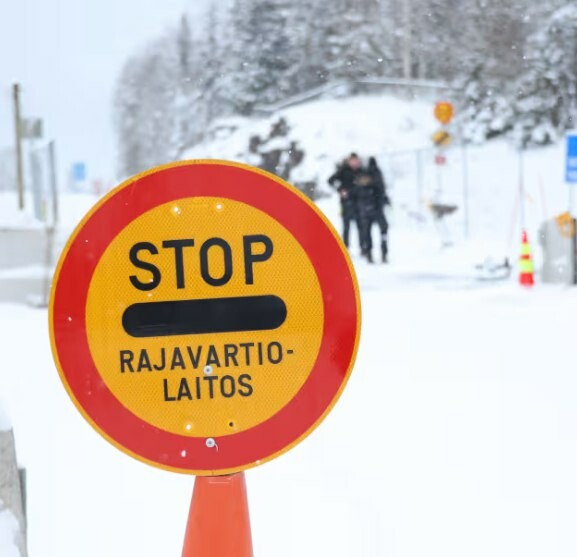
Finland closes border with Russia indefinitely.
The Finnish government has extended "until further notice" the closure of the checkpoint on the border with Russia, reports the local publication Yle.
The proposal was made by the country's Ministry of Internal Affairs, explaining that Russia continues to use "directed migration" against Finland. Previously, the closure of the border was extended each time for two months. The last such deadline was supposed to expire on April 14. According to the newspaper, the decision to close the border is valid indefinitely "or as long as it is deemed necessary."
Finland closed its border with Russia in November 2023 amid a sharp increase in the number of migrants who tried to enter Europe from Putinistan. Last fall, migrants from the Middle East stormed the Russian-Finnish border.
@freerussia_report
Seven more Ukrainian children, together with their families, were returned home from the Russian-occupied territories in Kherson and Zaporizhzhia oblasts, Ombudsman Dmytro Lubinets said on April 3.
At least 19,500 children have been confirmed as abducted by Russia since the start of its full-scale invasion of Ukraine, and less than 400 of them have been returned home, according to the Children of War database.
"Some of the families went through true horror under occupation and became the witnesses of Russians looting homes of the locals, forcing (Ukrainians) to take Russian passports, abusing Ukrainians, forcing children to learn by 'Russia's world' canons," Lubinets wrote on his Telegram channel.
Lubinets also said that families with boys decided to flee from the occupied territories due to the risk of a future men mobilization to the Russian army.
"The children's parents said at our Centre of Children's Rights Protection that the perspectives of their future on the occupied territories did not fit their further view on their family's lives," Lubinets added. "So, they decided to move to the territories, which remained under Ukraine's control."
According to Lubinets, the returned families will receive the required medical, humanitarian, and psychological help. Later, they will also be assisted in further document restoration, job searching, and sending children to educational institutions, Lubinets added.
Previously, the ombudsman reported on March 22 on the return of nine children who were deported by Russia or held in Ukraine's Russian-occupied territories.
Kyiv ind.
🇺🇦@ukraine_report 🇺🇦🔱 Liz
I am a Democrat who supports Ukraine in their battle against The Russian fascist invaders.
I am a 73 year old Covid hermit who
lives on 10 acres in a sparsely populated area of the Ozarks. I heat with wood that is leftover by the lumber industry. When cutting oak for lumber only the trunk is used.
The largest town is population 2993. The county is 13k people scattered over 713 square miles.
Joined Dec 2022
TheOldGuy's choices: