

Rooney’s old account @girls_can@qoto.org
- Website
- https://uwaterloo.ca/rooney-lab/
I moved to girls_can@TheCanadian.social Posts about #ecology #teaching #biodiversity #contaminants #university #academia #ONpoli #CanPoli #conservation #nature #GreatLakes #parenting she/her
Joined Nov 2022
Rooney’s old account
boosted

I bet i was being blander than that. I think that in the past a lot of of theoretical ecology focused on resource dynamics. I often get asked about resource models even when they are impractical. Part of what has happened in the last few years is ways to do theory that are less focused on resources, but the presenations we have for these tools tend to be mathy. Looking at critiques of the tragedy of the commons is one way to better tell the story of this theory.
Rooney’s old account
boosted

Anecdotes not being data aside, I have found that the folks I've been able to say hello to when they first sign up seem to be more likely to stick around.
If you spot a new signup on your instance, you can do worse than to say howdy and ask if they need any help with anything.
Nine times out of ten they just want to know how to 1) find their birdsite followers and 2) find new followers. Have those links at the ready!
Rooney’s old account
boosted

@girls_can I have to admit that I didn’t think about the competition part lol. More University fellowships would actually take pressure off faculty & give them time to do the actual science & more time mentoring instead of constantly having to write proposals to find money to allow young scientists do their work. It would also increase scientific independence of students & posts docs & hopefully result in better pay …
Rooney’s old account
boosted

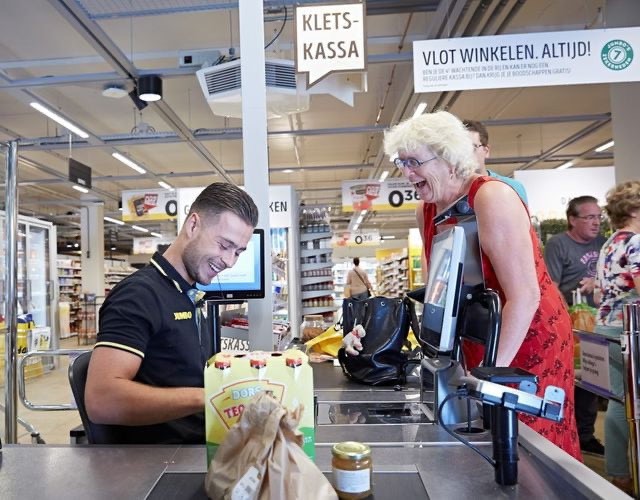
Jumbo, the #Dutch supermarket chain, introduced slow checkouts when it discovered some people enjoy chatting while paying for their goods. The added personal touch is helping many people, especially the elderly, deal with loneliness.
I wrote this thread and wish I’d tagged @academicchatter, but living with regrets is unavoidable in academia.
Maybe this will work, in the absence of quote toots.
https://qoto.org/@girls_can/109627740588982902
Rooney’s old account
boosted

We’re working on an episode about how we’re #MoreThanWork. What kind of #hobbies and other extra-curricular pursuits do you want to get into in 2023?
We’ll read out some of your responses on a future #podcast!
Rooney’s old account
boosted
@girls_can @girls_can let me just forward this study to our admins along with our perpetual request for the university to fund more graduate students and post docs
Rooney’s old account
boosted
Start of #NewYear is good time for a long overdue #introduction. I’m a #ecologists at Rice University. My research interests include population, community, evolutionary, & infectious disease ecology. I use a variety of approaches from experiments to theory but my happiest moments are when I get to spend time doing research in the field. I also just (officially yesterday) started as Editor-in-Chief of @ASNAmNat & always happy to hear from our authors & readers.
Rooney’s old account
boosted


Just got asked to take someone's picture with a Polaroid camera and am I still in 2023?
Rooney’s old account
boosted


By working through your holidays you’re piling up work for staff and colleagues who return from their #holidays to a flood of emails, meeting requests, things to review! You’re contributing to norms that oblige early career researchers to work through their holidays! It never occurred to me before today the real depth of my complicity. I’m resolved to becoming a #RenaissanceProf to save my sanity and find more joy and meaning in my work. But I hope it makes it easier for others to #CalmDown too
Has everyone read this paper? https://www.science.org/doi/10.1126/sciadv.abq7056?utm_campaign=SciAdv&utm_source=Twitter&utm_medium=ownedSocial.
You should, in case you had any doubts. And if you think about it much you realize that if you keep playing along you’re complicit.
You know that glorious week between Boxing Day and New Years when you can get a bit caught up? Finally knock a couple things off your To Do list without your inbox exploding? So productive! Such relief!
Rooney’s old account
boosted

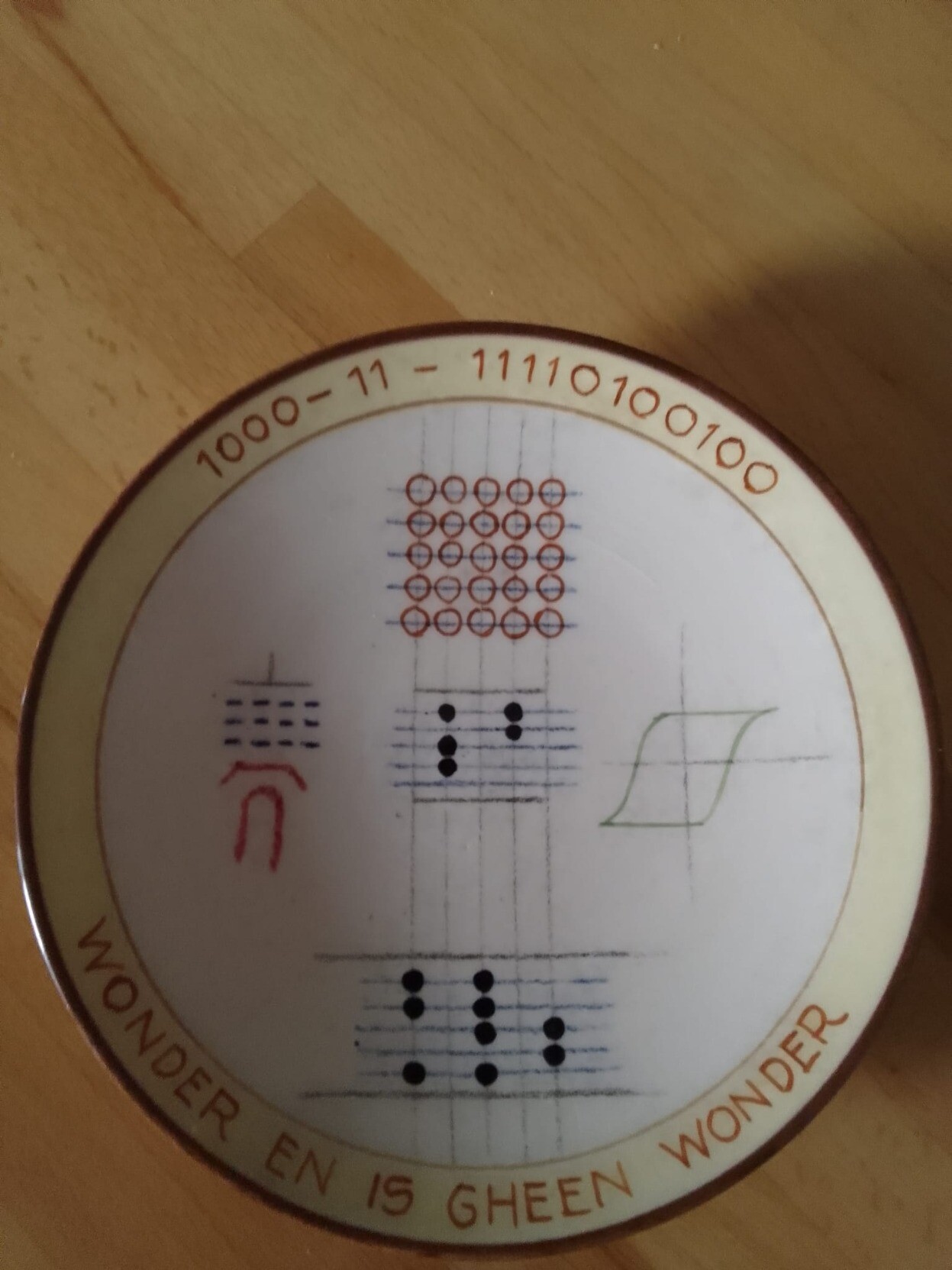
Looking for people who know something about early computing, especially in the Netherlands. Please boost and help me solve the mystery of this custom made plate that used to belong to my grandfather Bram Jan Loopstra, one of the pioneers of Dutch computing. What do the pictures mean?
But how can I - post tenure - practically ramp down and realign my research program with my values without becoming an academic honey badger OR quitting a life-long achievement addiction cold turkey? I can’t just decide not to try to do my best.
I must realign my goals and set new success criteria that I commit to #celebrate in meaningful ways.
I need to not apply for all the grants, say no to potentially excellent grad students and interesting side projects. Engage less, but more deeply
I was reading Sarah Cooley’s blog about how #professor identity and #selfworth gets tangled up in the job, and how the issue is more profound than a lack of work-life balance. She described it as an #addiction: being on an #achievementbender. Just like a drug, the successes have to keep getting bigger to even register. The highs are brief and the hustle is all you really have. Check it out: https://sarah-cooley.com/blog/2023/1/2/academia-identity-and-self-worth-a-reflection-on-2022
I’ve long sought a way to ramp down my research program to something more sustainable. But the only path seemed to be curmudgeonhood and bad Dept relations. You know this model; your department has one. The prof who avoids all service except for prestige roles and is so aggressively terrible at teaching that their classes are tiny and made degree optional. They’re like the academic honey badger who just does what they want and collegiality be damned. I don’t want that. I want good relations.
In the pre-tenure slog I grew my research program like a cancer, always afraid to say “no.” Convinced I had to seize every opportunity and constantly prove my worth. And now I have brought in millions in research money, graduated >20 grad students, published >60 papers, expanded my lab footprint, and been promoted. And you know what? It still doesn’t feel successful enough. It never will. Because there is no end to the academic rat race (except burnout or retirement if that arrives first)
I was reading #PollutionIsColonialism by @maxliboiron and encountered the concept of extractive reading, which really resonated. I want to sit with texts, not mine them for valuable nuggets. I want to build good relations with my students, mentors and research partners. I want to lay deep, thoughtful academic roots. I want to spend more time lifting people up than climbing to the summit of some achievement mountain. I want to focus on the parts of the job that nourish me.
So here it is: my 2023 #newyearsresolution is to become a #renaissanceProf. What do I mean by that? The 1960s, 70s, and 80s were a slower time with objectively lower expectations for professors. Classes were smaller and so were budgets. The pace of publishing was more manageable and overall people seemed to engage in more deep though, synthesis, and reflection.
The hectic pace and toxic productivity of #academia has transformed the professoriate into manic information capitalists.
- Website
- https://uwaterloo.ca/rooney-lab/
I moved to girls_can@TheCanadian.social Posts about #ecology #teaching #biodiversity #contaminants #university #academia #ONpoli #CanPoli #conservation #nature #GreatLakes #parenting she/her
Joined Nov 2022
