

kwitschas @kwitschas@qoto.org
Biochemist and postdoc at Gent University
#neuroscience
#ScienceMastodon
#ionchannels
#Electrophysiology
#Biophysics
Joined Nov 2022
kwitschas
boosted

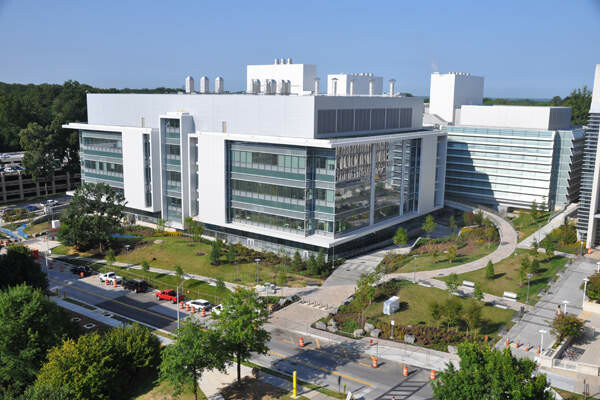
Fully funded 4 year PhD in my group, supported by EPSRC available!
Come work on the cutting edge of understanding how mutations alter the aging tissue and influence cancer development. Study how mutant clones spread and interact in the tissue with a diverse set of computational methods.
Recent graduates have been highly successful taking positions in industry and academia.
See my lab web page to learn more about our work- https://www.hall-lab.com
https://ucl-epsrc-dtp.github.io/2023-24-project-catalogue/projects/2228bd1101.html
kwitschas
boosted

Discussed scientific texts generated by prompting ChatGPT with @kordinglab Can one integrate into one's own papers and grants? #ChatGPT #neurodon
kwitschas
boosted

My first mastodon post!
Interested in #neuralinterfaces #deeplearning and #brainimplants for the blind? Sharing our latest 🔥PRE-PRINT🔥"Biologically plausible phosphene simulation for
the differentiable optimization of visual cortical
prostheses" w Maureen van der Grinten,
@deRuyterJaap
et al. 1/
kwitschas
boosted

@MolemanPeter @NicoleCRust I think this has been my perspective from my time in neuroscience as well. I think we had a great period of advances from ~1970s to ~2000 built around the successful application of molecular biology to the brain. This was a time when new tools made a reductionist approach extremely powerful, to pick apart complex things to smaller and smaller pieces.
To me it seems like the biggest sea change of the past 10-15 years has been widespread acceptance that reductionism is not enough, that we need to go the other way and think about emergent explanations of lower-level phenomena. Predictive coding and the dynamical systems approach are two examples of this, in which the goal is to understand population activity, not individual neurons. I would say that the search for systems-level explanations has been the conceptual innovation of our time (with the caveat that no ideas are ever really new, and perhaps this is just the pendulum swinging back to the era before molecular biology).
Unfortunately I also think the search for multi-level explanations of the brain is much more ill-posed than the reductionist approach, a much harder problem, possibly even intractable. It's not even clear what it would mean to understand the brain at a systems level -- concretely, how would we even know if we succeeded? So maybe this is why we also feel like we're stagnating as a field. But I am glad we are looking at things this way even so :)
kwitschas
boosted

I recently joined Mastodon, and I found it jarring that it has very few discoverability features.
So I’ve built this little tool to help build connections with people: https://followgraph.vercel.app/
Check it out!
kwitschas
boosted

#MastodonNews Dec 28, 2022
Seems not everybody is willing to sell out to evil billionaires.
Financial Times: Twitter rival Mastodon rejects funding to protect non-profit status >>>
https://t.co/TXNmtIPV3O
Twitter rival Mastodon has rejected more than five investment offers from Silicon Valley venture capital firms... The platform’s non-profit status was “untouchable”... Mastodon will not turn into everything you hate about Twitter.
News Archive >>> https://docs.google.com/spreadsheets/d/1d5Q6oyzrlfXBEhHsLI9cxltdFV_XPrZWQj1mj8Ivc7Q/edit?usp=sharing
#twittermigration
kwitschas
boosted

@NicoleCRust @albertcardona @matthewcobb
One of the things I've been struggling with recently is how the vast majority of papers (including most or arguably all of mine) don't propose an idea that could in principle get us closer to understanding how the brain does what it does. I have the feeling that there was this moment in time when people were coming up with tons of crazy theories. They were all wrong (probably) but it was exciting. Now we're just talking about how many dimensions a 'neural manifold' has and I just can't get excited about that (sorry manifold people). In my case, I think I've had a small handful of ideas that went in the direction I'd like neuroscience to be going in of proposing ideas that could scale to part of a full explanation of the brain, but I haven't pursued them because they were hard to define or get funding for. My resolution for 2023 is to focus more on those interesting questions and less on things that I think are easy to get published or get funding. For what it's worth, the biggest challenge to neuroscience I reckon is how it can operate in a stable way based on what seems to be a surprisingly unstable substrate (e.g. synaptic turnover). If I had a good idea about how to solve that problem, that's what I'd be working on.
kwitschas
boosted

RT @BonifacinoJuan@twitter.com
This #postdoc position in my lab @NICHD_NIH@twitter.com to study molecular mechanisms of protein and organelle transport is still open. For info, visit https://tinyurl.com/2fyp5rrb https://twitter.com/BonifacinoJuan/status/1590383519687376896
🐦🔗: https://twitter.com/BonifacinoJuan/status/1607725312099368963
kwitschas
boosted

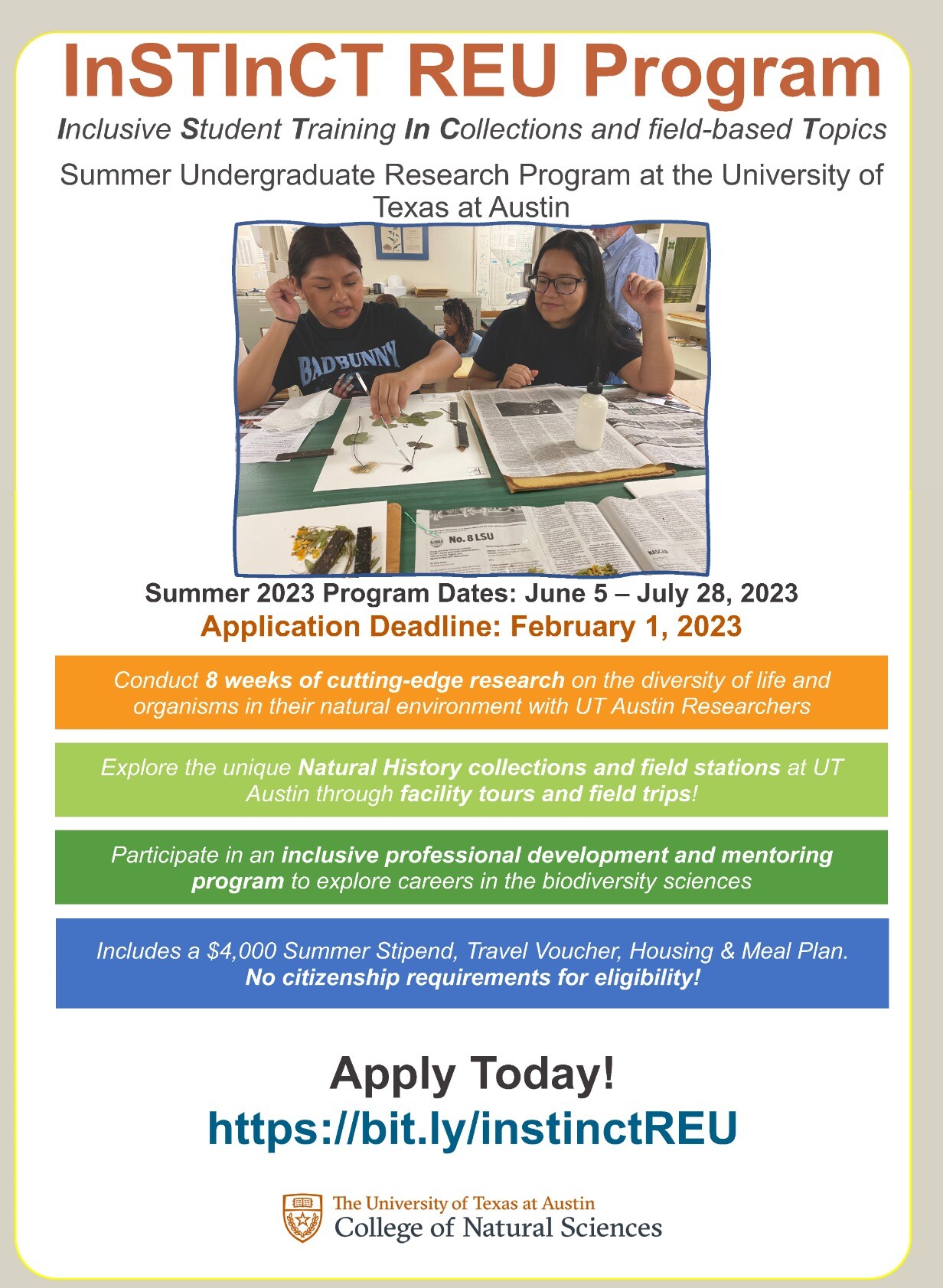
Please Boost! We have an amazing REU Program in Integrative Biology at UT Austin that is focused on Biodiversity Science! Fieldwork, collections-based research, organisms... and to boot amazing mentors! Help spread the word to your undergrads!
https://biodiversity.utexas.edu/academics/stengl-wyer-reu-program
kwitschas
boosted

job search, boost please  (cont.)
thanks to everyone who's been supporting this post. i haven't gotten contacted yet but i'm still hopeful. i should add, i want a data entry position but i will take any fully remote non-customer-facing wfh job. clerical work and other admin assistance stuff like that is fine.
kwitschas
boosted
job search, boost please
hi, im an autistic adult looking for fully remote work in data entry. i type 100 WPM+ with years of computer experience and i'm fully available all times of day except thursday afternoon. i keep getting contacted by indeed scams so the website is unusable. if you know a real company looking for fully remote data entry workers, please contact me.
kwitschas
boosted

Received 270 review invites in 2022.
Let's assume I reject all, but do my due diligence.
1. carefully read email & abstract
2. consider request
3. reject x2
4. think & recommend 1 or 2 reviewers
5. write awkward "sorry" email to editor in case it's a friend
That's ~10min each, not counting interrupted workflow, ~45 hours.
Genuinely interested how others deal w this. I don't feel comfortable just deleting review requests, but it's totally gotten out of hand.
What are sustainable solutions?
kwitschas
boosted

Also, remember that #Elsevier owns #Mendeley, which it uses to collect data on you. #Zotero is #OpenSource and not run a by an EvilCorp.
See this blog by @eikofried and Robin Kok on Elsevier's #data extraction and collection practices.
Lots of reasons to ditch anything to do with Elsevier.
#OpenScience #OpenAccess #research
https://eiko-fried.com/welcome-to-hotel-elsevier-you-can-check-out-any-time-you-like-not/
kwitschas
boosted

date: 2022-12-27 13:22:17
by: Oiwi Parker Jones
AWS and EPSRC are kindly funding a #PhDposition (DPhil) to work with me on deep learning and electrophysiology (for neural speech prosthetics). Deadline 20 Jan: https://aims.robots.ox.ac.uk/media/12256/parker-jones-2022-aws-aims-cdt-dphil-advert.pdf @OxEngSci @OxfordRobots #BrainComputerInterface #Neuroscience #DeepLearning #OxfordUniversity
Source🦖:
https://twitter.com/twitter/statuses/1607728577931366402
#PhdPosition

kwitschas
boosted

New paper! Full text is now available.
Working Memory Is Complex and Dynamic, Like Your Thoughts
https://direct.mit.edu/jocn/article/35/1/17/113628/Working-Memory-Is-Complex-and-Dynamic-Like-Your
#neuroscience
kwitschas
boosted

Call for papers on: “The influence of the group on cognition and emotion”
@Nature’s Scientific Reports calls for psychology and neuroscience work on the influence of social groups on cognition and emotion.
Submission deadline: 21st June 2023
For more info see https://www.nature.com/collections/hahdhchhjh
Editors on Mastodon:
@amykrosch
@zogmaister
#Psychology
@psychology
#SocialPsychology
#SocialScience
@socialpsych
#Cognition
#Emotion
#Neuroscience
kwitschas
boosted

kwitschas
boosted

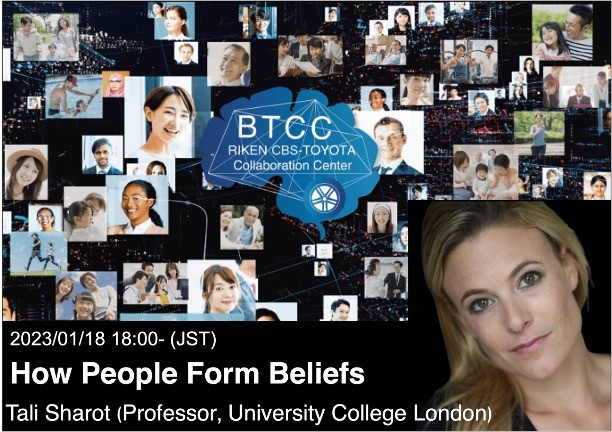
***RIKEN BTCC Talk Series***
[Title]
How People Form Beliefs
[Speaker]
Tali Sharot
Professor
University College London
[Date & Time]
2023/1/18, 18:00- (JST)
[Event Format]
ZOOM Webinar
[Registration Link]
https://us02web.zoom.us/webinar/register/WN_Lq50xd0oSg6Wvej4pvw4VQ
kwitschas
boosted



8. How was this the best year of my life?
2022 was a rough year for many reasons but if you're reading this that means you got through it.
By asking this question you focus your mind on gratitude and place yourself in the best position to make the most of 2023.
Biochemist and postdoc at Gent University
#neuroscience
#ScienceMastodon
#ionchannels
#Electrophysiology
#Biophysics
Joined Nov 2022
