

Léo Varnet @leovarnet@qoto.org
- Institution
- CNRS, ENS Paris
- Research topics
- Auditory perception, psycholinguistics, hearing loss.
CNRS researcher at École normale supérieure Paris. Auditory perception, psycholinguistics, hearing loss. My toots are searchable #tootfinder.
Joined Oct 2022
Aujourd'hui je présentais mes recherches à l'Université d'Oldenburg, et à cette occasion j'ai découvert leur merveilleux Hörgarten ("jardin de l'audition") qui jouxte le bâtiment d'audiologie.
Petite question de psycholinguistique appliquée : quels sont les mots qui vous "sautent aux oreilles" lorsque vous écoutez des chansons dans une langue que vous ne connaissez absolument pas ? Par exemple typiquement pour moi en portugais : saudade.
#psycholinguistique #linguistique
Léo Varnet
boosted

I thought it might be a good idea to create an account list for #linguistics similar to the ones collected here https://github.com/nathanlesage/academics-on-mastodon - if you want to be on the list, feel free to add yourselves here: https://etherpad.wikimedia.org/p/mastodonlinguists \cc @linguistics@a.gup.pe @linguistics@mastodon.social
Léo Varnet
boosted

Post : #introduction: je suis enseignante-chercheuse en #langue #languefrançaise #stylistique à l'Université d'Orléans. Je travaille sur les liens entre langue et pouvoir.
Je suis intéressée par tout ce qui est #linguistique #littérature #SHS #ESR #vulgarisation !
Je suis également enseignante en #détention #prison et m'intéresse au monde carcéral en général.
Et enfin podcasteuse et chroniqueuse langue à la radio pour #CestEncoreNous !
Léo Varnet
boosted

Dans l'explosion de transphobie (enfin de transphobie manifeste et déclarée...) à laquelle on assiste depuis quelques temps, il y a un "argument" qui revient régulièrement : les mouvements trans voudraient "changer" le sens du mot "femme".
Et au-delà de tout ce qu'il y aurait à en dire, ça témoigne surtout d'une très mauvaise compréhension de comment fonctionne le langage.
Léo Varnet
boosted

Reviewing Tip: The 10 Minute Data Check
How to spot errors in analyses without doing an entire reproducibility test
http://steveharoz.com/blog/2022/reviewing-tip-the-10-minute-data-check/
J'adore Michel Chion et ses écrits sur le cinéma (je m'étais moi-même inspiré de sa théorie de l'acousmêtre pour analyser les rapports entre voix et identité dans le cinéma fantastique http://dbao.leo-varnet.fr/2021/01/05/voix-metamorphoses-et-possessions-au-cinema/)... Mais son ouvrage sur "Le son", quelle déception ! On dirait que l'auteur n'a jamais ouvert un seul manuel de psychoacoustique. C'est vraiment surprenant de se dire que Chion est à l'origine de réflexions passionnantes sur la bande son au cinéma, et que néanmoins il ignore totalement l'existence d'une discipline scientifique portant sur l'étude de la perception auditive...
Léo Varnet
boosted

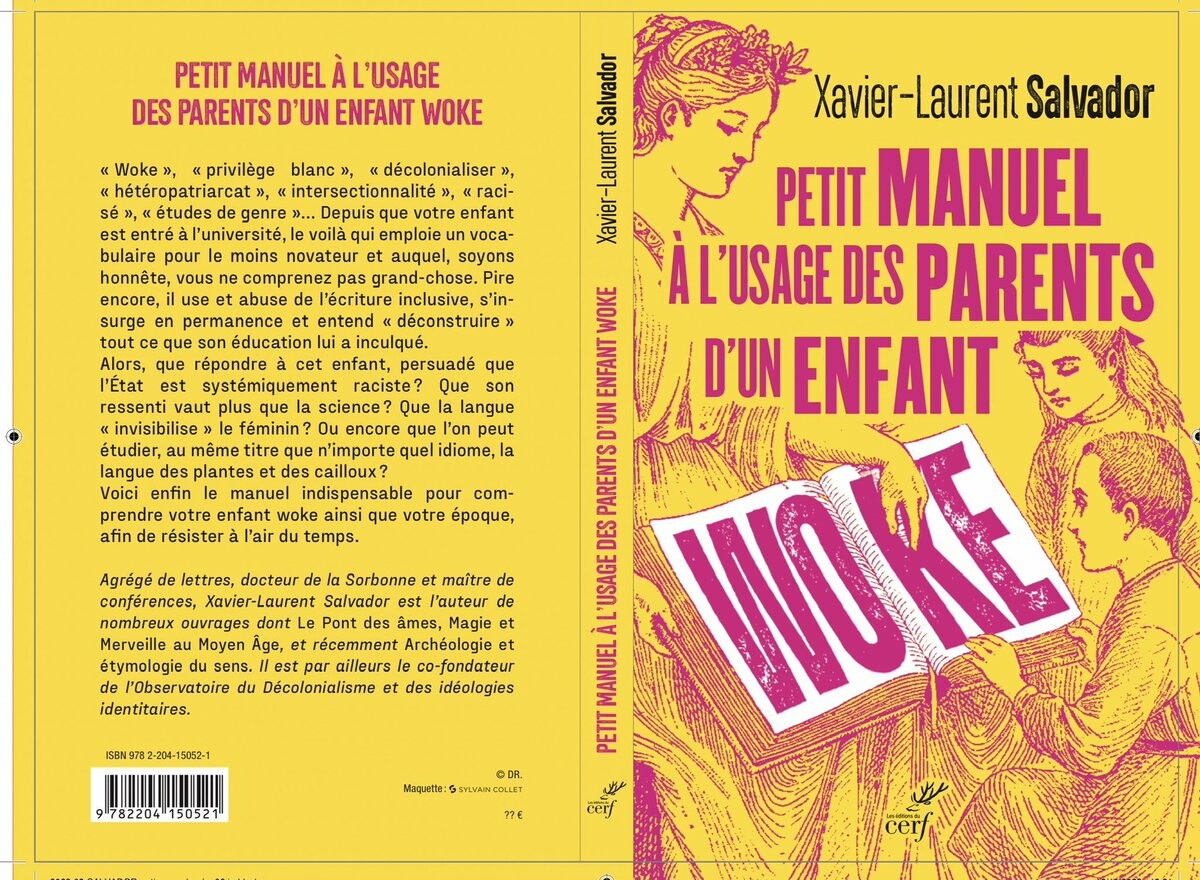
Les obsédés du woke (la poêle bien sûr)
---
RT @ehouardvial
Mon futur livre de chevet, je le sens
https://twitter.com/ehouardvial/status/1588185791666487296
Another two cents about this book: reading the stories of scientific misconducts, and in particular of fraudsters who were supported by their institutions against all evidence (for example Paolo Macchiarini at Sweden's Karolinska Institutet https://en.wikipedia.org/wiki/Paolo_Macchiarini) reminded me of the way universities also cover up sexual harassment cases almost systematically... It is interesting (and depressing) to see how the "cover up culture" in academia goes way beyond sexual violence at work and seems to include in fact any types of wrongdoings.
Léo Varnet
boosted

Avec "Le mystère des voix intérieures", publié @EDITIONSDENOEL
et disponible dans les gentilles librairies, explorez les facettes de votre #endophasie, cultivez ses vertus bénéfiques et découvrez la diversité de ses formes autour de vous...
#linguistique #monologueinterieur #voixinterieure #psychologie #neuroscience #philosophie #sciencescognitives
#aphantasia #hallucination
Léo Varnet
boosted

As Voltaire famously said: "I may not agree with what you have to say, but I do want you to give me $8."
Original tweet : https://twitter.com/existentialcoms/status/1587995667284512768
Original tweet : https://twitter.com/existentialcoms/status/1587995667284512768
Léo Varnet
boosted

Hello! Is there madness in your methods? :)
Next week I will be presenting my work at Institut De l'Audition in Paris, at Universität Oldenburg (Germany), at Technical University of Denmark, then back home. I will travel only by train, in a desperate attempt to reduce the carbon footprint of research. This is a bit of an adventure, though: 600€ in train tickets and a total travelling time of 26h...
Léo Varnet
boosted


The #bayesian learning party continues with my brms / tidyverse #rstats translation of Bayes Rules chapter 15 introducing hierarchical/multilevel models. Nothing too fancy in this chapter—it does an excellent job comparing pooling/no pooling/partial pooling https://bayesf22-notebook.classes.andrewheiss.com/bayes-rules/15
It's reassuring to know that despite the perverse incentives, despite the crooked publication system, science does actually contain the tools to evaluate its own weaknesses, and maybe to heal itself. (3/3)
A particularly enlightening insight is the estimation of the prevalence of fraud (e.g. how often do biologists fake the figures in their papers?), publication bias, p-hacking, and even numerical errors in published papers... There are public records (such as Retraction Watch), very clever tools (such as statcheck http://statcheck.io/), and tests (e.g. the GRIM test https://en.wikipedia.org/wiki/GRIM_test) (2/3)
I just finished Stuart Ritchie's jaw-dropping book "Science Fictions" which exposes the deleterious effects of fraud, bias, negligence and hype on the constitution of scientific knowledge. Of course this is a a deplorable but all-too-familiar observation, however the book brings a new level of detail. (1/3)
Léo Varnet
boosted

Did you know that my sample size justification paper (which you are citing about once a day, thanks for that) has a shiny app that will guide you towards a state of the art sample size justification? You can find it here: https://shiny.ieis.tue.nl/sample_size_justification/ As part of this Mastodon promotion month, I will answer each and every question anyone has who uses the Shiny app for the sample size justification in their next study (if I can!).
Léo Varnet
boosted

A toot-summary of our recent article!
We often use our confidence to gauge the reliability of our perception.
But what about the confidence... in our confidence?
Sometimes, we can be certain we are uncertain.
With Samuel Recht, Ljubica Jovanovic, and Pascal Mamassian, we had fun testing the limits of meta-metacognition in a classic visual task.
We found surprising accuracy of confidence up to the fourth order (confidence in confidence in confidence, or meta-meta-meta-cognition).
https://www.radiofrance.fr/franceculture/podcasts/la-science-cqfd/metoo-la-science-aussi-9608803
Un épisode très dense de #scienceCQFD sur les inégalités et violences de genre dans les sciences. Parmi les nombreuses choses qui y sont dites, cette réflexion de Marianne Blanchard lorsque le débat commence à s'orienter exclusivement sur la lutte contre les biais de genre : "Il ne faut pas non plus se focaliser sur ces stéréotypes... Le risque est de diluer les responsabilités. Ils sont une conséquence de rapports de pouvoir sociaux de sexe. Il y a des fondements matériels, et des réalités sexistes et sexuelles."





- Institution
- CNRS, ENS Paris
- Research topics
- Auditory perception, psycholinguistics, hearing loss.
CNRS researcher at École normale supérieure Paris. Auditory perception, psycholinguistics, hearing loss. My toots are searchable #tootfinder.
Joined Oct 2022
