

Daniel Dvorkin @medigoth@qoto.org
Bioinformaticist / biostatistician, veteran USAF medic and Army infantryman, armchair paleontologist, occasional science fiction author, long-ago kickboxer, oldbat goth, vaccinated liberal patriot.
Joined Oct 2022
Sure, there are things we don't understand about #LLMs. We know how the underlying #code works, and #tokenization, and all that, but the models are so complicated we can't just take them apart and look at them the way we would, say, a big database. This leads to unexpected emergent behaviors.
That reminds me a lot of my job, which boils down to modeling living systems with #math and code. We know the #physics, we know the #chemistry, and we can observe the #biology, but there are a whole lot of layers in between where apparently simple processes lead to remarkably complicated results.
And? It doesn't mean we don't *understand* living systems, it just means we don't know every single thing that goes on inside them all the time. So we need to #experiment to figure out the most probable results: "If I do this, what do I expect to happen?" Then quantify our #uncertainty about that expectation, which is pretty important when, say, #cancer patients want to know how long they have to live.
Congratulations, #computers! You've joined the entire rest of the universe. In that limited sense, the idea that we "don't understand AI" is true. But it's not some unknowable permanent mystery.
On the scale of revolutions in human affairs, I'm still going with stone #tools, controlled #fire, and #agriculture as somewhat bigger deals. On the second tier I'd put #writing, #machinery that runs on something other than #muscle power, and #electronics including computers themselves.
I don't say it's *impossible* AI will be on the same scale eventually, but if so it won't be any more of a #singularity than the previous big technological shifts. "Our time is unique and nobody else has ever experienced any change this profound!" doesn't have a great track record.
Sure, there are things we don't understand about #LLMs. We know how the underlying #code works, and #tokenization, and all that, but the models are so complicated we can't just take them apart and look at them the way we would, say, a big database. This leads to unexpected emergent behaviors.
That reminds me a lot of my job, which boils down to modeling living systems with #math and code. We know the #physics, we know the #chemistry, and we can observe the #biology, but there are a whole lot of layers in between where apparently simple processes lead to remarkably complicated results.
And? It doesn't mean we don't *understand* living systems, it just means we don't know every single thing that goes on inside them all the time. So we need to #experiment to figure out the most probable results: "If I do this, what do I expect to happen?" Then quantify our #uncertainty about that expectation, which is pretty important when, say, #cancer patients want to know how long they have to live.
Congratulations, #computers! You've joined the entire rest of the universe. In that limited sense, the idea that we "don't understand AI" is true. But it's not some unknowable permanent mystery.
On the scale of revolutions in human affairs, I'm still going with stone #tools, controlled #fire, and #agriculture as somewhat bigger deals. On the second tier I'd put #writing, #machinery that runs on something other than #muscle power, and #electronics including computers themselves.
I don't say it's *impossible* AI will be on the same scale eventually, but if so it won't be any more of a #singularity than the previous big technological shifts. "Our time is unique and nobody else has ever experienced any change this profound!" doesn't have a great track record.
I don't deceive myself that #Magyar is going to usher in a glorious new era. As far as I can tell, on the US scale he'd be a standard issue pre-Trump Republican. But he does seem committed to democracy (I hope I'm right about that) and he's pro #EU, and at least not hostile to #Ukraine. Which right now seems like plenty.
Congratulations, #Hungary! I hope we can do the same.

"Let's wait and see what the investigation shows! Anyway, the timing is suspicious! Whatever happened to innocent until proven guilty?"
The political arena is not a courtroom. Elections are not trials. We the People are not prosecutors, or defense attorneys, or judges. Maybe we're closest to being jurors, but even that is a lousy analogy. There is no obligation to follow rules of evidence or procedure. But there *is* an obligation to do what we think is best, with the knowledge we have at the time.
Eric #Swalwell should not go to prison without trial. Of course. He shouldn't be a candidate for the governorship of the most populous state in the country, either, under the current circumstances. All the #Democratic Party and the voters of #California can do right now is go with their guts.
By way of analogy, when Donald #Trump first ran for President, he had not yet been found legally liable for any sexual offenses. We'd be better off today if more #Republicans had chosen not to hold their noses and ignore the unmistakable stink of sleaze radiating off the guy. Sauce for the goose ...
And while I'm on that topic, all the cries about timing, the rumors of Roger Stone's involvement, etc.? Okay, it could be true. *Maybe* it's a plot to take down someone who was until recently a rising star. We know it happens.
We also know, or should know, that abusers turn up in every walk of life, every job, every political party. Right now I'm catching more a whiff of "He can't be like that, he's one of Our People! That's a Those People problem!" Yeah. Never a good look.
Throughout my life, I've been part of several quite different groups of Our People, and one thing they have in common is that they are very reluctant to admit repulsive behaviors right in front of their noses, because they're so sure only Those People do such things. Which makes me a lot less thrilled to be one of Our People than I was when I filled out my membership application.
Maybe Swalwell didn't do any of what he's accused of. Maybe he did some, but not the worst. Maybe he did all of it and genuinely believed at the time that it was consensual. I acknowledge that any of those could be true.
I just don't care. It's time for him to go.
Note the name of the group where this was posted. They really think they're scoring some kind of point.
Liberals punish our sex offenders. Conservatives idolize theirs.

A #British friend asks, "For goodness' sake #America, if you can achieve what you achieved last night, surely you can find a way to fix the global mess you've made politically?" I started to reply with my usual light-hearted snark, and then my answer turned into something else entirely:
I continue to believe we can fix it. Somehow. Eventually.
But I have the unpleasant feeling #Artemis is our last hurrah. Humans will once again walk on the #Moon, and to do so they'll embark from ships emblazoned with the star-spangled banner, and for a moment I'll feel like the kid who grew up with an #Apollo mission profile poster on my bedroom wall and a house full of memorabilia from my father's #NASA career. And then—at best—we'll go back to our steady decline into mediocrity and irrelevance.
That's better than tyranny and destruction, and on a personal level I'll be happy enough if we pull it off. Most nations, and most people in those nations, are mediocre and irrelevant, after all. Nobody stays #1 forever. Survival is victory.
Every once in a while, to the end of my days, I'll look up at the night sky and remember what we could have been.

#Artemis II is, as far as I know, still safely on its way to the #Moon. Flyby, not a landing. But you know, #Apollo 10 was followed by Apollo 11. This is a hell of a lot more than baby steps.
Every once in a while, this country still reminds me what it was, and I continue to hope can be again.
Now, back to work. My #science doesn't make headlines, but it does keep people alive. Not because it is easy, etc. SCIENCE never sleeps, but scientists have to. Eventually.
"#Treason doth never prosper: what’s the reason?
For if it prosper, none dare call it treason."
https://www.politico.com/news/2026/03/30/jan-6-lawsuit-capitol-police-00850890
When I am #dictator, every antivaxer will be on the hook for every death that could have been prevented by vaccines. #Civil and/or #criminal liability, depending on the extent of their activities.
https://www.propublica.org/article/rfk-jr-vaccine-agenda-childhood-plagues
Say there were 100,000 #vaccine-preventable deaths in the US last year—a reasonable guess, from some quick Googling. Did you make an #antivax post? Now you're a defendant in 100,000 wrongful death lawsuits.
Are you making money by pandering to paranoia and willful ignorance? You're an accessory to 100,000 counts of conspiracy to commit #murder. Public figure, spreading your poison every time people look at their TVs, computers, or phones? That's 100,000 cases of first-#degree homicide.
No truce with #traitors, now or ever.
"I say we take off and nuke the site from orbit. It's the only way to be sure."
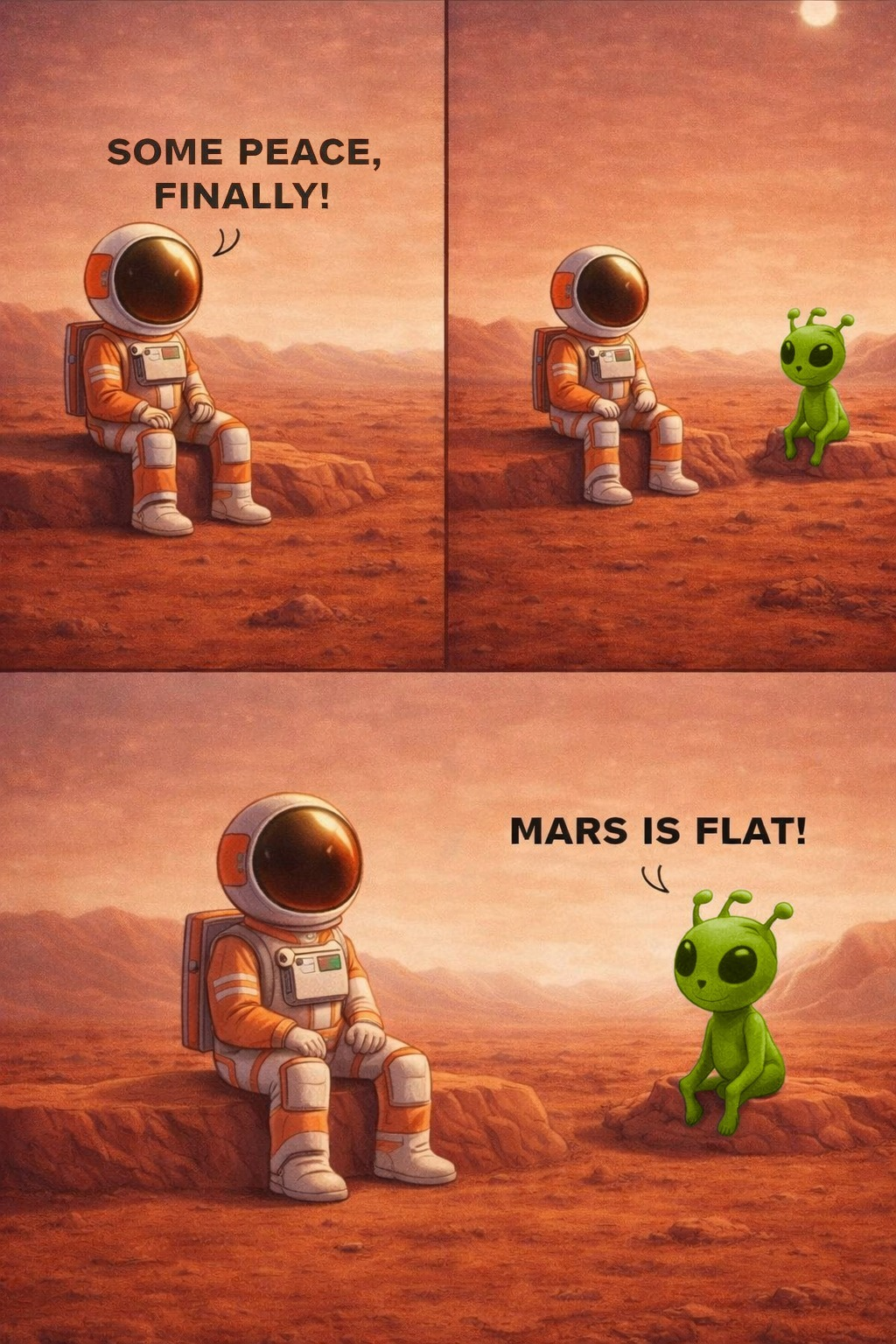
"And this is why argument from authority is not always (or even usually) fallacious. Neither is ad hominem, and if you disagree with me, it's probably because you're an idiot."
This is good news. Just remember what #antivaxers are. They don't know they're mass murderers—but they still want you dead, and your children, and ultimately themselves after they've done away with everyone else. You have to be lucky all the time. They only have to be lucky once.
https://open.substack.com/pub/yourlocalepidemiologist/p/a-win-for-your-access-to-vaccines
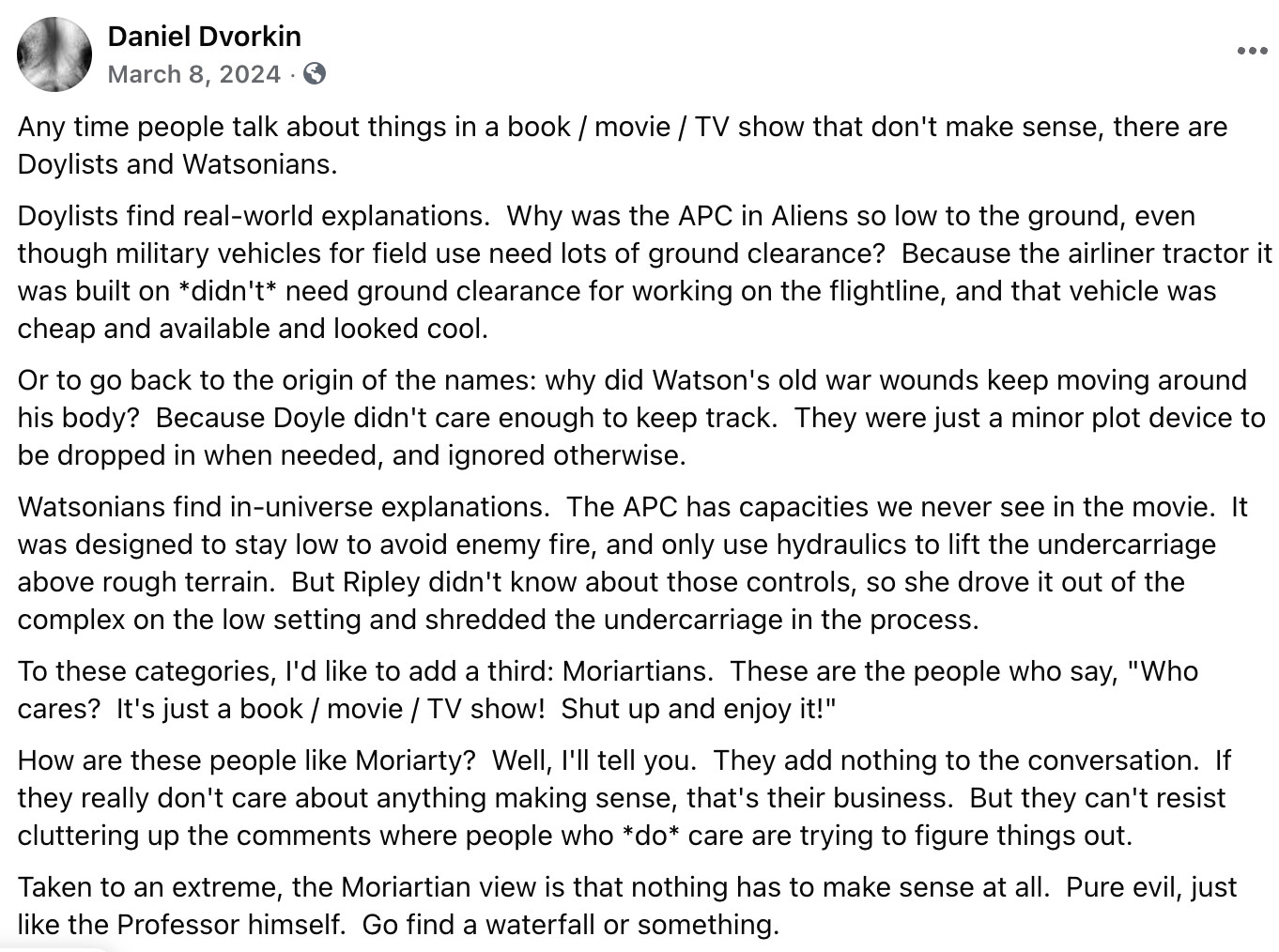
Of course, “really bad at getting the point” is always a possibility. I’m just going to pretend I didn’t think of that.
A line in a mostly unrelated post by a friend got me thinking about a maxim I've heard a lot lately: "#Sciencefiction is not about predicting the #future, but rather commenting on the present." It's become conventional wisdom rapidly approaching the status of a thought-terminating cliche.
When I sit down to write #SF, "what if" is my primary motivation. The here-and-now obviously shapes my thoughts, but I'm not *deliberately* writing about it—if I wanted to do that, I'd pick a different genre.
Maybe I'm not exactly trying to predict the future, but I am trying to make believable predictions about what *could* happen if such-and-such occurred. And I think most of the SF authors whose work I admire would agree with me, unless I'm just really bad at getting the point!
This was a pretty mild expression of my opinion on the matter. “I don’t care” is practically never something you should feel the need to say, unless someone asks you directly. And when it comes to fan debates, let the people who *do* care have their fun.
For the WISP (work in some progress) I'm fiddling with #population growth models, and considering rolling my own to justify the numbers I want. I guess that makes me a rather finicky #Watsonian. But maybe it's like Tolkien coming up with several complete languages before writing any actual plot!
Like their modern #Italian descendants, the ancient #Romans ate a lot of fish. Italy is a peninsula, after all, and except for the northernmost part, nowhere in the country is far from salt water. Even as the #Empire extended to places deeper inland, they kept up their #pescavorian habits.
Indeed, fish may have been their most esteemed source of protein. They appreciated red meat and poultry as much as anyone, but fish brought out their true culinary artistry. From tiny herring to giant halibut, from the icy North Sea to the body-temperature waters of the southern Mediterranean, from cooking fresh on the beach to smoking and salting and drying and fermenting—there was no way in which they did not savor the bounty of the sea.
One particular type of fish, however, took on greater meaning than mere sustenance. Their writings speak of their devotion to this optima maxima of the finned and scaled kind. Religious inscriptions in particular show their gratitude, not only for meat on the table but for all kinds of good luck, be it victory in battle or a bountiful harvest or a successful business venture. They might even ask for its aid *before* setting out on some difficult quest.
Yes, as strange as it may seem to the modern mind, the record is clear: Romans would do anything for tuna.
Bioinformaticist / biostatistician, veteran USAF medic and Army infantryman, armchair paleontologist, occasional science fiction author, long-ago kickboxer, oldbat goth, vaccinated liberal patriot.
Joined Oct 2022
