

Michael Piotrowski @true_mxp@qoto.org
Associate professor of digital humanities, University of Lausanne, Switzerland
Professeur associé en humanités numériques, Université de Lausanne, Suisse
Joined Nov 2022
Michael Piotrowski
boosted

“The neural network's operations are largely opaque and inscrutable. It is, in other words, a black box. And as these black boxes assume responsibility for more and more of our daily digital tasks, they are not only going to change our relationship to technology—they are going to change how we think about ourselves, our world, and our place within it.” (2016)
https://www.wired.com/2016/05/the-end-of-code/
Michael Piotrowski
boosted

We're delighted to announce the open-access @ManifoldScholar edition of _Global Debates in the Digital Humanities_, edited by Domenico Fiormonte, Sukanta Chaudhari, & Paola Ricaurte
https://dhdebates.gc.cuny.edu/projects/global-debates-in-the-digital-humanities
The volume is part of the Debates in the Digital Humanities series from the University of Minnesota Press
Michael Piotrowski
boosted

This post reframes the venerable Unix tool Make in an insightful way:
"Makefiles are machine-readable documentation that make your workflow reproducible."
Declaring dependencies documents the build process by making explicit the required sources, build steps and actions, and intermediate products, as well as their relationships.
Michael Piotrowski
boosted

I'd fallen for, and helped spread, what I now realize was a myth about quote tweets: That there's almost no research on them. Big mistake! Now rectified.
Here's my new post, digging into more than 30 studies with data on quote tweets. They don't settle all the questions. But there are answers, or at least partial ones, to most. It's still complicated, though.
It's a * very * long read, but there are summary points ....1/2
https://absolutelymaybe.plos.org/2023/01/12/quote-tweeting-over-30-studies-dispel-some-myths/
Michael Piotrowski
boosted

Michael Piotrowski
boosted

New blog post! Let's start the new year with a post by our DigiKAR colleague Mariam Gambashidze: “EuroCarto 2022 - presenting DigiKAR to the international cartographic community”
Michael Piotrowski
boosted

Eins unserer Hightlights #2022? Unser DH-Tag!
Die Keynote von @VanOorschot_FEST zum Thema „Neue Technik(en) – Neue Wissenschaft?!“, die Poster und Slampräsentationen haben wir auf Zenodo veröffentlicht. Schaut vorbei!
https://zenodo.org/communities/unboxingdh/?page=1&size=20
Michael Piotrowski
boosted

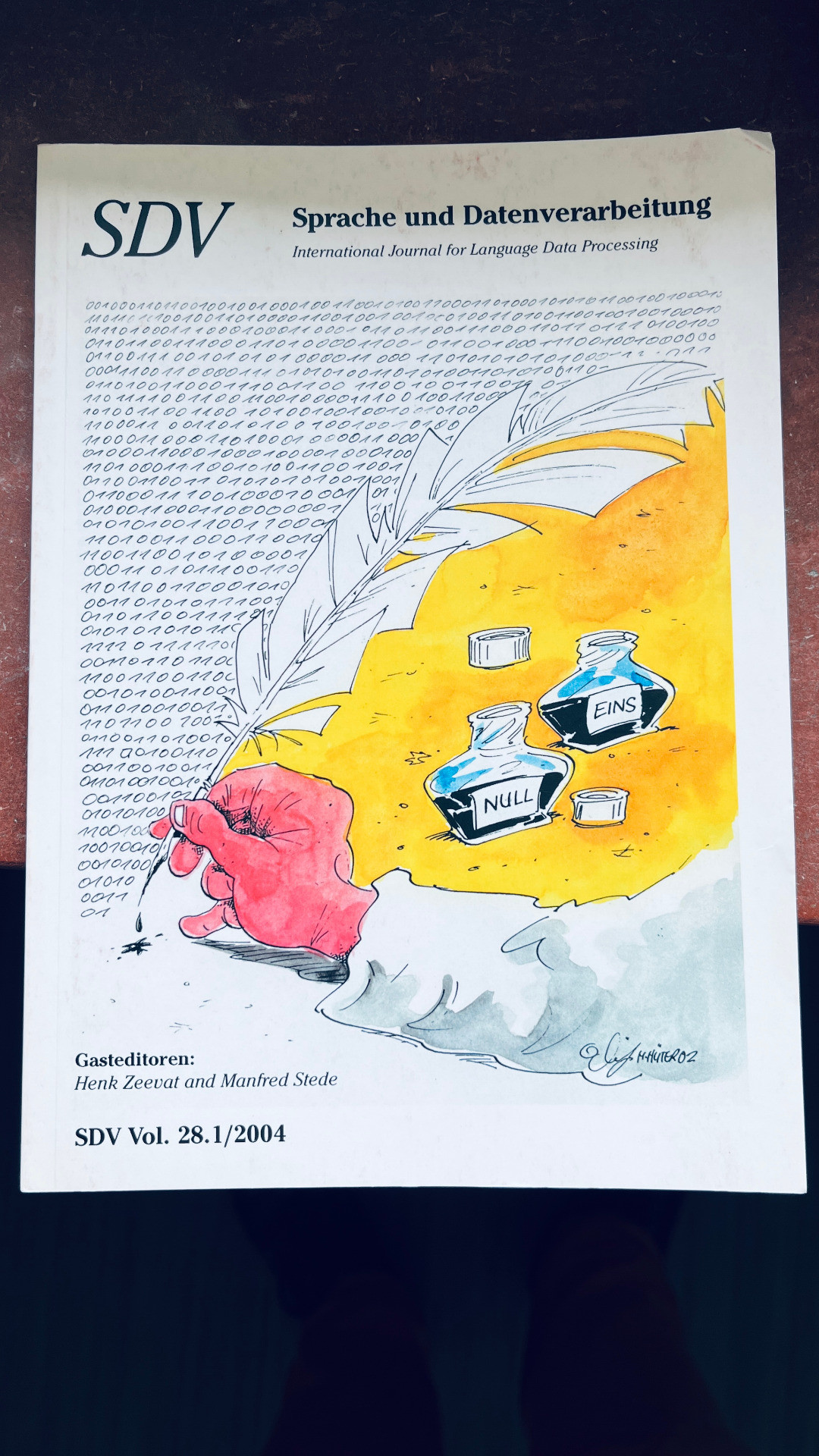
Robert Tinney was the cover artist for Byte magazine from 1975-1986, where he cranked out these fantastic paintings that captured the spirit of tech from that time. Here is one of my favorites (from 1981). #RetroComputing #Byte
I've shared more of Robert's retro-futuristic paintings on my blog https://docpop.org/2020/11/robert-tinneys-visions-of-the-future/
Robert is also selling prints via his site http://tinney.net/
Michael Piotrowski
boosted

Doc CH richtet sich an vielversprechende Forscherinnen und Forscher, die eine Dissertation zu einem selbstgewählten Thema im Bereich der Geistes- und Sozialwissenschaften in der Schweiz verfassen möchten. Die Ausschreibung ist offen bis am 15.03.2023
https://sohub.io/tj79
Michael Piotrowski
boosted

Doc CH is aimed at promising researchers who wish to write a doctoral thesis on a topic of their own choice in the humanities and social sciences in Switzerland. The call for proposal is open until 15 March 2023.
https://sohub.io/navd
Phew, I’ve sent out the “rapport de planification” for the 2025–2028 period to the department members for comments.
As for the abstract I wanted to write—it’s still titled “something about uncertainty and modeling.”
I just received an inquiry about Malaga, a software package for the
development and application of so-called Left-Associative Grammars (LAG), developed at the University of Erlangen in the 1990s.
Amazing.
Michael Piotrowski
boosted

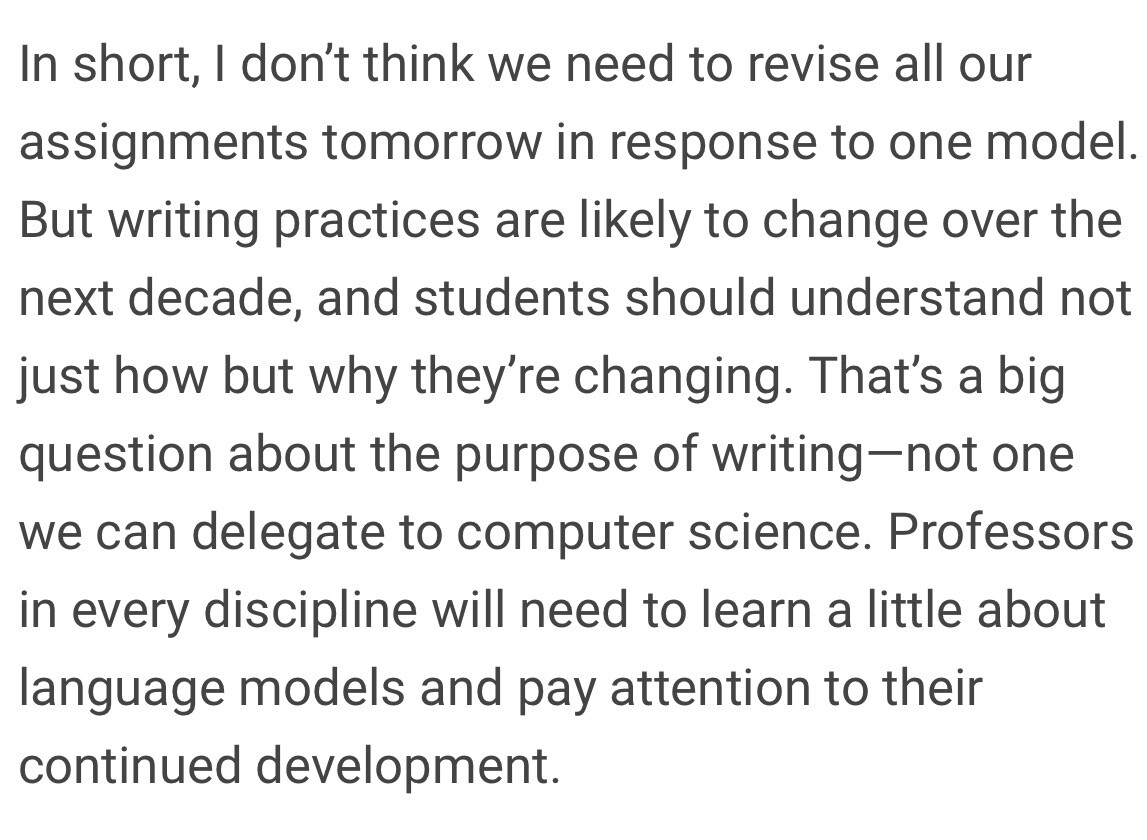
I suspect my take is not what people want to hear, but it’s that we need to prepare students for the long run, which means not just adjusting assignments but helping them understand the technology.
Michael Piotrowski
boosted

Morgen möchten wir uns wieder die Köpfe heiß diskutieren bei unserem Gesprächskreis! Von 11-12 Uhr stellt @toroe essentielle Fragen zu ethischen Aspekten der #DigitalHumanities. Es moderiert @resonanzfilter Komm gerne spontan vorbei, Zugangsdaten findest du hier https://dhtheorien.hypotheses.org/1306
Michael Piotrowski
boosted

"the increasing prevalence of artificial intelligence in peer review by companies such as Elsevier, Wiley, and Springer excises critical human judgement in the evaluation of scholarship and serves the capitalist interests of these corporate entities rather than academic interests and values."
https://www.researchinformation.info/feature/publication-and-data-surveillance-academia
Michael Piotrowski
boosted
The outlook is bleak:
"the core functions of higher education are destined to be quantified and that this data will be harvested, curated, and repackaged through a variety of enterprise management platforms"
"enterprise companies correctly see an opportunity for vertical integration and end-to-end or closed-loop systems"
https://www.researchinformation.info/feature/publication-and-data-surveillance-academia
Michael Piotrowski
boosted

No doubt there are fish hooks in his perspective too, but I found Stephen Wolfram's description of the potential synergies between ChatGPT and Wolfram|Alpha illuminating.
He highlights the inadequacies of ChatGPT but also (primarily) the ongoing value of human-curated, structured, data.
Michael Piotrowski
boosted
This website provides the full back archive of BYTE magazine, all 23 years of it from 1975 to to 1998. It's a treasure trove of vintage tech and nostalgia, not even Archive.org carries all the issues.
The site actually focuses on old Apple magazines, but has also PC magazines and other resources on the history of microcomputing.
Michael Piotrowski
boosted

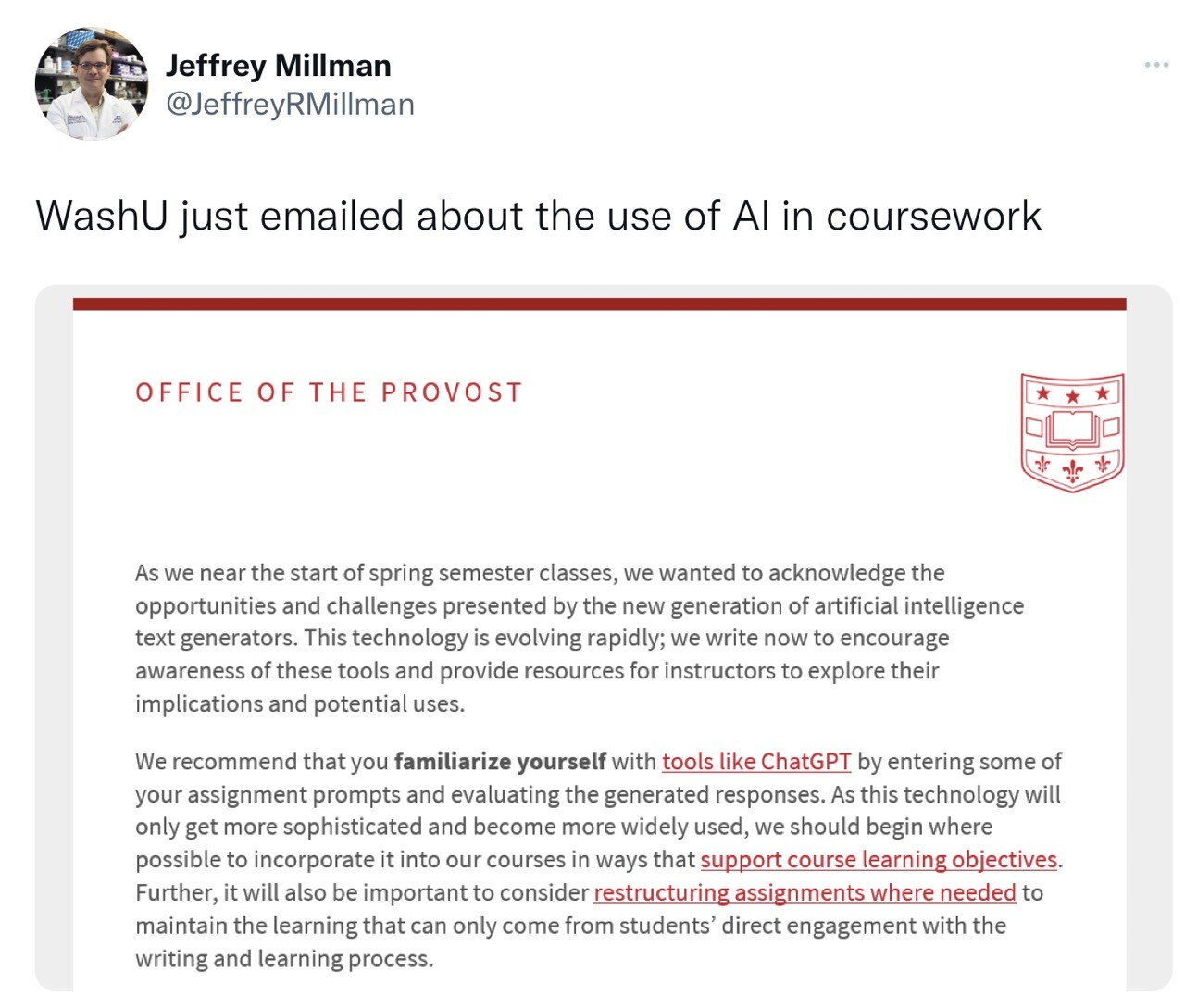
Kudos to WashU for a progressive stance on #ChatGPT and other AI text generators. Their Center for Teaching and Learning is also holding workshops to help faculty understand what’s new.
https://ctl.wustl.edu/event/1_11_23_chatgpt-exploring-the-threats-and-opportunities-of-ai-text-generators-on-teaching-and-learning/
Michael Piotrowski
boosted

Here's my contribution to #receptiogate. I am nearly a 100% sure that I have been at their stated address, 20-22 Wenlock Road, London, a few years ago to attend a chocolate-making workshop. It was a lot of fun. No manuscripts involved though.





Associate professor of digital humanities, University of Lausanne, Switzerland
Professeur associé en humanités numériques, Université de Lausanne, Suisse
Joined Nov 2022
