

Michael Piotrowski @true_mxp@qoto.org
Associate professor of digital humanities, University of Lausanne, Switzerland
Professeur associé en humanités numériques, Université de Lausanne, Suisse
Joined Nov 2022
Michael Piotrowski
boosted

Chaosnet: The #Lisp Machine network protocol that was beat by TCP/IP
"The only really visible remnant of #Chaosnet is the CH DNS class. There’s something about that fact that I find strangely fascinating. The CH class is a vestigial ghost of an alternative network protocol in a world that has long since settled on TCP/IP. It’s exciting, at least to me, to know that the last traces of Chaosnet still lurk out there in the infrastructure of our networked society. The CH DNS class is a fun artifact of digital archaeology. But it’s also a living reminder that the internet was not born fully formed, that TCP/IP is not the only way to connect computers to each other, and that “the internet” is far from the coolest name we could have had for our global communication system."
@michal_h21 Yes, but since Babel 3.39 this is supposed to be no longer necessary; see Section 1.3, “Mostly monolingual documents” in the Babel manual.
@michal_h21 Kinda, but I currenlty don’t have the time for a bug report (because I need to grade…)
Actually, the issue seems to be due to an interaction between babel and biblatex (and unrelated to abstract). This example always produces “undefined references” (I only load csquotes to stop biblatex from complaining, it doesn’t change anything):
\documentclass{minimal}
\usepackage{csquotes}
\usepackage[english]{babel}
\usepackage{biblatex}
\begin{document}
English
\begin{otherlanguage}{german}
Deutsch
\end{otherlanguage}
\end{document}
I’ve found three ways to make it work:
- Remove biblatex; or
- Explicitly load the other language (here: german); or
- Use otherlanguage*
@felwert Exactly my reasoning as well :-)
I hope to be able to replace LaTeX for PDF generation at some point: it’s so slow :-(
Michael Piotrowski
boosted


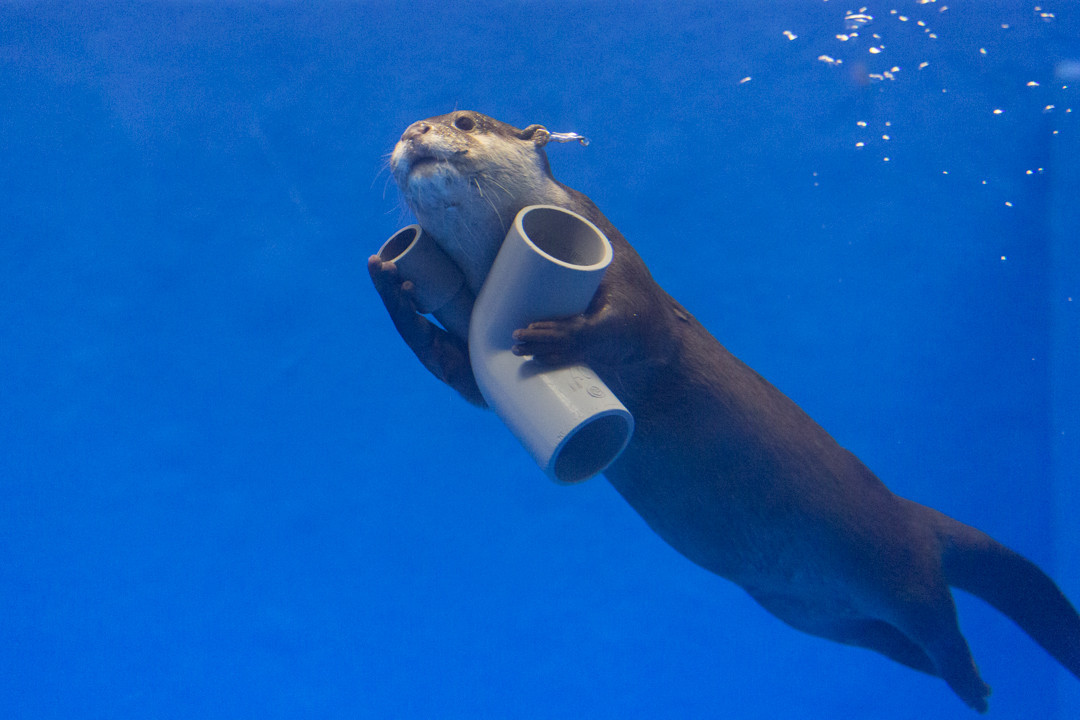
He needs those parts for his spaceship, he's going to otter space.🚀
@felwert Both, I guess. Package development moves much faster today, which is good in some respects, but also leads to instability and incompatibilities.
The days when you could say that, in contrast to Word, you can still process your LaTeX files from 10 years ago, are definitely over. This is one reason why I switched from #TeXLaTeX #Beamer to Markdown (#Pandoc + #Deckset): I could no longer reasonably expect my slides from last semester to compile without changes.
Michael Piotrowski
boosted

Talk about wildly anti-patterned. Trying to change a password on an Office365 account. If you paste into the password box, you get a message along the lines of "password cannot contain username". I promise the random string I was pasting contained *no similarity* to the user name. They made me actually type it. Twice. So it's shorter and simpler because who has the time?
#TeXLaTeX TIL:
1. Using an otherlanguage environment in the abstract environment produces spurious “unresolved references” that can never be resolved. Using otherlanguage* seems to avoid this problem.
2. biber sometimes simply stops working. The solution is to delete its cache, e.g., by saying rm -rf $(biber --cache)
Is it just me, or has #TeXLaTeX become very brittle?
Michael Piotrowski
boosted

Digital History and Theory
An Open Conversation on the Futures of Digital Scholarship
March 3-4, 2023 - online and in person
For more information, visit the event website: https://historyandtheory.org/digitalht2023
Michael Piotrowski
boosted

no less than eight (8!) #philosophy lectureships at #Utrecht University: http://edu.nl/8xfhx Please apply if you are interested, or share with suitable candidates. Deadline for applications: 26 February 2023.
#jobs #academia #ethics #politicalphilosophy
Michael Piotrowski
boosted

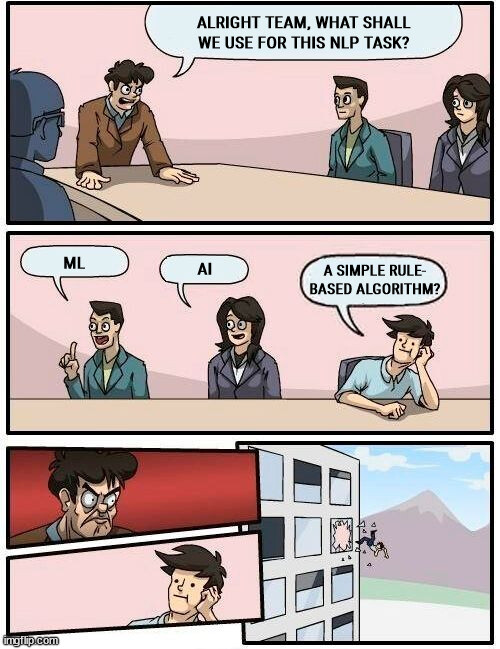
Careful, mentioning the wisdom of our ancestors can get you defenestrated.
Michael Piotrowski
boosted

Fantastic project by @mfenner ! Check it out:
An Archive for Scholarly blogs
DOIs for scholarly blog posts!
Michael Piotrowski
boosted

Professur "open rank" für Geschichte der Frühen Neuzeit https://www.infoclio.ch/de/professur-open-rank-fu%CC%88r-geschichte-der-fru%CC%88hen-neuzeit?utm_source=dlvr.it&utm_medium=mastodon #infocliojob

Michael Piotrowski
boosted

So OpenAI just released a detector of AI-generated text, I assume because of concerns in education / homework.
https://openai.com/blog/new-ai-classifier-for-indicating-ai-written-text/
Maybe this is good?
No, it's very bad.
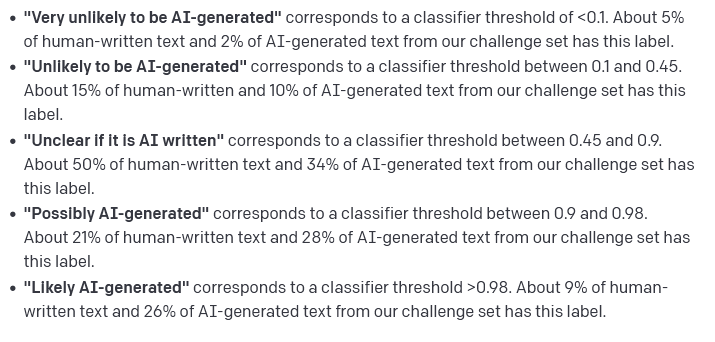
They claim 26% true positives, 9% false positives. Assume 10% of submitted homework is chatgpt generated, you get the classic counterintuitive outcome of poor predictive power: if a homework is flagged, there's a 3:1 chance it's *human* generated.
This is going to cause a lot of harm. It should be immediately recalled.
Michael Piotrowski
boosted
DIZH-Brückenprofessur für Digital Cultures and Arts https://www.infoclio.ch/de/dizh-br%C3%BCckenprofessur-f%C3%BCr-digital-cultures-and-arts?utm_source=dlvr.it&utm_medium=mastodon #infocliojob
Michael Piotrowski
boosted

All right, folks, here are some great links about #ChatGPT (espeically for educators)
tl;dr: Don't panic
* Sarah Elaine Eaton's talk "Academic Integrity and Artificial Intelligence: Implications for Plagiarism and Academic Writing" is available on YouTube: https://www.youtube.com/watch?v=9QNNPVSC24w
* Nature has a word for publishers: https://www.nature.com/articles/d41586-023-00191-1
* The ultimate link list to English language sources (and soon French): https://pupp.uqo.ca/en/artificial-intelligence-and-plagiarism/
Michael Piotrowski
boosted
OpenAI released a tool which purports to detect AI-generated text. At the highest end of detection, it labels text "possibly" or "likely" AI-generated. 21% of human-written text falls under "possibly" and 9% of "likely" does. That's 3 in 10 students being defamed and/or harmed.
Just like other providers of academic surveillance software, OpenAI states that their detector "should not be used as a primary decision-making tool".
It will be, though. And harm will follow.
https://openai.com/blog/new-ai-classifier-for-indicating-ai-written-text/
Michael Piotrowski
boosted

Important @garymarcus on the "uncanny cognitive valley" in which seemingly good enough AI leads to neglect and inattention https://garymarcus.substack.com/p/the-cnet-fake-news-fiasco-autopilot



Associate professor of digital humanities, University of Lausanne, Switzerland
Professeur associé en humanités numériques, Université de Lausanne, Suisse
Joined Nov 2022
