

Shamar @Shamar@qoto.org
Joined May 2019
Shamar
boosted

I wrote a medium size program for chip design and released it under the #AGPL. In this field the world is moving towards cloud services.
Now a research group wants to contribute. Google promises to pay them - but only if I change the licence to something else. Google does not like the APGL. If I don't change the licence a group of students will rewrite the tool. (Likely under a permissive licence.)
What would you do?
Basically #FUD.
As you said, #Google does whatever it can to build ecosystems that depends on it, technically and culturally.
They did so in 2010 with #GoogleChrome through #Mozilla. It did so with #Android. And #QUIC. And #HTTP3.
#AGPLv3 has several limits (that I tried to address with the #HackingLicense) but the strongest the #copyleft the better.
Sticking with #AGPL and resisting to Google's pressure won't save your ecosystem alone.
BUT it might make their capture weaker and their abuse of their dominant position more evident.
As for AGPLv3 be harder to use, that's plain bullshit. As long as they use your software unmodified, they do not even need to host a copy of the code. They just need to provide users a link to your repository.
It's pretty easy.
But they do not want to.
In the long run, an AGPL alternative out of Google's control might enable the creation of an alternative ecosystem, and they want to minimize this risk as much as they can.
Without looking evil, obviously.
But if you look at Google from outside the USA, it's slowly becoming a huge geopolitical liability.
Europe is realizing that depending on #GAFAM means becoming an US colony.
And alternatives like your might get much more support from here.
So my suggestion is to ignore the FUD and resist Google.
If you change the license, they will capture your tool and use it against the hacking community without any risk.
They won't try to impose a closed source alternative because they care for their #OSS narrative.
They will try to build a MIT alternative from scratch under their full control.
BUT by doing so, they might have legal issues with #antitrust as, given the existance of a copyleft alternative, their replacement will makes it clear that #Google is trying to build yet another #monopoly.
Instead if you surrender to their pressure and weaken the license of your tool, you make their OSS-based propaganda stronger and harder the antitrust case against them, because they will argue "hey, we just contributed to the ecosystem", while they got control of it.
So my suggestion in your case is to stick to the #AGPLv3.
Don't trust neither Google nor Google's engineers.
I did this error before, and it didn't end well:
http://www.tesio.it/2018/02/14/what-i-wish-i-knew-before-contributing-to-open-source.html
@lucamp@mastodon.uno
Grazie per il chiarimento.
Personalmente lo trovo deleterio perché incentiva (seppure meno che sulle piattaforme di sorveglianza) la ricerca di visibilità rispetto alla ricerca di dialogo.
Shamar
boosted

Vaccinare il mondo senza toccare i monopoli sulle idee? Ecco il risultato: https://bird.trom.tf/andcapocci/status/1522634360083689475
@humanetech@mastodon.social
Years ago I had a similar issue after I forked #HarveyOS after they violated #GPLv2 (details here, bad story involving #Google and @conservancy@mastodon.technology: http://www.tesio.it/2018/02/14/what-i-wish-i-knew-before-contributing-to-open-source.html ) I asked #FSF how to better attribute previous work.
The context there was a bit more complex (GPLv2 code without file level notice), but here what I've learnt:
1. Preserving commit history is not a #copyleft requirement BUT things will be way easier if you preserve it when shit happens¹
2. Retaining existing copyright statements of each file is a copyleft requirement
3. if you fork copylefted code that lacks file level licensing headers it is a good idea to add them first and foremost, or at least as soon as possible.
It makes it easier to understand who are the copyright holders of each file when shit happens even if the #git history get stripped.
4. If you import code from other copylefted project the easiest and safest approach is to import in dedicated files with proper attribution, whenever it's technically feasable.
If it's not, #FSF legal team suggested me to add to the copyright header of the modified file something along the line
```
Portions of this file are Copyright (C) 2015-2018 Giacomo Tesio <giacomo@tesio.it>
See /doc/license/gpl-2.0.txt for details about the licensing.
```
See https://gitea.it/JehanneOS/jehanne/src/branch/master/sys/src/kern/port/dev.c#L1-L6 for an example.
Hope this helps!
____
¹ that's why, after their GPL violation and their refusal to restore my #copyright statements, I asked Harvey to `git revert` up to my first contribution and remove them. And it's also why they `git rebased` instead, squashing some of my contributions in huge commits while removing my name from the repository history.
@kgerloff @rysiek@mastodon.technology
Grazie della segnalazione.
Nota di servizio: @Shamar@framapiaf.org è ancora attivo, ma non lo uso da tempo.
Il mio account attuale è @Shamar
Shamar
boosted

Una riflessione sulle implicazioni dell'uso massiccio a #scuola di strumenti digitali che fanno profilatura http://tesio.it/2022/05/01/A_Scuola_da_Google.html grazie a @Shamar @nilocram @scuola
Sono d'accordo.
Sono sul fediverse da anni e ho imparato a scegliere con attenzione le persone che seguo.
Anzitutto per evitare di seguire persone troppo simili a me, di chiudermi in una bolla autoreferenziale.
Cosa che qui purtroppo capita anche se c'è sempre qualcuno pronto a bucarla.
Quanto alle pressioni del software (non chiamiamoli "algoritmi", sono software con bug e tutto) in effetti all'inizio il fediverse ne era completamente libero.
Oggi però ho letto che alcune istanze ne hanno abilitato qualcuno che ad esempio ti sconsigliano automaticamente di seguire certi utenti, giudicati dall'amministratore "problematici' o su istanza "problematiche".
Analogamente ho letto che l'app mobile ufficiale di #mastodon non ordina più i toot in modo temporale.
Insomma le dinamiche del fediverse stanno virando verso un maggiore conformismo.
Something else: adopt the #HackingLicense http://www.tesio.it/documents/HACK.txt
As an alternative, stay with #AGPLv3.
The choice is:
- let #Google exploit your work as #FreeLabour, or
- force Google to pay to compete with you but starting from scratch
Never let the bully get what they want.
Shamar
boosted

He just lost his chance to make a choice.
His 404 notice caught him with his lederhosen down. He waited too long to choose 9front. If he had acted sooner, he would have had his pick of more than 300 ThinkPads. And his choice would have booted. So don't wait. Choose your hardware and get the best drivers (they exist) in the world. On a laptop you can be proud of. There's no better way to actually run Plan 9 instead of just talking about running Plan 9. Your future, your decision ...choose 9FRONT
Shamar
boosted

Se vi siete persi il nostro ultimo incontro "Intelligenza artificiale e pensiero magico", trovate di seguito il video e le diapositive:
▶️ Video Peertube: https://peertube.uno/w/3oBpN2khbe9KhgQKwujonp
📚 PDF diapositive: https://gitlab.com/etica-digitale/risorse-incontri/-/blob/master/2022_04_15_Daniela_Tafani_Intelligenza_artificiale_e_pensiero_magico.pdf
Shamar
boosted
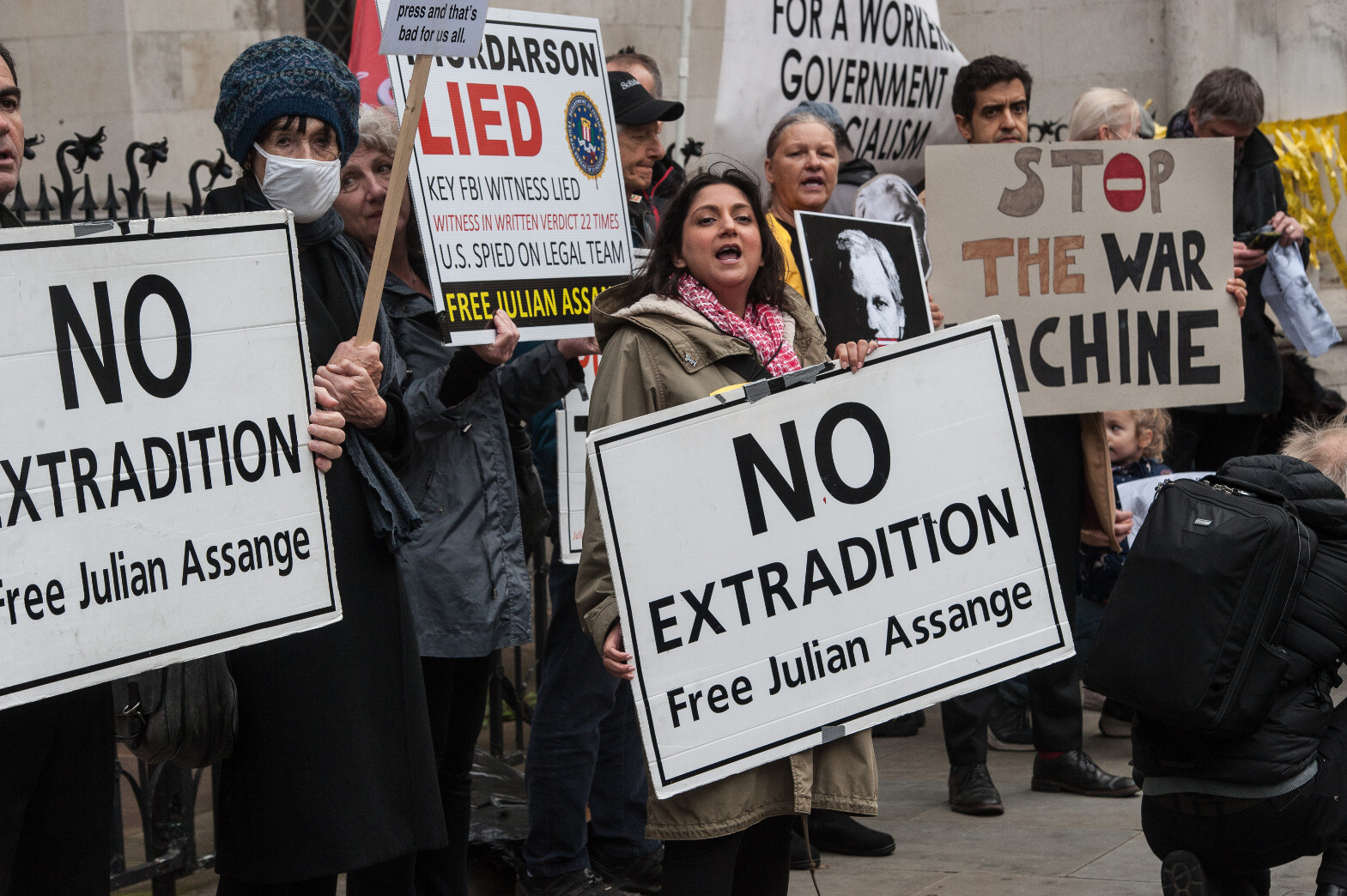
Io l'ho già firmata: https://nitter.net/SMaurizi/status/1522498037708472322 #freeAssange
Shamar
boosted
Lavori forzati, in un'economia nemmeno più di mercato, ma addomesticata dalla cosiddetta AI: https://www.avvenire.it/opinioni/pagine/il-lavoro-per-fratelli-ditalia-tra-orwell-e-hunger-games E il concetto della scuola come addestramento sviluppato fino in fondo.
Shamar
boosted


It’s the 90ies world wide web all over again. If I want to access certain websites I can only do it with one big corporate browser.
For those wondering, the 90ies did not end well.
@rysiek@mastodon.technology
except they cannot think
@moviemorgz@laserdisc.party
Shamar
boosted


Why the Julian Assange case is the most important battle for press freedom of our time
By Chris Hedges
"A society that prohibits the capacity to speak in truth extinguishes the capacity to live in justice. The battle for Assange's liberty has always been much more than the persecution of a publisher. It is the most important battle for press freedom of our era."
#FreeAssangeNow
Joined May 2019
