

Gary Ackerman @garyackerman@qoto.org
- On the web:
- https://hackscience.education/
Educational Technology Expert in New England
Retired k-12 science/ math/ technology teacher/ technology integration specialist/ coordinator
Joined Nov 2022
Educators spend their days in rooms filled with young people. It can be a glorious existence, it can be a dreary existence. It is an existence dedicated to providing those young people with experiences that prepare them for an unknowable future.
Ingenious humans solve engineering problems very quickly.
If good teaching was known and reliable and amenable to engineering, it would have been done long ago.
Gary Ackerman
boosted

@Tornflakes @garyackerman Local culture and environment play a role too. I've got employees scattered all over the world. But just cause a practice in Switzerland works in Switzerland, doesn't mean in works in Ghana. While those are extremes, the differences propogate down to interdepartmental communications in the same office. Environments keep evolving too.
As a high school student, I was thoroughly unimpressed with computers, but as an undergraduate using them to analyze data and prepare and present lesson plans, I recognized their importance as a tool for the scientist and science teacher I hoped to become.
Soon, my near-obsession with teaching science became a near-obsession with using computers to teach. One school year, a colleague and I spent hours setting up physics experiments in which data were collected via probes connected to personal computers. We spent a summer writing the first technology integration plan for the district, and rewriting our chemistry and physics curricula to use the computers we worked with during the school year.
Online and Face-to-Face Students
While individuals in each group do select their preferred classroom for recognized reasons (e.g. online learners’ preference for flexible attendance schedules), the best students in both settings are those who engage with the content, classmates, and the teacher. Learners who react to new and challenging ideas with reasons (excuses) why the ideas have no connection to their work or their life exist in both environments. While such students may earn credits for attending the course, there is little chance they will change anything they do as a result of the course. In my experience the proportion of students who are actively engaged and those who are actively opposed to new ideas are about the same in each group.
I was recently asked to contribute to a discussion about being an online student. One bit of advice I gave:
If you enroll in a distance learning graduate program, find additional professional activities to complete your resume and that allow you to apply what you are learning to authentic situations.
If one really wants to be "data-driven," they must adopt a science-like approach to their data. Few realize how science deals with data, however. I tell #education folks they cannot be data-driven without:
The supremacy of observation and logic.
Avoidance of truth. Rather than demonstrating an idea is true, scientists demonstrate an idea is a false.
Accounting for variables. In education, we assume our interventions are the only factors affecting what we are measuring. This is just one example of fields where relevant factors are ignored.
Verification of observations. If others do not observe the same thing, you are probably wrong.
Peer review is necessary to evaluate one's work and ensure that necessary data was collected and that it was properly and logically analyzed and that observation supports conclusions.
Once a new paradigm has become established, there are typically some individuals who continue to work according to the old paradigm, but those individuals find themselves increasingly marginalized.
We have not seen a new #eduction paradigm in generations.
Earlier this year, I released Technology in Schools: Its Not Like this in Business under CC-BY-NC.
"My purpose in writing this book is to give readers a view into the work of managing information technology in schools. IT professionals will notice differences (some nuanced and some significant) between the needs and expectations of IT users in business and IT in school."
You can find an .odt and .pdf versions on my web site:
https://hackscience.net/technology-in-schools/
Gary Ackerman
boosted

@garyackerman Absolutely. Employees align with bosses because of management style. Change in leadership team will always bring some mis/alignments and shake ups.
It’s the same with sport players and coaches
Gary Ackerman
boosted

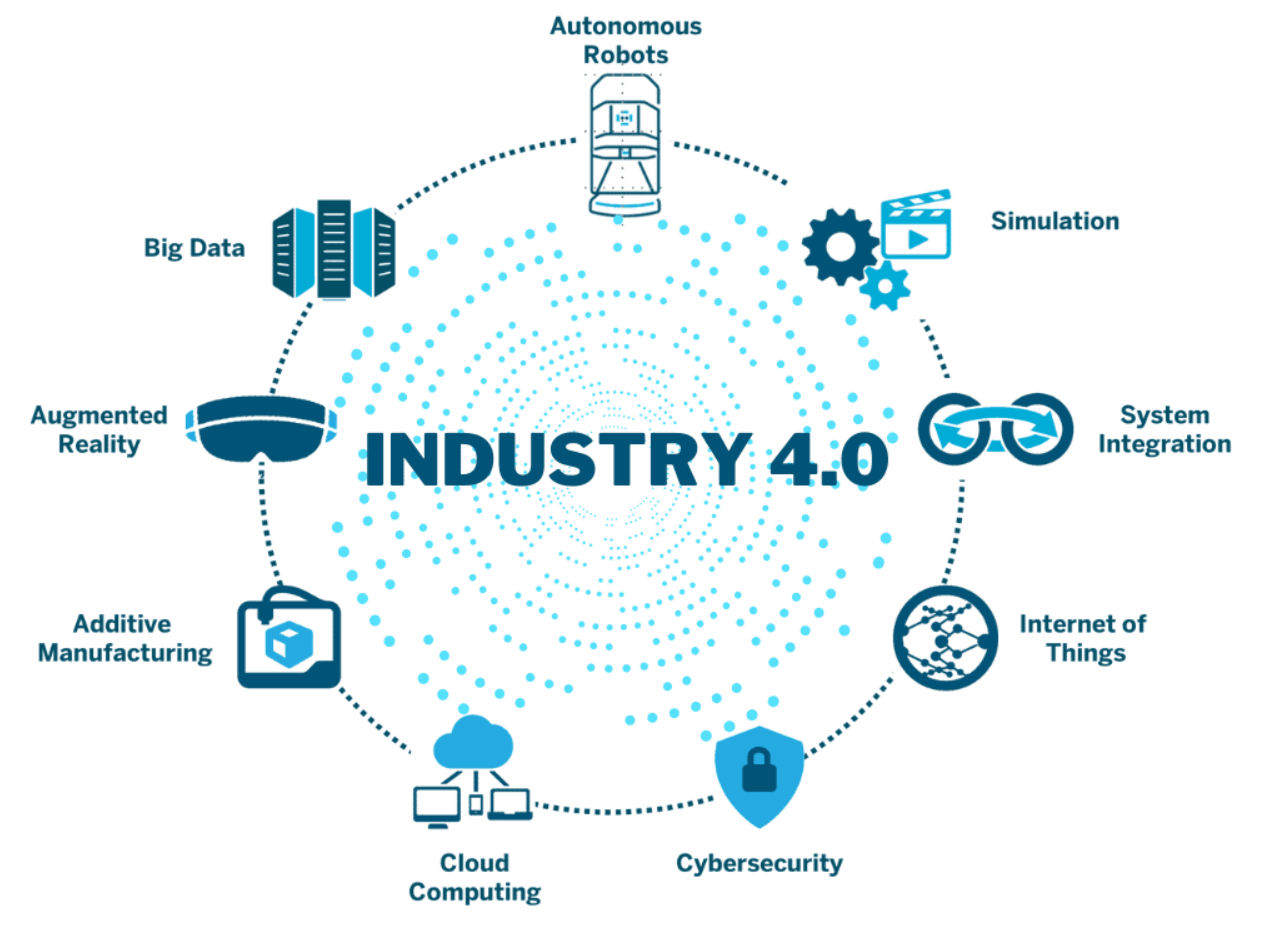
In this article I outline some previous impacts of industrial revolutions, what they may be able to tell us about our current #Inudstry4.0 revolution and the resultant impact on our society.
https://www.rte.ie/brainstorm/2018/0419/955765-are-you-ready-for-industry-4-0/
Once you can differentiate red herrings from meaningful practices, you will be very successful… but you will anger leaders.
If your course does not include some activities in which ethics of your field and its applications are the focus, it’s time to rewrite your syllabus.
Is it just the server I joined or are there an inordinate number of geoscience folks on Mastodon? I’m not composing, just seems a statistical anomaly.
Sitting outside in New England in November… it’s about 20 C (almost 70 F). Unseasonably warm. The geese are still flying south. They will not be fooled.
When you work as an educational technology professional, you as invited to join committees where “we are going to reinvent something.” What they really mean is “we want you to build a web site” and our only role is to email you thing to put on it and complain about the information that is on it.
Gary Ackerman
boosted

#HighSchool #education in #SouthAfrica is completely warped by #exams. My daughter’s school in particular has gone into an almost suspensive state for a month while ‘end-of-year’ exams are going on. It’s nowhere close to the end of the year, it’s madness!
There must be better ways.
I hang out with #educators who talk about how they are #data driven. They seem to misunderstand the importance of accurate interpretation of data.
While claiming to be "data-driven," educators are incredibly sloppy with their collection, analysis, management, and reporting of data. Their sloppiness derives from blind acceptance that tests measure what they proportion (and other unchallengeable assumptions), their reliance on single measures, and their lack of sophistication in analysis. Statisticians have created tools to help us understand large data sets. Let’s insist they start using those tools.
Two Types of Problems
Most jobs require workers to solve problems. Usually, we are taught to solve problems with this process: Set a goal, develop and implement a plan to solve it, and then decide if the goal was accomplished. That leads to new goals and the process is repeated.
1) One begins with goals-- we decide what we want to accomplish and how we will accomplish it.
2) Next, one decides what actions will result in the goal being accomplished. In designing these actions, planners assume that they know what will happen if they take the actions they developed. All that needs to happen is that the actions be taken or implemented.
3) After the actions are taken, one checks to see if the goals were accomplished. If not, then the steps are taken to redesign the actions or to improve the implementation of the actions.
This model is built upon the assumption that one can accurately predict the effects of actions. This is sometimes described as cause and effects. Everything we observe has a single cause (or a small number of causes) and one can know those clearly. The objective-based problem solving works best for problems that are:
- definable-- We can clearly identify the cause of the problem
- understandable-- We know what will happen if it is solved.
- consensual-- Most everyone agrees that it should be solved.
Someone who has a stroke has a definable (there is a blood clot preventing blood from flowing to a part of the brain), understandable (that part of the brain without blood will die), and consensual (the patient and his family and the medical team all want to clear to blood clot). Scholars refer to such problems as tame. Tame does not mean that it is not complex or important, only that the course of action is known.
Another collection of problems, especially those in the social sciences and those that deal with social issues and problems, are very difficult to define and understand, and not everyone agrees what to do or even that the problem should be solved.
These problems are referred to as wicked problems, and because cause and effect are difficult to establish with these problems, solving them is difficult or even impossible.
Making people “smart” is a good example of a wicked problem. No one really knows what it means to be smart (and smart depends on the situation-- knowing about computers is not much help when you need a plumber!), we don’t know how to make people smart (what helps me learn may not help you) and we don’t even agree that we should make people smart.
The importance of goals and objectives in the process is a relatively recent idea to be added to planners’ and managers’ work; before the 1960’s most workers focused on making their work more efficient or “better” and not “what should my system do?” In this figure, we see a version of “outcomes-based action” that has been common in recent decades:
- On the web:
- https://hackscience.education/
Educational Technology Expert in New England
Retired k-12 science/ math/ technology teacher/ technology integration specialist/ coordinator
Joined Nov 2022
