

Javier Campos @javifields@qoto.org
- Webs y RRSS
- https://jcampos.es
Sígueme en esta cuenta: @javifields.eurosky.social
Leo #librosjf, veo #cinejf y a veces hago #fotosjf y #viajesjf.
(Catedrático jubilado de Unizar, Universidad de Zaragoza)
Joined Jan 2020
Me faltaba de Jim Jarmusch: “Dead Man” (1995). Obra emblemática del western revisionista, subgénero acid western. Subvierte las convenciones del género para ofrecer una visión mucho más oscura, espiritual y crítica de la expansión hacia el oeste. Un viaje lírico sobre el delirio agónico. #cinejf
https://www.filmaffinity.com/es/film711519.html
Javier Campos
boosted

The Wall Street Journal portrays the current U.S. president as a puppet, Dr. Trump by day and Mr. Punch by night.
https://www.wsj.com/politics/national-security/trump-public-bravado-private-fear-59814dca?st=xAi1mB
@ecueto vaya, lo probaré unos días a ver
Javier Campos
boosted

PKU AI disproves Anderson conjecture: China's first autonomous math breakthrough. ~ Sophia Langford. https://www.academicjobs.com/research-publication-news/pku-ai-solves-anderson-conjecture-or-academicjobs-12100 #AI4Math #LeanProver
Football, Power, and Censorship: How La Liga Broke the Spanish Internet
https://daniel.es/blog/cloudflare-vs-la-liga/
Javier Campos
boosted

Hola gente linda, desde hacklab han desarrollado esta app para pedir cita previa de extranjeria en España, nos piden ayuda para dar difusion https://lamardecitas.net/ si tienen conocidas en este tramite seguro les ayudará ❤️ #barcelona
Javier Campos
boosted
"On Ada, the language that the Department of Defense built, the industry ignored, and every modern language quietly became"
Javier Campos
boosted
'For months, Microsoft and Amazon were among those publicly lobbying for fast-tracked planning permission processes, both pointing to the Spanish region of Aragón's “one-stop shop” approach for environmental paperwork.'
https://www.investigate-europe.eu/posts/big-tech-data-centres-secrecy-eu-law-environment-footprint
Y, de paso, probando openvibe.social para publicar simultáneamente en Bluesky y mastodon.
Empezando serie: “Deadwood” (2004), de David Milch. Bebe de esa vertiente del western revisionista que “McCabe & Mrs. Miller” ayudó a consolidar: una visión desmitificada, sucia y mercantilista de la frontera americana. Aunque no está a su misma altura en fotografía y música. #cinejf
Javier Campos
boosted

#OTD in 1959, LISP was introduced to the world by computer scientist John McCarthy. LISP treated code as data and emphasized symbolic computation, which made it well-suited for early work in artificial intelligence. For more #OTD in #computing: https://www.acm.org/education/otd-in-computing-history
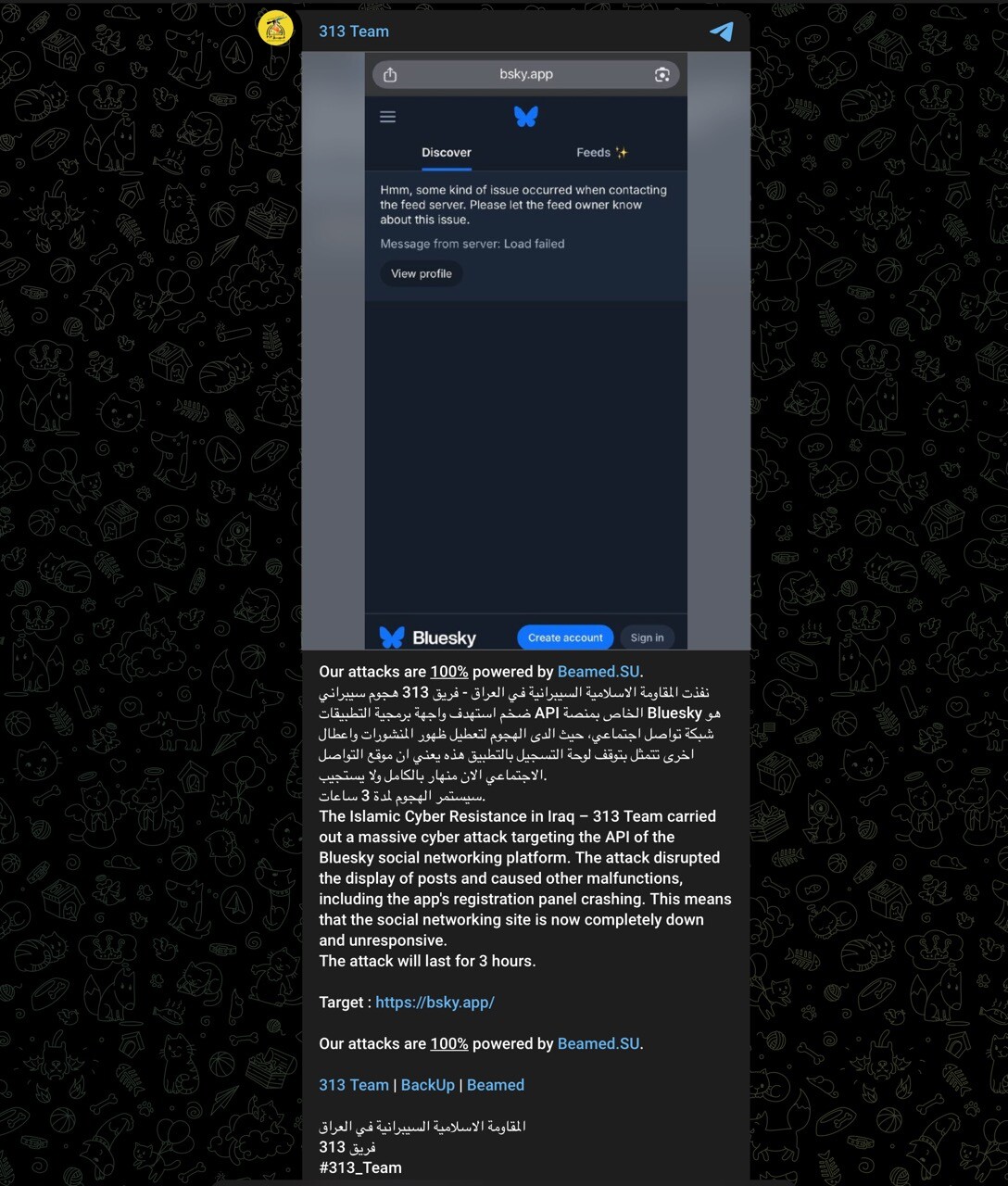
Bluesky lleva horas caído y leo esto que adjunto. ¿Cómo de fiable es? ¿Opiniones?
Tony Hoare passed away on March 5th. RIP
https://lefenetrou.blogspot.com/2026/03/in-memoriam-tony-hoare.html?m=1
Javier Campos
boosted

"La crisis del Golfo agrava la escasez global de misiles".
Escasez. Global. De. Misiles.
Creo que no somos totalmente conscientes de lo *jodido* que es ese titular.
Javier Campos
boosted
Paper: “Claude’s Cycles”, por Donald Knuth.
“Shock! Shock! I learned yesterday that an open problem I’d been working on for several weeks had just been solved by Claude Opus 4.6.”
Caso documentado donde una IA ayuda en una conjetura matemática concreta presentada por un matemático de primer nivel.
www-cs-faculty.stanford.edu/~knuth/papers/...
Javier Campos
boosted
A partir de ahora publicaré aquí:
@javifields.eurosky.social
A partir de ahora publicaré aquí:
@javifields.eurosky.social


- Webs y RRSS
- https://jcampos.es
Sígueme en esta cuenta: @javifields.eurosky.social
Leo #librosjf, veo #cinejf y a veces hago #fotosjf y #viajesjf.
(Catedrático jubilado de Unizar, Universidad de Zaragoza)
Joined Jan 2020
