

kwitschas @kwitschas@qoto.org
Biochemist and postdoc at Gent University
#neuroscience
#ScienceMastodon
#ionchannels
#Electrophysiology
#Biophysics
Joined Nov 2022
kwitschas
boosted

#JuanBurroneLab Interested in doing a postdoc on in vivo imaging of synapse formation and plasticity, in a friendly scientific community and in the heart of London? Check out the link below to apply for a position. https://jobs.kcl.ac.uk/gb/en/job/059025/Research-Associate
kwitschas
boosted

RT @AdamIsabella1
The new Isabella lab website is live and lab opening is just around the corner! We are hiring at ALL LEVELS, so anyone interested in studying zebrafish nerve development and regeneration in fun and affordable Minneapolis, please get in touch. https://www.isabella-lab.org/
kwitschas
boosted

The biggest threat to Twitter under Musk is a multi-platform app that serves Twitter, Mastodon and other services.
Such an app would act as a catalyst for moving to other platforms by lowering the switching cost
I have a scheme for a multi-platform app that Space Elmo can't block. Click on the Twitter feed and it takes you to the Web interface if the API is down.
The client ID will be set to whatever works since my client is built around WebView which is a wrapper around Chrome.
Happy to share this idea with other client developers. My goal is to get people to use end-to-end secure communications, not to have to write the entire client myself.
kwitschas
boosted

kwitschas
boosted

Great opportunity!!! there is an open #postdoc position in Rasmus Mortensen lab @Statens Serum Institit in Copenhagen. interest in #bioinformatics, #tuberculosis and #immunology required.
kwitschas
boosted

Scientists have discovered a world that is likely rocky and 95% of the size of Earth. The planet, called TOI 700 e, is orbiting around a star and could have liquid water on it.
https://www.cbsnews.com/news/potentially-habitable-planet-toi700e-earth-sized-goldilocks-zone-nasa/
kwitschas
boosted

Hey neuromatch people! I just switched to this server in part because I wanted to have more conversations about metascience. So, I read the essay A Vision of Metascience
(https://scienceplusplus.org/metascience/index.html?s=09)
and I have some questions / would love to get pointed in the right direction towards people I can have more conversations with about this stuff.
I liked a lot of the content in this essay, and I really appreciate their effort to stimulate conversations about what alternative social structures for doing science could look like, and to make a plug for diversity in structure that could accommodate/empower, in principle, a broader range of people pursuing a broader range of scientific inquiries. That said, I'm a bit concerned that some of their proposed interventions (which to their credit they don't state would work or would necessarily be societally desirable) would exacerbate rich-get-richer dynamics. (Who do you think would get funding for moonshot proposals?) Much like the crypto/defi movement which partly inspired this essay, without substantial safeguards, I see a small group of currently already influential people (and some possible fraudsters) using new funding opportunities to further consolidate their power, all while touting that they're dismantling the old power structure. But maybe I'm just overly cynical ¯\_(ツ)_/¯.
Wouldn't a simple way to improve creativity/innovation and boost productivity be to move towards a less hierarchical, more egalitarian distribution of resources in science? My understanding is that there is a fairly sound literature (but correct me if I'm wrong) on how happiness boosts creativity, how equal societies are happier on average, and how diversity in leadership may actually support innovation and boost productivity (and isn't *just* morally desirable). I guess I don't see scientists and would-be scientists as having such huge variance in underlying abilities that it could possibly justify the way resources are allocated today. So, I'm wondering if adopting a more egalitarian approach would not only lead to better life outcomes for those of us that love and want to pursue science, but would also enhance and diversify scientific output.
Are there any reviews in the field of metascience that you could recommend that talk more about these types of issues? I just was a bit discouraged that this essay, which was being used to recruit more people into metascience, focused so much on selecting the "right people" to give huge sums of money to, when I believe (perhaps erroneously, but I sincerely hope not) there isn't that much variance in scientists' inherent ability to do good work, just in the extent to which they receive support to pursue that work.
kwitschas
boosted

Hello Mastodon! Thank you to everyone who has built this community.
Here is a brief #Introduction. I am a biophysicist. I am best known for:
- my research on liquid-liquid phase separation in biological and model membranes (https://www.biophysics.org/bps-bulletin/society-names-2021-fellows), and
- my advice to choose a research field with the fewest assholes (https://physicstoday.scitation.org/do/10.1063/PT.6.5.20210607a/full/)
I am looking forward to learning more about all of you at this site.
kwitschas
boosted

New researcher position in my lab at Berkeley.
kwitschas
boosted

The Kitten has commandeered The Kid's hamper and the cuteness level is off the charts 🥰 #catsOfMastodon
kwitschas
boosted

Hot take: academia would be significantly better (more creative, stimulant and productive) if, like Poincaré, we all worked just 4 hours a day
RT @adad8m@twitter.com
"[Henri Poincaré] worked regularly from 10 till 12 in the morning and from 5 till 7 in the late afternoon. He found that working longer seldom achieved anything"
kwitschas
boosted

It's a bit older but it was new to me; I really enjoyed this article about a patient whose insights guided science.
https://www.propublica.org/article/muscular-dystrophy-patient-olympic-medalist-same-genetic-mutation
kwitschas
boosted

“The apparent exodus is a shock to the academic system that some researchers didn’t see coming but that others say has been palpable for quite some time — and is a trend only set to continue. ‘The majority of senior academics still don’t understand how fast this is coming,’ says Daniel MacArthur, a population geneticist at the Garvan Institute of Medical Research in Sydney, Australia.
“Early-career scientists are not missing a beat, however.”
kwitschas
boosted

"There is one obvious way in which human neurons and their dendrites are different from dendrites in, say, cats or rats: they are bigger. However, are these anatomical differences, which alone could change the signal processing capabilities of dendrites [2.,3.], also accompanied by differences in functional properties?"
https://www.cell.com/trends/cognitive-sciences/fulltext/S1364-6613(20)30069-3
kwitschas
boosted

kwitschas
boosted

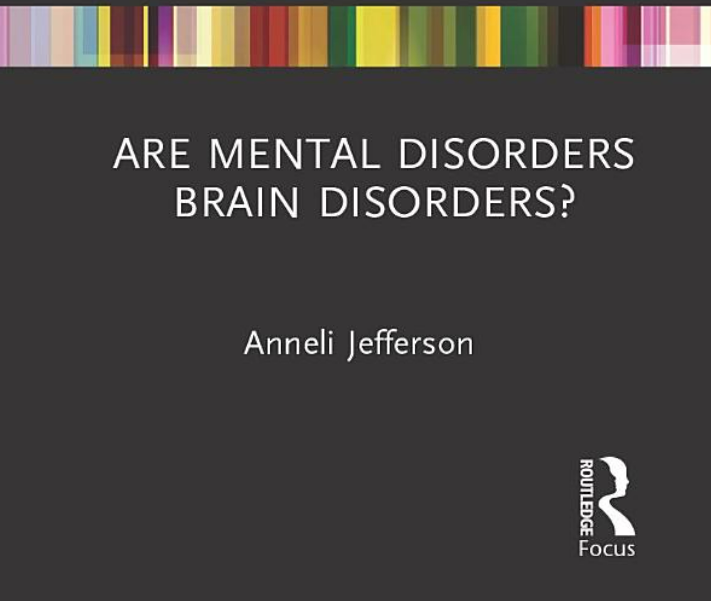
When are we justified in calling mental disorders “brain disorders”?
I discuss Anneli Jefferson's excellent philosophical work on answering this question and offer some thoughts.
#psychiatry #philosophy #psychology #neuroscience
https://awaisaftab.substack.com/p/when-are-we-justified-in-calling





kwitschas
boosted
Kudos to Pam Belluck at the NYT for this opening paragraph - this is the right way to report on a story like lecanemab:
"The Food and Drug Administration on Friday approved a new #Alzheimer’s drug that may modestly slow the pace of cognitive decline early in the disease, but also carries risks of swelling and bleeding in the brain."
https://www.nytimes.com/2023/01/06/health/alzheimers-drug-leqembi-lecanemab.html
kwitschas
boosted

kwitschas
boosted

Biochemist and postdoc at Gent University
#neuroscience
#ScienceMastodon
#ionchannels
#Electrophysiology
#Biophysics
Joined Nov 2022
