

Léo Varnet @leovarnet@qoto.org
- Institution
- CNRS, ENS Paris
- Research topics
- Auditory perception, psycholinguistics, hearing loss.
CNRS researcher at École normale supérieure Paris. Auditory perception, psycholinguistics, hearing loss. My toots are searchable #tootfinder.
Joined Oct 2022
Léo Varnet
boosted
To continue on the issue of #discrimination in selection committees, it seems to me that there are two levels on which to act. First, to reduce the influence of biases in the decision, for example by choosing the selection criteria before looking at the applications. However, this kind of tools is not enough: even if we manage to eliminate judgment biases, blindly basing the decision on merit is unfair for candidates facing discrimination or coming from countries where research is less developed, and who did not have the same opportunities as others. Complementary tools are therefore proposed, for example, considering the potential of candidates and not their achievements. I think this aspect is important, but more difficult to implement: Given that not all members of the jury are sensitive to the issue of discrimination, it can be tricky to argue that we want to put forward a candidate with a lesser CV because we think he or she has greater potential... assessing achievements is a bit like "counting points", whereas assessing potential seems more subjective. Do any of you have a concrete experience of how to deal with this in a jury? @academicchatter #AcademicMastodon #genderbias
To continue on the issue of #discrimination in selection committees, it seems to me that there are two levels on which to act. First, to reduce the influence of biases in the decision, for example by choosing the selection criteria before looking at the applications. However, this kind of tools is not enough: even if we manage to eliminate judgment biases, blindly basing the decision on merit is unfair for candidates facing discrimination or coming from countries where research is less developed, and who did not have the same opportunities as others. Complementary tools are therefore proposed, for example, considering the potential of candidates and not their achievements. I think this aspect is important, but more difficult to implement: Given that not all members of the jury are sensitive to the issue of discrimination, it can be tricky to argue that we want to put forward a candidate with a lesser CV because we think he or she has greater potential... assessing achievements is a bit like "counting points", whereas assessing potential seems more subjective. Do any of you have a concrete experience of how to deal with this in a jury? @academicchatter #AcademicMastodon #genderbias
Léo Varnet
boosted

@leovarnet Our committee put together a list of tips on this here (section "You are on a selection committee and want to avoid bias in your admission/hiring procedure"): https://equalityanddiversity.dec.ens.fr/en/am-i-biased-15020
Hello #AcademicMastodon @academicchatter ! I am part of a jury that selects students for our master program (application review + interviews). What are your tips for reducing #genderbias and all forms of #discriminations to a minimum? (@jesswade maybe?)
Léo Varnet
boosted

@academicchatter #AcademicMastodon #SciComm A related question: we may have to look for a server hosted in Europe, due to French regulation... but I have trouble finding this information, as I'm far from a #fediverse expert. @freemo where are the #qoto servers based? Is there any chance I can create an account for my lab here? Thanks!
Léo Varnet
boosted

@erinnacland @academicchatter The very definition of "The Matthew Effect" in science, coined by Robert Merton in 1968. https://www.science.org/doi/10.1126/science.159.3810.56
My colleague, Dr. Patricia Mabry, currently has an NSF/NIH project studying what she believes is the "Matthew Mechanism." https://www.nsf.gov/awardsearch/showAward?AWD_ID=2122232&HistoricalAwards=false
I was a co-I on this project until I quit my job at HealthPartners earlier this year.
Léo Varnet
boosted

Neuromancer 2022
The collapse of a startup leaves implanted medical devices in > 700 people
The unavailability of the proprietary SW needed to recalibrate the devices and maintain its effectiveness, and the draining of batteries, will leave them without treatment and with HW implanted in their bodies
They have to hack their own implants
And it is not an isolated case but a trend
https://www.nature.com/immersive/d41586-022-03810-5/index.html
Léo Varnet
boosted
@lanmar @StephaneDebove @RichardMonvoisin
Bonjour ! Au sujet de Steven Pinker, j'avais écrit deux billets de blog à la suite de la publication de son livre "Le Triomphe des Lumières" et de la série de conférences qu'il a donnée à cette occasion. Notez bien qu'il ne s'agit que d'une petite partie de sa production (essentiellement ses thèses concernant le progrès, la "raison", et le libéralisme, pour le dire vite). Notamment, il ne s'agit pas de sa production en tant que scientifique, mais de ses positions dans le domaine économique-politique, où il n'a pas d'expertise. C'est pourtant ces facettes de Steven Pinker qui sont les plus médiatisées.
(1/4)
Léo Varnet
boosted

En février, le Spectrum de l'IEEE alertait sur l'obsolescence technique des implants neuronaux : https://spectrum.ieee.org/bionic-eye-obsolete#toggle-gdpr - 350 patients qui avaient reçu un implant oculaire pour leur rendre en partie la vue l'ont vu s'arrêter brutalement... quand l'entreprise a fermé !
Hello #AcademicMastodon #SciComm @academicchatter! I'd like to create an account for my #psychophysics lab on Mastodon... Any advice on which server to choose? Is there anything in particular I should be careful about?
Léo Varnet
boosted

Mediapart revient sur le faux scoop du Point sur le couple Garrido-Corbière. L’hebdo avait promis de publier une enquête pour expliquer le fiasco mais l'article rédigé a été enterré. Le site d'information pointe "un journal à folle allure, avec un processus de vérification minimal". En interne, élus syndicaux et journalistes avaient alerté des mois avant sur la situation critique au sein de la rédaction.
#NotrePresseEnRevue
https://www.mediapart.fr/journal/france/081222/faux-scoop-du-point-sur-garrido-corbiere-un-accident-industriel-ecrit-d-avance
Une heure d'échange avec Zoé Besmond de Senneville, qui a décrit son parcours depuis la découverte de son otospongiose (pertes auditives sévères et progressives) dans un livre et un podcast "Journal de mes oreilles". Nous avons discuté des aspects scientifiques de la malentendance mais aussi du vécu des personnes touchées.
L'émission est écoutable et retranscrite sur mon site : http://dbao.leo-varnet.fr/2022/12/08/podcast-audition-et-creation/
@disability #audiologie #otospongiose
Léo Varnet
boosted

New blog post! Tagging @linguistics and #linguistics this toot
@ahnaphor had a cool Twitter thread a week or so about the "sexy baby voice" described by Lake Bell. From the examples that Bell gives, it seems like the primary features of "sexy baby voice" are bright vocal resonance and creaky voice (aka vocal fry).
There's a lot more to say about this, but I wanted to get the basic #phonetics down!
https://grieve-smith.com/blog/2022/11/listen-to-the-voices-of-the-sexy-babies/
Léo Varnet
boosted
L'horreur. Derrière Neuralink, 1500 animaux morts, notamment suite à des actes chirurgicaux réalisés dans la hâte. La science muskienne a déjà de sacrées casseroles.
Merci à Claire Jeanne pour l'invitation et le travail de préparation !
Il y a quatre jours, j'étais avec Zoé Besmond de Senneville sur Radio Campus pour discuter de malentendance : qu'est-ce que c'est, comment ça se traduit concrètement, comment y répondre, et comment continuer à créer quand on a des pertes auditives.
https://www.radiocampusparis.org/gestalt-episode-5-perception-audition-et-creation/
Un résumé de notre dernière étude en collaboration avec NeuroPSI et l'Institut de l'Audition: https://sco.lt/9IA83s
RT @lsp_ens@twitter.com
This weekend the LSP was on a retreat in Deauville. We discussed everyone's research interests, open science, and the ways to improve our lab, and enjoyed a nice cold walk on the beach.
Léo Varnet
boosted

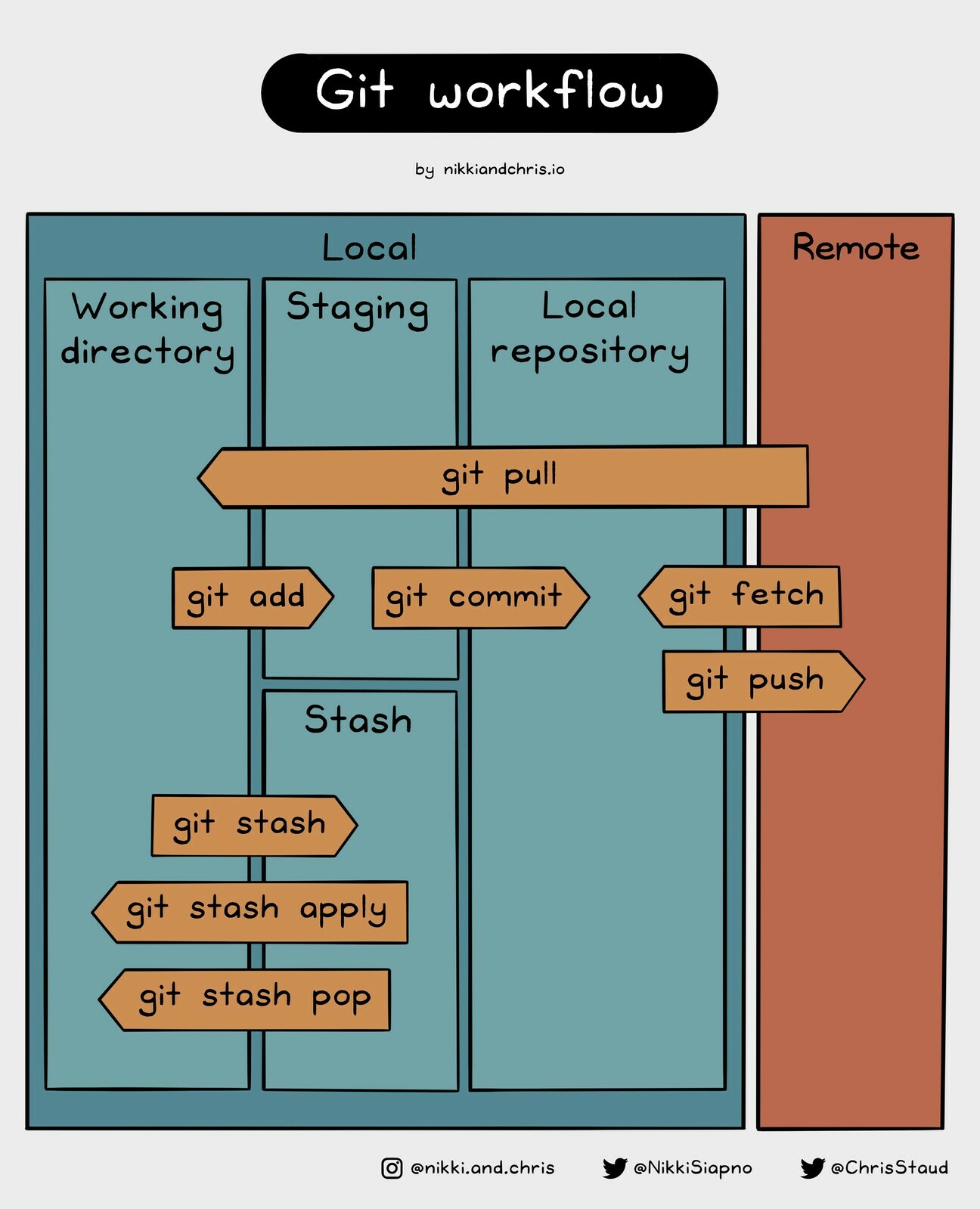
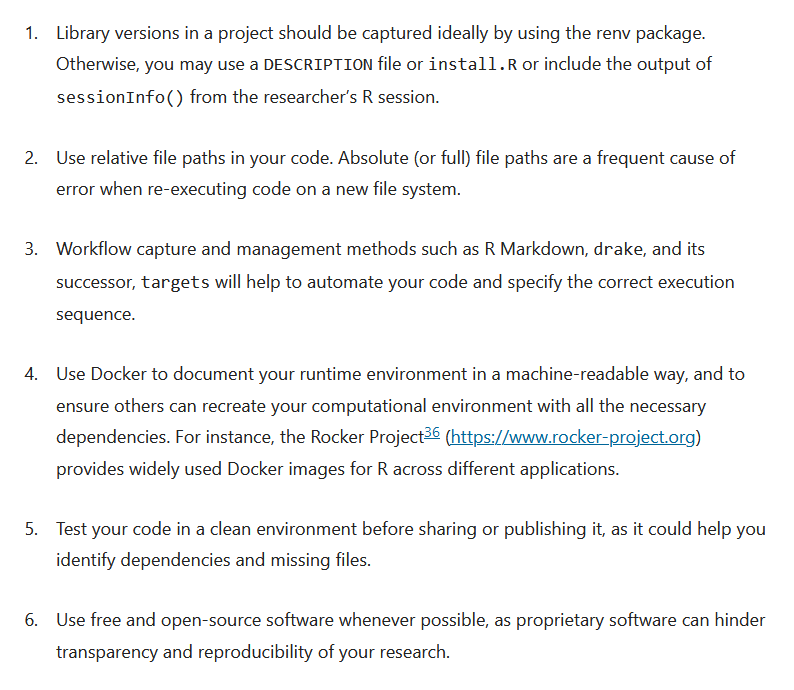
New paper shows (as many papers before) that code that is shared will often not run. This is to be expected - few of us had training in this. But if you share code, go through checklists to prevent the most common mistakes. From the paper: https://www.nature.com/articles/s41597-022-01143-6 For some extra suggestions, see my textbook chapter on computational reproducibility: https://lakens.github.io/statistical_inferences/computationalreproducibility.html#some-points-for-improvement-in-computational-reproducibility



- Institution
- CNRS, ENS Paris
- Research topics
- Auditory perception, psycholinguistics, hearing loss.
CNRS researcher at École normale supérieure Paris. Auditory perception, psycholinguistics, hearing loss. My toots are searchable #tootfinder.
Joined Oct 2022
