

Léo Varnet @leovarnet@qoto.org
- Institution
- CNRS, ENS Paris
- Research topics
- Auditory perception, psycholinguistics, hearing loss.
CNRS researcher at École normale supérieure Paris. Auditory perception, psycholinguistics, hearing loss. My toots are searchable #tootfinder.
Joined Oct 2022
Master's Degree Scholarship Alert
The Master program in Cognitive Science of ENS-PSL (so-called Cogmaster) is currently inviting applications until March 10, 2023 (23h59, CET)
The Cogmaster offers training at the highest level in all disciplines of #cognitivescience (#Psychology, #Medicine, #Neuroscience, #Philosophy, #Linguistics, Social Sciences, #AI, Cognitive #Modeling), together with the opportunity to discover the latest applications of our discipline, from behavioral public policy to cognitive engineering.
More information on the Cogmaster website: https://cogmaster.ens.psl.eu/en/application/admissions-13494
@cognition @cogsci @psychology @psycholinguistics @linguistics
#mastersprogram #mastersdegree
Léo Varnet
boosted

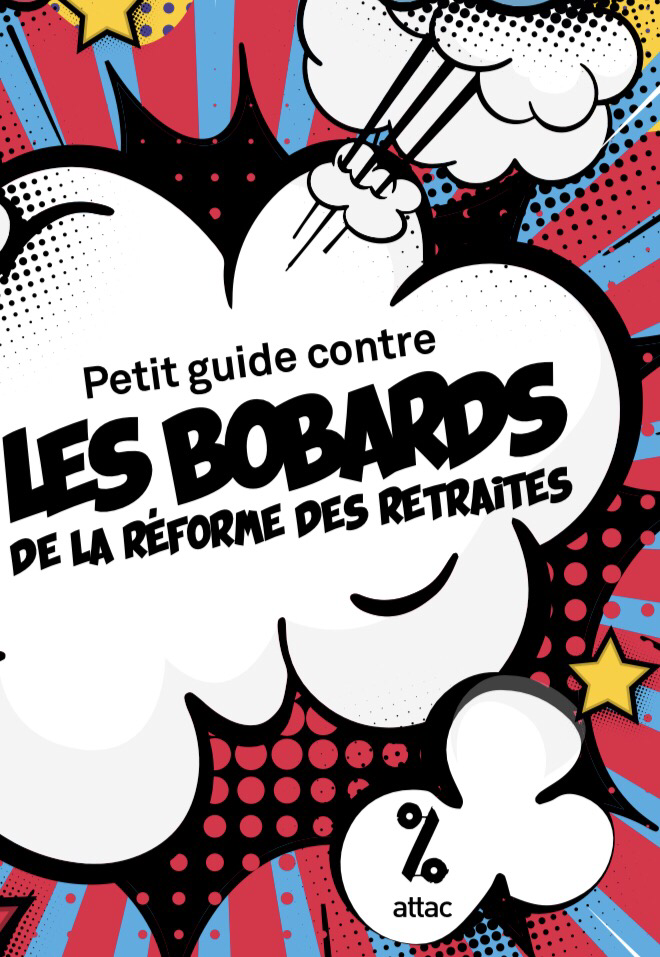
Petit guide contre les bobards de la réforme des retraites
https://france.attac.org/IMG/pdf/petit_guide_retraite_bat_04_page_a_page.pdf
Léo Varnet
boosted

[#OuvrezLesGuillemets] Usul. Retraites: la bagarre monte en régime
La première ministre va présenter sa réforme des #retraites. C’est l’occasion de revenir sur l’esprit de ce texte et de se demander si les jeunes, qui semblent plus préoccupés par le climat que par leurs hypothétiques futures pensions, se joindront à la bataille.
› https://www.mediapart.fr/journal/politique/090123/usul-retraites-la-bagarre-monte-en-regime
Léo Varnet
boosted

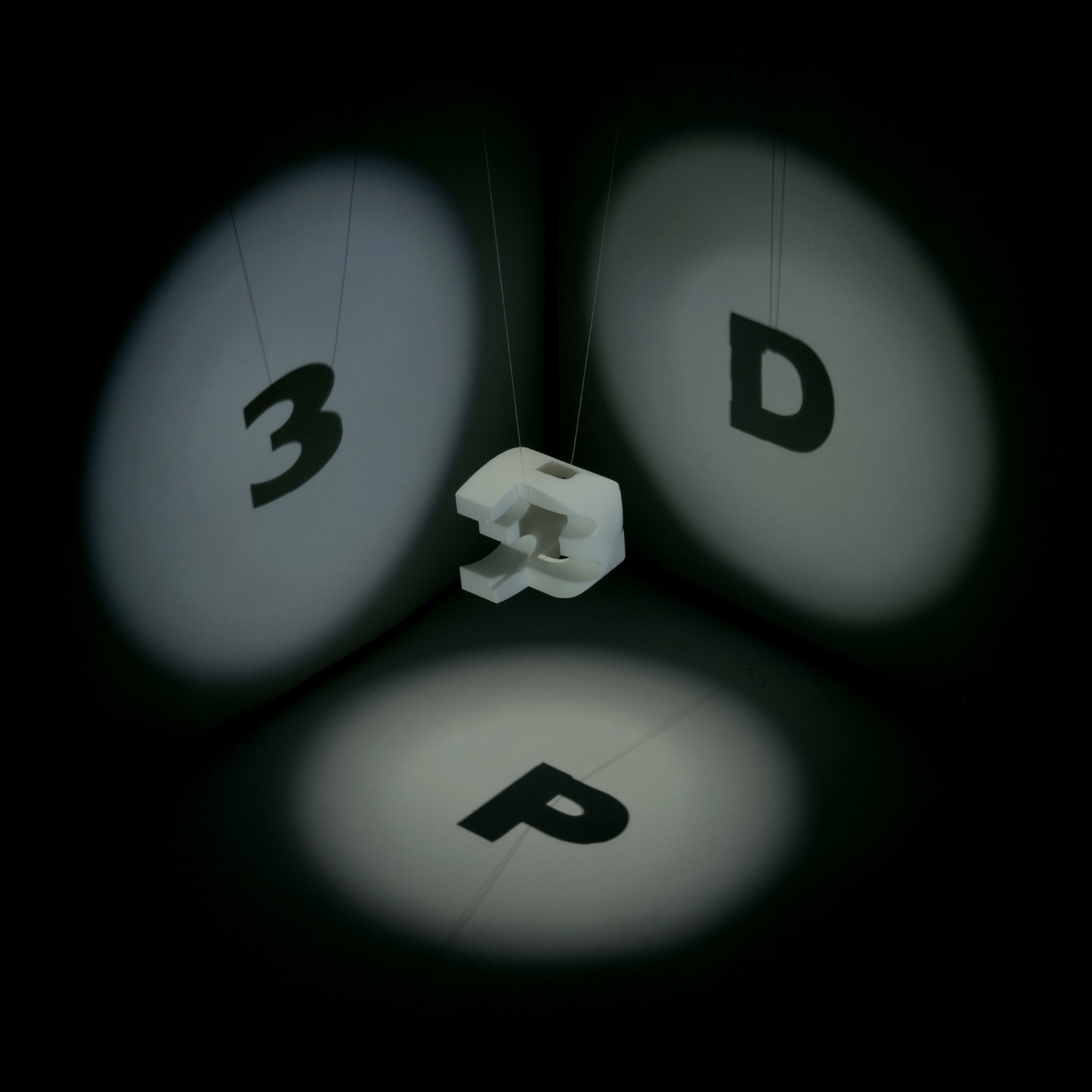
My homage to Douglas Hofstadter's image, featured on the front cover of some editions of his book Gödel, Escher, Bach. He calls this a "triplet" sculpture, I believe because there are "trip" (three) "let" (letters).
Instead of the letters "G", "E", and "B", I used "3", "D", and "P", for "3D printing". #3DPrinting #Shadow #Art
Léo Varnet
boosted

On démarre bien la journée en faisant grimper le compteur. Ça donne de la force pour mettre tout le monde dans la rue #greve19janvier
https://www.change.org/p/retraites-non-%C3%A0-cette-r%C3%A9forme-injuste-et-brutale
L'intersyndicale nationale CFDT, CFTC, CGC, CGT, FO, FSU, Solidaires et UNSA contre la réforme des #retraites lance une pétition large contre la réforme et de soutien à la mobilisation
🚨 Deux offres de stage M1 ou M2 au Laboratoire des Systèmes Perceptifs de l'#ENS :
- l'un plutôt orienté #phonétique expérimentale et #psycholinguistique : https://cogmaster.ens.psl.eu/fr/job/identifying-speech-cues-phoneme-perception-using-auditory-reverse-correlation-15910
- l'autre orienté #OptimisationBayésienne et #psychophysique : https://cogmaster.ens.psl.eu/fr/job/improving-auditory-reverse-correlation-approach-bayesian-optimisation-15913
N'hésitez pas à faire circuler ! @psycholinguistics @linguistics
Léo Varnet
boosted

Been away for a while, much depressing disease around me (on top of world climate in more than one sense)…
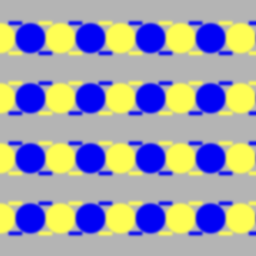
Now built a new (of sorts) angle #illusion, strifing for the simplest arrangement showing the illusion: https://michaelbach.de/ot/ang-obliqueSimple/
I just found a video of the "horse race" music box in operation: https://youtu.be/3TywonXiQVg
Léo Varnet
boosted

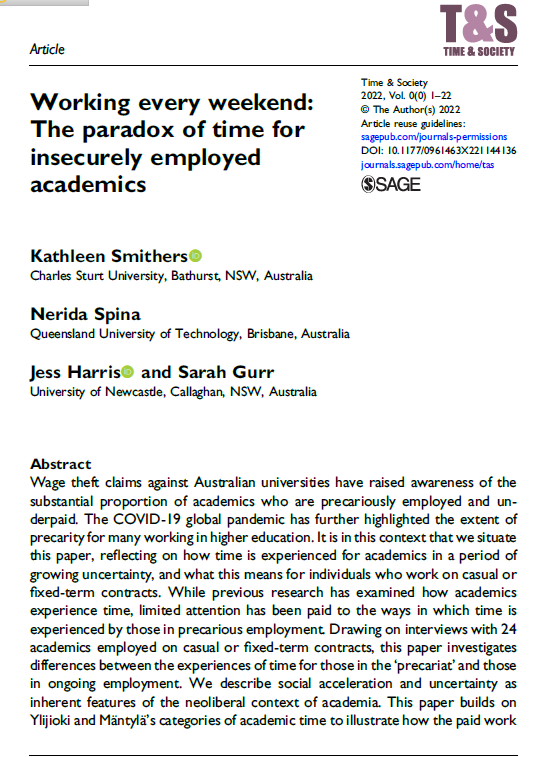
Academics' time:
“When asked about time off, Jordan replied: What do you mean? I work every weekend.”
https://doi.org/10.1177/0961463X221144136
Few quotes follow: 🧵👉
#HigherEducation
#HigherEd
#EducationalResearch
#EDI
@edutooters
#AcademicChatter
@academicchatter
@academicsunite
#PhdLife
@phdstudents
Léo Varnet
boosted

This #ReceptioGate article is interesting because it considers wider issues for scholars, research, and academia: https://thecritic.co.uk/receptiogate-and-the-absolute-state-of-academia/
Our new study is about to be submitted! We demonstrate that the effect of a background noise on #SpeechPerception is multifaceted, even in the case of a simple stationary white noise. You can find the #preprint on @biorxivpreprint (https://www.biorxiv.org/content/10.1101/2022.12.27.522040v1?med=mas), the raw and processed data on #zenodo (https://zenodo.org/record/7476407#.Y67E3hWZND9), and the #preregistration document on #OSF (https://osf.io/4ju3f/). #psycholinguistics #psychoacoustics #psycholinguistique @psycholinguistics
Léo Varnet
boosted

#phdchat does anyone have advice or resources on starting the introduction for the PhD? I'm doing it by publication, so I need a normal intro literatuatue review chapter & a second part to tie it all up. Feels like a mammoth task and my blank page is looking extremely daunting and empty 🤣. #academicchatter #phd #writing
A great way to start the year: finding that one's work on the neural encoding of noisy whistles by guinea pigs is featured on the front cover of the January issue of the Journal of Physiology!
(The article by Samira Souffi et al. is freely available here https://hal-cnrs.archives-ouvertes.fr/U1120/hal-03853055v1 or behind paywall here https://physoc.onlinelibrary.wiley.com/doi/10.1113/JP283526)
Léo Varnet
boosted

DAGs, Golems, and Owls: Statistical Rethinking 2023 Lecture 1 (of 20). No hard work in this introductory lecture, just a conceptual outline and some dank memes. Lecture 2 later this week introduces Bayesian inference. https://www.youtube.com/watch?v=FdnMWdICdRs&list=PLDcUM9US4XdPz-KxHM4XHt7uUVGWWVSus&index=1
Léo Varnet
boosted

Léo Varnet
boosted

A microscopic investigation of the effect of random envelope fluctuations on phoneme-in-noise perception https://www.biorxiv.org/content/10.1101/2022.12.27.522040v1?med=mas
Léo Varnet
boosted
Another very interesting piece in this museum is the Mini-componium, a replica of the original Componium built by Diederich Nikolaus Winkel in 1821. This remarkable mechanical music instrument can vary the music it plays using a randomizing mechanism! In fact, the Componium creates endless variations on a theme by selecting randomly one of the 8 possible melodies every two measures.
In a sense, this is a very early example of
#ComputerMusic #AlgorithmicComposition
(https://en.m.wikipedia.org/wiki/Componium)
(3/3)
#musicbox #music
Léo Varnet
boosted

My periodic reminder that my book on the discrete Fourier transforms (incl. FFT, finite fields valued FT, representation theory, and more) is available for free. https://mathematical-tours.github.io/daft/
Another very interesting piece in this museum is the Mini-componium, a replica of the original Componium built by Diederich Nikolaus Winkel in 1821. This remarkable mechanical music instrument can vary the music it plays using a randomizing mechanism! In fact, the Componium creates endless variations on a theme by selecting randomly one of the 8 possible melodies every two measures.
In a sense, this is a very early example of
#ComputerMusic #AlgorithmicComposition
(https://en.m.wikipedia.org/wiki/Componium)
(3/3)
#musicbox #music
Léo Varnet
boosted
These music boxes were probably built at the end of the 19th century. An extra feature is the panorama of the horse race in the cabinet. By inserting a coin, the music is played and one can gamble on the winning horse. The machines were designed in such a way that the winning horse could not be predicted with any certainty.
I don't know how it works, but this is maybe one of the earliest random number generator! (2/2)




- Institution
- CNRS, ENS Paris
- Research topics
- Auditory perception, psycholinguistics, hearing loss.
CNRS researcher at École normale supérieure Paris. Auditory perception, psycholinguistics, hearing loss. My toots are searchable #tootfinder.
Joined Oct 2022
