

Léo Varnet @leovarnet@qoto.org
- Institution
- CNRS, ENS Paris
- Research topics
- Auditory perception, psycholinguistics, hearing loss.
CNRS researcher at École normale supérieure Paris. Auditory perception, psycholinguistics, hearing loss. My toots are searchable #tootfinder.
Joined Oct 2022
See here for the original matlab toolbox: https://github.com/LeoVarnet/TMST
pyTMST, a Python version of my Temporal Modulation Spectrum Toolbox, developped by Anton Zickler from Goethe Universität (Frankfurt): https://github.com/anzic0/pyTMST
Cette année j'ai accueilli Elsa Cahay, étudiante en arts appliqués à l'#EPSAA, qui a visité le labo, discuté avec des doctorant.e.s et post-docs, etc... Elle a résumé son séjour sous la forme d'un petit livret vulgarisé que voici : https://mycore.core-cloud.net/index.php/s/JSxNBc5Lpi1eqPC
Très content de ma petite slide d'introduction au problème de la segmentation. (Pour celles et ceux que ça intéresse, voici le lien vers l'article #psycholinguistique de référence pour ce genre d'homophonies : https://www.tandfonline.com/doi/abs/10.1080/01690960601076472) @psycholinguistics
Léo Varnet
boosted

Les meufs, scénario:
1.un gars que vous ne connaissez pas vous contacte pour discuter en lien avec un sujet sur lequel vous êtes visible
2. vous lui proposez de prendre un café sur votre lieu de travail
3. le gars vous propose plutôt de déjeuner à l'extérieur
=> pour vous, c'est normal ou ça tend vers le malaisant?
(les mecs: ne faites pas ça, vous ne savez pas si votre interlocutrice a une historique de #VSS , ça peut être flippant pour elle)
A very topical excerpt from Merton's *Paradigm for the sociology of knowledge* (1945):
> With increasing social conflict, differences in the values, attitudes, and modes of thought of groups develop to the point where the orientation which these groups previously had in common is overshadowed by incompatible differences. Not only do there develop distinct universes of discourse, but the existence of any one universe challenges the validity and legitimacy of the others. The coexistence of these conflicting perspectives and interpretations within the same society leads to an active and reciprocal distrust between groups. Within a context of distrust, one no longer inquires into the content of beliefs and assertions to determine whether they are valid or not, one no longer confronts the assertions with relevant evidence, but introduces an entirely new question: how does it happen that these views are maintained? Thought becomes functionalized; it is interpreted in terms of its psychological or economic or social or racial sources and functions. In general, this type of functionalizing occurs when statements are doubted, when they appear so palpably implausible or absurd or biased that one need no longer examine the evidence for or against the statement but only the grounds for its being asserted at all. Such alien statements are "explained by" or "imputed to" special interests, unwitting motives, distorted perspectives, social position, and so on. In folk thought, this involves reciprocal attacks on the integrity of opponents; in more systematic thought, it leads to reciprocal ideological analyses. On both levels, it feeds upon and nourishes collective insecurities.
Léo Varnet
boosted

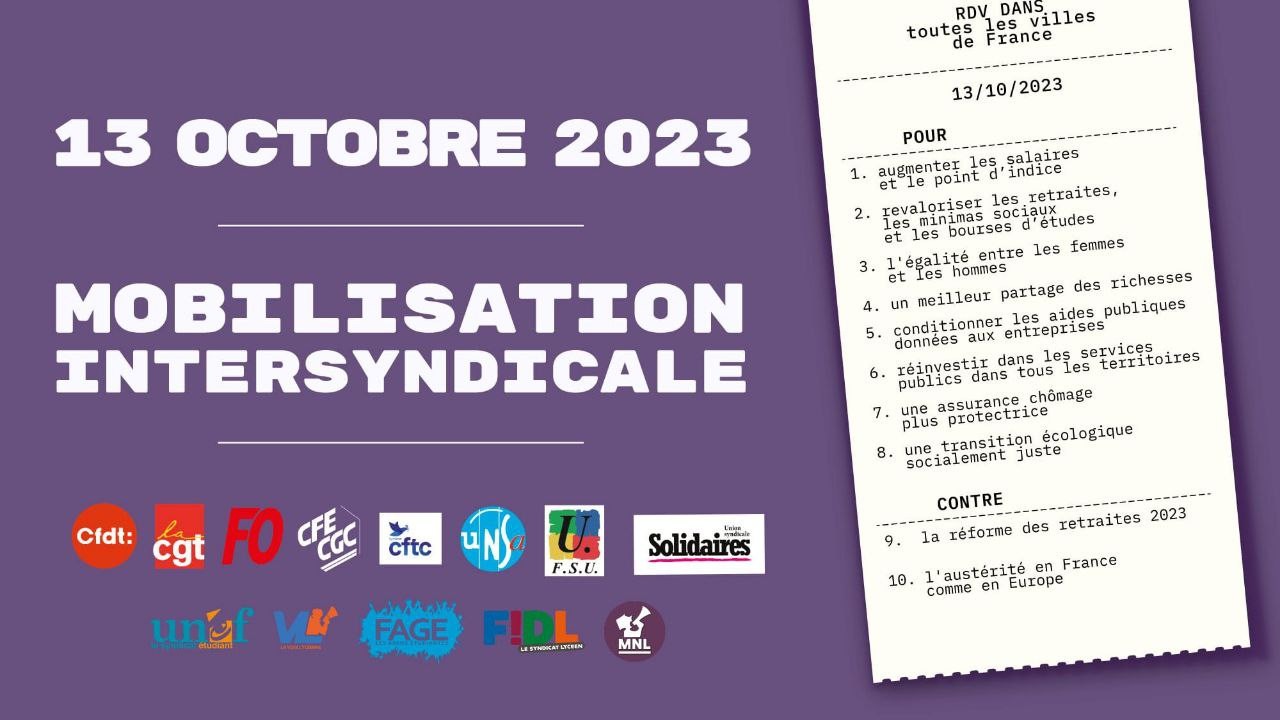
Manifestation intersyndicale contre l’austérité, pour les salaires et l’égalité femmes-hommes
demain à 14h, Place d’Italie, Paris
https://www.agendamilitant.org/Manifestation-intersyndicale-contre-l-austerite-pour-les-salaires-et-l-egalite.html
Un petit résumé en français d'une étude psycholinguistique du langage inclusif menée en collaboration avec Elsa Spinelli. Nous avons mesuré expérimentalement l'efficacité de deux formes d'écriture inclusive pour contrer le biais vers le masculin. Pour en savoir plus : http://dbao.leo-varnet.fr/2023/10/10/langage-inclusif-pour-le-cerveau-le-neutre-nest-pas-neutre/
Léo Varnet
boosted

Neural envelope tracking predicts speech intelligibility & hearing aid benefit in children with hearing loss
https://sciencedirect.com/science/article/pii/S0378595523002058
Neural envelope tracking increases with stimulus intensity -but only without hearing-aids; tracking correlated with measured speech intelligibility
Un petit résumé en français de nos derniers travaux sur le site du @CNRS : "Langage inclusif : pour le cerveau, le neutre n’est pas neutre" https://www.inshs.cnrs.fr/fr/cnrsinfo/langage-inclusif-pour-le-cerveau-le-neutre-nest-pas-neutre #LangageInclusif #Epicene #EcritureInclusive @psycholinguistics
Entretien avec Charlotte Jacquemot, directrice du département d’Études cognitives de l’#ENS, qui a une politique réellement volontariste pour la lutte contre les discriminations et les #VSS dans l'#ESR. Grâce à elle le département a mis en place un formation minimale obligatoire contre les VSS, ainsi que des formations complémentaires (sur la transidentité et les violences LGBTphobes), un système de mentorat pour les chercheuses... https://www.ens.psl.eu/actualites/nous-intervenons-sur-tous-les-axes-possibles-contre-les-discriminations-de-genre
Léo Varnet
boosted

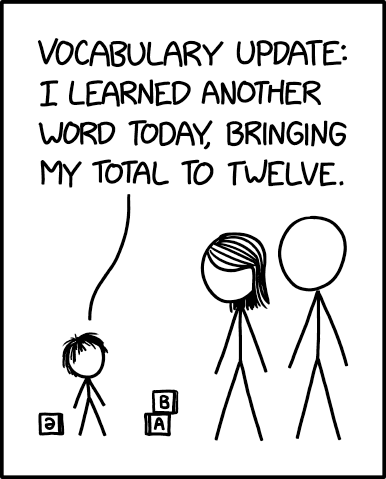
#xkcd No. 2839
Date: 2023-10-9
Title: Language Acquisition
Alt text: My first words were 'These were my first words; what were yours?'
https://xkcd.com/2839/
Léo Varnet
boosted

Après l'université Rennes 2, qui avait décidé fin août de "mettre en veille" son compte Twitter/X (et qui n'a effectivement plus rien publié depuis)
https://twitter.com/UnivRennes_2/status/1697248900187562036
C'est au tour de l'Ensib d'en faire de même (École nationale supérieure des sciences de l'information et des bibliothèques).
https://twitter.com/enssib/status/1709867274474033361
PS : Dans les deux cas, le raisonnement ne va pas jusqu'à créer de comptes Mastodon, ce qui est un peu dommage.
I finished reading @lakens 's book "Improving Your Statistical Inferences" (freely available here: https://lakens.github.io/statistical_inferences/ #OpenAccess). I originally read it because I was interested in the chapters on effect size and power analysis, but I learned a lot about #stats in general.
As an example, here's something I never realized about p-values:
"When there is no true effect, and test assumptions are met, p-values for a t-test are uniformly distributed. This means that every p-value is equally likely to be observed when the null hypothesis is true. In other words, when there is no true effect, a p-value of 0.08 is just as likely as a p-value of 0.98. I remember thinking this was very counterintuitive when I first learned about uniform p-value distributions (well after completing my PhD). But it makes sense that p-values are uniformly distributed when we think about the goal to guarantee that when H0 is true, alpha % of the p-values should fall below the alpha level. If we set alpha to 0.01, 1% of the observed p-values should fall below 0.01, and if we set alpha to 0.12, 12% of the observed p-values should fall below 0.12. This can only happen if p-values are uniformly distributed when the null hypothesis is true" (https://lakens.github.io/statistical_inferences/01-pvalue.html#sec-whichpexpect)
#HelloESR ! Je suis chercheur #CNRS en Sciences Cognitives, spécialisé dans la #psychoacoustique la #psycholinguistique et la perception auditive en général.
J'adore la science et la vulgarisation scientifique et je déteste la mauvaise science et la mauvaise vulgarisation scientifique (surtout quand ça touche au cerveau). Aussi petite passion #PhiloDesSciences et un gros intérêt pour ce qui touche aux questions de parité dans l'#ESR (et à l'extérieur).
Je suis basé à l'#ENS paris et parfois de passage à #lemansuniv.
Léo Varnet
boosted

La communauté académique/scientifique/éducative ne cesse de grandir sur ce nouveau réseau.
Ce serait sympa qu'on se présente en utilisant le tag #HelloESR pour créer du lien et faciliter les nouvelles arrivées.
Dans la suite, j'explique comment se tenir informé.
Partages appréciés.
C'est quand même amusant les incentives contradictoires dans l'#ESR. En général on est poussé.e.s à mettre en avant le côté interdisciplinaire de nos recherches, parfois contre toute logique... mais pour l'#HCERES il faut surtout mettre en avant que notre labo n'est pas interdisciplinaire du tout, sinon il risquerait d'être fusionné avec un autre labo pour répondre à la politique actuelle de réduction des coûts administratifs dans le service public par diminution du nombre de structures.
Cognitive Science Master program at ENS Paris
The International Selection at the Ecole Normale Supérieure (Paris France), Université Paris Sciences et Lettres is a unique opportunity for students from all over the world to join the ENS-PSL. Students in the International Selection prepare for a Master's degree and the ENS-PSL diploma (DENS). Individual tutoring, access to a room on campus for most of the course and a three-year scholarship offer the most favorable study conditions.
To inform on this pathway, we are organizing videoconference presentations on Saturday 14/10/2023, which will be in French from 9:30 a.m. to 6:45 p.m., with a presentation of the ENS, teaching and student life in the morning, followed by a presentation of each department in the afternoon.
For non-French speakers, we are planning two sessions in English at either 8:30 am or 5:30 pm (Paris time), which will summarize the essential information. You can log on at the following link: https://jpo.ens.psl.eu/
Further information on the ENS website: https://www.ens.psl.eu/en/academics/admissions/international-selection
Léo Varnet
boosted

Taught this paper on 'Facts and objectivity in science" by Stamenkovic to master students yesterday. Especially like the final paragraph. https://doi.org/10.1080/03080188.2022.2150807 I think it is important to teach students about the criticisms of scientific relativism.
Very proud to be a coauthor on this paper by Nihaad Paraouty, Dan Sanes et al. in Nature Communications "Sensory cortex plasticity supports auditory social learning" (https://www.nature.com/articles/s41467-023-41641-8 ). We used an ingenious protocol to study social learning in the absence of any visual cue, in Mongolian gerbils. #Learning @psychology @neuroscience @nature #auditory #openaccess #SocialLearning





- Institution
- CNRS, ENS Paris
- Research topics
- Auditory perception, psycholinguistics, hearing loss.
CNRS researcher at École normale supérieure Paris. Auditory perception, psycholinguistics, hearing loss. My toots are searchable #tootfinder.
Joined Oct 2022
