

Lup Yuen Lee 李立源 @lupyuen@qoto.org
- Pronouns/Gender/Sexuality
- He/Him/They, Bisexual/Asexual 🇸🇬
- Date of Birth
- 1969
- Articles
- https://lupyuen.org
IoT Techie and Educator / Apache NuttX PMC
Joined Jan 2020
"With Twitter in chaos, Mastodon is on fire"
Tao Huabi: the driving force behind crunchy chilli sensation Lao Gan Ma
Lup Yuen Lee 李立源
boosted

@lupyuen I have a bias as I have long benefited from the traditional Linux distro model, and I have never encountered "depdency hell" on Linux *except* when I attempt to install 3rd party software (whether built from source or as a binary) outside the distro's channels, which is not unexpected.
But I will not pretend there are not issues, or rather, tradeoffs made in that model. Flathub may help, but all those new packages feel a bit like:
Lup Yuen Lee 李立源
boosted

 🇳🇱
🇳🇱
> First, it will never be the year of the "Linux desktop", as Linux is only a kernel and doesn't operate on its own.
Did you mean systemd/Linux?
Cant say this makes sense. Obviously linux needs many things to run and doesnt run on its own. It needs systemd, gnu userland, a x86 cpu, a motherboard, electricity, etc.. we dont say "Today is the year of linux, systemd, x86, motherboard, electricity"... we just say linux.
why, because its the component we care about in this discussion. We are sayi g "is this the year desktops finally start using linux as its kernel".
Lup Yuen Lee 李立源
boosted

@lupyuen First, it will never be the year of the "Linux desktop", as Linux is only a kernel and doesn't operate on its own.
Did you mean systemd/Linux?
I tried to read that article, but the example it gave was installing the proprietary malware known as steam, so I stopped reading.
The fact is, the kernel, Linux's SYSCALL ABI for each architecture does not change once it is stabilized.
You can run a statically linked elf from 1998 that only uses Linux SYSCALLs and it'll work today.
But, generally binaries are dynamically linked for security and sanity reasons and so you can't just copy those between systems and expect them to work.
Even so, generally libraries like glibc are forwards compatible, but you can't expect the ABI to be the same after 20 years - only the API.
As a result, the real packaging solution is to compile from source and let the compiler and build scripts to the rest.
Gentoo-libre and Guix is an example of how to properly manage packaging.
Really, you only have issues with packaging when it comes to using proprietary malware, as you can't compile software you only have the binaries of, as a result, the real solution is to just not use proprietary malware.
Did you mean systemd/Linux?
I tried to read that article, but the example it gave was installing the proprietary malware known as steam, so I stopped reading.
The fact is, the kernel, Linux's SYSCALL ABI for each architecture does not change once it is stabilized.
You can run a statically linked elf from 1998 that only uses Linux SYSCALLs and it'll work today.
But, generally binaries are dynamically linked for security and sanity reasons and so you can't just copy those between systems and expect them to work.
Even so, generally libraries like glibc are forwards compatible, but you can't expect the ABI to be the same after 20 years - only the API.
As a result, the real packaging solution is to compile from source and let the compiler and build scripts to the rest.
Gentoo-libre and Guix is an example of how to properly manage packaging.
Really, you only have issues with packaging when it comes to using proprietary malware, as you can't compile software you only have the binaries of, as a result, the real solution is to just not use proprietary malware.
Fancy modules for #PinePhone's Allwinner A64 Display Engine
Source: https://lupyuen.github.io/articles/de?1#appendix-initialising-the-allwinner-a64-display-engine
"Distribution packaging for #Linux desktop applications is unsustainable"
Lup Yuen Lee 李立源
boosted

I can’t wait to read them. I have a few of those lanterns in safe places, with rolls of wicks and a little fuel stored up too. I’ll be happy to see what other insights your articles and or posts, will illuminate.
Homebrew "rvPhone" aims to be the first #RISCV mobile experiment
https://tuxphones.com/risc-v-phone-rvphone-imx8-esp32-sim7600x-e310-nlnet-majstor/
Z-Library eBook site domains seized by U.S. Dept of Justice
Lup Yuen Lee 李立源
boosted
@lupyuen kinda reminded of the time microsoft tried to put that 'strong naming' thing in to .NET, which was something like including the signature of a library when you marked it as a dependency.
Lup Yuen Lee 李立源
boosted

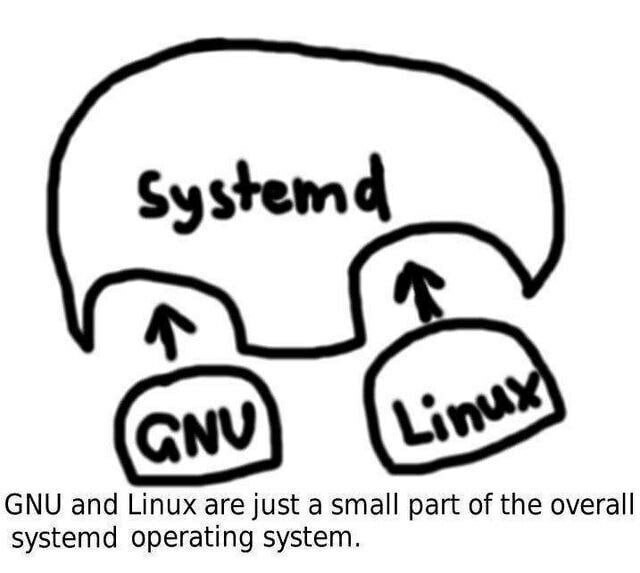

I agree though, that an long unedited video of an in-person conference is really difficult to watch and forces the viewer to do their own editing by fastforwarding and skiping through that long video.
Lup Yuen Lee 李立源
boosted
Some people are more visual learners, so they appreciate a spoken presentation. But writing it down forces you to organize the material better.
I think a nice, scripted and tightly edited video presention is a wonderful way to present many topics. But that takes a lot of work and requires certain skills to pull off properly.
Conference Videos: "I’m a big fan of an “exploded presentation” blog post ... where you export all the slides as individual images and you write the spoken commentary"
https://www.notcheckmark.com/2022/11/stop-publishing-conference-videos/
Tim Berners-Lee: ‘Web3 is not the web at all’
https://www.cnbc.com/2022/11/04/web-inventor-tim-berners-lee-wants-us-to-ignore-web3.html
Backlash after 500 drones light up New York City sky to celebrate Candy Crush
https://www.theguardian.com/us-news/2022/nov/04/candy-crush-drone-show-backlash
- Pronouns/Gender/Sexuality
- He/Him/They, Bisexual/Asexual 🇸🇬
- Date of Birth
- 1969
- Articles
- https://lupyuen.org
IoT Techie and Educator / Apache NuttX PMC
Joined Jan 2020
