

Martin Jambon 🌍🌎🌏 @mjambon@qoto.org
- Art Website
- https://martinj.art
- https://www.instagram.com/martinjambon/
- Website
- https://mjambon.com
- https://twitter.com/mjambon
mad scientist/artist
Interests: cognition, artificial cognition, epistemology, machines, history, understanding most things.
Academic and professional credentials: 3D structure of proteins (PhD), program analysis with OCaml, free software author.
Hobbies: trail running, mushrooms, art.
Location: San Francisco Bay Area, originally from Orléans, France
Ancien rameur à l'ACOO. Ancien élève du Lycée Saint-Louis et de l'École normale supérieure de Lyon.
Joined Nov 2022
@freemo I was mostly joking. If I were to debate these issues, I would make the distinction between situations where equality of rights is essential and others where skill-based permission is preferable.
@freemo I will prove my young age by engaging in this futile debate 😂
@wald they fluorescence yellow-green under UV light!
@aftd does it assume you're in the United States? These images would be weird in other locales e.g. in China.
@freemo I'm French and live in the US. I've been sticking to SI units for almost the 20 years that I've been here. I know what's good and won't let it go.
I blame the Big Bang.
#politics #causality #causation #transitivity #physics #philosophy #liability #bullshit
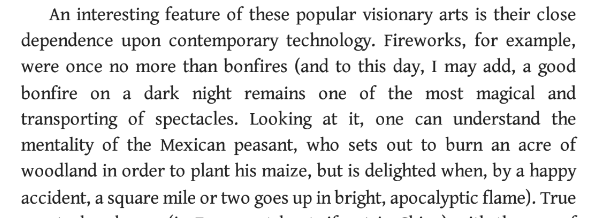
@ZaneSelvans man is content with an abundance of wild light. I love this quote about the peasant who's delighted to burn a bit more than initially planned (from Heaven and Hell by Aldous Huxley).
@ZaneSelvans my answer is yes as long as your visible spectrum overlaps our visible spectrum sufficiently for you to see colors where we see colors. It doesn't matter much if the grey clouds are purple to you and the orange light appears white. Still pretty.
Martin Jambon 🌍🌎🌏
boosted

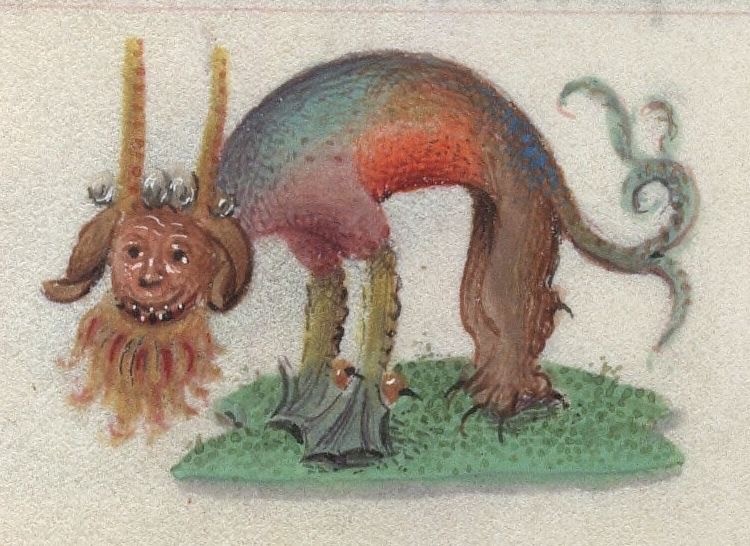
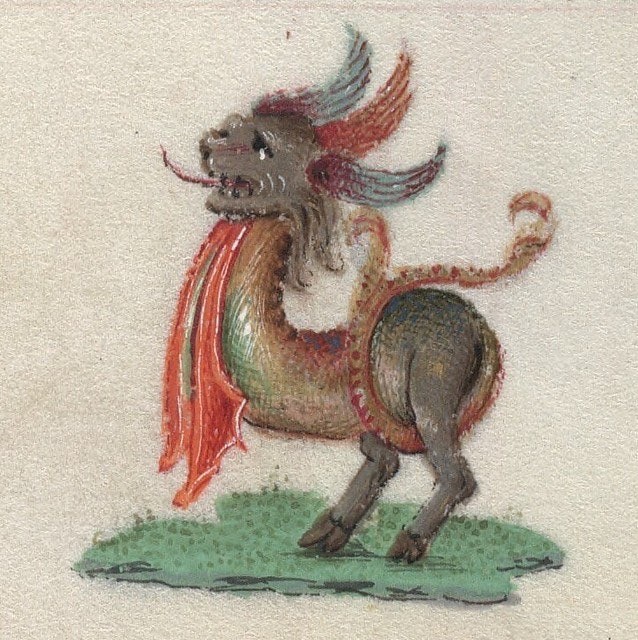
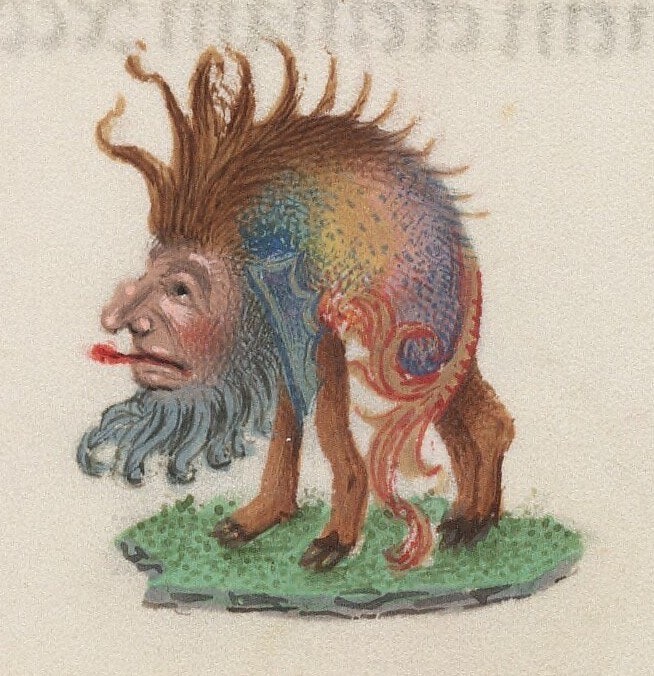
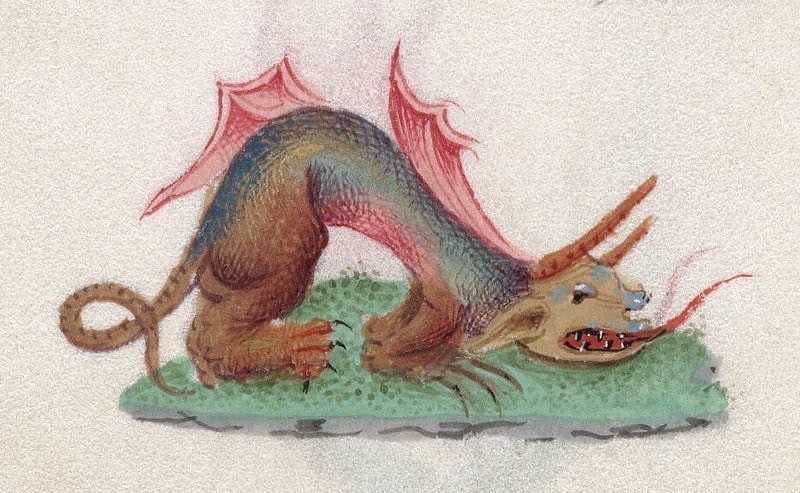
Some 15th-century rainbow-coloured beasts to brighten your Monday: https://publicdomainreview.org/collection/rainbow-coloured-beasts-from-15th-century-book-of-hours/
@SteelFolk the origin of "mind" as a verb is interesting: etymonline.com/search?q=to%20mind
@SteelFolk German: es ist mir scheißegal 😄
I need to find out when the word for "mind" (Latin: mens, Sanskrit: manas) disappeared from the French language and some other European languages.
I call the mind the last taboo of rationalist society.
@NoelJPenaflor ah, "Fotomontag" doesn't mean "photo montage" at all but we're not Monday either 🤔
Martin Jambon 🌍🌎🌏
boosted

"Children In France Playing With A Toy Guillotine. 1959
#pic #pics #pictures #picture #photo #photography #PhotoMonday #photografie #photographie #Fotomontag #foto #fotos #fotographie #fotografie #fotograf #france #history #historical #histodons #histodon

@f_dion oh, I thought it was a cake!
Martin Jambon 🌍🌎🌏
boosted
@Great_Albums @lowqualityfacts it's "whoever", not "whomever" because it's the nominative case (as in Latin, German, etc.) which I just learned is also named the subjective case in English. The nominative case applies to the subject but also to the complement if the complement is the same thing as the subject. For example, in "I am a Berliner", both "I" and "a Berliner" use the nominative case because they describe the same thing. However, in "I eat a Berliner", "a Berliner" is not equivalent to the subject and therefore uses another case. This is poorly explained here and there:
https://en.wikipedia.org/wiki/Nominative_case
https://en.wikipedia.org/wiki/Predicative_expression
@Great_Albums @lowqualityfacts it's "whoever", not "whomever" because it's the nominative case (as in Latin, German, etc.) which I just learned is also named the subjective case in English. The nominative case applies to the subject but also to the complement if the complement is the same thing as the subject. For example, in "I am a Berliner", both "I" and "a Berliner" use the nominative case because they describe the same thing. However, in "I eat a Berliner", "a Berliner" is not equivalent to the subject and therefore uses another case. This is poorly explained here and there:
https://en.wikipedia.org/wiki/Nominative_case
https://en.wikipedia.org/wiki/Predicative_expression
- Art Website
- https://martinj.art
- https://www.instagram.com/martinjambon/
- Website
- https://mjambon.com
- https://twitter.com/mjambon
mad scientist/artist
Interests: cognition, artificial cognition, epistemology, machines, history, understanding most things.
Academic and professional credentials: 3D structure of proteins (PhD), program analysis with OCaml, free software author.
Hobbies: trail running, mushrooms, art.
Location: San Francisco Bay Area, originally from Orléans, France
Ancien rameur à l'ACOO. Ancien élève du Lycée Saint-Louis et de l'École normale supérieure de Lyon.
Joined Nov 2022
