

Bibliolater 📚 📜 🖋 @bibliolater@qoto.org
Not a bot just a chap in his fifties who occasionally reads things.
Toots are humanities, science, non-fiction, books, maps, charts and graphs related. Some toots containing videos may also find their way into the timeline.
Toots or follows or boosts or mentions ≠ endorsements of any particular notion or notions.
Finis
Joined Nov 2022
Arpan R Mehta, Puja R Mehta, Stephen P Anderson, Barbara L H MacKinnon, Alastair Compston, Etymology and the neuron(e), Brain, Volume 143, Issue 1, January 2020, Pages 374–379, https://doi.org/10.1093/brain/awz367 #etymology #science #openaccess #article #language
The Portly Victorian Undertaker Who Launched the World’s First Low-Carb Craze - Narratively https://narratively.com/the-portly-victorian-undertaker-who-launched-the-worlds-first-low-carb-craze/ #victorian #history
Source: https://twitter.com/Narratively/status/1598788848846311452?s=20&t=RW7HO_AcRbNBrROq0ZOXPQ
Bibliolater 📚 📜 🖋
boosted

Timeline (especially federated) updating so fast you can't scroll through it? Turn on slow mode.
The joy of science - with Jim Al-Khalili https://youtu.be/0lPjleuohMo #youtube #video #science
Source: https://twitter.com/Ri_Science/status/1598999760723132416?s=20&t=y_5cdbJK9ppLPAfbRqL8hQ
Bibliolater 📚 📜 🖋
boosted

Bibliolater 📚 📜 🖋
boosted

Bibliolater 📚 📜 🖋
boosted

From 1755 a swirling map of claims showing locations of native lands, British Claims east of the Mississippi, French to the west. Note the Cherokee lands throughout what would be western North Carolina, Tennessee, etc., clusters of native towns across the region. Shows the vast "Six Nations" confederation of the Iroquois stretching from Illinois to upstate New York. #map #maps #nativeamerican #Cherokee #history #USA
Bibliolater 📚 📜 🖋
boosted

My new book, Language and the Rise of the Algorithm, was featured on the Page 99 Test, a blog based on the premise that opening a book to page 99 can give a good idea of its contents. Page 99 of my book discusses an #18thCentury debate about whether #algebra should be considered a #language—a debate that gained a newfound relevance in the computer era.
https://page99test.blogspot.com/2022/12/jeffrey-m-binders-language-and-rise-of.html
Bibliolater 📚 📜 🖋
boosted

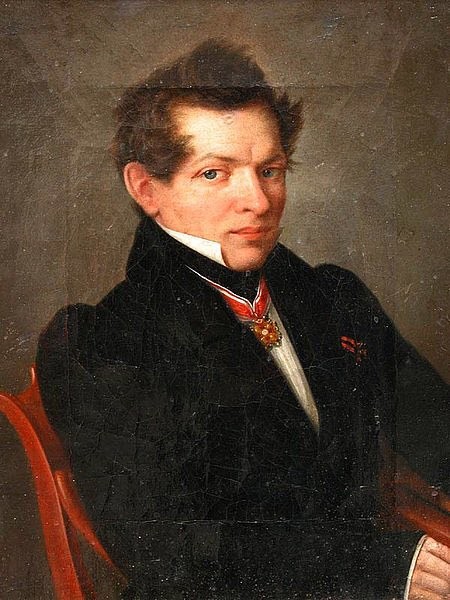
The mathematician Nikolai Ivanovich Lobachevsky was born #OTD in 1792. He developed a non-Euclidean geometry that shows up in areas ranging from relativity to the designs of M.C. Escher.
In Lobachevsky's geometry there exists more than one line parallel to a given line and passing through a point not on that line. Although the term "Lobachevsky geometry" is still used, we more frequently refer to it as "hyperbolic geometry" – a term introduced by Felix Klein.
Portrait: Lev Kryukov (wikimedia)
Queloz, Matthieu, The Practical Origins of Ideas: Genealogy as Conceptual Reverse-Engineering (Oxford, 2021; online edn, Oxford Academic, 22 Apr. 2021), https://doi.org/10.1093/oso/9780198868705.001.0001, accessed 30 Nov. 2022.
#metaphysics #history #philosophy #openaccess #book
Source: https://twitter.com/OUPPhilosophy/status/1597891974131961856?s=20&t=AuMTBl7Hzv1xY8J3dDlwsQ
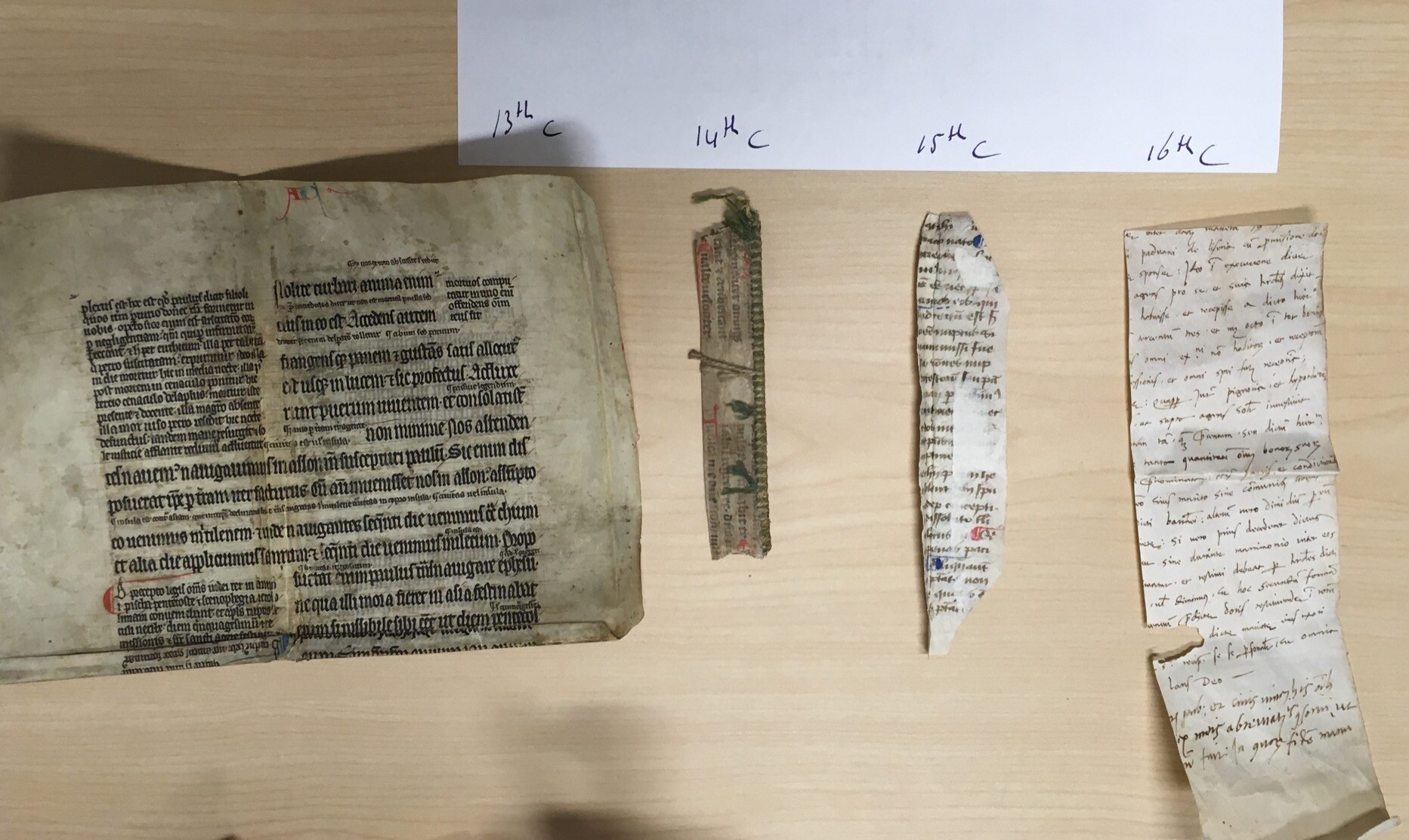
Introducing the CUL Additional Fragments Project or Three Lessons in Fragmentology https://specialcollections-blog.lib.cam.ac.uk/?p=23644 #medieval #manuscripts
Source: https://twitter.com/aldevine/status/1598268021172473858?s=20&t=AuMTBl7Hzv1xY8J3dDlwsQ
Kabukcu, C., Hunt, C., Hill, E., Pomeroy, E., Reynolds, T., Barker, G., & Asouti, E. (2022). Cooking in caves: Palaeolithic carbonised plant food remains from Franchthi and Shanidar. Antiquity, 1-17. doi: https://doi.org/10.15184/aqy.2022.143 #openaccess #archaeology #food
Bibliolater 📚 📜 🖋
boosted


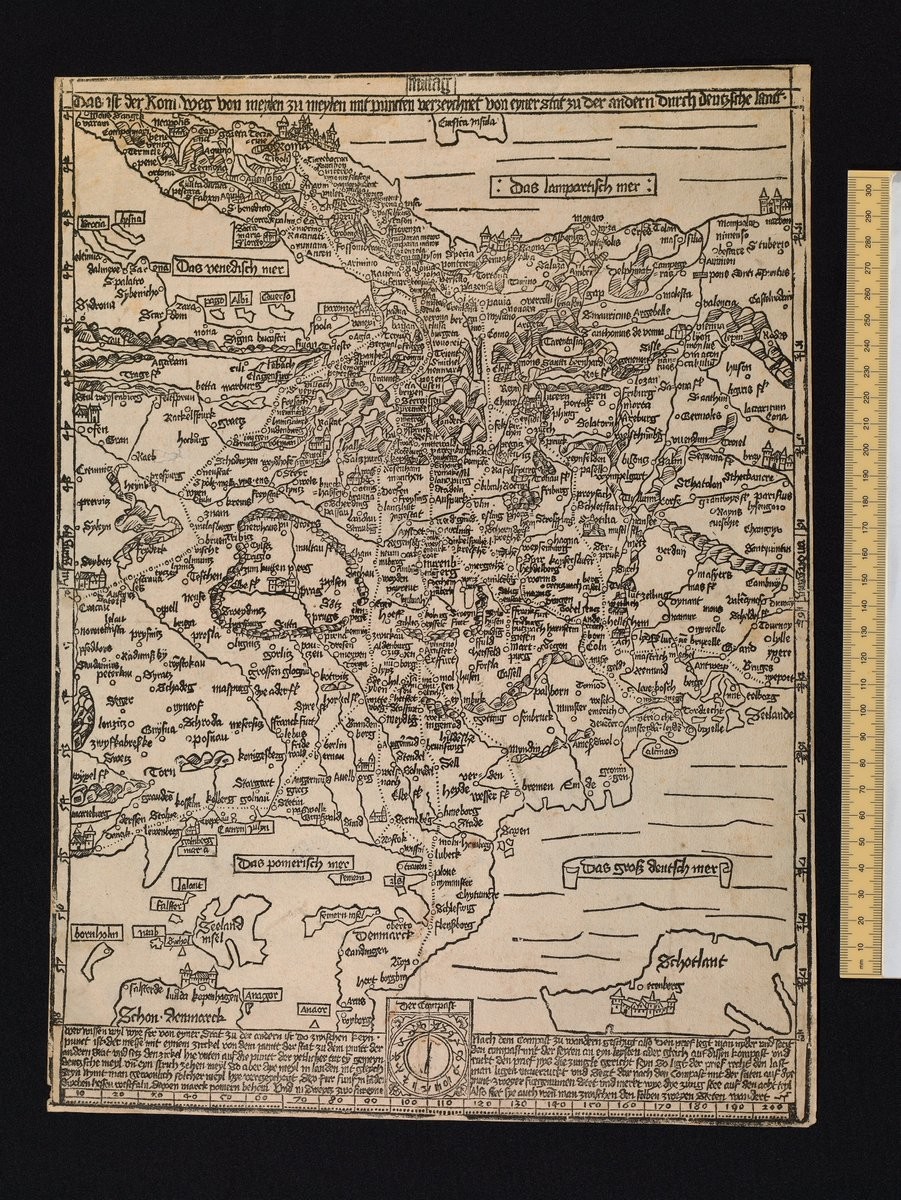
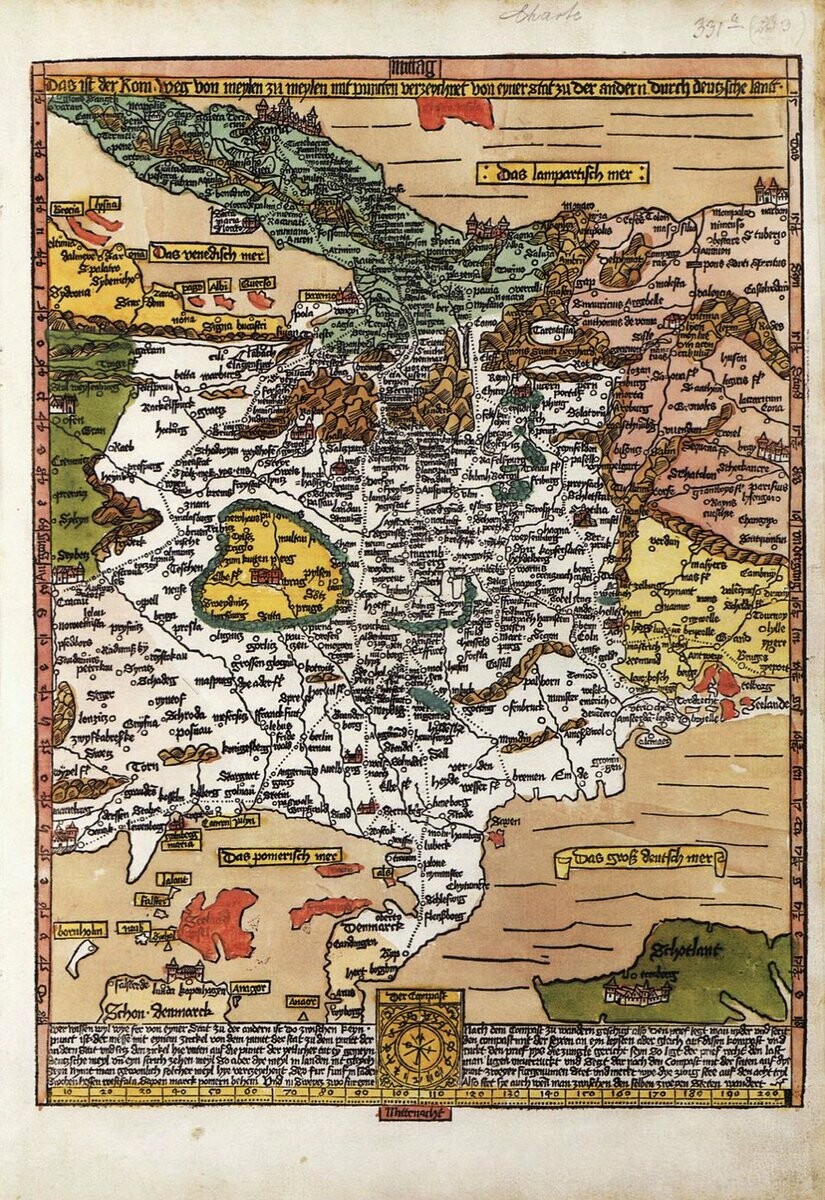
All roads lead to Rome. Meet the earliest known European map with a scale: This woodcut "south up" map by Erhard Etzlaub offers a route to Rome - located on the top of the map - through early modern German speaking Europe. The map was printed as a single-sheet item, and was made in Nuremberg for the Holy Year 1500.
Etzlaub wanted his "Rom-Weg" map to be bought, so he offered colored versions too, like the one you see, because these were more expensive.
#MapHistory #BookHistory #histodons
1/4
Bibliolater 📚 📜 🖋
boosted




Inspired by the vibe here, I just posted my first new blog post in a long time: "Medieval Manuscript Fragments in the Classroom". Read here: https://tinyurl.com/yc6bkf7n
The post discusses fragments as survivors of systematic book destruction, shares my experiencing of teaching with them, and details a new frame design #UBC is implementing. Happy to discuss teaching with these hidden gems!
#medieval #ManuscriptFragment #BookHistory #Teaching #MedievalManuscript @histodons @medievodons
Frost Robert. 2022 A geologist and an Egyptologist in conversation: Sir Charles Lyell and Sir John Gardner Wilkinson. Notes Rec.
http://doi.org/10.1098/rsnr.2022.0032 #history #science #19thcentury #openaccess #article
Not a bot just a chap in his fifties who occasionally reads things.
Toots are humanities, science, non-fiction, books, maps, charts and graphs related. Some toots containing videos may also find their way into the timeline.
Toots or follows or boosts or mentions ≠ endorsements of any particular notion or notions.
Finis
Joined Nov 2022
