

Shamar @Shamar@qoto.org
Joined May 2019
Actually, I think that this is the real answer to the @ekaitz_zarraga's question.
I don't know about #clang, but GCC's (huge, overwhelming) complexity is mostly due to the supported combinations of
- languages
- architectures
- operating systems
- optimizations
- diagnostics / debug
- internationalization
Reading this from top to bottom might give you an insight: https://gcc.gnu.org/install/configure.html
#GCC is not just a #C compiler but the #GNU Compilers Collection.
It tries to maximize the possible use cases, including several niches and corner case that are simply not considered by simpler C compilers.
Why?
Well, there is obviously an ideological aim: providing #Software #Freedom through an high quality compilers suite to everybody, no matter how peculiar are their needs (to reduce the attack surface from proprietary software).
But there is also a reasonable architectural goal: maximize the reuse of a large high quality code base that is common among the various combinations of need.
The price of this is a huge complexity, due to the tensions between different perspective on how computing should work.
I don't like such complexity (really, I hate it), but it's very short-sighted to blame it without understanding the overall vision that GCC pursuits.
@suetanvil@mastodon.technology @codewiz
I'm not.
As long as the implemented behaviors are properly documented, undefined behaviours can be useful hooks: don't forget that C is a language designed to be used in a wide variety of use cases: portability is valuable in many of them, but sometimes is not relevant at all.
Shamar
boosted


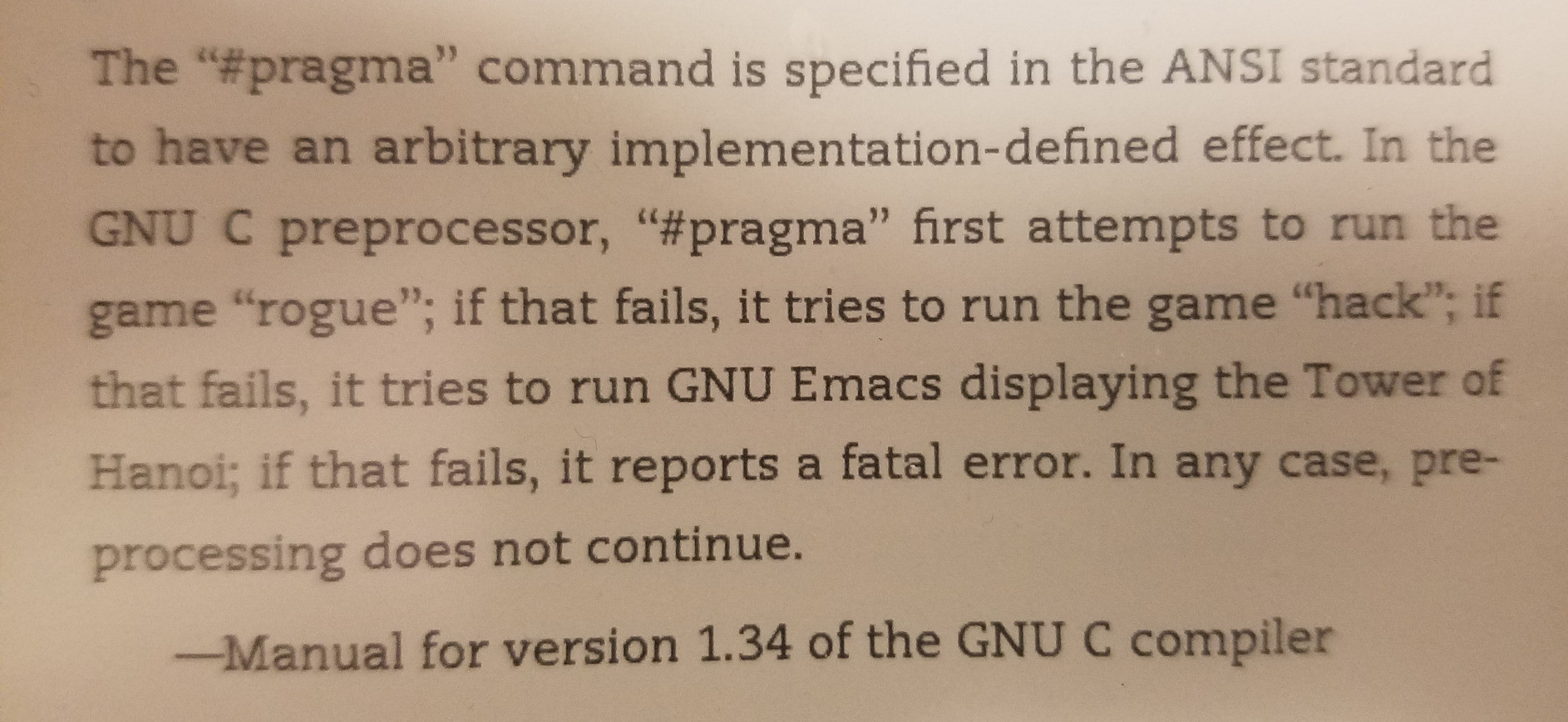
In an early version of the C compiler gcc, when the pragma directive was introduced, it took the "implementation-defined" effect literally and tried to launch computer games.
C'è una profonda differenza fra andare dove ci sono persone in catene per liberarle e mandare persone a farsi incatenare o sponsorizzare/normalizzare i carcerieri.
Essere su #Facebook e #Twitter per raggiungere le persone che vi sono intellettualmente recluse è necessario. Ma bisogna spingerle fuori.
Non si può linkare (ovvero alimentare con i dati di tutti i visitatori che non usano uMatrix) un sistema di sorveglianza e poi non condividerne "il modo di comunicare".
L'unico modo per usare questi sistemi senza esserne usati è postare link a contenuti esterni.
@filippodb @madbob@mastodon.technology
On January/February 2020 I'm going to give #GNUnet a new try with some italian friends (after a decade or so...).
May we ask you some questions if in throuble? Do you have any specific reading to suggest?
I mean beyond https://gnunet.org/en/use.html and https://docs.gnunet.org/handbook/gnunet.html
Shamar
boosted

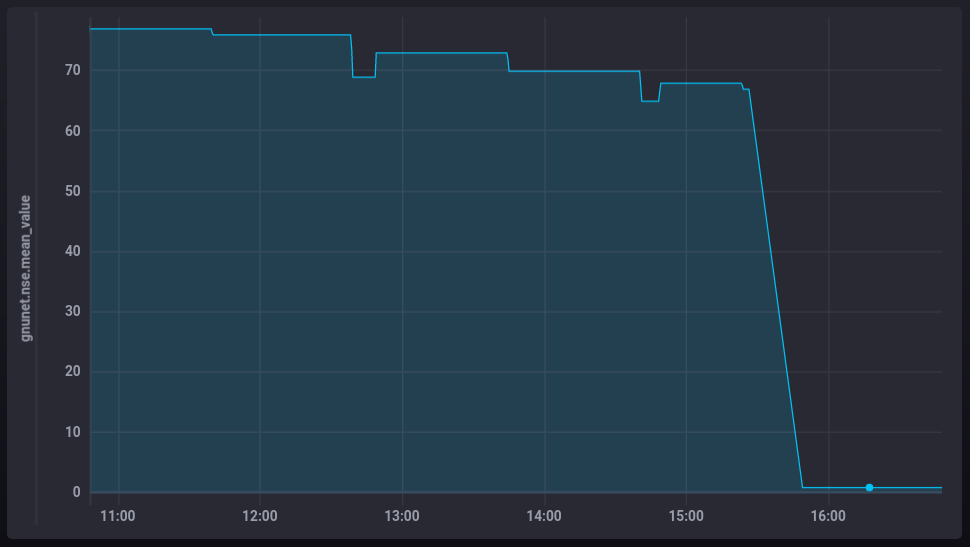
It appears I'm the first who updated their #GNUnet nodes to 0.12 release. 
Can only see my other* node in connection monitor.
* With another one recompiling at the moment.
Shamar
boosted

Linguists Hear An Accent Begin - Scientific American
https://www.scientificamerican.com/podcast/episode/linguists-hear-an-accent-begin/ #linguistics
Shamar
boosted

Shamar
boosted

"Today, the difference between a programmer and a nonprogrammer is that the programmer was told to overcome obstacles while the nonprogrammer was told to give up."
Shamar
boosted

Rv8 – RISC-V simulator for x86-64
https://rv8.io/
(submitted by lelf)
Shamar
boosted

 🇳🇱
🇳🇱
Shamar
boosted

@Blort join the #VOICE group and test with us! Reports on the tests we've done so far are (or will be) here:
https://hub.libranet.de/channel/voice
But TL;DR based on my experiences so far ...
I guess we are all programming bitches, after all... 😂
Shamar
boosted


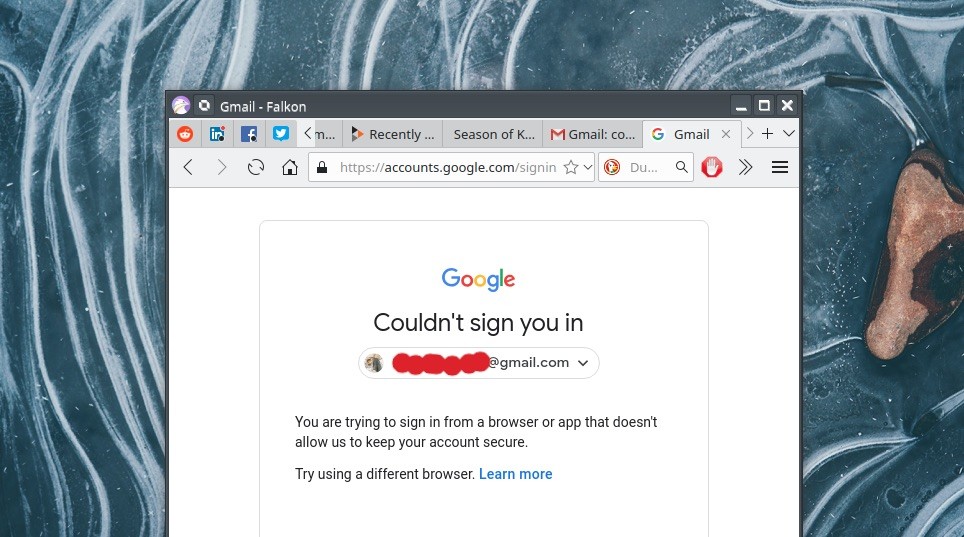
Google is blocking niche Linux browsers from accessing services like Gmail https://www.omgubuntu.co.uk/2019/12/couldnt-sign-you-in-google-browser-error-linux
I wonder why #GCC specification files use such a weird language.
As for BSD we are apparently reading different pages. Here's my source https://en.wikipedia.org/wiki/BSD_licenses
"Some releases of BSD prior to the adoption of the 4-clause BSD license used a license that is clearly ancestral to the 4-clause BSD license. These releases include 4.3BSD-Tahoe (1988) and Net/1 (1989)."
Plan 9 had a more complex (and somewhat sad) history, because LPL 1 was "almost free but not quite". Yet the point was that operating systems exists that were developed independently of GNU tools.
As of today Plan 9 (and in particular #9front) is probably the only general purpose operating system out there who can really claim to be GNU-free (and it somewhat does it).
Even #Windows today comes with several #GNU tools.
So in a way I think it's fair on GNU side to resist to this new wave of embrace, extend and extinguish.
Joined May 2019
