

Nicola Romanò @nicolaromano@qoto.org
- Pronouns
- he/him
Senior lecturer at Edinburgh University and Zhejiang-Edinburgh Joint Institute (ZJE).
Undergraduate Programme Coordinator, Biomedical Informatics at ZJE.
I teach #imageanalysis & #dataanalysis with #RStats & #python.
My research is focused on how #heterogeneous behaviour in #pituitary (and other) cells shapes their function as a population.
I'm also very interested in #reproducibility and #openscience.
Joined Oct 2022
Nicola Romanò
boosted

An update on that "suck my tongue" story regarding the Dalai Lama--a great example of the way rage-click farming and propaganda (Tibetans are united in their conviction that China is behind the uproar) overlap.
Nicola Romanò
boosted

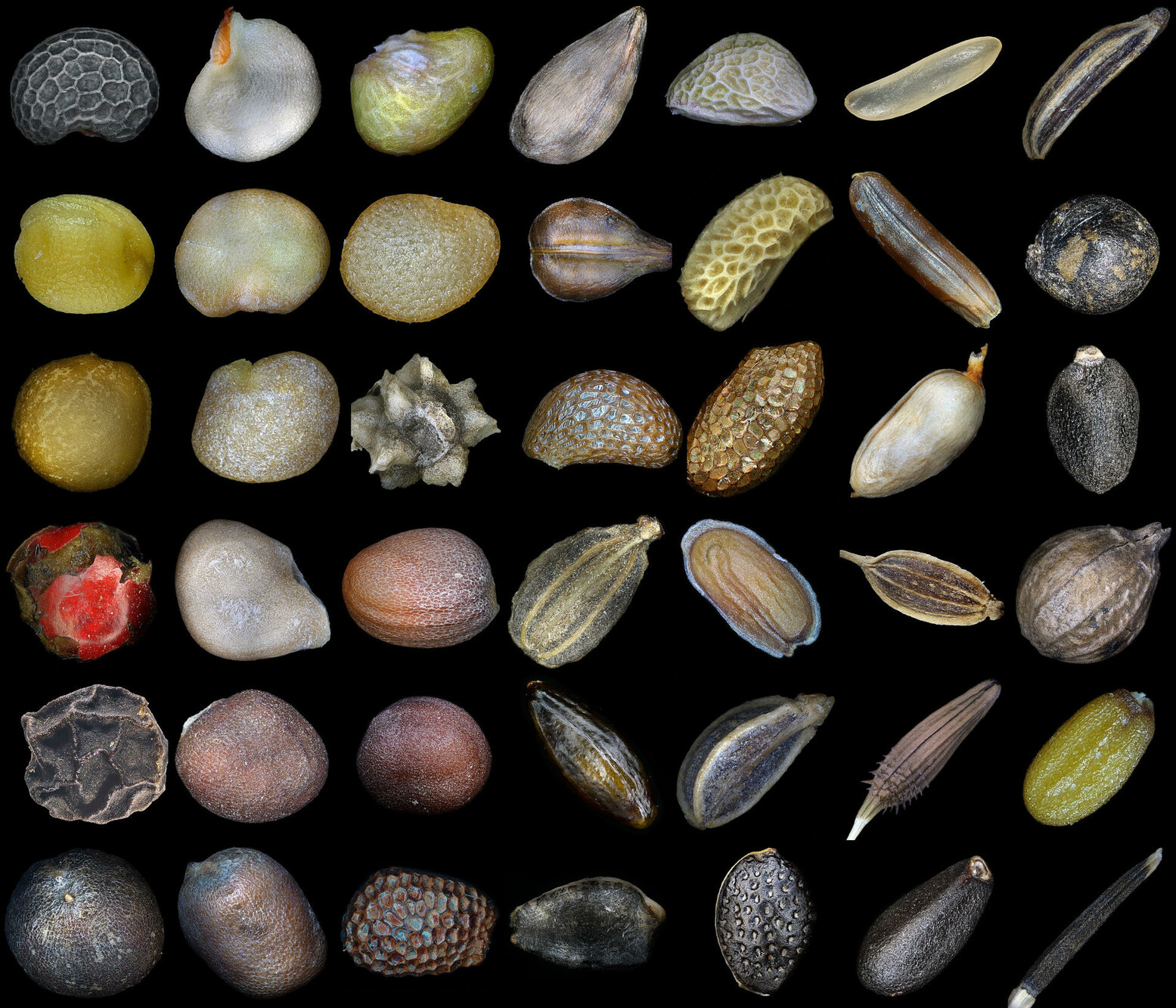
"A handful of companies own the patents on virtually every seed planted in the US. Now, a new crop of unowned seeds is bringing biodiversity back to farming" https://worldsensorium.com/open-source-seeds-loosen-big-ags-grip-on-farmers/ /via @gijs
Nicola Romanò
boosted

Oh, FFS. Golf is used in business to exclude women. So what is the WSJ's solution? Women should learn to play golf. Peak Journal.
What many women miss out on by not golfing with their colleagues https://www.wsj.com/articles/female-executives-dont-play-golf-be27532a via @WSJ
Nicola Romanò
boosted

Prompt injection: what’s the worst that can happen?
https://simonwillison.net/2023/Apr/14/worst-that-can-happen/
Discussions: https://discu.eu/q/https://simonwillison.net/2023/Apr/14/worst-that-can-happen/
Nicola Romanò
boosted

Did you know you can see how #Python parses your code? 🐍🤯
Breaking a .py file into a tree of "tokens" 🪙
python3 -m tokenize hi.py
Turning that into an "abstract syntax tree" 🎋
python3 -m ast hi.py
Then "disassembling" that to bytecode 🤖
python3 -m dis hi.py
When people say "comprehensions generate fewer operations than loops", they used dis.
I used the ast module when I made my undataclass script: https://www.pythonmorsels.com/undataclass/
More in this PyCascades talk: https://m.youtube.com/watch?v=RcGshw0tzoc&feature=youtu.be
@koen_hufkens Not my field so can't suggest a specific journal, but I'd definitely start by putting it on BiorXiv
Nicola Romanò
boosted

“I am so happy to have finally got this shot. It has taken me all winter. I have had so many difficulties; frozen equipment, blurry photos through ice, battery issues, flash placements and flare, clouds(!), cats’n’dogs, wind blowing everything over, night exposure, and the list goes on. So you can imagine my excitement and disbelief this morning when I found this on my card! Thank you beautiful Mrs fox, you get an Oscar.”
~ Duncan MacArthur
Nicola Romanò
boosted

Do you know there's a #fediverse alternative to Amazon-owned #Goodreads? #BookWyrm is a social network for tracking your reading, writing reviews, and discovering what to read next. You can follow and interact with users on different #BookWyrm instances and on #Mastodon. You can import from a Goodreads CSV export. You can create private shelves and curated lists. Join us at https://ramblingreaders.org or choose one of the other instances available #books #reading #bookstodon @bookstodon
Nicola Romanò
boosted

We have an opening for a technician on a KWF (Dutch cancer charity) funded project. Interested? More info in the link below.
Nicola Romanò
boosted

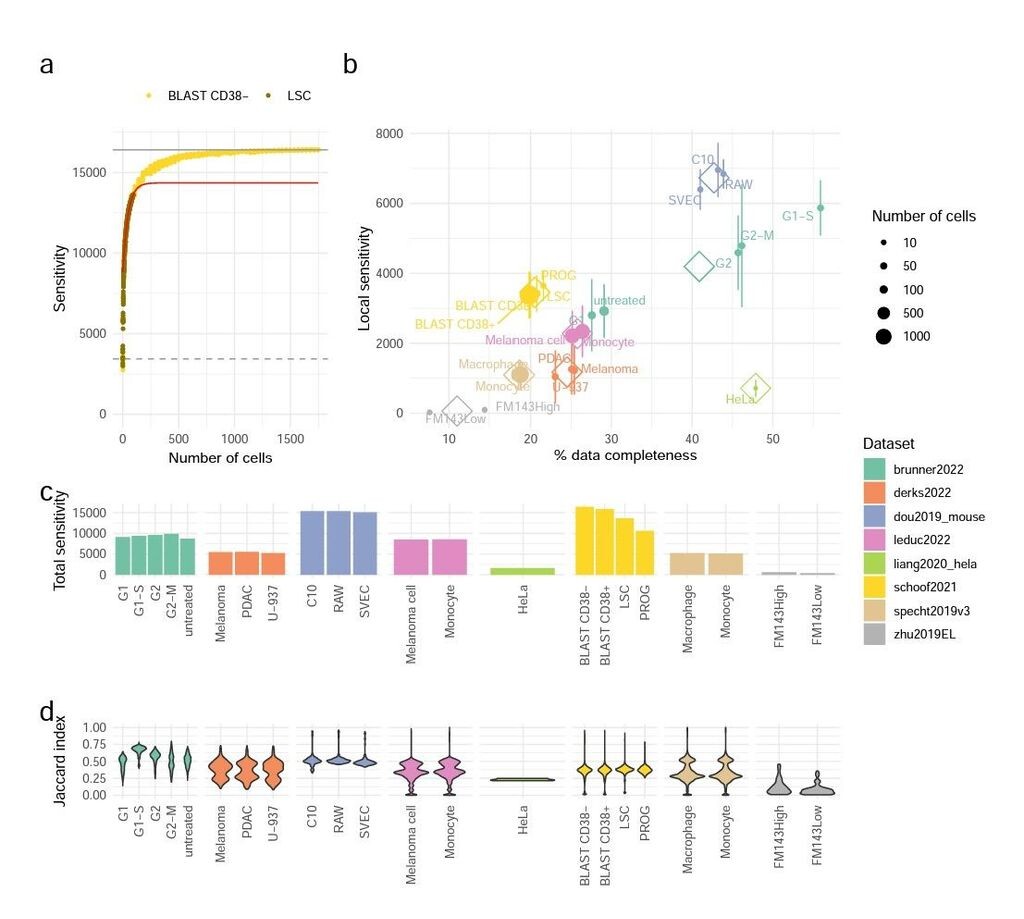
Revisiting the thorny issue of missing values in single-cell proteomics | https://arxiv.org/abs/2304.06654v1 #proteomics
Following up from last week's post, here is the continuation of our journey onto neural networks! In this post I discuss the basics of neural network training. 🤖
https://www.nicolaromano.net/data-thoughts/training-neural-networks/
Keep watching this space as more posts are in the pipeline! Next up: make your first neural network in Python!
Are you interested in the topic? Let me know what you would like to hear next
#neuralnetworks #ai #artificialintelligence #machinelearning #training #statistics #python
Nicola Romanò
boosted

Inuit children invented their own system for writing numbers which makes arithmetic easier. Now its in Unicode.
Nicola Romanò
boosted

@notoriousiptg Interesting and maybe not surprising (?).
@requiem It seems to me like you are looking at it from the wrong point of view. I am sure you have found many other human-introduced bugs as well, and have also found good code written with the aid of Copilot. The problem is not Copilot (which works well in many cases), it is people misusing it and trusting the code without actually checking (or not being able to check) that it works.
@adamr Absolutely, I am not advocating never rejecting, and agree certain works can't be saved. However I think/hope those are not the vast majority. I found it bizarre that many journals boast their high rejection rate. It sounds like a reflection of an 'old-boys club' type of culture that we should work to get rid of.
@ecological_fallacy @albertcardona @eLife Honestly, I don't care too much for the short assessment... however I think we also have to be realistic and realise that grant and job applications panels won't stop looking at publications any time soon. And they are more likely to read 100 paragraphs than 100 papers.
Nicola Romanò
boosted

@nicolaromano This is refreshing to hear. I agree that we need to get real about peer review and its limitations. Our papers could all do with some deflation too. Right now any flaws are removed/minimised for fear that this will jeopardise the chance of publication (or negative data is simply left in the drawer). None of that is good for science.
I have been considering publishing my next article in #elife
I was not very convinced by their new #publishing method, but the more I think about it, the more I like it.
What convinced me is that I think of the way I review papers myself. I won't ever reject a paper unless there is something majorly wrong e.g. from an ethical point of view. Instead, I would rather spend time and give constructive and realistic feedback to improve the study.
This is because of two reasons:
1. If the study idea/methodology etc, is good but maybe is missing some key experiment, I think that the authors must have put a lot of effort, time and money into producing this. I have been through the "your work is not fancy enough for our prestigious journal" crap enough times that I will not engage in that. Ever. There is no reason your paper should not publish negative results if the study is well done.
Also, people's jobs and mental health depend on that, which is way more important.
Also, there are plenty of papers in "fancy journals" that are just piles of bs, so I really won't buy into shiny names (I have just spent an entire day trying to run code from several papers published in high-IF journals to no avail...).
2. If the study is poor, it is easy to say: "This is cr*p, straight reject". This just means the authors will submit elsewhere, hoping the next reviewer won't be bothered reading the paper in depth and will let it through. Even worse, this plays into the hands of #predatory journals. I would rather say this can be accepted after all of these major revisions.
The authors get useful feedback on how to improve their study; they might choose not to act on it, but at least I have made my part.
I would be interested in hearing other views on this.
Nicola Romanò
boosted



In the tidyverse, we work with a lot of people - each other and #rstats community members.
We wanted to document how we handle code review, so we've drafted a guide detailing our review principles!
We hope you find it useful, and we welcome your feedback!
- Pronouns
- he/him
Senior lecturer at Edinburgh University and Zhejiang-Edinburgh Joint Institute (ZJE).
Undergraduate Programme Coordinator, Biomedical Informatics at ZJE.
I teach #imageanalysis & #dataanalysis with #RStats & #python.
My research is focused on how #heterogeneous behaviour in #pituitary (and other) cells shapes their function as a population.
I'm also very interested in #reproducibility and #openscience.
Joined Oct 2022
