

rotenotes @rotenotes@qoto.org
- blogroll
- https://linktr.ee/rotenotes
- rotenotes @blogspot
- https://rotenotes.blogspot.com/
- rotenotes @wordpress
- http://rotenotes.wordpress.com/
- @rotenotes@electricrequiem.com
- https://electricrequiem.com/@rotenotes
♥∞♪☮☯☭Ⓐ☆ 🏴☠️🇵🇸🏴🏳️🌈🏳️⚧️🌻❤️☀️💚🌿😍💚😍🍃
I don’t sing because I am happy; I’m happy because I sing.
— William #James
"All the interests of my reason, speculative as well as practical, combine in the three following questions: 1. What can I #know? 2. What #ought I to do? 3. What may I #hope?"
— Immanuel #Kant
#Law is concerned with #freedom, the worthiest and holiest thing in man, the thing man must know if it is to have obligatory force for him.
— [#Hegel’s Philosophy of #Right, § 215 – Ethical Life / Civil Society / Administration of Justice / Determinate Law] [at: http://www.marxists.org/reference/archive/hegel/works/pr/prcivils.htm]
“No #morality can be founded on #authority, even if the authority were #divine.”
— A. J. #Ayer, Essay on #Humanism
All #punishment is mischief. All punishment of itself is evil.
— Jeremy #Bentham, Principles of #Morals and #Legislation
Έτσι γίνεται φανερό, ότι τα προβλήματα της πολιτικής επιστήμης είναι και προβλήματα της
πολιτικής αγωγής και των πολιτικών και πολιτισμικών αξιών του κάθε #πολίτη.
— Κοσμάς Ψυχοπαίδης – Εισαγωγή στην Πολιτική Επιστήμη (παραδόσεις)
#Κομμουνισμός - «μια ένωση στην οποία η ελεύθερη ανάπτυξη του καθενός [ατόμου] είναι η προϋπόθεση για την ελεύθερη ανάπτυξη όλων».
— #Marx & #Engels, Manifesto (1848)
#Communism - “an association in which the free development of each [individual] is the condition for the free development of all.”
— #Marx & #Engels, Manifesto (1848)
Αρθρον 1. - Ο σκοπός οπού απ’ αρχής κόσμου οι άνθρωποι εσυμμαζώχθησαν από τα δάση την πρώτην φοράν, δια να κατοικήσουν όλοι μαζί, κτίζοντες χώρας και πόλεις, είναι δια να συμβοηθώνται και να ζώσιν ευτυχισμένοι, και όχι να συναντιτρώγονται ή να ρουφά το αίμα τους ένας.
— #Ρήγας #Βελεστινλής, “Τα Δίκαια του Ανθρώπου”
"The consistent #anarchist, then, should be a #socialist, but a socialist of a particular sort. He will not only oppose alienated and specialized labor and look forward to the appropriation of capital by the whole body of workers, but he will also insist that this appropriation be direct, not exercised by some elite force acting in the name of the proletariat."
— Noam #Chomsky - In Daniel Guérin, #Anarchism: From Theory to Practice, 1970
"[…] Την δήμευσιν δεν την φοβείται αυτός που δεν έχει τίποτε, εκτός εάν έχης ανάγκην από αυτά τα σχισμένα κουρέλια μου και τα ολίγα βιβλία μου, που αποτελούν όλην την περιουσίαν μου. Την εξορίαν δεν την εννοώ, εγώ που δεν περιορίζομαι εις ένα τόπον, και δεν έχω ιδικόν μου ούτε το μέρος που τώρα κατοικώ, και κάθε μέρος είναι ιδικόν μου όπου και αν ευρεθώ ή μάλλον, κάθε μέρος είναι του Θεού, όπου εγώ είμαι ξένος και περαστικός. […]"
— Μέγας Βασίλειος
"He who joyfully marches to music in rank and file has already earned my contempt. He has been given a large brain by mistake, since for him the spinal cord would fully suffice. This disgrace to civilization should be done away with at once. Heroism at command, senseless brutality, and all the loathsome nonsense that goes by the name of #patriotism, how violently I hate all this, how despicable and ignoble #war is; I would rather be torn to shreds than be part of so base an action! It is my conviction that killing under the cloak of war is nothing but an act of murder."
— Albert #Einstein
Joined Sep 2023
rotenotes
boosted

https://www.AnarchistFederation.net - Multi-lingual anarchist news from 400+ collectives
Το #νεοφιλελεύθερο δόγμα είναι πάντα τριπλό:
1. #Περικοπή των #δημοσίων #δαπανών.
2. #Ιδιωτικοποιήστε τα πάντα.
3. #Απορρύθμιση.
Είναι καλό μόνο στη #συσσώρευση #πλούτου στην κορυφή.
Απέτυχε σε οτιδήποτε άλλο στη Χιλή τη δεκαετία του '70, αλλού στις δεκαετίες του '80, του '90, των 00s και των 10s.
Θα αποτύχει ξανά, αλλά θα κάνει την ολιγαρχία πλουσιότερη.
Πόσες φορές θα αποτύχει αυτό το μοντέλο προτού σταματήσουμε να πιστεύουμε ότι οι πωλητές λαδιού φιδιού το διακινούν;
Πόσες γενιές πρέπει να υποφέρουν πριν δοκιμάσουμε μια καλύτερη προσέγγιση;

The neoliberal dogma is always threefold: 1. Cut public spending. 2. Privatise everything. 3. De-regulate. It's only good at accumulating wealth a...
rotenotes
boosted

The Tories have backed down, for the moment, on plans to scan users' digital communications, but the requirement is still in the law they are about to pass: https://www.wired.com/story/britain-admits-defeat-online-safety-bill-encryption/ Perhaps they plan to make another try in a year or two.
rotenotes
boosted

Researchers use AI to predict recovery after serious brain injury - Science Daily https://news.google.com/rss/articles/CBMiPmh0dHBzOi8vd3d3LnNjaWVuY2VkYWlseS5jb20vcmVsZWFzZXMvMjAyMy8wOS8yMzA5MTMxMzQzMDguaHRt0gEA?oc=5&utm_source=dlvr.it&utm_medium=mastodon #science
Αν θέλω να πω ότι ένα υπολογιστικό εργαλείο μπορεί (εκτεταμένα) να «λογίσει», αναζητώ τις ακόλουθες δυνατότητες:
(1) Η ικανότητα να συναχθεί ένας γενικός κανόνας από παραδείγματα, όσο και
(α) αναφέρετε/περιγράψτε τη γενική περίπτωση και
β) εφαρμόζει με συνέπεια τον γενικό κανόνα σε νέα παραδείγματα.
(2) Η δυνατότητα κάθετης πλοήγησης στον προβληματικό χώρο, δηλαδή
(α) αναλύει τα μεγάλα προβλήματα σε μικρότερα υποπροβλήματα και
(β) συνθέτει λύσεις σε υποπροβλήματα για να βρουν λύσεις σε μεγαλύτερα προβλήματα.
(3) Η ικανότητα επίλυσης προβλημάτων με χρήση αναδρομής/επαγωγής.
(4) Η ικανότητα να αμφισβητείται εάν η ίδια η ερώτηση είναι καλοσχηματισμένη ή εάν υπάρχει λάθος ή λανθασμένη/παράλογη υπόθεση ή έλλειψη πληροφοριών στην ερώτηση/προδιαγραφή/θεώρημα.
(5) Η ικανότητα να ανακαλύπτουμε σχέσεις μεταξύ διαφορετικών εννοιών/ιδεών/αντικειμένων και στη συνέχεια να προσαρμόζουμε με συνέπεια κανόνες που έχουν μάθει σε αυτές τις σχέσεις.
(6) Η ικανότητα να θέτει κανείς τις σωστές ερωτήσεις για να τον καθοδηγήσει προς μια απάντηση (ή μια καλύτερη ερώτηση) όταν δεν γνωρίζει την απάντηση (ή η ερώτηση είναι κακοσχηματισμένη).
Οπότε ναι, έχω υψηλά πρότυπα για τη χρήση αυτής της ορολογίας, ακόμη και όταν χρησιμοποιείται καθαρά επεκτατικώς. Νομίζω ότι τα τρέχοντα σημεία αναφοράς «συλλογισμού» είναι παράλογα.

If I want to say that a computational tool can (extensionally) "reason," I am looking for the following capabilities: (1) The ability to infer a ge...
#Κομμουνισμός - «μια ένωση στην οποία η ελεύθερη ανάπτυξη του καθενός [ατόμου] είναι η προϋπόθεση για την ελεύθερη ανάπτυξη όλων».
— #Marx & #Engels, Manifesto (1848)
#Communism - “an association in which the free development of each [individual] is the condition for the free development of all.”
— #Marx & #Engels, Manifesto (1848)
Artwork: The celebration of the election of the #Commune, 28 March 1871
[Description
Italiano: Proclamazione della Comune, Parigi, 28 marzo 1871
Date 1871
Source http://www.paperblog.fr/4317074/la-commune-proclamee-le-28-mars-1871/
Author Unknown author](https://commons.wikimedia.org/wiki/File:Commune_28_mars.jpeg)
[translate in english and expand on the following: "Οι εργάτες την (παραγωγική/αξιακή) συνεργασία (cooperation) τους την δινουν (συνειδητα ή ασυνείδητα) δωρεαν στον καπιταλιστη κατοχο των μεσων παραγωγης, μεσων διαβιωσης και χρηματος (M -- C [MP+L]) -- C [commodities] -- M' με M' > M"
ChatGPT
The statement you provided is in Greek and it discusses the relationship between #workers and #capitalist owners in the process of #production and #exchange. I'll provide a translation into English and then expand on its meaning:
Translation:
"Workers, consciously or unconsciously, provide their (productive/value-creating) cooperation to the capitalist owner of the means of production, means of subsistence, and money (M -- C [MP+L]) -- C [commodities] -- M' with M' > M."
Expansion:
This statement delves into the dynamics of capitalist production and exchange, highlighting the fundamental relationship between workers and capitalist owners. Here's a breakdown of the key concepts:
Workers' Cooperation (Παραγωγική/Αξιακή Συνεργασία):
This refers to the collective effort, skill, and labor provided by workers in the production process. It encompasses both the physical work done and the intellectual contributions that lead to the creation of goods or services.
Capitalist Owner (Καπιταλιστής Κάτοχος):
This refers to the individual or entity that owns and controls the means of production, which includes machinery, factories, and other resources required for production. In this context, the capitalist is also the owner of means of subsistence (essential goods for living) and money.
Means of Production, Subsistence, and Money (Μέσα Παραγωγής, Διαβίωσης, και Χρήματος):
This encompasses the tools, materials, and facilities necessary for producing goods or services (means of production), as well as the resources needed for daily life (means of subsistence) and money for transactions and investments.
Exchange Process (M -- C -- M'):
This represents the core process of capitalist production and exchange. It starts with the capitalist investing money (M) to purchase means of production and labor (C [MP+L]). Then, through the production process, commodities (C) are created. These commodities are then sold in the market for a higher sum of money (M'), resulting in profit if M' is greater than M.
Conscious or Unconscious Contribution:
This recognizes that workers may or may not be fully aware of the economic implications of their labor. Some workers may consciously understand that their efforts contribute to the capitalist's profit, while others may not be as aware of the broader economic context.
In summary, the statement highlights the unequal power dynamic in capitalist systems. Workers, by providing their labor and expertise, play a crucial role in the production process. However, the fruits of their labor, represented by the commodities produced, ultimately benefit the capitalist owner in terms of profit. This dynamic is central to the critique of capitalism, emphasizing issues of exploitation and unequal distribution of wealth.](https://chat.openai.com/c/1535a1a9-8474-4f49-9f2e-fcb6c73954d3)
Artwork: [The Factory, 1898
(Die Fabrik, 1898)
Maximilien Luce
1898 · oil on canvas
Post Impressionism](https://www.meisterdrucke.ie/fine-art-prints/Maximilien-Luce/833557/The-Factory%2C-1898.html)
rotenotes
boosted


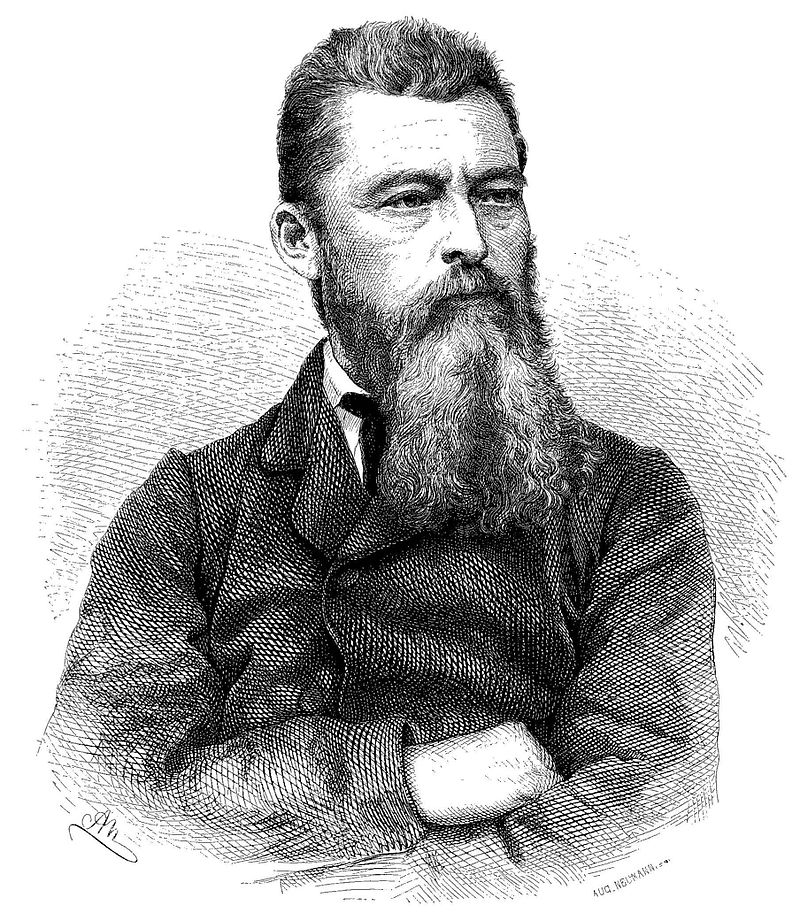
"The first philosophers were astronomers. The heavens remind man … that he is destined not merely to act, but also to contemplate."
The Essence of Christianity
Ludwig Feuerbach died #OTD in 1872. He is best known for his book The Essence of Christianity, which provided a critique of Christianity that strongly influenced generations of later thinkers, including Karl Marx, Friedrich Engels, Richard Wagner & Friedrich Nietzsche.
Ludwig Feuerbach at PG:
https://www.gutenberg.org/ebooks/author/44096

«Αν αγαπάς χωρίς να προκαλείς αγάπη σε αντάλλαγμα — δηλαδή, αν η αγάπη σου ως αγάπη δεν παράγει αμοιβαία αγάπη' αν μέσα από μια ζωντανή έκφραση του εαυτού σου ως ερωτευμένου ανθρώπου δεν κάνεις τον εαυτό σου αγαπημένο πρόσωπο, τότε η αγάπη σου είναι ανίκανη — ατυχία».
[“If you #love without evoking love in return — that is, if your loving as loving does not produce #reciprocal love; if through a living expression of yourself as a loving person you do not make yourself a loved person, then your love is impotent — misfortune” (#Marx).](https://epochemagazine.org/.../marx-and-anti-oedipus-on.../)
Artwork: "The Lovers" by René #Magritte

[#Capitalism, according to #Deleuze and #Guattari, consists of the “conjunction” of two flows [flux]. Regarding #money, this means the #salary on the one hand, and #capital on the other. This basically coincides with #Marx’s two forms of circulation as he elaborates them in Capital: The circulation C-M-C (commodity-money-commodity) and the circulation M-C-M’ (money-circulation-money + surplus value). The #worker sells his labour (force) as a commodity with a certain value (price) (C) for money that is his salary (M), and buys food and clothes with it to survive (C). Once this money runs out, he needs to go work again, so the cycle starts over again. The #capitalist, on the other hand, invests his money (M) into the production of certain commodities (C) and in the end, once he’s sold them on the market, gets the money he invested plus a certain profit he made (M’), which he can once again reinvest in further production, so this cycle starts over as well.](https://epochemagazine.org/32/marx-and-anti-oedipus-on-desiring-ones-own-suppression/)
[“In estranging from man (1) nature, and (2) himself, his own active functions, his life-activity, estranged labour estranges the species from man. It turns for him the life of the species [Gattungsleben] into a means of individual life. First it estranges the life of the species and individual life, and secondly it makes individual life in its abstract form the purpose of the life of the species, likewise in its abstract and estranged form.
For in the first place labour, life-activity, productive life itself, appears to man merely as a means of satisfying a need — the need to maintain the physical existence. Yet the productive life is the life of the species. It is life-engendering life. The whole character of a species its species character is contained in the character of its life-activity; and free, conscious activity is man’s species character. Life itself appears only as a means to life [Lebensmittel]” (Karl #Marx, Manuscripts, 76).](https://epochemagazine.org/32/marx-and-anti-oedipus-on-desiring-ones-own-suppression/)
Η ερώτησή μου… ήταν η πιο απλή από τις ερωτήσεις, που βρισκόταν στην ψυχή κάθε ανθρώπου από το ανόητο παιδί μέχρι τον πιο σοφό γέροντα: ήταν μια ερώτηση χωρίς απάντηση στην οποία δεν μπορεί κανείς να ζήσει, όπως είχα διαπιστώσει από την εμπειρία μου. Ήταν: «Τι θα προκύψει από αυτό που κάνω σήμερα ή θα κάνω αύριο; Τι θα έρθει από όλη μου τη ζωή;» Διαφορετικά εκφρασμένο, το ερώτημα είναι: «Γιατί να ζήσω, γιατί να επιθυμώ κάτι ή να κάνω οτιδήποτε;» Μπορεί επίσης να εκφραστεί ως εξής: «Υπάρχει κάποιο #νόημα στη ζωή μου που δεν καταστρέφει ο αναπόφευκτος #θάνατος που με περιμένει;»
[My question … was the simplest of questions, lying in the soul of every man from the foolish child to the wisest elder: it was a question without an answer to which one cannot live, as I had found by experience. It was: “What will come of what I am doing today or shall do tomorrow? What will come of my whole life?” Differently expressed, the question is: “Why should I live, why wish for anything, or do anything?” It can also be expressed thus: “Is there any #meaning in my life that the inevitable #death awaiting me does not destroy?”](https://www.themarginalian.org/2014/06/03/tolstoy-confession/)
Leo #Tolstoy
/[993b]/
1. Ἡ περὶ τῆς ἀληθείας θεωρία τῇ μὲν χαλεπὴ τῇ δὲ ῥᾳδία. σημεῖον δὲ τὸ
μήτ᾿ ἀξίως μηδένα δύνασθαι θιγεῖν αὐτῆς μήτε πάντας ἀποτυγχάνειν, ἀλλ᾿
ἕκαστον λέγειν τι περὶ τῆς φύσεως, καὶ καθ᾿ ἕνα μὲν ἢ μηθὲν ἢ μικρὸν
ἐπιβάλλειν αὐτῇ, ἐκ πάντων δὲ συναθροιζομένων γίγνεσθαί τι μέγεθος
THE investigation of the #truth is in one way hard, in another easy.
An indication of this is found in the fact that no one is able to
attain the truth adequately, while, on the other hand, we do not collectively
fail, but every one says something true about the nature of things,
and while individually we contribute little or nothing to the truth,
by the union of all a considerable amount is amassed.
[#Aristotle, #Metaphysics]
“A human being is a part of the whole called by us universe, a part limited in time and space. He experiences himself, his thoughts and feeling as something separated from the rest, a kind of optical delusion of his consciousness. This delusion is a kind of prison for us, restricting us to our personal desires and to affection for a few persons nearest to us. Our task must be to free ourselves from this prison by widening our circle of compassion to embrace all living creatures and the whole of nature in its beauty.”
― Albert #Einstein
“People ‘have an effect upon’ one another: Not by virtue of their nature, but rather by virtue of #motivations brought forth through #mutual #understanding.”
— Edmund #Husserl, Basic Problems of Phenomenology, p. 172
Η #εργασία δεν εμφανίζεται πια τόσο πολύ σαν ενταγμένη στην παραγωγική διαδικασία, όσο αντίθετα ο άνθρωπος συμπεριφέρεται ο ίδιος σαν #επόπτης και #ρυθμιστής της παραγωγικής διαδικασίας… Προβάλλει δίπλα στην παραγωγική διαδικασία αντί να αποτελεί τον κυριότερο παράγοντα της. Σ΄ αυτή τη μεταλλαγή, σαν ο μεγάλος ακρογωνιαίος λίθος της παραγωγής και του πλούτου δεν εμφανίζεται η άμεση εργασία που εκτελεί ο ίδιος ο άνθρωπος, ούτε ο χρόνος αυτής της εργασίας, αλλά η ιδιοποίηση της γενικής παραγωγικής δύναμης του ανθρώπου, η δική του κατανόηση της φύσης και ο εξουσιασμός της διαμέσου της ύπαρξης του ανθρώπου σαν κοινωνικού σώματος – μ΄ ένα λόγο, η ανάπτυξη του #κοινωνικού #ατόμου. Η #κλοπή ξένου εργάσιμου χρόνου, όπου βασίζεται ο σημερινός πλούτος, παρουσιάζεται σαν μίζερη βάση μπροστά σ’ αυτή τη νέα βάση που δημιούργησε και ανάπτυξε η ίδια η μεγάλη βιομηχανία.
— #Μαρξ: Βασικές γραμμές…(#Grundrisse), τετράδιο VII, 3, σελ. 538
"No #morality can be founded on #authority, even if the authority were #divine."
- blogroll
- https://linktr.ee/rotenotes
- rotenotes @blogspot
- https://rotenotes.blogspot.com/
- rotenotes @wordpress
- http://rotenotes.wordpress.com/
- @rotenotes@electricrequiem.com
- https://electricrequiem.com/@rotenotes
♥∞♪☮☯☭Ⓐ☆ 🏴☠️🇵🇸🏴🏳️🌈🏳️⚧️🌻❤️☀️💚🌿😍💚😍🍃
I don’t sing because I am happy; I’m happy because I sing.
— William #James
"All the interests of my reason, speculative as well as practical, combine in the three following questions: 1. What can I #know? 2. What #ought I to do? 3. What may I #hope?"
— Immanuel #Kant
#Law is concerned with #freedom, the worthiest and holiest thing in man, the thing man must know if it is to have obligatory force for him.
— [#Hegel’s Philosophy of #Right, § 215 – Ethical Life / Civil Society / Administration of Justice / Determinate Law] [at: http://www.marxists.org/reference/archive/hegel/works/pr/prcivils.htm]
“No #morality can be founded on #authority, even if the authority were #divine.”
— A. J. #Ayer, Essay on #Humanism
All #punishment is mischief. All punishment of itself is evil.
— Jeremy #Bentham, Principles of #Morals and #Legislation
Έτσι γίνεται φανερό, ότι τα προβλήματα της πολιτικής επιστήμης είναι και προβλήματα της
πολιτικής αγωγής και των πολιτικών και πολιτισμικών αξιών του κάθε #πολίτη.
— Κοσμάς Ψυχοπαίδης – Εισαγωγή στην Πολιτική Επιστήμη (παραδόσεις)
#Κομμουνισμός - «μια ένωση στην οποία η ελεύθερη ανάπτυξη του καθενός [ατόμου] είναι η προϋπόθεση για την ελεύθερη ανάπτυξη όλων».
— #Marx & #Engels, Manifesto (1848)
#Communism - “an association in which the free development of each [individual] is the condition for the free development of all.”
— #Marx & #Engels, Manifesto (1848)
Αρθρον 1. - Ο σκοπός οπού απ’ αρχής κόσμου οι άνθρωποι εσυμμαζώχθησαν από τα δάση την πρώτην φοράν, δια να κατοικήσουν όλοι μαζί, κτίζοντες χώρας και πόλεις, είναι δια να συμβοηθώνται και να ζώσιν ευτυχισμένοι, και όχι να συναντιτρώγονται ή να ρουφά το αίμα τους ένας.
— #Ρήγας #Βελεστινλής, “Τα Δίκαια του Ανθρώπου”
"The consistent #anarchist, then, should be a #socialist, but a socialist of a particular sort. He will not only oppose alienated and specialized labor and look forward to the appropriation of capital by the whole body of workers, but he will also insist that this appropriation be direct, not exercised by some elite force acting in the name of the proletariat."
— Noam #Chomsky - In Daniel Guérin, #Anarchism: From Theory to Practice, 1970
"[…] Την δήμευσιν δεν την φοβείται αυτός που δεν έχει τίποτε, εκτός εάν έχης ανάγκην από αυτά τα σχισμένα κουρέλια μου και τα ολίγα βιβλία μου, που αποτελούν όλην την περιουσίαν μου. Την εξορίαν δεν την εννοώ, εγώ που δεν περιορίζομαι εις ένα τόπον, και δεν έχω ιδικόν μου ούτε το μέρος που τώρα κατοικώ, και κάθε μέρος είναι ιδικόν μου όπου και αν ευρεθώ ή μάλλον, κάθε μέρος είναι του Θεού, όπου εγώ είμαι ξένος και περαστικός. […]"
— Μέγας Βασίλειος
"He who joyfully marches to music in rank and file has already earned my contempt. He has been given a large brain by mistake, since for him the spinal cord would fully suffice. This disgrace to civilization should be done away with at once. Heroism at command, senseless brutality, and all the loathsome nonsense that goes by the name of #patriotism, how violently I hate all this, how despicable and ignoble #war is; I would rather be torn to shreds than be part of so base an action! It is my conviction that killing under the cloak of war is nothing but an act of murder."
— Albert #Einstein
Joined Sep 2023
