

Shamar @Shamar@qoto.org
Joined May 2019
I'm not a writer (poetry count? and blogging?) so maybe you are right.
But maybe you are confusing coding and programming.
When you code, you encode something that is known into a certain language.
When you program, you explore a problem to build a solution. With my operating system I've had periods of "writer block". Programming is a deeply creative process.
Shamar
boosted

This morning I want to briefly describe Conflict-free Replicated Data Types (CRDTs). Which suggests that if you model your data correctly you can fairly easily implement collaborative editting without involving a centralized server, no matter frequently or infrequently the updates arrive.
I don't know of any practical applications of this technology, but Google did use it's more complicated predecessor "Operational Transforms" in Docs & the late Wave. Please tell me I'm wrong though!
Shamar
boosted

RT @drybones_5@twitter.com
FYI, Google is trying to kill web URLs
Google wants users to use Google search as the access point for all content on the web. They are doing this by:
1. Removing visible URLs in Chrome
2. Penalizing sites for not using Google AMP
3. Removing URLs from search results
🐦🔗: https://twitter.com/drybones_5/status/1190694123965210625
Just in case somebody need this to be said: it's the same with programming (which actually is writing).
Shamar
boosted

GitLab won't hire people in China and Russia... at https://gitlab.com/gitlab-com/www-gitlab-com/issues/5555 - discuss at https://freepo.st/freepost.cgi/post/Y6SA8OqPXB #freepost
Shamar
boosted

Russia Has ‘Oligarchs,’ the US Has ‘Businessmen’
https://fair.org/home/russia-has-oligarchs-the-us-has-businessmen/
(submitted by ericdanielski)
Shamar
boosted

Shamar
boosted

Mastodon, PeerTube e le alternative “libere” ai giganti della Rete: Google, Apple, Facebook… https://medium.com/Alternativa_open_source_a/mastodon-peertube-e-le-alternative-libere-ai-giganti-della-rete-google-apple-facebook-f96da298dfaa?source=rss-baf8af9eb919------2
Roadmaps are not political goals.
They talk about what is going to happen to the software, not about what we are trying to achieve through the project.
While I have to admit I'd read carefully a RELIGION.txt to understand how a software is related to religious beliefs, I don't think it's the same.
#Software impacts #society in several ways, while it doesn't impact God, usually.
However there are notable exceptions such as #TempleOS that deserve all of our respect.
Anyway, as I said you are free to ignore the political goals of a project at your own risk, just like you can ignore the license or the code they write.
For example I purposedly ignore #CoC because I refuse to adopt an #US workplace like behavior in my #free time.
If forced to read them I look for ways to ridiculize them by violating their letter without violating their rational. So usually it's better for the project leaders to NOT try to impose me their #moralism.
Yet I do this at my own risk.
Shamar
boosted


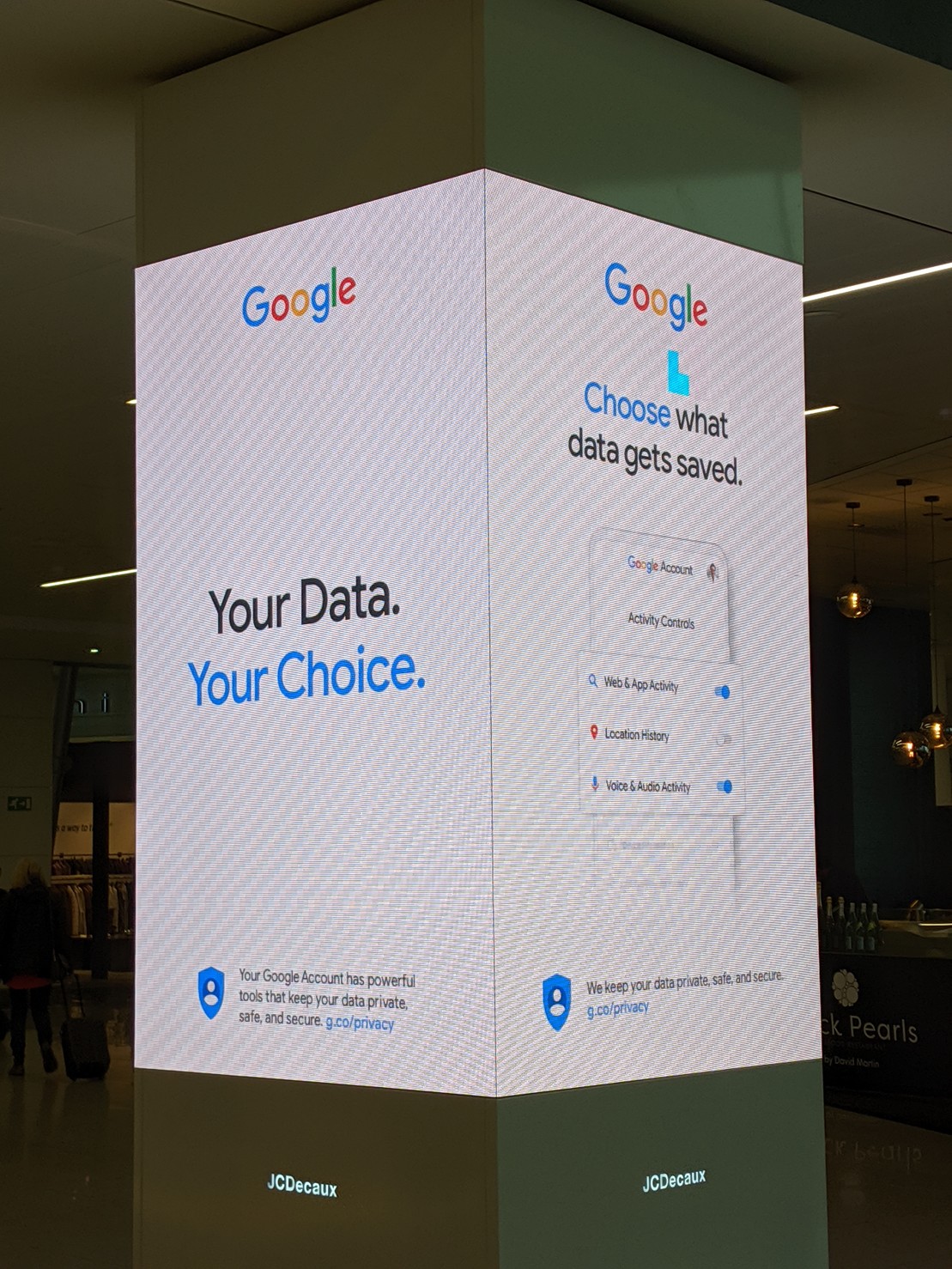
The #google ministry of truth cares about you.
https://www.theglobeandmail.com/business/article-sidewalk-labs-document-reveals-companys-early-plans-for-data/
Shamar
boosted

According to the BBC, Google, Apple and Facebook-owned Instagram are enabling an illegal online slave market by providing and approving apps used for the buying and selling of domestic workers in the Gulf.
While you are obviously free to ignore a POLITICS.txt it's pretty obvious it's a rather short sighted decision, at least from a professional perspective.
For example you might build your software upon a library specifically designed to be broken, just to put shame on developers who don't give a shit about politics! 😉
Another example: suppose you want to integrate #Jehanne into a #Web application. I will refuse your pull request, no matter how many people want it and no matter its quality.
The fact is that when you decide to depend on my work, you decide to depend on my goals. Writing down my political goals I let you know what to expect. You are free to ignore it, but at your own risk.
You should write a POLITICS.txt as you would write an architectural description of the application.
There's no prescription in it as there's no way to enforce it on the receivers.
It's just a set of statements that the authors accept to be judged upon, something they will use to measure the political achievements of the project.
Imagine a crypto library: it could be a technical success AND a political failure, and the politics.txt exists to make it easy for everyone to verify this condition.
The POLITICS.TXT should be a short list of easy to verify #political goals of the #software itself.
It's not a general declaration of authors' ethical values or party's affiliation.
It should briefly describe how the software project is intended to chance the society, through clear and verifiable statements.
To be honest I'm not sure you can have a template for this.
For example this is the one of #Jehanne https://github.com/JehanneOS/jehanne/blob/master/POLITICS.md
The word #Politics has been chosen according to its actual meaning: Politics is the art of serving the "#Polis", the society at large (as it was conceived in ancient Greek cities).
Over centuries it has been turned into a game of Power and it's not by chance that today #money drive political movements: money sublimates power and allows its accumulation on large scale.
So today it's important to rediscover Politics as a practical activity with clear and measurable #social goals.
Shamar
boosted

> From now on, all of my Free Software projects will contain a new file alongside with LICENSE.txt and README.txt: POLITICS.txt
~ http://www.tesio.it/2019/06/03/what-is-informatics.html
@Shamar really knocks out the quotables in this piece





Joined May 2019
