

Bibliolater 📚 📜 🖋 @bibliolater@qoto.org
Not a bot just a chap in his fifties who occasionally reads things.
Toots are humanities, science, non-fiction, books, maps, charts and graphs related. Some toots containing videos may also find their way into the timeline.
Toots or follows or boosts or mentions ≠ endorsements of any particular notion or notions.
Finis
Joined Nov 2022
@wigbert Sometimes I really do feel like that.
Oebele Vries (2015) Frisonica libertas: Frisian freedom as an instance of medieval liberty, Journal of Medieval History, 41:2, 229-248, DOI: https://doi.org/10.1080/03044181.2015.1034162 #openaccess #oa #history #histodon #histodons #medieval #medievodons #europe @histodon @histodons @medievodons
#Image attribution: art designer at PLoS, modified by Wikipedia users Nina, Beao, and JakobVoss, CC0, via Wikimedia Commons https://commons.wikimedia.org/wiki/Fil
Bibliolater 📚 📜 🖋
boosted

Blaise Pascal, the philosopher born just over 400 years ago, made what is know as "Pascal's Wager" about the existence of #god.
He argued for betting on the existence of God. “If you win, you win everything; if you lose, you lose nothing,” he wrote, positing that although one cannot know for certain whether or not God exists, we are better off believing in God’s existence than not.
His #philosophy is all of life is a wager.
And would you take his wager?
@literaryatlas I try and do that as well but invariably fail as there are too many distractions in life.
@pepikhipik@mastodon.world Alternating #books might be a good idea. I have never tried that before.
@paul I think I might be experiencing the latter rather than the former.
@agasramirez I do not give up however that might be to my detriment.
If you are reading a #book and find it really heavy going do you just give up and change #book or do you continue until the end? #books #bookstodon @bookstodon
Bibliolater 📚 📜 🖋
boosted

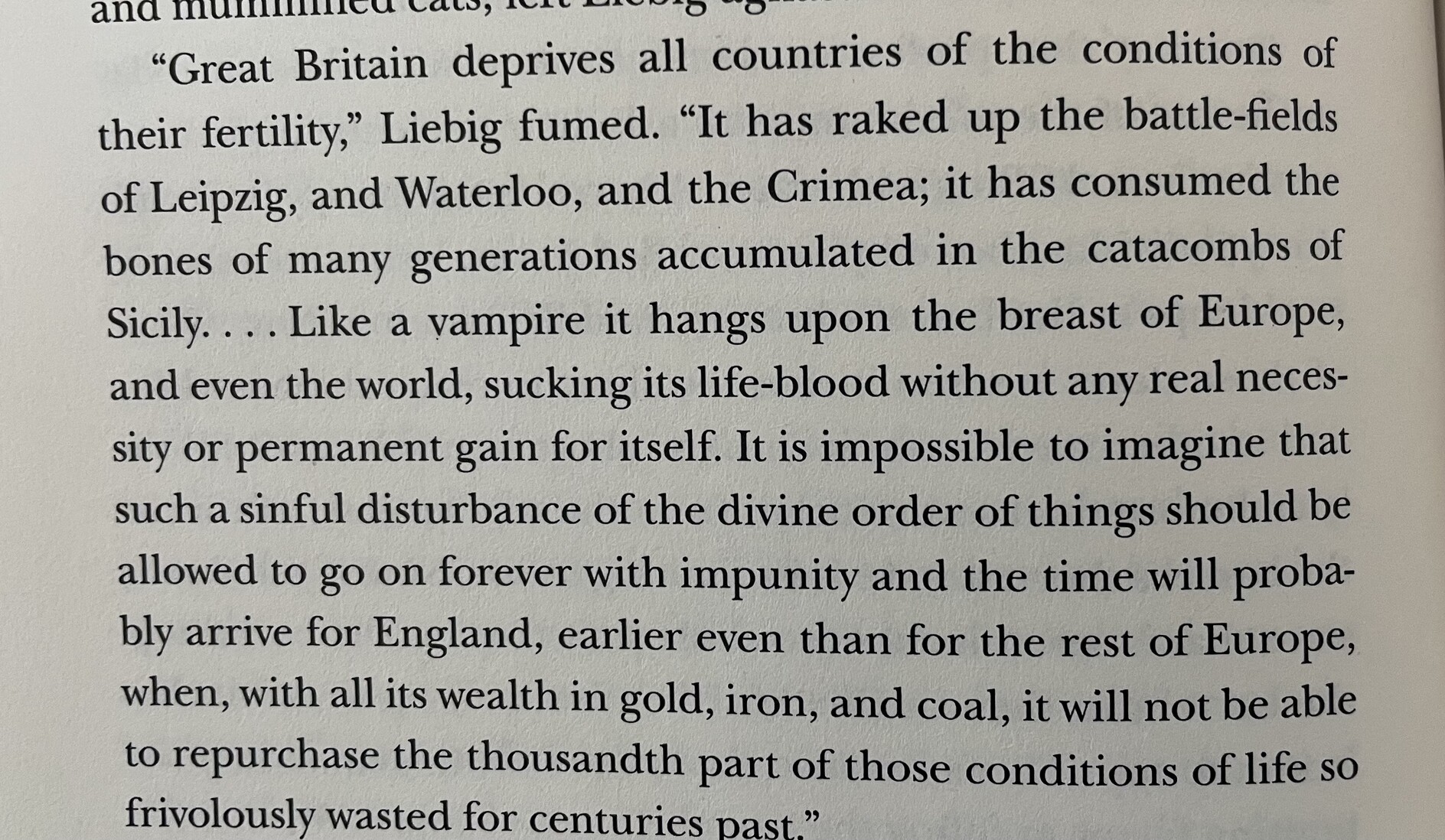
In Blue Machine, I cover how the structure of the ocean helped produce the vast guano reserves near Chile that were extracted by western nations in the mid-1800s. I’m just reading The Devil’s Element by Dan Egan (recommended!), which includes the grim source of phosphate fertiliser before the guano arrived: human bones from the battlefields of Waterloo, Crimea etc. This extraordinary quote by the biologist Liebig describes his fears about the ruined environment this was creating: #science #books
Marijke Van Der Veen (2022) All Change on the Land? Wheat and the Roman to Early Medieval Transition in England, Medieval Archaeology, 66:2, 304-342, DOI: https://doi.org/10.1080/00766097.2022.2129753 #openaccess #oa #history #histodon #histodons #medieval #medievodons #archaeology #archaeodons #england @histodon @histodons @medievodons @archaeodons
#Image attribution: art designer at PLoS, modified by Wikipedia users Nina, Beao, and JakobVoss, CC0, via Wikimedia Commons https://commons.wikimedia.org/wiki/File:Open_Access_logo_PLoS_transparent.svg
"Plans for a cenotaph for the great scientist would have been the tallest building in the world." https://www.bbc.com/future/article/20160318-the-memorial-to-newton-that-would-have-eclipsed-the-pyramids #video #history #architecture #science #histodon #histodons #C18th @histodon @histodons @science
"Cambridge University Library holds the largest and most important collection of the scientific works of Isaac Newton (1642-1727). They range from his early papers and College notebooks through to the ground-breaking Waste Book and his own annotated copy of the first edition of the Principia." https://cudl.lib.cam.ac.uk/collections/newton/1 #History #Archives #Library #Science #histodon #histodons #histsci #Maths #Math #Mathematics #Physics @histodon @histodons @science @physics
Bibliolater 📚 📜 🖋
boosted

Drought In Europe Mid-June
Source: European Drought Observatory (EDO), for the period of June 11-20, most recent data available
#News #EuropeanNews #Europe #ClimateChange #Drought #Droughts
Bibliolater 📚 📜 🖋
boosted

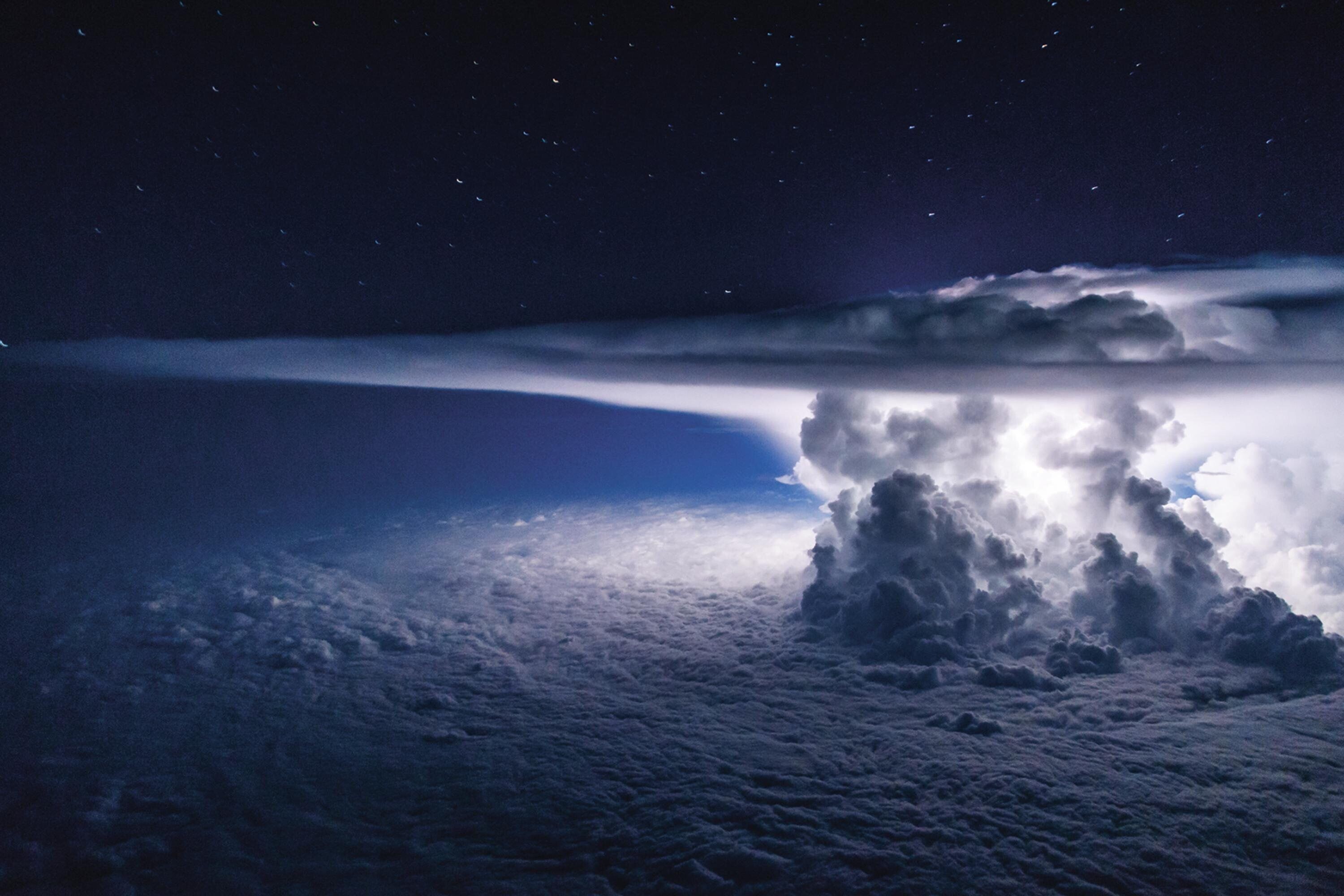
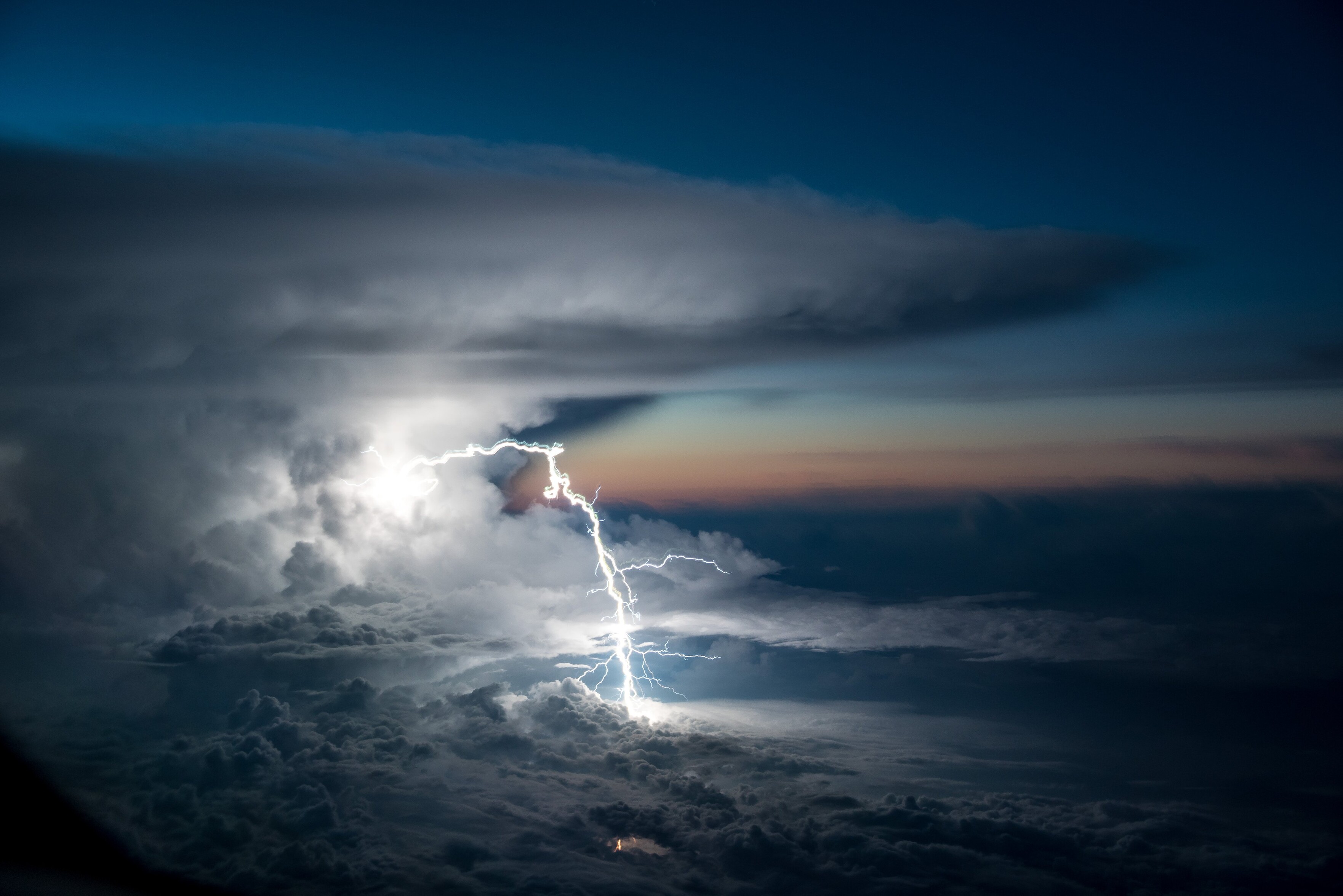
Amazing thunderstorm photos captured at 37,000 feet by airline pilot Santiago Borja.
Web: https://www.santiagoborja.com/
Instagram: https://www.instagram.com/santiagoborja/
Bibliolater 📚 📜 🖋
boosted

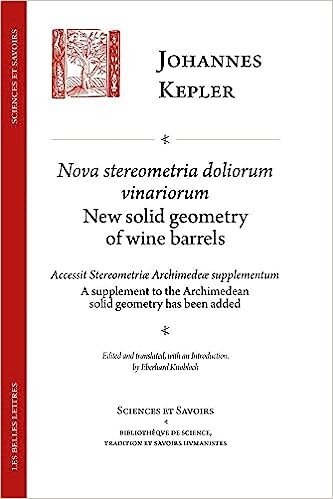
Besides doing a bunch of useless research on the motion of planets, Kepler did some practical work on the volume of wine barrels. The story is interesting! Roberto Cardil writes:
"Kepler had several children before his first wife died. In 1613, he married for the second time in a celebration in Linz, Austria. Kepler bought a barrel of wine for the wedding but questioned the method the wine merchant used to measure the volume of the barrel and thus determine the price. In consequence, afterwards Kepler set out both to determine the correct volume of a wine barrel or cask, and to find the proportions that optimize the volume of such a barrel."
To determine the volume of a wine barrel, Kepler thought of any solid body as made up of thin layers, took the sum of the volumes of these layers, and then took a kind of limit where the thickness of these layers became infinitesimal.
Otto Toeplitz wrote:
"Working out finer approximations of various barrel shapes, Kepler consulted Archimedes and discovered that his own method of indivisibles had enabled him to obtain results in a far simpler and more general way than Archimedes, who had been struggling with cumbersome and difficult proofs. What he did not suspect was that Archimedes, too, had found his results by the same method of indivisibles (for his book The Method was lost until 1906!)."
I guess these "indivisibles" are like "infinitesimals".
For more, read this:
Roberto Cardil, Kepler: The Volume of a Wine Barrel, https://www.maa.org/press/periodicals/convergence/kepler-the-volume-of-a-wine-barrel
The "optimization" problem is not quite clearly explained here, but it seems to be maximizing the volume of a barrel while keeping its volume as measured by the wine merchant constant! 😈
@elsdraeger Whenever speaking of the food industry, the words multinational corporate profits should never be far behind.
"James Clerk Maxwell (1831-1879) was one of the most important mathematical physicists of all time, after only Newton and Einstein. Within a relatively short lifetime he made enormous contributions to science which this lecture will survey." https://youtu.be/v40OcJ7rfSE #Youtube #Video #History #Science #Lecture #Physics #Maths #Math #Mathematics #victorian #histodon #histodons @histodon @histodons @science
Bibliolater 📚 📜 🖋
boosted




Tonight's #YouTube watch:
best physics equation | virial theorem | gravothermal catastrophe
https://www.youtube.com/watch?v=9CdE5a3xyxE
This person has an amazing sense of comic timing, and a perfect deadpan delivery ("It's fine"), and manages to make physics that I juuuuust barely understand (some of, sometimes) extremely fun.
Unexpectedly delightful.
Not a bot just a chap in his fifties who occasionally reads things.
Toots are humanities, science, non-fiction, books, maps, charts and graphs related. Some toots containing videos may also find their way into the timeline.
Toots or follows or boosts or mentions ≠ endorsements of any particular notion or notions.
Finis
Joined Nov 2022
