

Bibliolater 📚 📜 🖋 @bibliolater@qoto.org
Not a bot just a chap in his fifties who occasionally reads things.
Toots are humanities, science, non-fiction, books, maps, charts and graphs related. Some toots containing videos may also find their way into the timeline.
Toots or follows or boosts or mentions ≠ endorsements of any particular notion or notions.
Finis
Joined Nov 2022
Bibliolater 📚 📜 🖋
boosted

As far as Newton could tell, the ratio m_g / m_i did not vary with composition. He concluded that the same mass appears in both his laws of motion and his universal law of gravitation.
Of course, this was not a very precise test! Later generations of scientists would scrutinize Newton's claim with increasing precision, most notably Baron Loránd Eötvös in a series of brilliant experiments that began in 1885.
Bibliolater 📚 📜 🖋
boosted
He tested it using pendulums. The period of a simple pendulum – the amount of time it takes to swing back and forth – depends only on its length and the acceleration due to gravity of the mass attached to the end.
If the inertial and gravitational properties of masses depend on their composition, this should show up in the periods of pendulums with identical lengths and masses made of different materials.
Bibliolater 📚 📜 🖋
boosted
Newton appreciated that this should not be taken for granted. He imagined an object might have an "inertial mass" m_i for his laws of motion, and a "gravitational mass" m_g for his law of gravity, and they may not be the same for objects of different composition.
If that were the case, different objects would accelerate at different rates, proportional to their ratio m_g / m_i. Newton knew, based on the work of Galileo and Huygens, that this ratio must be very nearly equal to 1.
Bibliolater 📚 📜 🖋
boosted
Now, Newton's 3rd law of motion says that if object A exerts a force on object B, then B exerts the same amount of force on A, but in the opposite direction. It follows that the gravitational force Earth exerts on an apple must also be proportional to the mass of the Earth.
The dependence on mass is a bit weird. In Newton's laws of motion, mass quantifies how an object resists changes to its motion. But in his law of universal gravitation it controls how much an object participates in gravity!
Bibliolater 📚 📜 🖋
boosted
If gravity causes two objects with different masses to accelerate at the same rate, it follows that the gravitational force each one experiences must be proportional to its mass.
So Earth exhibits a larger gravitational force on a cannonball than on, say, an apple. But it is also more difficult to change a cannonball's motion. Drop them both and, in the absence of air resistance, they accelerate downward at the same rate.
Bibliolater 📚 📜 🖋
boosted
The first part says the gravitational force between objects is proportional to the product of their masses.
Galileo, and later Huygens, had established an important fact: Earth’s gravity causes objects to accelerate at the same rate, independent of their mass.
Newton’s 2nd law of motion, stated earlier in the Principia, equates an object’s acceleration to the force it experiences divided by its mass: a = F/m. Here, mass quantifies inertia, an object's tendency to resist changes in its motion.
Bibliolater 📚 📜 🖋
boosted

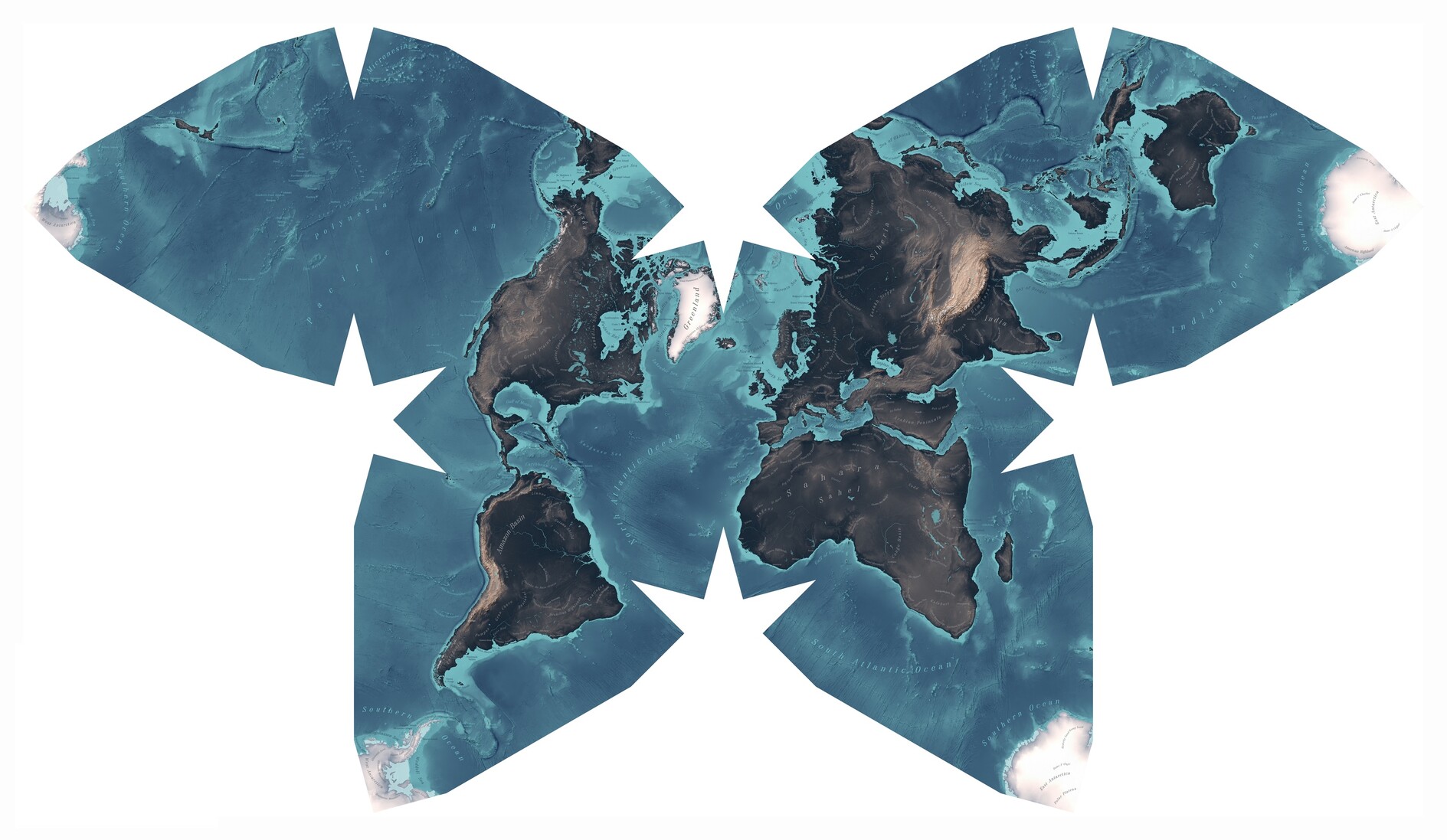
The wonderful Waterman Butterfly World Map that @fabian and I created a few years ago from scratch is now available for download!
As I wrote back in 2019: »I always wanted to design my own maps. But it seemed difficult and trivial at the same time. […] Then I discovered the Waterman Butterfly projection. And I was in love.«
If you want to find out more about our design process and the technical challenges (or if you just want to download the map) read on:
Bibliolater 📚 📜 🖋
boosted
Newton's insight gave a precise explanation of hundreds of years of astronomical observations. Despite being superseded by general relativity, it is sufficiently accurate that we used it to land people on the moon.
What does it mean, and how did he arrive at it?
Bibliolater 📚 📜 🖋
boosted
One of the main results contained in the Principia is Newton's "Law of Universal Gravitation."
Newton describes gravitation as producing a force between two objects "according to the quantity of solid matter which they contain and propagates on all sides to immense distances, decreasing always as the inverse square of the distances."
Some of this had been explored by earlier scientists, but this is the first time all the pieces come together in a consistent and quantitative explanation.
Bibliolater 📚 📜 🖋
boosted
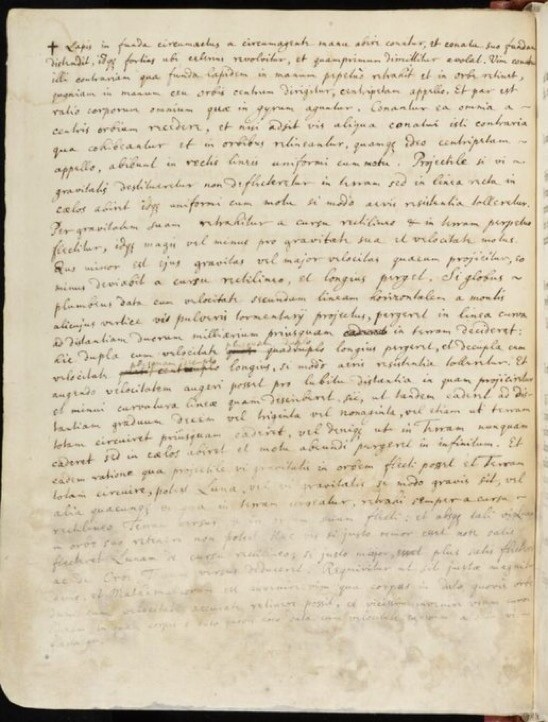
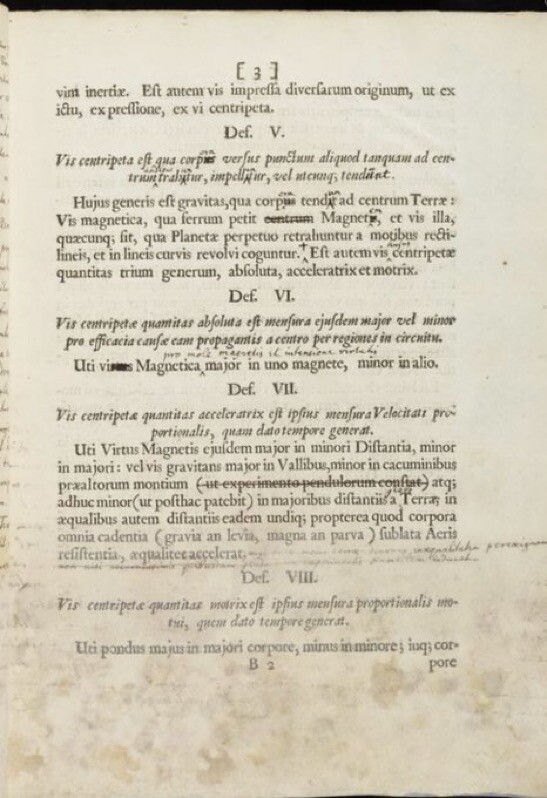
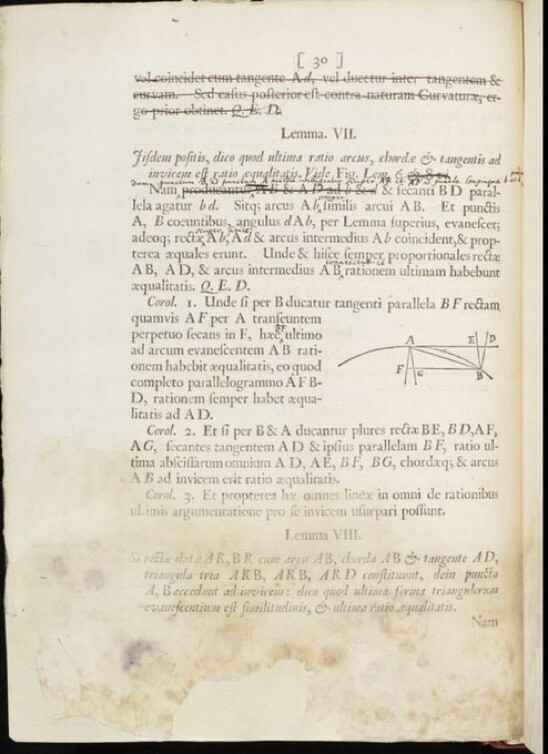
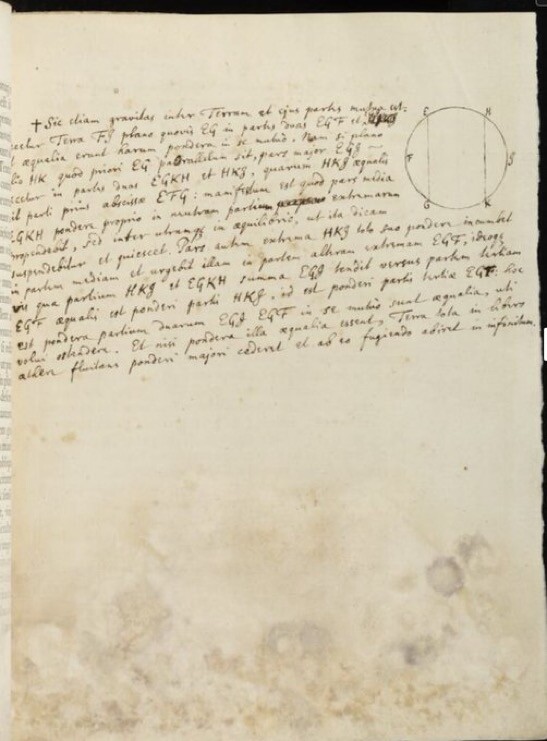
You can thumb through one of Isaac Newton's personal copies of the Principia, courtesy of the Cambridge Digital Library.
Donated by the 5th Earl of Portsmouth in 1872, it contains many of Newton's own notes, annotations, and corrections.
Bibliolater 📚 📜 🖋
boosted
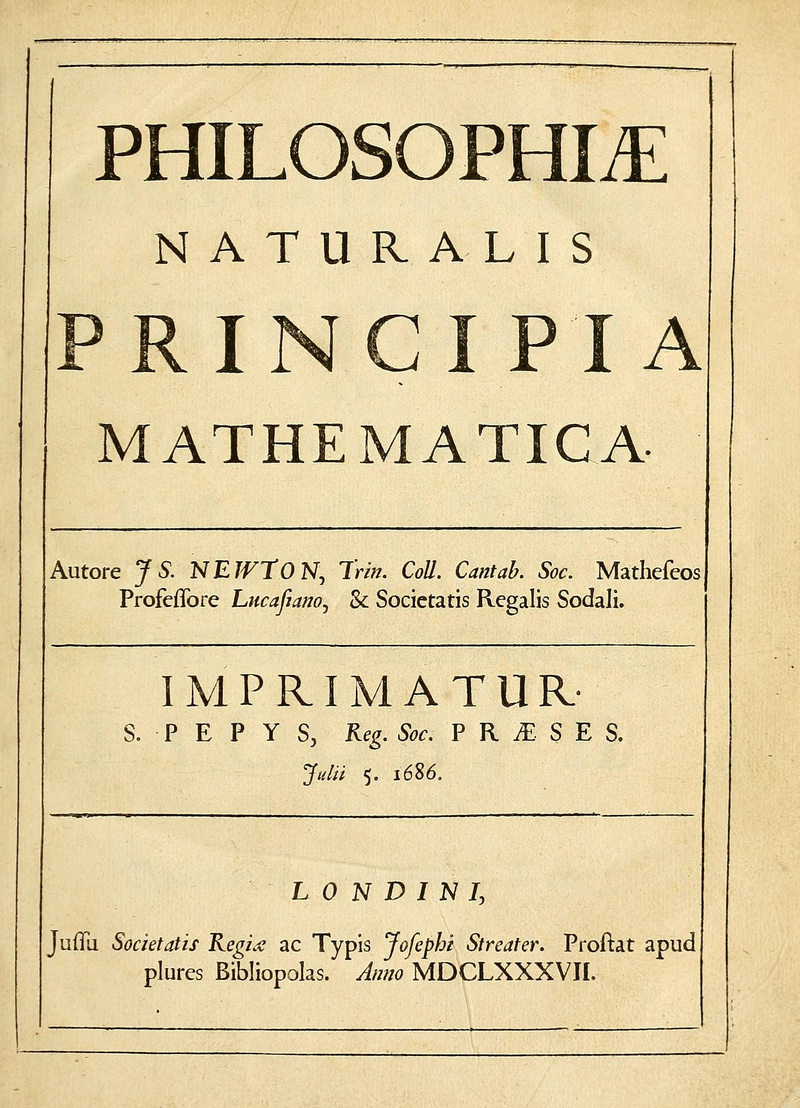
Sir Isaac Newton's "Philosophiæ Naturalis Principia Mathematica" was published #OTD in 1687. Often referred to as just “the Principia,” it presents Newton’s laws of motion and his universal law of gravitation.
336 years old and we still teach its main results!
One of the difficulties that a cohort of new users to #mastodon will face is that there is no #algorithm controlling the content they consume. It makes the job of populating timelines, a personal effort. #socialmedia #fediverse
Bibliolater 📚 📜 🖋
boosted

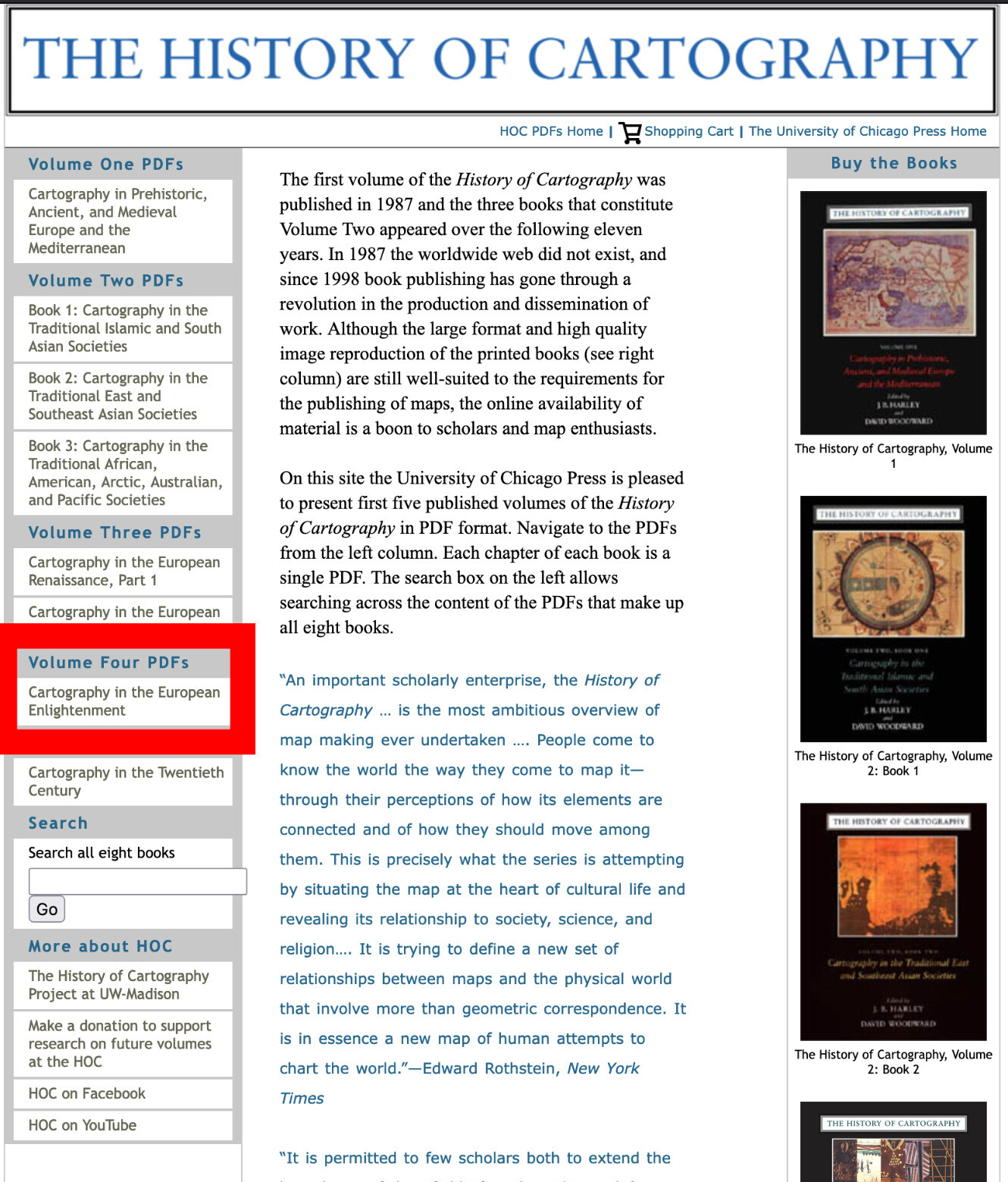
CARTOGRAPHY IN THE EUROPEAN ENLIGHTENMENT = volume 4 of The History of Cartography series is now, as of today, FREELY AVAILABLE !!!!!
Goto https://press.uchicago.edu/books/HOC/index.html and click the link for volume 4.
WOW WOW WOW
The prettiest of all the volumes, if I say so myself. All thse mss in full color!
Bibliolater 📚 📜 🖋
boosted

The start of a new Renaissance Mathematicus series
https://thonyc.wordpress.com/2023/07/05/from-τὰ-φυσικά-ta-physika-to-physics-i/
Rabin, S. J. (2014). Early Modern Jesuit Science. A Historiographical Essay, Journal of Jesuit Studies, 1(1), 88-104. doi: https://doi.org/10.1163/22141332-00101006 #openaccess #oa #history #earlymodern #histodon #histodons #science #histsci #catholic #church #maths #math #mathematics #astronomy #physics #cartography #telescope @histodon @histodons @science
#image attribution: art designer at PLoS, modified by Wikipedia users Nina, Beao, and JakobVoss, CC0, via Wikimedia Commons https://commons.wikimedia.org/wiki/File:Open_Access_logo_PLoS_transparent.svg
Antunes, C., & Negrón, R. (2022). The Dutch Republic and the Spanish Slave Trade, 1580-1690. TSEG - The Low Countries Journal of Social and Economic History, 19(2), 17–44. https://doi.org/10.52024/tseg.12315 #history #histodon #histodons #europe #spain #dutch #earlymodern #17thcentury #C17th #research #article #social #economic @histodon @histodons
Bibliolater 📚 📜 🖋
boosted

#OTD in 1687, Sir Isaac Newton published his magnum opus, the Principia — one of the most important works in the history of science.
It was in the Principia, or the Philosophiæ Naturalis Principia Mathematica, that Newton first set out in mathematical terms the principles of force, time and motion, and revolutionized methods of scientific investigation. via @iaeaorg
Principia mathematica (3 vols) by Alfred North Whitehead & Bertrand Russell is being proofed by @DProofreaders.
Bibliolater 📚 📜 🖋
boosted

The oldest humans identified as riders (so far). #bioanthropology #horse #archaeology #openaccess
The authors report five Yamnaya individuals well-dated to 3021 to 2501 calibrated BCE from kurgans in Romania, Bulgaria, and Hungary, displaying changes in bone morphology and distinct pathologies associated with horseback riding.
"Ninth Dedekind number discovered: Scientists from the Universities of Paderborn and Leuven solve long-known problem in mathematics" https://www.eurekalert.org/news-releases/993662 #Maths #Math #Mathematics #Science @science
Bibliolater 📚 📜 🖋
boosted



Google Says It'll Scrape Everything You Post Online for AI
https://gizmodo.com/google-says-itll-scrape-everything-you-post-online-for-1850601486
Not a bot just a chap in his fifties who occasionally reads things.
Toots are humanities, science, non-fiction, books, maps, charts and graphs related. Some toots containing videos may also find their way into the timeline.
Toots or follows or boosts or mentions ≠ endorsements of any particular notion or notions.
Finis
Joined Nov 2022
