Think that paying to have the #blockchain say that you are the “owner“ of a JPEG everyone can see on the internet was often silly enough? Think again. #KevinRose shares the good news that legendary collectibles can now be sliced into tokens so that we poor late arrivers can pay to have a blockchain say that we are the “owners“ of a _little piece_ of what _another_ blockchain says is the legitimate instance of a JPEG everyone can see on the internet.
Progress!
All three people (both hosts included) confessed that they are not actually “bankless”. “Unfortunately we have to keep a Wells Fargo.” Of course you do.
Bringing this up is a bit cruel (I know that the name of the podcast is aspirational, not the statement of a state that is currently achievable). But it's funny that in a podcast named “Bankless”, no-one is bankless.
The hosts ask #KevinRose why $DOGE is still a thing. Answer (from memory, and paraphrasing): the power of community, backing a project, a shared purpose, building something together, blah blah blah.
Too kind, too rosy (too cynic and self-serving?)
(Paraphrasing) At some point in the episode, the two hosts and the guest almost interrupt each other to heatedly express their shared conviction (and to _celebrate_) that the purpose of many of these projects (chains, collectibles, DAOs, whatever) _does not matter_. The goal, the use case, may be a mystery. And that, for them, is a good thing.
Yeah.
First (and this is not specific to this episode, but a constant in the #NFT craze): isn't anyone else annoyed and suspicious of that sudden interest that everyone seems to have now in #art, artists, and galleries?
I keep on hearing and reading from all these #crypto nerds and geeks, who have been obsessed with technology their whole life, and never before, to my knowledge, shared a book or an article about the art world, bought a painting, attended a live art performance, befriended an artist, bought a physical record (they went from Napster to BitTorrent to Spotify), or set foot in a gallery IRL… all these people are suddenly SO excited about novel graphic artists, live happenings, and exhibitions of generative art, SO eager to buy, support, collect and showcase #art, and SO convinced that everyone out there shares their very whimsical new passion…
Isn't that wishful thinking, opportunistic, and fake?
I'll say it upfront: I like #blockchains. I think that they're exciting #tech and that there'll be use cases for them — and I have invested a little bit in a few crypto projects (eg, $BTC).
However.
The amount of nonsense in the #crypto world in general, and around #NFT's in particular, is astonishing. Proponents and advocates should be the first to call BS, for our own benefit.
I listened to [this recent #episode of the #Bankless #podcast with #KevinRose (of Digg fame)](http://podcast.banklesshq.com/95-how-kevin-rose-invests-in-web3), and in that spirit, I'll mention here five idiotic or at least naïve ideas expressed in the show:


tripu
boosted

Old books are in the public domain, which means publishers and authors don't make money on them, which means they don't get promoted as much, which means fewer people hear about them and read them.
Also, people may want to read about what they are most familiar with, which is recent/current events. Also, very old works are written in a style that takes more work to read or that requires more training to understand. Even English works that are over a century or so old have many unfamiliar words because language changes and things that were once familiar have now become esoteric.
Some people like that challenge of figuring those things out, but many don't and would rather just breeze through some popular novel.
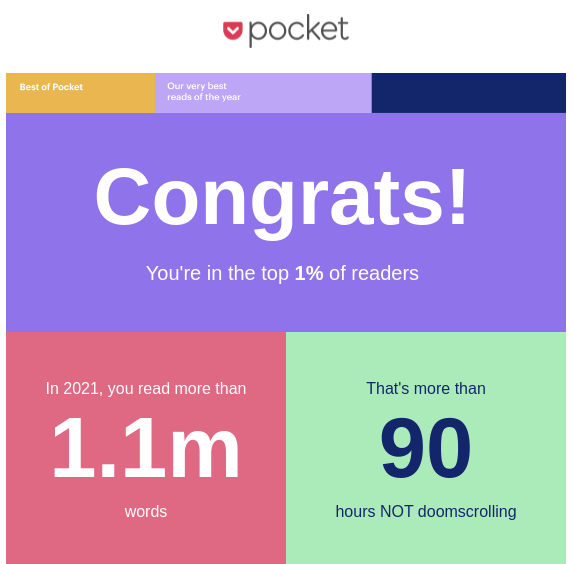
#Pocket says that in #2021 YTD I read > 1,100,000 words using the app, and that I'm in the top 1% of readers 🤷
Has everyone seen the exact same message? 😆
#Books written “recently” (say, within the last decade or two) are still being evaluated by critics and readers. Their apparent merits might prove exaggerated in the end. There might even be plagiarism or falsities that haven't been detected yet. No-one has had the time to fully digest them and grow up with them. Very few parents have passed them along to their children as a precious thing. The values or the insights they contain may not survive one generation.
**Read old.**
#Goodreads has been pestering me about “the best #books of 2021”; first to vote, then to see the results — but I couldn't care less.
I try to read the best there is since writing exists. That often means reading works written half a millennium ago, and sometimes even as far back as the 8th century BCE. How could it be otherwise?
The year 2021 alone represents < 0.04% of time elapsed since humans started writing and reading. Even if we assumed that book production, or even book “quality”, increase over time somehow (questionable), I can't understand the disproportionate interest in novelty most people seem to have.
tripu
boosted

@ElMichel Es una maravilla :)
tripu
boosted

I just heard a little honk and was like, What notification was THAT, I do not recognize it, and turns out there was a literal goose outside
tripu
boosted

Nothing is so firmly believed, as what we least know
#MichelDeMontaigne
I just finished reading the first volume of the #Essays by #MichelDeMontaigne, arguably [the most important non-fiction work in all of world #literature](https://thegreatestbooks.org/nonfiction).
Here are all my highlights (in 🇪🇸 #Spanish):
tripu
boosted







The best reason to follow political trends (maybe the only one) is to prepare yourself for the future.
Do you live where you would like to live if/when this happens?
https://mobile.twitter.com/balajis/status/1467060990751621120
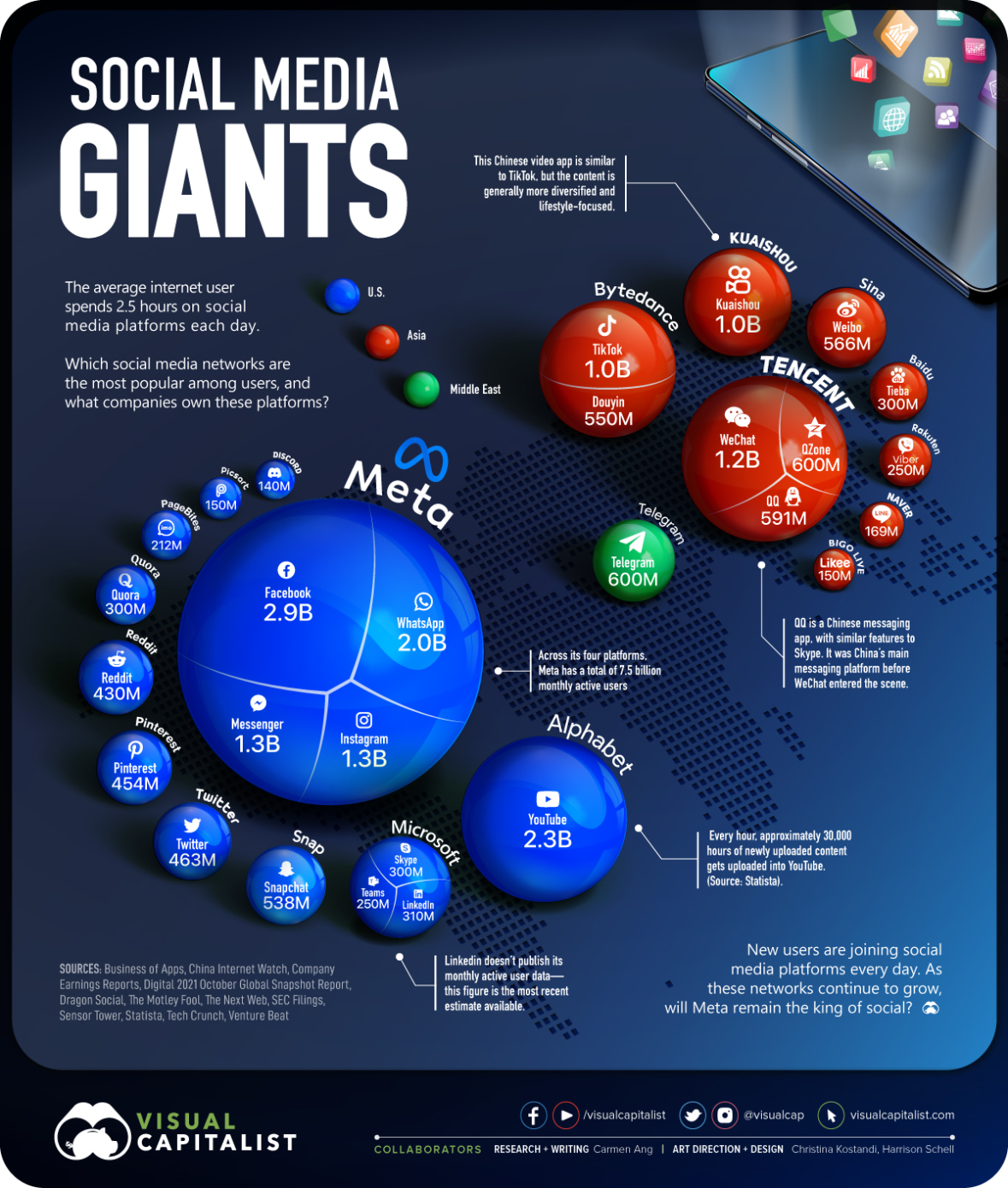
Speaking of #socialmedia… another beautiful #dataviz by #VisualCapitalist
https://www.visualcapitalist.com/ranked-social-networks-worldwide-by-users/
Go, #fediverse, go!