

🎓 Doc Freemo  🇳🇱
@freemo@qoto.org
🇳🇱
@freemo@qoto.org
- UFoI Member
- http://UFoI.org/u/freemo/
- Website
- http://JeffreyFreeman.me
- Gitlab
- https://git.qoto.org/freemo
Admin
Jeffrey Phillips Freeman
Innovator & Entrepreneur in Machine Learning, Evolutionary Computing & Big Data. Avid SCUBA diver, Open-source developer, HAM radio operator, astrophotographer, and anything nerdy.
Born and raised in Philadelphia, PA, USA, currently living in Utrecht, Netherlands, USA, and Thailand. Was also living in Israel, but left.
Pronouns: Sir / Mister
(Above pronouns are not intended to mock, i will respect any persons pronouns and only wish pronouns to show respect be used with me as well. These are called neopronouns, see an example of the word "frog" used as a neopronoun here: http://tinyurl.com/44hhej89 )
A proud member of the Penobscot Native American tribe, as well as a Mayflower passenger descendant. I sometimes post about my genealogical history.
My stance on various issues:
Education: Free to PhD, tax paid
Abortion: Protected, tax paid, limited time-frame
Welfare: Yes, no one should starve
UBI: No, use welfare
Racism: is real
Guns: Shall not be infringed
LGBT+/minorities: Support
Pronouns: Will respect
Trump: Moron, evil
Biden: Senile, racist
Police: ACAB
Drugs: Fully legal, no prescriptions needed
GPG/PGP Fingerprint: 8B23 64CD 2403 6DCB 7531 01D0 052D DA8E 0506 CBCE
Joined Jul 2018
No it doesnt, but it would be contrary to such principle when the editorial board has bias int heir narrative overall. Its fine to share an opinionated and biased article, when labeled as such, under the newspaper (editorial), so long as opposing view supporting the other candidates are equally welcomed and highlighted. So long as the overall narrative remains neutral there is no problem with individual articles having a bias, and being labeled as such.
🎓 Doc Freemo 🇳🇱
boosted
🇳🇱
boosted
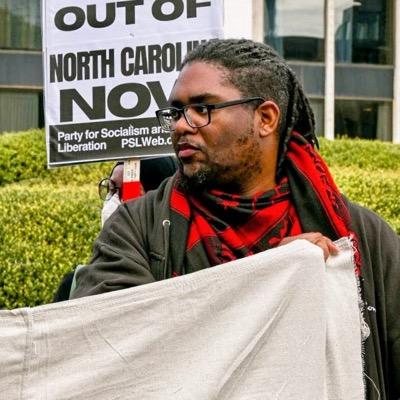
Even if my vote is a protest vote (which it isn't), I still have a right to cast it.
My vote WILL count toward the candidate I'm voting for.
It doesn't not count against your candidate.
It doesn't count toward a candidate you don't like or I didn't vote for.
So, please, for the last time...
Sit your whole ass down with this 3rd party voting bullshit!
Stay mad that I won't vote for genocide, capitalism, imperialism, and racism!
Thank you for coming to my TED Talk!
I have two criteria:
1) No praising hitler
2) No past support of genocides.
Unfortunately that means I have to vote third party.
How often does a day go by where the oldest person in the world dies on that day?
I think there are many issues at play here, some of which i dont have enough info to speculate on, others I probably do.
A news paper can have an "editorial" section with opinions of course, the key being that it doesnt favor one narrative or set of opinions over another. The proper news section of course is held to a higher standard and shouldnt express opinion of the journalist at all, an the journalist themselves need to be impartial.
I have made who I endorse quite clear on my feed many many times, and it is neither Trump nor Harris.
Wow, not even going to respond to that. I think it stands as absurd in its own right, doesnt need me to expand on that... Good luck with that.
> The notion that past newspapers were fair, balanced, and neutral is a modern concoction, not a historical one.
That wasnt the claim. The claim is that there were principles of journalistic integrity, not that all the newspapers managed to live up to that standard.
I can speak the same for the constitution. The principles were great "all men created equal". That doesnt change as a good principle or standard just because people didnt always follow it.
@maccruiskeen Fair. I am in no way claiming his motivations are good or not, I dont know that guy. All I am saying is the choice is the correct ethical one, regardless if ethics are what motivated the choice or not.
Now if he IS endorsing Trump and **only** not endorsing Harris than as far as ethical decisions go, that wouldnt be one either.
No, newspapers that didnt follow the ethics were, at the time, called "yellow rags" and generally treated by the general public as disreputable. Obviously in modern times journalistic integrity is at an all time low, so this sort of deplorable behavior is sadly the norm now.
Remember these rules were established by the society most journalists were a part of, so it was the consensus ethically.
For at least a century. One such example is the 1923 ethical rules adopted by the American Society of Newspaper Editors. Though the concept, perhaps not codified, goes back much farther than that.
@dangillmor News agencies should not have endorsements for any candidate, that is contrary to what journalistic integrity stands for.
The owner made the right choice.
Almosy everyone i ever met in person would fall under all of these categorie
The biggest lie the democrats (and republicans) convinced the world of is that you should vote for them, even if they are evil, because they might win.
Interesting fact of the day: Most bee larvae, including honey bees, don't and can't poop until right before they spin their cocoon. Basically the upper and lower part of their intestine are seperate and there is no where for the poop to go. Right before they form their cocoon their intestinal tract connected, they poop their first and only poop as a larvae then spin their cocoon.
The reason for this is because all the food the larvae will eat is in the cell with them. As such if they were to poop it would contaminate the food. So by only pooping once, after the food is all eaten, it keeps the food safe and clean.
#Nature #Biology #Science #Stem #Bee #Bees #Honeybee #Honeybees
> However:
> There also is (we can also define and measure) "radar acceleration", https://arxiv.org/abs/0708.0170 for instance, i.e. _of one specific participant_, _at some particular event_, _in reference to some other participant_.
When we say that something is not relative in the context of relativity we just mean there is some [privileged value. You can always measure something in a relative way even if it does have some absolute value with meaning.
> ... (cue drumroll) ...
>
> motion!, i.e. having a choice of different reference systems; with members of distinct ref. systems generally not remaining pairwise in coincidence wrt. each other, nor (pairwise) at rest wrt. each other.
The point is that if you have some object with a magnetic field that magnetic field can look like an electric field due to relativity effects. This is unrelated to the fact that a moving field will give off the other field. Also to be clear it isnt all motion, only acceleration causes this not velocity.
> Please discuss this statement for the case of
> - a regulation size <a href="https://en.wikipedia.org/wiki/American_football_field">American football field</a> (presumably strictly 120 yards long, with two goals standing at rest wrt. each other this exact distance apart on the two endlines)
Since we dont operate at near-light speeds, or in extreme gravitational gradients the effects of relativity are small enough that they can be ignored for us in every day life. But the point is if i were going fast enough the effect can become significant and a football field may be a wildly different length depending on the conditions it is expierncing (speed, gravity, etc).
> Please discuss this statement for the case of muons (which -- pretty much always, so far -- were found to have <a href="https://pdglive.lbl.gov/Particle.action?node=S004">mean life duration \(\overline{\tau_{\mu }}\)</a> of about 2.2 micro seconds ...
Muons, like anything with a half-life at the quantum level, including radioactive material, does not have a fixed half-life like you suggest. The half-life described is only when the observer is in the same frame of reference as the muon. If the observer or muon are moving relative to eachother the half life changes and is no longer a constant.
🎓 Doc Freemo 🇳🇱
boosted
🇳🇱
boosted


@freemo Doc Freemo wrote (Oct 18, 2024, 07:04 PM):
> [...] However there is absolute acceleration (which is key to Gen. #Relativity).
Yes, there is (we can define and measure) (the magnitude of) _acceleration_ _of a specific participant_, _at some particular event_, as the <a href="https://en.wikipedia.org/wiki/Circumcircle#Other_properties">radius of cuvature</a> of _the_ time-like worldline traced by that participant; by means of a Cayley-Menger determinant as expression of <a href="https://en.wikipedia.org/wiki/Heron%27s_formula#Alternate_expressions">Heron's fomula term</a>; cmp. https://mathstodon.xyz/@MisterRelativity/109622725097842951
However:
There also is (we can also define and measure) "radar acceleration", https://arxiv.org/abs/0708.0170 for instance, i.e. _of one specific participant_, _at some particular event_, _in reference to some other participant_.
> [...] A magnetic field arrises from an electric field [...] and vice versa [...] due to
... (cue drumroll) ...
motion!, i.e. having a choice of different reference systems; with members of distinct ref. systems generally not remaining pairwise in coincidence wrt. each other, nor (pairwise) at rest wrt. each other.
p.s.
> * There is no absolute distance
Please discuss this statement for the case of
- a regulation size <a href="https://en.wikipedia.org/wiki/American_football_field">American football field</a> (presumably strictly 120 yards long, with two goals standing at rest wrt. each other this exact distance apart on the two endlines)
- and a row of cars, driving along a sideline at constant speed \(\beta ~ c\) ...
> * There is no absolute time
Please discuss this statement for the case of muons (which -- pretty much always, so far -- were found to have <a href="https://pdglive.lbl.gov/Particle.action?node=S004">mean life duration \(\overline{\tau_{\mu }}\)</a> of about 2.2 micro seconds ...
That isnt what I said.. I said everyone **has been** a fetus and thus is open to an opinion. Thankfully we **can** think now and thus have an opinion as someone who could have been effected by such a decision.
- UFoI Member
- http://UFoI.org/u/freemo/
- Website
- http://JeffreyFreeman.me
- Gitlab
- https://git.qoto.org/freemo
Admin
Jeffrey Phillips Freeman
Innovator & Entrepreneur in Machine Learning, Evolutionary Computing & Big Data. Avid SCUBA diver, Open-source developer, HAM radio operator, astrophotographer, and anything nerdy.
Born and raised in Philadelphia, PA, USA, currently living in Utrecht, Netherlands, USA, and Thailand. Was also living in Israel, but left.
Pronouns: Sir / Mister
(Above pronouns are not intended to mock, i will respect any persons pronouns and only wish pronouns to show respect be used with me as well. These are called neopronouns, see an example of the word "frog" used as a neopronoun here: http://tinyurl.com/44hhej89 )
A proud member of the Penobscot Native American tribe, as well as a Mayflower passenger descendant. I sometimes post about my genealogical history.
My stance on various issues:
Education: Free to PhD, tax paid
Abortion: Protected, tax paid, limited time-frame
Welfare: Yes, no one should starve
UBI: No, use welfare
Racism: is real
Guns: Shall not be infringed
LGBT+/minorities: Support
Pronouns: Will respect
Trump: Moron, evil
Biden: Senile, racist
Police: ACAB
Drugs: Fully legal, no prescriptions needed
GPG/PGP Fingerprint: 8B23 64CD 2403 6DCB 7531 01D0 052D DA8E 0506 CBCE
Joined Jul 2018
