
#FreeSchool ⬅️ (see hashtag) @freeschool@qoto.org
#FreeSchool = #Notes #Quotes from #Books #Videos #Talks #Websites all around #DIY Care# and #Caring as our main #Politics / #Politics
#Degrowth / PostGrowth
#WellbeingEconomy #DoughnutEconomics
#CaringEconomy / #CareEconomy / #Partnerism
"Free School" is a term for a movement born from the 1960's / 70's using educational living & learning practice towards #Caring & #DIY with all others (all at the same time - not an after-thought or specialism in 1 field or person who is a #compartmentalised person ignoring others in other fields). Caring to involves more things, increasingly aiming towards everything...
Posts are 1-line #Notes and #Quotes that links all other things (it's all relative).
Long comments use CW to shorten post vertically and add a 'show more' button to reveal more text if you want it. Long posts might seem bad but it's giving chance to more connection and understanding.
All things towards #Freedom (life moving from Shorter to Deeper thought).
Freedom doesn't come from short-depth lifestyles / short lines of text / ignoring / #inaction. Not less communication between lovers of similar things. MORE!)
#FreeSchool = Learning Together 🔁
#FreeSchool = Working Together 🔁 (eventually + I do Free work for Freedom.
#FreeSchool = Co-Operating & #DIY Solutions 🔁
See My #FreeSchool (Hashtag) for latest examples anytime. Or keep open and refresh from time to time:
https://qoto.org/web/tags/freeschool
#FreeSchool ➡ Increment Talking + Peacefully solve everything.
TLDR - Inaction = Fascism
Trust comes from "slowly but surely"... Doesn't have to be all-in, but peace doesn't come from one-way short messaging on 'social' Mastodon either - collecting memes and cats only is limited!
Remember we need develop better humans as well as 'develop' code on computers etc.
☮ Peace needs more... even to save all types of cats!
Get in touch - I'm someone that cares for everything because it's all human-related...
Human #chats welcome - I using #Jitsi audio chat which uses JUST browser (ANY PLATFORM + 2minutes to enter !)
(i.e. no-install / no account / no google / instant / privacy-respecting / safe-enough, etc!) Really the best out there - any platform / device! Instant audio chat !
Just ask for a link and prepare a few topics!
#AltText used (when I remember).
FREE WORK - I do free audio and video editing (anything considered - just ask).
Again - Creating Trust needs a bit of trust given "slowly but surely"... not all-in... being relaxed about it... but has to be more - 'working' like a 2nd job towards peace because your job isn't going to do it / it's now allow by State to get there! War increases prices etc ☮
So do "peace" as a side-job like it was your real job in the world, parallel to the Capitalism (Trap) you (we) were born into. We have to accept that and fight out of that and not be comfortable in it.
Heart and Soul all the way.
Joined Dec 2021
Richard Stallman's account = #Guardian posts mostly...
@datum This is where I think I'm way ahead of you (because it's not a thought I didn't have before).
And how I measure it could considered somewhat speaking or thinking on people's behalf but that's what we're left with if Stallman's or anyone movement is about people or wants one of the people to rise up or do something between them- surely they can't mostly ignore them. lol
Simple as that equation.
Can't really magic around that too much even if I do say "ok I give up" in the end about wanting to help / asking questions / testing how this is actualyl supposed to be a MOVEment.
Writers etc, fine they make a work and then at the end the fruit. Maybe they don't want contact or pile or their time into a material object and like computer programmers overlook the whole 'people' thing. People change people, not even books sometimes, certain not so much all the code people do and redo constantly as another time hole.
So as far as Stallman and free software movement I've talk to him... he would talk about the topics he wanted in email (for example I numbered points 1/ 2/ 3) and he wouldn't even mention the others on reply - and then after a while I asked him "hey what about the other points" and again not much about that and continuing like they were not said or didn't exist.
That's a kind of fascism or ignorance or in-humanness for genuine topics (they were not lewd or about sex or anything !) that were just something quite straightforward....
So I conclude, again without calling names but behaviors that is a kind of illness or mental psychological thing, a closing of eyes or something very close.
People are a bit sick if we consider system similar to which their in and probably just following...
but educating people or outreach (for those that claim it) - if that doesn't involve people or do much even outside of Fediverse from the founders or me or anyone possible as a helper, then it's not a movement and even going backwards (again in might have been in earlier days or ust shows even then mostly could have bee a programming group but I'm sure Stallman has actually achieved a lot more and done a lot which is why I can't stand the silence on people work / changing people and not computers so much anymoe).
It's more psychological / emotional now (hence why people don't speak or try sometimes)
So when you get Stallman reeling off Guardian links - link after link from almost all the Guardian news, there is a lot of '"time" and simply just what people do and don't want to do (don't want to interact or do the shitty the people work and change egos). So again we come back to why Fediverse and lots of bourgeoise type comforts perpetuate stuff because NEAR-NOBODY wants to do the hard work (and honest work it is to listen and speak) and upgrade minds / process their crap to solving the world. Which system has installed.
IHe wasn't busy when I corrected him and you can see others are not busy - they are chat to others as you are and they simply dkip you... so it is selective and not always time while they are so fast - just a cover up for their prejudice or whatever etc which again would not be as bad if they said so.... !!
For example @markhburton writes in his bio that "I rarely engage with accounts where the user hides their name."
AS IF pseudonames never existed on the internet or that it's "hiding" in the first place!
And then if they did 'hide' name, to know why people hide their name (he's an activist for crying out loud! And therefore very close to stupid/hypocritical/uneducated if not knowing why an activist would hide their name - as an activist himself! sooo rubbish.
(oh but there "could be" other reason --- but he won't say). So stuff they are trying to do "good" work.
If people won't say it or try and 100 other things you have claim we're just far behind and not cut them too much slack... it doesn't help anyone to make up excuses for them.
I liked you wrote back and even gave testimony to writing people without reply / ignored - and maybe you're ok / happy with it.
I see it as also "it's not just what the bad people do, it's what the good people don't do".
Not saying why Stallman didn't reply to some of my topics in email and then others, or people saying how they use their account - is frankly weak or unskilled AND wouldn't take long to add it in their account to manage expectation / learn something from them - which stopped a while back with Stallman.
I hope you have higher hope than writing people unreplied !
?
#FreeSchool ⬅️ (see hashtag)
boosted

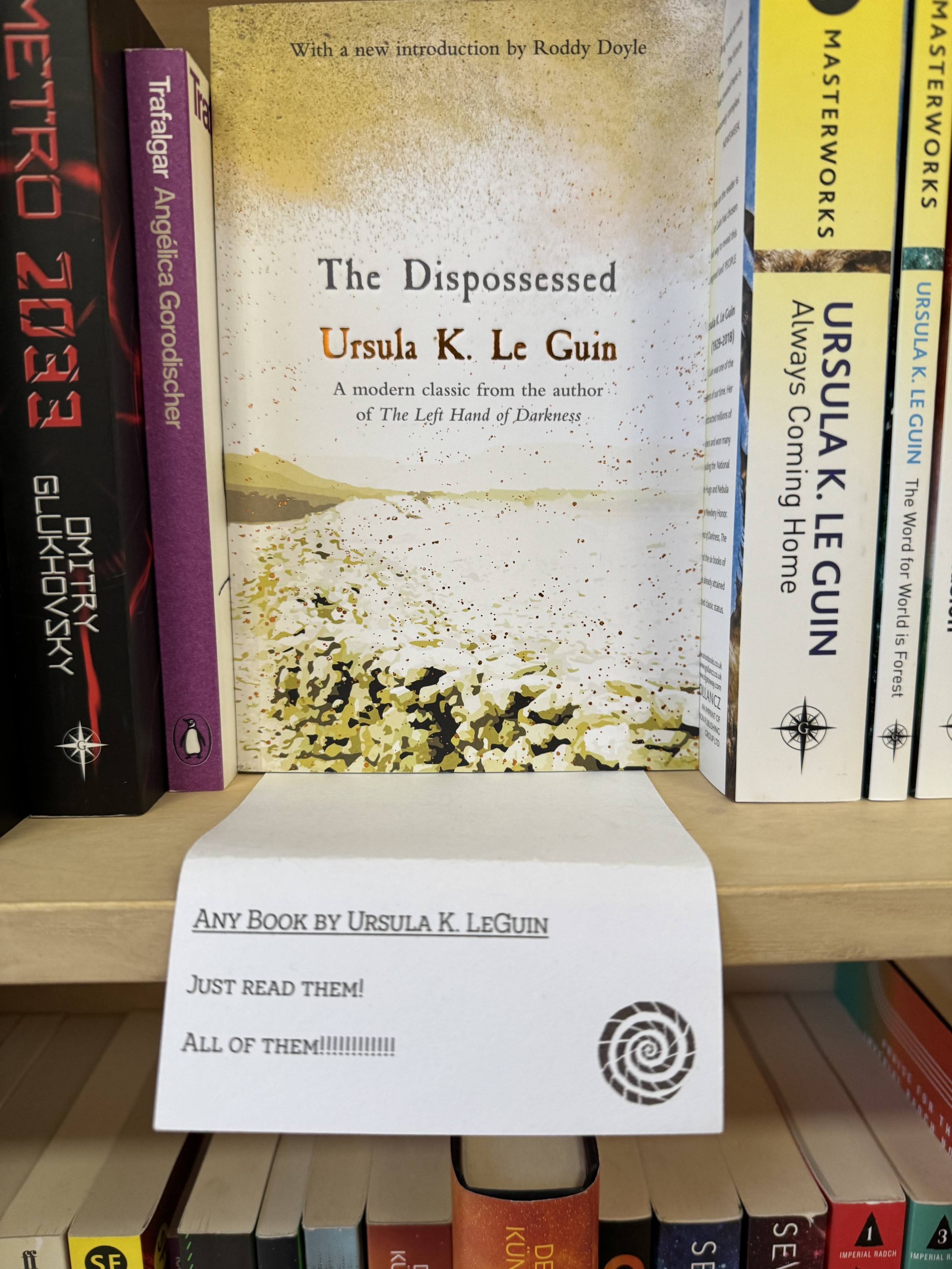
Somebody at this bookshop feels the same way I do 😄
(Argonaut Books, Leith, btw)
@baz WOW the audio is a wopping 190mb for 83mins - really high and I'm on low bandwidth... so if you have mp3 already and if you don't mind reducing it to 64kbps and uploading it that would ace (of course not expecting you to do it) and upload it here https://bin.dembased.xyz/
Thanks either way as I'm 100% not download / stream such a big file (already closed it). But nice topic though...
#FreeSchool ⬅️ (see hashtag)
boosted
Ursula K. Le Guin fans and admirers: I’ve just been listening to episode 664 of the Coode Street Podcast, in which Julie Phillips, currently writing the authorised biography of Le Guin, talks about Ursula’s life and works and thinking, and how these interrelated in various ways. All sorts of stuff I hadn’t known before. It’s well worth listening to.
#FreeSchool ⬅️ (see hashtag)
boosted
Computing job (networks, AV) in Edinburgh, Scotland
There's another computing job going at our place. Here’s the blurb:
Are you an enthusiastic IT network specialist looking for an exciting DevOps role? We have an opportunity for you that will involve maintaining and developing the data network, AV infrastructure and data centres for a world-leading teaching and research centre in informatics, located in the heart of Edinburgh.
https://elxw.fa.em3.oraclecloud.com/hcmUI/CandidateExperience/en/sites/CX_1001/job/11684
#Quote about #SocialMedia #Etiquette / #Notice / #Disclaimer
" Social media (at least on Mastodon) feels to me like a giant technical conference reception.
I'm surrounded by people with interesting opinions and can get into good conversations about anything, even unrelated things, simply by wandering past someone having an interesting conversation or by asking or stating something to whoever happens to be nearby.
Conference manners: interact freely remembering anyone can hear, don't be rude, and it's always ok to walk away. "
🗨️ Robotistry @robotistry
Post: https://sciencemastodon.com/@robotistry/112806869200466178
Richard Stallman's account = #Guardian posts mostly...
@datum @rms
There is perhaps bit of expectation from the ranks of Stallman to do more people work
but even then the answer is:
YES to some level there is a wrong if social online is not really social and more broadcast website style for a movement or causes we clearly need to look to each other and not mainstream websites and the constant #shitshow (forgive my wording but it is a deliberate distraction like candy for kids or car crash TV)
So measurably speak if Stallman or yourself (respect to both is given) are just echoes or 90% of their posts are someone else's links... AND he doesn't reply or interact (there are way but they are knee-jerk rather than methodical) then he's doing broad-cast only / mostly.
Interaction is the key and frankly the time about Trump or causes with nearly 0 action we can do also need to be put aside for looking at each other and helping OUR things whatever they may be and after hit and miss WE CAN DO SOMETHING about those things in our life.
Take this from a veteran in trying... a lot are doing it wrong (according to their own goals and / or other fair measurements of what their about / ideas).
A short example is all the Trump posts and nothing (not even reply but people / fans to their posts supporting or questioning them)... it's like 0 reply down their profile (go ahead look at Stallman who doesn't even take my advice to add "I don't reply at all to people / hardly ever so I'm just saying so you don't waste your time and then get annoyed at me which is fair if I didn't put this notice"....
So instead (and added to this post) is that you get hate legitimately from people trying and trying... people not writing "I don't want messages" or "I judge you based on your name and flag" .... so in the end they actually tease people with thinking they can contact them (not just stars but imagine yourself retrying with MOST of the Fediverse as I have tested and finding Stallman-ish behaviour and not being clear)...
This is not a big moan. It's a constructive complain with logic and testing...
#Mastodon people or those in the #Fediverse (the collection of all different software accessing the protocol) HAVE A LOT TO LEARN and not just because I say so....
Happy to say more, because at least your responded (see how this works Stallman ?)
And @datum let me know how you're finding it - it can depend on who you are and goals... but basically I see humans being the vital thing to change, not more tech - as we have enough for basic communication, time to work on / with humans.
Computers do not do that (more than half on #Fediverse seem to be head down in computer-only mode for whole life, so now wonder we're in this human crisis across the board).
Again your thoughts (they help balance out my basic perception).
Thanks
#FreeSchool ⬅️ (see hashtag)
boosted

Degrowth in Scotland Handbook - Enough!:
https://enough.scot/degrowthhandbook/
#FreeSchool ⬅️ (see hashtag)
boosted

I live in a car free town. Actually, I don't but I need something to cheer me up today so I am declaring my town car free.
People rather complain
More than stick Together and Do
#Fediverse. #Trump
Richard Stallman's account = #Guardian posts mostly...
+ lack of interaction
+ lack of action together
Do check it out the number of posts mostly from the Guardian like a forwarding machine!
@rms
#RMS... #Fediverse
@goto80 @transmission64 @jplebreton @lukiss@sonomu.club @SanderFocus No Adverts / #Invidious Link as Alternative to instead of Google YouTube is below - Try it first!
#FreeSchool ⬅️ (see hashtag)
boosted

Hello, I am the Notifications tab. I am here to tell you that a post was edited a month ago for the 10th time.
#Women #Postnatal #Depression #Health + QUOTES
@RadicalAnthro #QUOTE 1
" They don’t need to torture us, we will do it to ourWomen's Postpartum Psychosis + #Quotes
#Women #Postnatal #Depression #Health
#Mental #Psychiatry #Female #Childbirth #WellBeing
@RadicalAnthro #QUOTE 1
" They don’t need to torture us, we will do it to ourselves. "
#QUOTE 2
" The group became a vital source of hope, support and anecdotal knowledge, which didn’t seem to be accessible anywhere else. "
FULL TEXT FROM LINK
‘Deep in my madness, witches gave me hope’: Elizabeth Sankey on motherhood, depression and witches
While battling through the darkness of severe postpartum anxiety, Elizabeth Sankey saw a light of solidarity in the stories of witchcraft
Elizabeth Sankey
Sun 24 Nov 2024 12.00 CET
Share
Four years ago, when my son was only one-month-old, he and I were admitted to a mother and baby unit, a psychiatric ward that cares for people with perinatal mental health issues and their babies. I was diagnosed with severe postpartum anxiety and depression, and placed on medication. I had weekly sessions with the psychiatric team about my progress, and my son and I spent time with the other women on the ward and their babies. Every day, sometimes twice a day, my husband would come and see us and we would walk around Hackney as I tried to remember who I once was, tried to resist the temptation to step in front of a car. Gradually, horrifically, painfully slowly, I got a bit better. After eight weeks we were discharged and we went home.
But while I was no longer in a crisis situation, my mental health was extremely fragile. I had weekly calls with an NHS therapist who approached my illness in a methodical, precise way. She explained what was happening to me and why it had happened. I was desperate to put it all down to hormones, I wanted to run away from the corrupt version of myself and never think about her again, wanted to slice her out of my heart, my mind, bury her and spit on her grave. I was so embarrassed and ashamed of her, I hated her. But my therapist gently pushed back – it wasn’t just hormones, and I needed to find a way to accept that.
Two months later, I was still not in my right mind, still plagued by the knowledge that I had imagined doing terrible, evil things to my son. I knew that those intrusive thoughts were caused by my illness, but that didn’t make them any easier to live with. It was at this point that I started thinking about witches. Although, to be fair, I have always thought about witches. Many women have. Even this year for Halloween, my son wanted to be the witch from Room on the Broom – which was annoying because I’d already bought him a skeleton costume. And lots of women have a favourite witch: Glinda from The Wizard of Oz, The Witches of Eastwick, Samantha in Bewitched, and – for me personally – Mildred Hubble (The Worst Witch).
Witches represent female power and can be a celebration of our potency, but they are also often used as the embodiment of society’s ancient fears about women. Consequently many of us are afraid of turning into witches, transforming into hags and crones as we age, pushed to the edge of our communities, derided, ignored, hideous. For others, witches represent women who are out of control – they show us the dangers of an unhinged female, a vixen who doesn’t do as she is told. But I think for me, in that quiet, grey December, still so deep in my madness, witches represented hope.
Bad witches became aspirational. They made me feel I wasn’t alone
I made a list of every witch film I could think of and watched them one by one while my son slept on my chest. As I did so I found connection and comfort. But while once I had loved the “good” witches who were pink and maternal, who only used their power to change their outfit or help a friend, I was now increasingly drawn to “bad” witches. Maybe the Wicked Witch of The West had a point when she wailed, “what a world, what a world, what a world!” as she melted into a cold stone floor.
I realised that actually what I needed was the courage to accept that the person I thought of as evil, pathetic and sick was, in fact, me. After that the bad witches became aspirational. They made me feel like I wasn’t alone. Maybe I wasn’t evil. Maybe I was just a witch?
In the summer of 1645, Matthew Hopkins, one of the most famous “witch finders” to clomp around the country in his little heeled boots, arrived in Suffolk. By this point, witch trials had been happening in England for more than 60 years, and Hopkins was notorious for uncovering witches wherever he went. In breaks from films while my son drank warm formula from his bottle (told you I’m evil), I read through the testimonies of the women accused in this trial.
Anna Moats had voluntarily confessed within two hours of her arrest. And the devilish deed she had performed? “Cursing her husband and children.” Anna knew that confessing to be a witch meant she would be put in a cart and driven through the streets, before swinging from the gallows, in front of her friends, family, possibly even her children. And yet she still confessed.
In 1645, Matthew Hopkins was notorious for uncovering witches wherever he went
I called Marion Gibson, Professor of Renaissance and Magical Studies at Exeter University and asked why someone like Anna would confess – was it because of torture? “No, witches weren’t tortured in England.” My voice caught in my throat. So some women confessed without torture? “Yes.” And they knew they would die? “Yes. And no one is sure why they did that.” Huh. I have a theory.
To clarify – while there wasn’t torture, they did use sleep deprivation and intimidation. And they searched the women’s naked bodies for marks of the devil, which would have led to many coerced confessions. However, thanks to Professor Louise Jackson’s research, I learned that in a few of the Suffolk depositions, confessions had been made “freely”. Matthew Hopkins wrote that Rebecca Morris “confessed before any violence, watching [sleep deprivation] or other threats” that the devil came to her in the shape of a boy. Alicia Warner “freely being at her liberty confessed that she had entertained certain evil spirits”. Eliza Southerne confessed immediately, “The minister used no other argument to make her confess… [only] saying do wrong yourself, but clear your conscience.”
Very little research has been done into these “voluntary confessions” or why these women were so ready to condemn themselves to death. But reading through their testimonies I felt as if I knew. Scrolling through phone conversations I have with the women in my life, I felt like I knew. The guilt and the shame so many of us feel at not being good enough. The suffocating pressure we feel to be perfect. As Professor Louise Jackson writes, “In the production of confessions, coercion was as much cultural as it was physical. Frameworks of belief about women’s roles, responsibilities and expectations would lead women to condemn themselves… The Suffolk women who confessed that they were witches were also confessing that they were ‘bad’ mothers, ‘bad’ wives and ‘bad’ neighbours…” In my opinion very little has changed. They don’t need to torture us, we will do it to ourselves.
Elizabeth Sankey: ‘What I needed was the courage to accept that the person I thought of as evil, pathetic and sick was, in fact, me’
Elizabeth Sankey: ‘What I needed was the courage to accept that the person I thought of as evil, pathetic and sick was, in fact, me.’ Photograph: Kristina Varaksina/The Observer
I also saw descriptions of mental illness within the confessions. Back then suicide attempts and depression were almost always linked to the devil, and those ideations feature prominently in the women’s testimonies. Lidea Taylor confessed “that her imps… counselled her to kill herself”. Ellen Greenelif confessed that “she was often tempted to kill herself”. Elizabeth Fillet confessed that “the devil tempted her to kill herself”. I also saw hints of postpartum depression and psychosis. Prissilla Collit confessed that the devil had tempted her to kill her children. She placed one of her children next to the fire to burn it, a sibling pulled it away. Mary Scrutton confessed that the “devil appeared to her twice, once like a bear, once like a cat and tempted her in a hollow voice to kill her child”. Susanna Smith confessed the day after her arrest that 18 years previously the devil had appeared to her in the form of a shaggy red dog and tempted her to kill her children.
I contacted Dr Trudi Seneviratne, a psychiatrist who has saved countless lives through her work at the Bethlem Mother and Baby unit, part of South London and Maudsley hospital. She nodded as she read the testimonies from 1645, recognising symptoms of postpartum mental health illness. She said that even today the devil still appears in cases of psychosis, women will see themselves as witches, hear satanic voices telling them to do terrible things.
One of the most tragic cases of postpartum psychosis happened in 2001 when Andrea Yates, a Texan mother, drowned all five of her children in the bathtub during a psychotic episode. Yates later said that she thought she was a bad mother and had condemned them to hell. When I read about Andrea and her family I sobbed. While I didn’t have psychosis I knew how close I had come to her experience. Many of my symptoms were similar to hers – mania, restlessness, depression.
Many of my symptoms were similar to Andrea’s – mania, restlessness, depression
I was withdrawn, tearful, my anxiety so severe I couldn’t sleep. Most alarming, though, was that a few days before I was admitted to hospital I started to believe that ending my son’s life was the only way out of the torture I was experiencing. If I hadn’t received help so quickly, who knows what would have happened – women with these illnesses can deteriorate shockingly quickly. Postpartum psychosis symptoms usually start within hours or days of giving birth and presentations can change within minutes. For a general patient suffering from psychosis it could take months to see the same changes. It’s one of the rare instances where a psychiatric episode is considered an emergency.
I think about Andrea all the time. She currently lives in a low-security state mental hospital and though she has been eligible for release for many years, she always refuses. Thankfully cases like hers are not common, but they still happen, and while in the UK the Infanticide Act, which was re-enacted in 1938, ensures lenient sentencing for a mother who kills her child during the first year of its life, in the US there is no such protection.
On 4 January 2023, Lindsay Clancy of Massachusetts strangled her three children then slit her wrists and jumped out of a window. She survived, but her children did not. Now paralysed from the waist down, she’s on trial for homicide. Clancy, whose youngest child was only eight months old when he died, said she strangled the children during a “moment of psychosis”. The prosecution are depicting her as a sociopath who murdered her children, then faked a suicide attempt. They claim she’d been behaving normally on the day of the tragedy and had never mentioned anything suggesting a psychotic break, just “a touch of postpartum anxiety”.
My friends and family were incredibly supportive during my illness
Any woman who has experienced perinatal mental health illness will not be surprised that Clancy was reticent to talk explicitly about what was happening to her. My friends and family were incredibly supportive during my illness, but I was scared to tell them everything I was thinking and feeling. Including how, in the days before my hospitalisation, my brain had started playing a constant loop of hideous scenes. I saw myself smothering our son with a pillow, dropping him from a window on the third floor, drowning him in the bathtub. And yet I loved him more than I had ever loved anyone or anything. It was so scary, so horrifying. I didn’t want to burden them, but also I didn’t want it to be true. So I would convince myself I was making a big deal out of nothing.
What finally shifted things for me was joining Motherly Love, a support group filled with women from different backgrounds who have experienced perinatal mental health issues. All of them understood. Whatever terrifying thoughts I was having, someone else had had them, too, and they’d survived. The group became a vital source of hope, support and anecdotal knowledge, which didn’t seem to be accessible anywhere else. It was those women who recognised the severity of my symptoms and urged me to get immediate care. They saved my life simply by sharing how they were feeling and making sure I knew I wasn’t alone.
Suicide continues to be the leading cause of maternal death between six weeks and 12 months after birth, accounting for 39% of deaths in this period. And despite increased funding and awareness, suicide rates have increased 15% in 10 years. I think a huge part of that is the suffocating pressure women feel to be perfect.
My illness began with hormones, but was exacerbated by the stigma, guilt and shame that started the second I left hospital with my tiny son and realised I’d unlocked the door to yet another torture chamber for women. We must be mothers and when we’re mothers, we must be perfect mothers. We must breastfeed our babies, they must sleep well, if they’re in childcare it has to be the very best childcare, we have to be killing it in our careers, and still be present and calm for our children, we must stay youthful, we cannot put on weight. We must behave. And above all, we must be good.
It is impossible, we all know it is impossible, and yet we keep trying, and we keep failing, and when we fail we internalise the shame and the guilt because that is what we have been conditioned to do, and it eats away at us.
Going through my illness has changed me in so many ways, but I think the greatest gift it has given me is the realisation there are infinite ways to be a woman. And I’ve given up on being a good mother – I failed at that after only one month. Which is actually incredibly liberating. These days I just feel so lucky to still be here. To hold my son’s warm body every morning when he wakes up, to watch him eat a slice of birthday cake in rapturous silence. I am lucky I have been given the opportunity to feel acceptance and even love for that dark twisted version of myself I once hated so much. I would miss her if she ever went away. And I am so lucky that I get to age. Far too many of us don’t. I plan to fly towards it like the witch I am, wild and mad, flawed and imperfect.
Elizabeth Sankey’s documentary film, Witches, will stream on MUBI from 22 November 2024
If you’ve been affected by any of these issues, go to Maternal Mental Health Alliance https://maternalmentalhealthalliance.org/ or Action on Postpartum Psychosis https://www.app-network.org/
#Women #Postnatal #Depression #Health
#Mental #Psychiatry
#Female #Childbirth #WellBeing
selves. "
#QUOTE 2
" The group became a vital source of hope, support and anecdotal knowledge, which didn’t seem to be accessible anywhere else. "
FULL TEXT FROM LINK
‘Deep in my madness, witches gave me hope’: Elizabeth Sankey on motherhood, depression and witches
While battling through the darkness of severe postpartum anxiety, Elizabeth Sankey saw a light of solidarity in the stories of witchcraft
Elizabeth Sankey
Sun 24 Nov 2024 12.00 CET
Share
Four years ago, when my son was only one-month-old, he and I were admitted to a mother and baby unit, a psychiatric ward that cares for people with perinatal mental health issues and their babies. I was diagnosed with severe postpartum anxiety and depression, and placed on medication. I had weekly sessions with the psychiatric team about my progress, and my son and I spent time with the other women on the ward and their babies. Every day, sometimes twice a day, my husband would come and see us and we would walk around Hackney as I tried to remember who I once was, tried to resist the temptation to step in front of a car. Gradually, horrifically, painfully slowly, I got a bit better. After eight weeks we were discharged and we went home.
But while I was no longer in a crisis situation, my mental health was extremely fragile. I had weekly calls with an NHS therapist who approached my illness in a methodical, precise way. She explained what was happening to me and why it had happened. I was desperate to put it all down to hormones, I wanted to run away from the corrupt version of myself and never think about her again, wanted to slice her out of my heart, my mind, bury her and spit on her grave. I was so embarrassed and ashamed of her, I hated her. But my therapist gently pushed back – it wasn’t just hormones, and I needed to find a way to accept that.
Two months later, I was still not in my right mind, still plagued by the knowledge that I had imagined doing terrible, evil things to my son. I knew that those intrusive thoughts were caused by my illness, but that didn’t make them any easier to live with. It was at this point that I started thinking about witches. Although, to be fair, I have always thought about witches. Many women have. Even this year for Halloween, my son wanted to be the witch from Room on the Broom – which was annoying because I’d already bought him a skeleton costume. And lots of women have a favourite witch: Glinda from The Wizard of Oz, The Witches of Eastwick, Samantha in Bewitched, and – for me personally – Mildred Hubble (The Worst Witch).
Witches represent female power and can be a celebration of our potency, but they are also often used as the embodiment of society’s ancient fears about women. Consequently many of us are afraid of turning into witches, transforming into hags and crones as we age, pushed to the edge of our communities, derided, ignored, hideous. For others, witches represent women who are out of control – they show us the dangers of an unhinged female, a vixen who doesn’t do as she is told. But I think for me, in that quiet, grey December, still so deep in my madness, witches represented hope.
Bad witches became aspirational. They made me feel I wasn’t alone
I made a list of every witch film I could think of and watched them one by one while my son slept on my chest. As I did so I found connection and comfort. But while once I had loved the “good” witches who were pink and maternal, who only used their power to change their outfit or help a friend, I was now increasingly drawn to “bad” witches. Maybe the Wicked Witch of The West had a point when she wailed, “what a world, what a world, what a world!” as she melted into a cold stone floor.
I realised that actually what I needed was the courage to accept that the person I thought of as evil, pathetic and sick was, in fact, me. After that the bad witches became aspirational. They made me feel like I wasn’t alone. Maybe I wasn’t evil. Maybe I was just a witch?
In the summer of 1645, Matthew Hopkins, one of the most famous “witch finders” to clomp around the country in his little heeled boots, arrived in Suffolk. By this point, witch trials had been happening in England for more than 60 years, and Hopkins was notorious for uncovering witches wherever he went. In breaks from films while my son drank warm formula from his bottle (told you I’m evil), I read through the testimonies of the women accused in this trial.
Anna Moats had voluntarily confessed within two hours of her arrest. And the devilish deed she had performed? “Cursing her husband and children.” Anna knew that confessing to be a witch meant she would be put in a cart and driven through the streets, before swinging from the gallows, in front of her friends, family, possibly even her children. And yet she still confessed.
In 1645, Matthew Hopkins was notorious for uncovering witches wherever he went
I called Marion Gibson, Professor of Renaissance and Magical Studies at Exeter University and asked why someone like Anna would confess – was it because of torture? “No, witches weren’t tortured in England.” My voice caught in my throat. So some women confessed without torture? “Yes.” And they knew they would die? “Yes. And no one is sure why they did that.” Huh. I have a theory.
To clarify – while there wasn’t torture, they did use sleep deprivation and intimidation. And they searched the women’s naked bodies for marks of the devil, which would have led to many coerced confessions. However, thanks to Professor Louise Jackson’s research, I learned that in a few of the Suffolk depositions, confessions had been made “freely”. Matthew Hopkins wrote that Rebecca Morris “confessed before any violence, watching [sleep deprivation] or other threats” that the devil came to her in the shape of a boy. Alicia Warner “freely being at her liberty confessed that she had entertained certain evil spirits”. Eliza Southerne confessed immediately, “The minister used no other argument to make her confess… [only] saying do wrong yourself, but clear your conscience.”
Very little research has been done into these “voluntary confessions” or why these women were so ready to condemn themselves to death. But reading through their testimonies I felt as if I knew. Scrolling through phone conversations I have with the women in my life, I felt like I knew. The guilt and the shame so many of us feel at not being good enough. The suffocating pressure we feel to be perfect. As Professor Louise Jackson writes, “In the production of confessions, coercion was as much cultural as it was physical. Frameworks of belief about women’s roles, responsibilities and expectations would lead women to condemn themselves… The Suffolk women who confessed that they were witches were also confessing that they were ‘bad’ mothers, ‘bad’ wives and ‘bad’ neighbours…” In my opinion very little has changed. They don’t need to torture us, we will do it to ourselves.
Elizabeth Sankey: ‘What I needed was the courage to accept that the person I thought of as evil, pathetic and sick was, in fact, me’
Elizabeth Sankey: ‘What I needed was the courage to accept that the person I thought of as evil, pathetic and sick was, in fact, me.’ Photograph: Kristina Varaksina/The Observer
I also saw descriptions of mental illness within the confessions. Back then suicide attempts and depression were almost always linked to the devil, and those ideations feature prominently in the women’s testimonies. Lidea Taylor confessed “that her imps… counselled her to kill herself”. Ellen Greenelif confessed that “she was often tempted to kill herself”. Elizabeth Fillet confessed that “the devil tempted her to kill herself”. I also saw hints of postpartum depression and psychosis. Prissilla Collit confessed that the devil had tempted her to kill her children. She placed one of her children next to the fire to burn it, a sibling pulled it away. Mary Scrutton confessed that the “devil appeared to her twice, once like a bear, once like a cat and tempted her in a hollow voice to kill her child”. Susanna Smith confessed the day after her arrest that 18 years previously the devil had appeared to her in the form of a shaggy red dog and tempted her to kill her children.
I contacted Dr Trudi Seneviratne, a psychiatrist who has saved countless lives through her work at the Bethlem Mother and Baby unit, part of South London and Maudsley hospital. She nodded as she read the testimonies from 1645, recognising symptoms of postpartum mental health illness. She said that even today the devil still appears in cases of psychosis, women will see themselves as witches, hear satanic voices telling them to do terrible things.
One of the most tragic cases of postpartum psychosis happened in 2001 when Andrea Yates, a Texan mother, drowned all five of her children in the bathtub during a psychotic episode. Yates later said that she thought she was a bad mother and had condemned them to hell. When I read about Andrea and her family I sobbed. While I didn’t have psychosis I knew how close I had come to her experience. Many of my symptoms were similar to hers – mania, restlessness, depression.
Many of my symptoms were similar to Andrea’s – mania, restlessness, depression
I was withdrawn, tearful, my anxiety so severe I couldn’t sleep. Most alarming, though, was that a few days before I was admitted to hospital I started to believe that ending my son’s life was the only way out of the torture I was experiencing. If I hadn’t received help so quickly, who knows what would have happened – women with these illnesses can deteriorate shockingly quickly. Postpartum psychosis symptoms usually start within hours or days of giving birth and presentations can change within minutes. For a general patient suffering from psychosis it could take months to see the same changes. It’s one of the rare instances where a psychiatric episode is considered an emergency.
I think about Andrea all the time. She currently lives in a low-security state mental hospital and though she has been eligible for release for many years, she always refuses. Thankfully cases like hers are not common, but they still happen, and while in the UK the Infanticide Act, which was re-enacted in 1938, ensures lenient sentencing for a mother who kills her child during the first year of its life, in the US there is no such protection.
On 4 January 2023, Lindsay Clancy of Massachusetts strangled her three children then slit her wrists and jumped out of a window. She survived, but her children did not. Now paralysed from the waist down, she’s on trial for homicide. Clancy, whose youngest child was only eight months old when he died, said she strangled the children during a “moment of psychosis”. The prosecution are depicting her as a sociopath who murdered her children, then faked a suicide attempt. They claim she’d been behaving normally on the day of the tragedy and had never mentioned anything suggesting a psychotic break, just “a touch of postpartum anxiety”.
My friends and family were incredibly supportive during my illness
Any woman who has experienced perinatal mental health illness will not be surprised that Clancy was reticent to talk explicitly about what was happening to her. My friends and family were incredibly supportive during my illness, but I was scared to tell them everything I was thinking and feeling. Including how, in the days before my hospitalisation, my brain had started playing a constant loop of hideous scenes. I saw myself smothering our son with a pillow, dropping him from a window on the third floor, drowning him in the bathtub. And yet I loved him more than I had ever loved anyone or anything. It was so scary, so horrifying. I didn’t want to burden them, but also I didn’t want it to be true. So I would convince myself I was making a big deal out of nothing.
What finally shifted things for me was joining Motherly Love, a support group filled with women from different backgrounds who have experienced perinatal mental health issues. All of them understood. Whatever terrifying thoughts I was having, someone else had had them, too, and they’d survived. The group became a vital source of hope, support and anecdotal knowledge, which didn’t seem to be accessible anywhere else. It was those women who recognised the severity of my symptoms and urged me to get immediate care. They saved my life simply by sharing how they were feeling and making sure I knew I wasn’t alone.
Suicide continues to be the leading cause of maternal death between six weeks and 12 months after birth, accounting for 39% of deaths in this period. And despite increased funding and awareness, suicide rates have increased 15% in 10 years. I think a huge part of that is the suffocating pressure women feel to be perfect.
My illness began with hormones, but was exacerbated by the stigma, guilt and shame that started the second I left hospital with my tiny son and realised I’d unlocked the door to yet another torture chamber for women. We must be mothers and when we’re mothers, we must be perfect mothers. We must breastfeed our babies, they must sleep well, if they’re in childcare it has to be the very best childcare, we have to be killing it in our careers, and still be present and calm for our children, we must stay youthful, we cannot put on weight. We must behave. And above all, we must be good.
It is impossible, we all know it is impossible, and yet we keep trying, and we keep failing, and when we fail we internalise the shame and the guilt because that is what we have been conditioned to do, and it eats away at us.
Going through my illness has changed me in so many ways, but I think the greatest gift it has given me is the realisation there are infinite ways to be a woman. And I’ve given up on being a good mother – I failed at that after only one month. Which is actually incredibly liberating. These days I just feel so lucky to still be here. To hold my son’s warm body every morning when he wakes up, to watch him eat a slice of birthday cake in rapturous silence. I am lucky I have been given the opportunity to feel acceptance and even love for that dark twisted version of myself I once hated so much. I would miss her if she ever went away. And I am so lucky that I get to age. Far too many of us don’t. I plan to fly towards it like the witch I am, wild and mad, flawed and imperfect.
Elizabeth Sankey’s documentary film, Witches, will stream on MUBI from 22 November 2024
If you’ve been affected by any of these issues, go to Maternal Mental Health Alliance https://maternalmentalhealthalliance.org/ or Action on Postpartum Psychosis https://www.app-network.org/
#Women #Postnatal #Depression #Health
#Mental #Psychiatry
#Female #Childbirth #WellBeing
#FreeSchool ⬅️ (see hashtag)
boosted

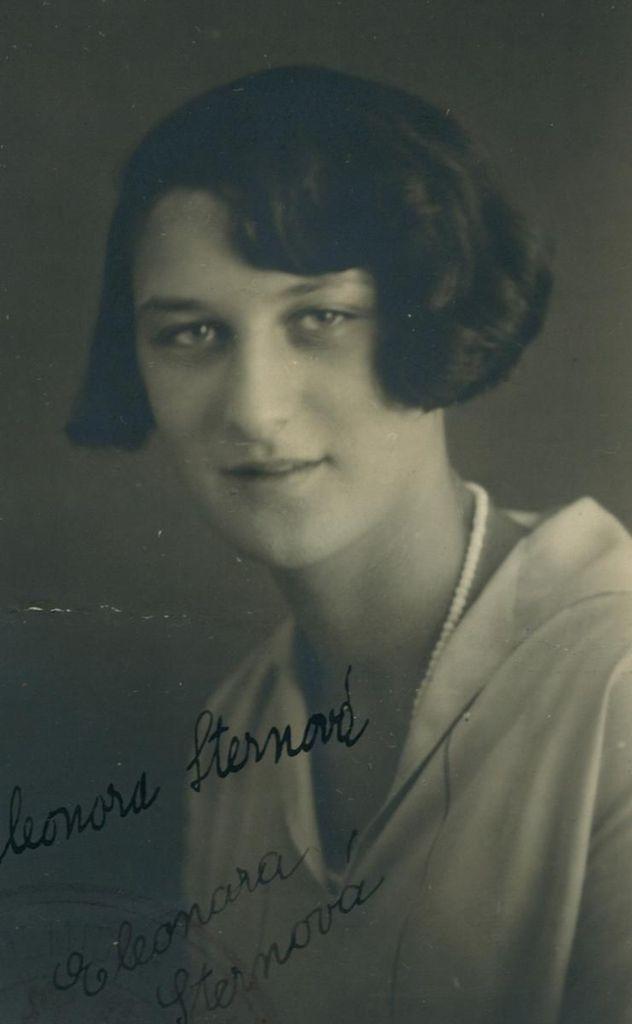
24 November 1912 | A Czech Jewish woman, Eleonora Hartová, was born in Prague.
She was deported to Auschwitz from Theresienstadt ghetto on 15 December 1943. She did not survive.
Does advance #Tech solve #Human related problems and relativity?
E.g. Imagine you have all the Tech - but people are scared of you,
Doesn't that render most tech (apart from the basic ability to communication) useless and limited at human level?
❓#Answers...
And if that is mostly true - isn't there a case to work on humans, not #Computers and #Computing field? ❓
@nat @nullagent Seeing this reminds me that kids are the future.
Perhaps having considered a non-system baby or less-system life - I wonder if you there is anything different about this baby that will come about more than work and rent destined... (so asking if you thought about that and almost a reason why to donate to this baby kind of...)
Thanks, honestly written / a bit too short perhaps but better than long (for most people). 'tiny bean' 😃
@solderandchaos @Workshopshed
Usually not holes - just smoothing the dents or mini holes, so doing this work makes later painting (roller) a lot more easier and perfect.
#FreeSchool = #Notes #Quotes from #Books #Videos #Talks #Websites all around #DIY Care# and #Caring as our main #Politics / #Politics
#Degrowth / PostGrowth
#WellbeingEconomy #DoughnutEconomics
#CaringEconomy / #CareEconomy / #Partnerism
"Free School" is a term for a movement born from the 1960's / 70's using educational living & learning practice towards #Caring & #DIY with all others (all at the same time - not an after-thought or specialism in 1 field or person who is a #compartmentalised person ignoring others in other fields). Caring to involves more things, increasingly aiming towards everything...
Posts are 1-line #Notes and #Quotes that links all other things (it's all relative).
Long comments use CW to shorten post vertically and add a 'show more' button to reveal more text if you want it. Long posts might seem bad but it's giving chance to more connection and understanding.
All things towards #Freedom (life moving from Shorter to Deeper thought).
Freedom doesn't come from short-depth lifestyles / short lines of text / ignoring / #inaction. Not less communication between lovers of similar things. MORE!)
#FreeSchool = Learning Together 🔁
#FreeSchool = Working Together 🔁 (eventually + I do Free work for Freedom.
#FreeSchool = Co-Operating & #DIY Solutions 🔁
See My #FreeSchool (Hashtag) for latest examples anytime. Or keep open and refresh from time to time:
https://qoto.org/web/tags/freeschool
#FreeSchool ➡ Increment Talking + Peacefully solve everything.
TLDR - Inaction = Fascism
Trust comes from "slowly but surely"... Doesn't have to be all-in, but peace doesn't come from one-way short messaging on 'social' Mastodon either - collecting memes and cats only is limited!
Remember we need develop better humans as well as 'develop' code on computers etc.
☮ Peace needs more... even to save all types of cats!
Get in touch - I'm someone that cares for everything because it's all human-related...
Human #chats welcome - I using #Jitsi audio chat which uses JUST browser (ANY PLATFORM + 2minutes to enter !)
(i.e. no-install / no account / no google / instant / privacy-respecting / safe-enough, etc!) Really the best out there - any platform / device! Instant audio chat !
Just ask for a link and prepare a few topics!
#AltText used (when I remember).
FREE WORK - I do free audio and video editing (anything considered - just ask).
Again - Creating Trust needs a bit of trust given "slowly but surely"... not all-in... being relaxed about it... but has to be more - 'working' like a 2nd job towards peace because your job isn't going to do it / it's now allow by State to get there! War increases prices etc ☮
So do "peace" as a side-job like it was your real job in the world, parallel to the Capitalism (Trap) you (we) were born into. We have to accept that and fight out of that and not be comfortable in it.
Heart and Soul all the way.
Joined Dec 2021
#FreeSchool ⬅️ (see hashtag)'s choices: