

@koalie Oh. I watched a couple seasons of that one, I think. I had mixed feelings. I remember the script, the production and the acting were all impeccable (as in _Breaking Bad_), and I love Bob Odenkirk. But I think my girlfriend and I got tired of waiting for things to happen; it was too slow. 🤷♂️
To clarify, this is the critique behind [my initial post](https://qoto.org/@tripu/106796492140032253), which proved somewhat controversial:
**I.** Mainstream #feminism today tends to see “patriarchy” everywhere and (consistent with that view) focuses almost solely on issues affecting more women than men, and on differences of outcome where women seem to do worse than men.
**II.** Definition of #patriarchy (in bold, my emphasis):
> _“Social system in which the father or a male elder has **absolute authority** over the family group; by extension, one or more men […] exert absolute authority **over the community as a whole**.”_
— [Britannica](https://www.britannica.com/topic/patriarchy).
> _“Social organization marked by the **supremacy of the father** in the clan or family, the **legal dependence of wives** and children, and the reckoning of descent and **inheritance in the male line**.”_
— [Merriam-Webster](https://www.merriam-webster.com/dictionary/patriarchy).
> _“Society in which the oldest **male is the leader of the family**, or a society **controlled by men** in which they use their power to their own advantage.”_
— [Cambridge English Dictionary](https://dictionary.cambridge.org/dictionary/english/patriarchy).
**III.** According to normal definitions of the term (and also because there are important issues affecting more men than women, and differences of outcome where men are clearly doing worse than women) prosperous liberal democratic countries today are obviously _not_ patriarchies.
**IV.** When confronted with this error, #feminists often bend and distort the definition of “patriarchy” to make it a synonym of “sexism”, and (consistent with that redefinition) say that the patriarchy is also hurting men, and that ending the patriarchy will benefit men, too.
**V.** That redefinition of “patriarchy” is unnecessary and confusing. Why conflate two words with very very different meanings? Can we then say that the Taliban and the old tribes of hunter-gatherers were merely “sexist”, instead of outright “patriarchal”? Should we then lump together under the same category truly retrograde societies where a few old men are the only people _legally_ entitled to exert absolute authority and to inherit and all women are _legally_ subservient, and extremely egalitarian 21st-century Sweden? The redefinition is (conscious or unconsciously) disingenuous.
**VI.** In spite of all those issues, bona fide #feminists often accept this bizarre framing for the sake of moving the conversation forward and making actual progress against sexism, naïvely assuming that _finally we are all now talking about the same thing_ (ie, fighting sex-based discrimination, wherever it occurs).
**VII.** After making this concession, inevitably it so happens that the original denouncers of the patriarchy get back to focusing only on issues affecting more women than men, and on differences of outcome where women do worse than men — ignoring or dismissing all male issues, just as before.
**VIII.** The result is that all participants in the discussion have now agreed that our modern, developed, equal-under-the-law societies are _patriarchies_ (I invite you to re-read the three definitions above) while at the same time having made zero progress against actual sexism of any kind. In fact, participants make _negative_ progress, because this swallowing-the-patriarchy move generates a lot of guilt and resentment.
I find this recurrent pattern dishonest, counterproductive, and irritating.
I like one or two Spanish sitcoms (eg, the first few seasons of [_7 Vidas_](https://en.wikipedia.org/wiki/7_vidas) were funny and original). But in general American and British #shows are better written and produced.
A Spanish #TV #drama, _Money Heist_, [became very popular worldwide recently](https://www.newstatesman.com/culture/tv-radio/2018/08/spanish-hit-series-la-casa-de-papel-captures-europe-s-mood-decade-after). But I have not watched it (and the comments I got from relatives were not very positive)…
tripu
boosted


Teens Flock To New App Where They Just Enter Own Personal Data Into Form https://bit.ly/3mkeEnB
@admin@masto.nogafam.es ¿No es el #capital privado de un montón de programadores y donantes altruistas lo que ha hecho siempre posible #Linux, el #SoftwareLibre y las redes «libres»?
TV series I have enjoyed the most:
More than anything else, **these four crime dramas**:
* _The Wire_
* _Breaking Bad_
* _The Sopranos_
* _Fargo_
Other kinds of dramas:
* _The Deuce_ (period)
* _The Leftovers_ (supernatural)
Sitcoms:
* _Friends_
* _How I Met Your Mother_
* _The Big Bang Theory_
Animated sitcoms:
* _The Simpsons_
* _Futurama_
* _Big Mouth_
* _Rick and Morty_
My top favourite #TVseries are all realistic, violent #crime #dramas with #drugs or #gangs, where important characters either turn evil or confront vicious evil.
What does that say about me?
tripu
boosted

Terrifying words.
#cartoon #politics #reMarkable2 #reMarkable #drawing #English #monster #libertarian
#cartoon #politics #reMarkable2 #reMarkable #drawing #English #monster #libertarian
tripu
boosted
> but that is just a side effect to observe as a curiosity
The fact that you think it's merely a curiosity doesn't change that it's an inequality based on sex. I agree with you that we should strive for equity, not simple equality of outcomes, but again that doesn't suggest that the current inequality doesn't have a basis in sex.
I also don't understand why you think that because sex isn't the only issue at play that makes it irrelevant. Take homelessness. Historically, the concept of the deserving vs the undeserving poor has changed very little in the last 2000 years. Widows and "pure" women throughout that time have been thought of as the deserving poor, i.e. they deserve our sympathy and charity. It's said that they aren't at fault for their circumstances. Contrast that with men and "impure women" who, except for veterans, are largely lumped in with the undeserving poor. There is a ton of cultural, religious, and economic baggage wrapped into these concepts, and sex is part of that, it's not just a bizarre side effect.
I want to reiterate that I agree that we shouldn't simply be looking to make the numbers equal. Making sure more women die at work is an absurd proposal that nobody is suggesting. I'll go a step further and agree that if we only treat these issues as sex-based the solutions are likely to fail. They are deeply intertwined with many aspects of our society and I think will probably require significant and radical changes that the status quo simply won't tolerate. However, to say the majority of the issues @tripu brought up have nothing to do with sex is patently false.
There's a huge imbalance in #workdeaths, yes. In my country (🇪🇸 #Spain), last year there were 751 work-related deaths, of which 696 were men (source: [last available official report by _Ministerio de Trabajo y Economía Social_](https://www.mites.gob.es/estadisticas/eat/eat20/TABLAS%20ESTADISTICAS/ATR_2020_Resumen.pdf)).
* 1,165% more #men than #women die at work.
* Men are >12× more likely to die at work than women.
* Of all people who die at #work, >92% are men.
/cc @namark

@tripu I'm not sure if I agree or disagree with you based on this, but the work deaths stat was kind of a shock when I first heard it. iirc men are...
“Let's combat the pay gap! Sexual harassment! Glass ceiling! STEM inequality! Ignored heroines! Rape culture! Sexist language! Pressure to be pretty! **Down with the patriarchy!**”
“Uh… What about male lifespan, work casualties, military deaths, the draft, parental fraud, traffic accidents, suicide victims, homicide victims, homelessness, imprisonment, drug abuse, family courts, work hours, concrete floor, educational attainment? Shouldn't we at least _talk_ about that too?”
“Yeah, that's all the patriarchy! See? It's a system that oppresses both #women _and_ men. We feminists work to dismantle it. It's in men's best interest, too. Aren't you a #feminist?”
“Sure I am — if it's about equal treatment of both sexes under the law, and about removing any discrimination on the basis of sex.”
“Then you're against the #patriarchy, too.”
“Well, I would prefer a word that is less divisive and doesn't suggest that #men are the problem… I don't think ‘patriarchy’ really means what you just said. But if we _have_ to unite under that banner… so be it! Down with the patriarchy! Down with sexism!”
“Well said! See? We're in this together! Let's combat the pay gap! Sexual harassment! Glass ceiling! STEM inequality! Ignored heroines! Rape culture! Sexist language! Pressure to be pretty!”
“Wait. What?”
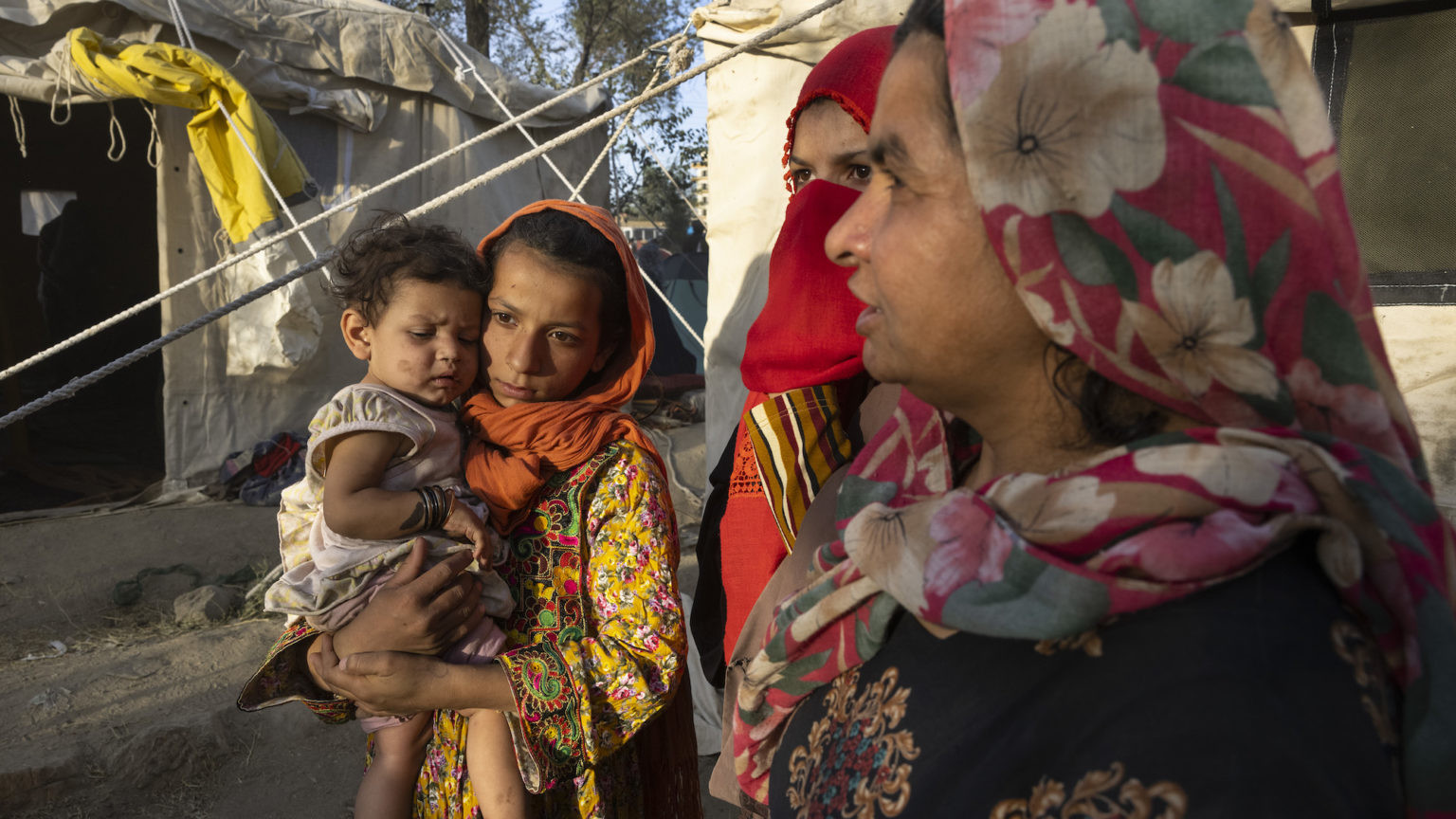
> _“The silence of the marchers and protesters, the petitioners and kneelers, is deafening. Is #Afghanistan too far away? Are Afghan #women not deserving of our sympathies? Or is the #Taliban, unlike Trump, the wrong type of enemy? British #feminists have grown so used to talking about the make-believe oppression apparently experienced by privileged women with media careers and vast salaries, or the pathetic non-issue of socially inadequate young men wolf-whistling on street corners, that they are now unable to recognise real oppression when it stares them in the face. At least, that’s one explanation. The other is that #woke activists are so fearful of being associated with any whiff of Islamophobia that they cannot bring themselves to condemn the atrocities now being confronted by Afghan women.”_
https://www.spiked-online.com/2021/08/17/the-silence-of-western-feminists-is-deafening/
tripu
boosted
tripu
boosted




Huge talent, wonderful #urbanporn and #cityscape, gorgeous #Tokyo. Infinite nostalgia.
> _“If this [shift in political support] was to happen, this would correspond to a complete realignment of the party system: the former “left” (which used to be associated to low-income, low-education voters) would now be associated to high-income, high-education voters; whereas the former “right” (which used to be associated to high-income, high-education voters) would now be associated to low-income, low-education voters. In effect, such a party system would have little to do with the “left” vs “right” party system of the 1950s-1960s. Maybe it should better be described as an opposition with the “globalists” (high-income, high-education) and the “nativists” (low-income, low-education). This is roughly the way in which the new political actors themselves [in France] – e.g. Macron and Le Pen during the 2017 presidential election – tend to describe what they perceive to be the central political cleavage of our time.”_
> _“In the 1950s, most western democracies had an elite party (right-wing) vs. an anti-elite party (left-wing), and the elite party captured both the richest and the best-educated segments of the population. Over time, this shifted to democracies having a multi-elite system: a financial-elite party vs. an educational-elite party.”_
🔬 **Some notable exceptions to that global trend**:
In the 🇺🇸 #USA, the influence of income has vanished, and support depends solely (and strongly!) on education (highly educated ↔ leftist).
In #Scandinavia (epitome: 🇸🇪 #Sweden) it's the opposite: education became irrelevant, and political preference depends only on income (perhaps because they are wealthy, egalitarian countries?).
🇵🇹 #Portugal hasn't changed like the other countries: there the Right is still supported mostly by educated (and rich) voters. (NB: in the 50's and 60's, Portugal was a dictatorship).
🇮🇹 #Italy is the rare case where leftist parties ended up being the parties of the _richest_ segment of the population. I wouldn't read too much into this, though, as the political landscape there during the last decade or two has been a populist mess.
🇪🇸 #Spain is the country where education and income tell you _the least_ about political preferences! There's still the secular correlation “high income ↔ right wing”, but it's very weak today. (NB: in the 50's and 60's, Spain was also a dictatorship).


🌐 **Globally**:
Half a century ago, the Left appealed mostly to the poor and uneducated, and the Right to the rich and educated.
Nowadays, supporting leftist parties still correlates with lower income (and supporting the Right with higher income), although that link has weakened.
What's most interesting is that correlation along the “education” axis has _reversed_: today, it is mostly _educated_ people supporting the Left, and _uneducated_ people supporting the Right.

[This #ACX post](https://astralcodexten.substack.com/p/contra-hanania-on-partisanship) contains some very insightful interpretations and charts, and complements nicely [my recent toot about #theLeft vs #theRight](https://qoto.org/@tripu/106606951147365147). #politics
Some highlights in a 🧵 thread:
