

tripu
boosted

tripu
boosted

Y aunque han tardado en llegar: ¡ya están publicados los vídeos de #esLibre2021!
Unos 80 vídeos con más de 40 horas de sobre #SoftwareLibre, #HardwareLibre y #CulturaLibre.
Al igual que el año pasado podéis encontrarlos todos en #WikimediaCommons: https://commons.wikimedia.org/wiki/Category:EsLibre_2021
👏👏👏
In the 🇺🇸 #US, in 2021, #men represent only ~41% of #college students ([source](https://collegenews.org/women-outnumber-men-in-us-colleges-nearly-60-of-students-in-2020-21-were-women/)). #Women have been the majority of four-year college graduates ever since 1982.
Yet what is the debate and the media reaction (if any)? To denounce that **“men with college degrees have become so cocky that they’re ruining romance for their female counterparts”**.

(When in university, it was less than 20% females at my college, yet somehow at the time I missed all the headlines about those arrogant women playing hard to get…)
https://nypost.com/2021/11/02/men-with-golden-penis-syndrome-ruining-romance-for-women/
@gasull that's for sure! 👍
Famous #people I admire and I have seen live — or even chatted, shared a meal, or taken a selfie with:
* Antonio Escohotado 🎤×2
* Bryan Caplan 🎤 🗣️ 🖼️ 🍴
* Juan Ramón Rallo 🎤×4
* Miguel de Icaza 🎤
* Pedro Duque 🎤
* Richard Stallman 🎤×3
* Scott Alexander 🗣️
* Tim Berners-Lee 🎤×n 🗣️×n 🖼️
* Vinton Cerf 🎤 🗣️ 🖼️
Plus, I once attended a talk by **Al Gore** and events by **Kevin Rose** and **Boris Johnson**.

tripu
boosted

 🇳🇱
🇳🇱
Ever since I started doing this I've been much less popular with the kids at Halloween.
tripu
boosted

PSA: Facebook has renamed their company to #Meta. So when you're looking for which company to avoid going forward, it's now Meta.
tripu
boosted


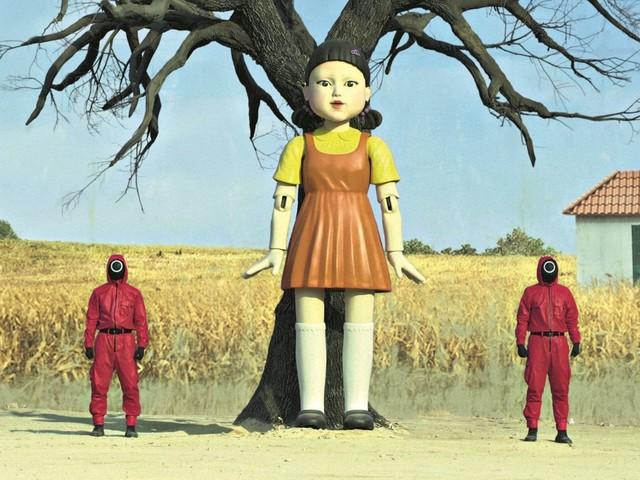
@trinsec It may be! I'm just saying the plot isn't all that original.
_Logan's Run_
+
_The Running Man_
+
_Cube_
+
_Black Mirror_
+
_The Hunger Games_
↓
#SquidGame
It's not that original, people!
No #Calibre at hand? Quick and easy online #epub format #converter for your non-sensitive #books:

_#Woke In Plain English_ by #PeterBoghossian:
* _#DEI_:
* _#Diversity_: people who look different but think alike.
* _#Equity_: making up for past #discrimination with current discrimination.
* _#Inclusion_: restricting #speech.
* _#Neoliberal_: a #capitalist and economically #conservative person.
* _#Relativist_: everything — like #culture, morality, art, and law — is subjective.

Where is the hard-on emoji? I can't find it.
> _“Looking at those #films in the list you provided could be enlightening. I started another thread specifically to comment on the films.”_
I saw that. It's great, thanks! (I only saw two or perhaps three of them, so I can't comment on those ten specifically.)
> _“If you care about racial injustice, you need to care about racial bias in media.”_
I care about injustice. There are injustices much, much bigger than the black/white gap in the US and that are treated very seldom or never at all in popular contemporary art. If we were to take the statistical critique of film to its final consequences, the vast majority of films we watch should portray the struggles of poor (or extremely poor) people from Nigeria or Bangladesh, or the miseries of being a woman or a homosexual in a theocracy, the terror of so many living under autarchies, millions of miserable deaths that go unnoticed, etc.
Do you care only about the US when criticising films made in Hollywood? I think that's not rational, but OK, let's see: in the US alone there is ageism and aspectism, too. Those forms of discrimination are pervasive (in film, too) and impact the lives of more people than blacks citizens live in the US. There is political correctness and social conformity. Too much ignorance and too little love for books and reason, an epidemic of obesity and diabetes, very poor nutrition, too many opioids, an oversized military, narcissism and invasion of privacy fuelled by tech giants…
Do you want me to give you biases in film, presumably with negative consequences in real life, that are much, much common than anti-black propaganda? In film, everybody is way more attractive than in real life; slimmer, younger, taller. Shouldn't we denounce that to prevent body issues, depression, anxiety, and suicide — especially among teenagers? In film, all houses are larger, brighter, prettier, better equipped. (I'd say larger rooms and sets make shooting much easier for the crew, but) isn't that distorting our own expectations? In film, there are way too many heroes, leaders, champions, and winners (isn't the vast majority of people neither of those?) In film, people speak very clearly, think very fast and act decisively; sex is glamorous (that distorts our expectations), fights are cool (ditto), nobody ever goes to the loo or cuts their finger with a piece of paper or spends one hour on the phone with the insurance company or leads an unremarkable life or needs assistance to walk up the stairs. Looking at real life stats, there are too few plumbers, street sweepers, pickpockets, truck drivers and ice-cream factory workers in movies. Too many athletic blokes and extremely feminine girls compared with real life. Way too many Americans, guns, mysteries, terrorists, protestant congregations, apple pies and school baseball games to reflect what the real world looks like.
How on Earth is film, or any other art, supposed to be realistic, balanced, representative?
We seem obsessed with racism affecting blacks, gay rights and trans issues. We see _those_ biases and transgressions everywhere. A few comfortable topics monopolise the discussion. People complain about racist bias in a film in which _the countries of the world, all speaking English and in harmony, end up defeating the alien invasion with an atomic laser under the leadership of a sex-symbol and the help of the caricature of a scientist, plus the sex-symbol happens to find true love in the process_. A film in which nothing even _tries_ to map real life. Yet the lack of black characters with enough lines is undoubtedly racist, and outrage. I find that perplexing.
> _“Film and TV are main drivers that perpetuate racial bias against black people in society.”_
As I said, I think art does three things with the status quo: reflect it, reinforce it, subvert it.
I am not saying that there aren't racist (and xenophobic, sexist, aspectist…) films, songs, books… But I also see a great deal of art with a very progressive agenda; more and more every day — that's my impression. That's why I'm sceptical of your “pessimistic” view. You can't diagnose Hollywood by looking at its worse output _only_.
> _“Regarding bias against white people, I have just one question: Would you rather be a black person in the US or a white person? There’s your answer.”_
How is that relevant? Don't tell me you are one of those people who think bias and discrimination only exist (or only count) when the recipients of prejudice are, on average, worse off than the “offenders”…
Let me use your same argument: in the US today, you would rather be a Jew, a Mormon, a Chinese, a Cuban exile, a Nigerian, an Indian, a Lebanese-American or an Iranian — rather than a WASP. Because all those groups, on average, clearly outperform white Christians Anglo-Saxons — in educational attainment, social status and earnings. Does that mean that bias, prejudice, racism/xenophobia, discrimination against those groups is not such, or that it “does not count”? Of course it is, and of course it counts! Why would prejudice against whites, or men, or Christians, be any different?
/cc @bonifartius @freemo
(Answering the rest of your message from a few days ago; sorry, I've been busy :)
> _“…or in a position of authority or dominance over a character played by a white person. If a black actor plays a boss, it typically is a ‘mean boss’ or one who is in opposition to the protagonist.”_
I don't know about this. I have no idea what's the ratio “mean black boss of a white character” vs “nice black boss of a white character” in Hollywood films. I'm surprised that you think you have a large enough sample to measure that, that you have an estimation for that ratio, and that you feel the ratio is unjust or indicative of racism (!). I haven't watched _that many_ films for sure (nor do I keep so many tallies in my head about so many possible combinations of race, role, screen time, lines spoken, etc).
I really want to see studies about all this. Otherwise the debate is hunches vs intuitions.
> _“Or black people are rappers, janitors, criminals, slaves, soldiers, boxers, cops, etc.”_
Seriously: is it any wonder that in film, the percentage of blacks among characters of slaves and rappers is higher than 13% (the approximate percentage of blacks in the US population)? In that case, surely the fact that the vast majority of slave owner characters are white is indicative of anti-white prejudice, right? I mean, at most 73% of slave owners should be white (and don't forget, of every ten fictional slave owners, one should be Mexican!).
Again: there are _just so many legit reasons_ why representation and primacy of races, genders, sexual orientation, age, etc. in fiction may not be evenly distributed, and not even representative of the real world.
> _“What about a film that excludes black people entirely? Is that bias?”_
It doesn't have to! The burden of proof is on the person making the accusation of racism — not on the artist.
Why is it that hard to imagine that in certain occupations some genders/races/ages/religions are more represented than others, and that those people and the projects and companies they create tend to focus slightly more (or even much more) on _their_ stories, subcultures, interests and tastes?
Do gay comic artists portray mostly straight characters, or do they have a special interest (and the right) to focus on people like them?
Do female writers put male protagonists in 50% of their novels? Why should they?
Aren't there too many intellectuals, too many rich people, and too many Jews in Woody Allen films? Is that classist? Is that anti-Semitic because he indulges in stereotypes about Jews and makes fun of them? Or is that anti-gentile because non-Jews are unfairly under-represented in his films? Or… is it possible that is just what the guy knows best and enjoys doing, and what his audience prefers and expects?
> _“It’s complicated.”_
It is, sometimes. I'm just saying: don't try to make it more complicated than it needs be.
/cc @bonifartius @freemo
